

Indonesian Biodiversity
Indonesia’s wild Betta: species, places, and living diversity
A referenced guide to Indonesia’s native wild Betta, from peat-swamp bubble-nesters to riverine mouthbrooders—and why locality matters as much as colour.
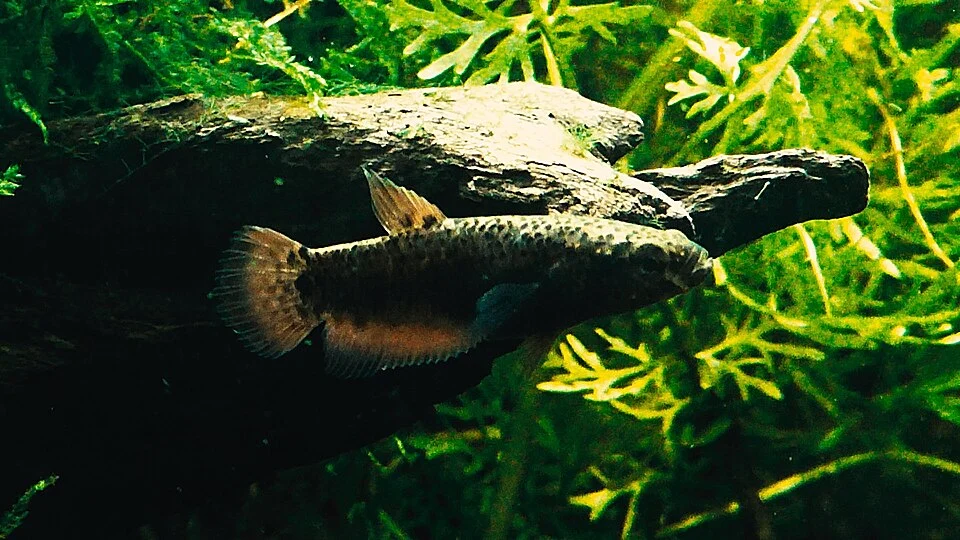
Wild species are not domestic fin forms
Plakat, halfmoon, crowntail, and other familiar labels describe selectively bred forms of domestic Betta, not the diversity of wild species. A wild Betta should be identified by an accepted scientific name and, where possible, a documented locality. Colour, a shop name, or a photograph alone is not enough to establish identity because related species may look similar and living colour can change with sex, condition, and behaviour.[1,3]
The genus also contains two broad reproductive strategies. Some species build bubble nests, while others brood fertilised eggs in the male’s mouth. These behaviours occur across distinct evolutionary lineages; they are not decorative traits and should not be used alone to identify an animal. Species-group placement combines morphology, distribution, behaviour, and increasingly molecular evidence.[4]
Kalimantan is a major centre of diversity
A 2026 review recognises 29 native Betta species in Indonesian Kalimantan, arranged in eleven species complexes. In the review’s framework these are: the akarensis group—Betta antoni, B. balunga, B. obscura, and B. pinguis; albimarginata—B. albimarginata and B. channoides; anabatoides—B. anabatoides and B. midas; bellica—B. simorum; coccina—B. brownorum, B. hendra, B. rutilans, and B. uberis; edithae—B. edithae; foerschi—B. foerschi, B. mandor, and B. strohi; dimidiata—B. dimidiata and B. krataios; picta—B. taeniata; pugnax—B. breviobesa, B. enisae, and B. lehi; and unimaculata—B. compuncta, B. ideii, B. ocellata, B. pallifina, B. patoti, and B. unimaculata.[2]
This concentration is not simply a long checklist. West, Central, East, South, and North Kalimantan contain different river basins, peatlands, forest streams, and lowland blackwaters. Some species are known from restricted areas, so the words ‘Borneo’ or ‘Kalimantan’ are too broad to function as provenance. Taxonomic work has repeatedly separated apparently similar populations—for example, Betta midas from the lower Kapuas was distinguished from B. anabatoides, whose confirmed Indonesian records lie farther south and east.[2,5,6]
Sumatra, Bangka–Belitung, Riau–Natuna, and Java
Published catalogues and regional revisions document another rich Indonesian assemblage west and south of Kalimantan. It includes B. andrei, B. aurigans, B. bellica, B. burdigala, B. chloropharynx, B. coccina, B. cracens, B. dennisyongi, B. falx, B. fusca, B. iaspis, B. miniopinna, B. mulyadii, B. pardalotos, B. picta, B. raja, B. renata, B. rubra, B. schalleri, and B. spilotogena. Betta andrei was described in 2023 from Singkep Island and appears restricted to acidic blackwater habitat there. Some ranges cross political boundaries or require continuing review, while others are narrow island or peat-swamp endemics. This is why an Indonesia-wide list should never be read as permission to mix localities or breeding lines.[1,3,7,10]
Aceh illustrates the need to separate occurrence records from native-range conclusions. Field research confirmed B. dennisyongi and B. rubra, but also reported members of the domesticated splendens complex. A fish found in a waterway is not automatically native there: releases, translocations, historical identifications, and hybridisation can complicate the record. Current taxonomic catalogues, original descriptions, voucher specimens, and locality data should be read together before a distribution claim is repeated.[1,8]
Species groups point toward ecology—not a universal recipe
Small bubble-nesters in the coccina complex are strongly associated with forest swamps and acidic blackwater habitats. Other Indonesian Betta are mouthbrooders found in streams and river systems, including members of the albimarginata, akarensis, pugnax, picta, and unimaculata complexes. The contrast helps explain why there is no single ‘wild Betta water’ or standard aquarium formula that can responsibly cover the genus.[2,4,7]
Habitat descriptions should therefore be tied to a verified species and source population. Peat colour, low pH, leaf litter, or a river label cannot by themselves demonstrate suitable care. Water chemistry, flow, temperature, dissolved oxygen, shelter, diet, social behaviour, and the conditions under which a captive line was maintained must be evaluated as a system, using species-specific evidence rather than visual imitation.[2,4]
Identity, provenance, and conservation belong together
Many Indonesian wild Betta occupy specialised habitats threatened by drainage, peat-swamp conversion, pollution, fire, mining, and other land-use change. Restricted ranges make some lineages especially vulnerable: losing one small forest swamp or tributary may mean losing a large part of a species’ known habitat. Collection pressure can add risk when rarity is marketed without traceability or habitat responsibility.[2,7,8]
Responsible aquarium work begins with lawful, documented sourcing; separation of species and localities; durable breeding records; biosecurity; and honest uncertainty. Captive breeding may reduce pressure and preserve knowledge, but it does not replace habitat protection. Never release captive fish, and never describe an aquarium line as a conservation population unless its identity, founders, pedigree, and management purpose can withstand independent scrutiny.[2,9]
SPECIES FIELD GUIDE
Wild Betta with strong specialist-market potential
These species combine distinctive appearance, compelling reproductive behaviour, and a clear Indonesian biogeographic story. The relevance markers are LIMNIC’s editorial assessment of specialist appeal—not sales forecasts, proof of legal exportability, or encouragement to collect from the wild.
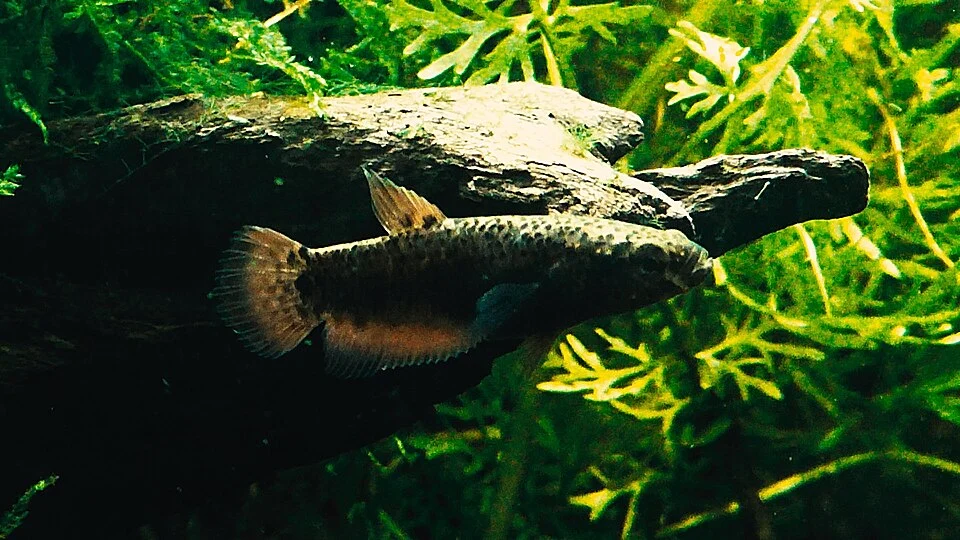 IUCN ENEndangered
Snakehead Betta
Betta channoides
- Origin
- Mahakam basin, East Kalimantan
- Ecology
- Paternal mouthbrooder
- Habitat
- Shaded forest streams and marginal pools in the Mahakam basin
- Conservation note
- Restricted-range lineage; protect locality records and avoid mixing captive populations
One of Indonesia’s most recognisable wild mouthbrooders. Conditioned males can develop a saturated orange-red body with strong black-and-white fin margins; locality records and unmixed captive lines are central to its long-term value.
Photo: Ryan O. Hershey / Wikimedia Commons · CC BY 4.0.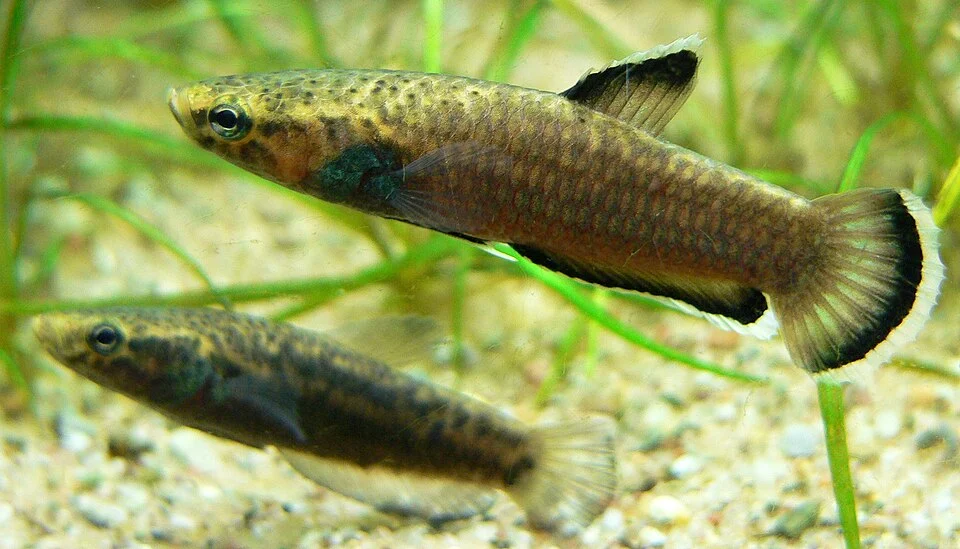 IUCN ENEndangered
Whiteseam Betta
Betta albimarginata
- Origin
- Sebuku drainage; Malinau locality records, North Kalimantan
- Ecology
- Paternal mouthbrooder
- Habitat
- Cool, shallow forest streams with leaf litter and submerged cover
- Conservation note
- Narrow northern Kalimantan distribution; captive lines require documented provenance
Named for the pale seam along the fins, this compact mouthbrooder combines a distinctive silhouette with complex courtship and parental care. It is especially suited to provenance-led, captive-bred specialist collections.
Photo: BS Thurner Hof / Wikimedia Commons · CC BY-SA 3.0.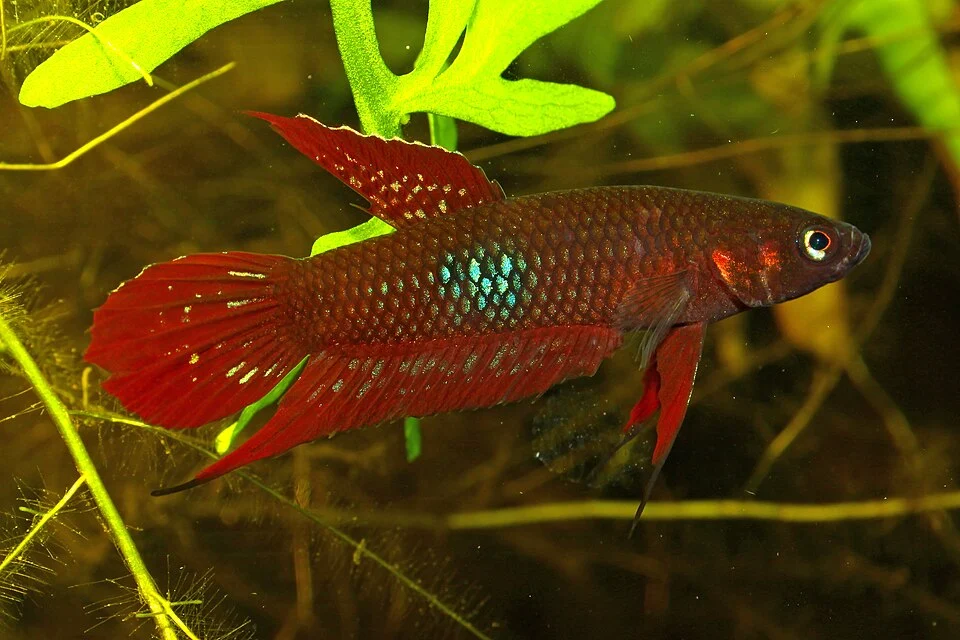 IUCN VUVulnerable
Scarlet Betta
Betta coccina
- Origin
- Peat-swamp waters of Sumatra, including Jambi
- Ecology
- Bubble-nester
- Habitat
- Acidic, tannin-stained peat and forest-swamp waters
- Conservation note
- Peat-swamp specialist exposed to drainage, fire, and land conversion
A small crimson member of the coccina complex associated with acidic forest-swamp habitat. Its intense colour creates international appeal, but narrow habitat dependence makes traceability and captive production more important than rarity marketing.
Photo: Parostoteles / Wikimedia Commons · CC BY-SA 3.0.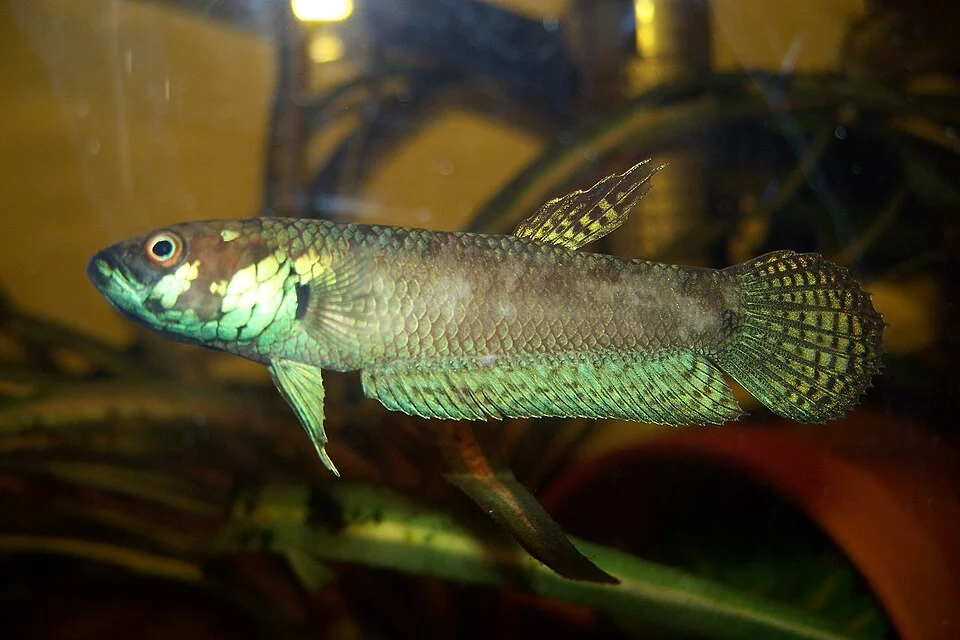 IUCN DDData Deficient
Pallifina Betta
Betta pallifina
- Origin
- Upper Barito basin, Central Kalimantan
- Ecology
- Paternal mouthbrooder
- Habitat
- Clear to tea-coloured tributaries of the upper Barito system
- Conservation note
- Known from a limited basin; identity and lawful captive origin need verification
A larger mouthbrooding wild Betta whose males can show blue-green iridescence and patterned fins. Its scale, display behaviour, and restricted provenance make it compelling for experienced keepers and carefully documented breeding programmes.
Photo: Stacyh202 / Wikimedia Commons · CC BY-SA 3.0.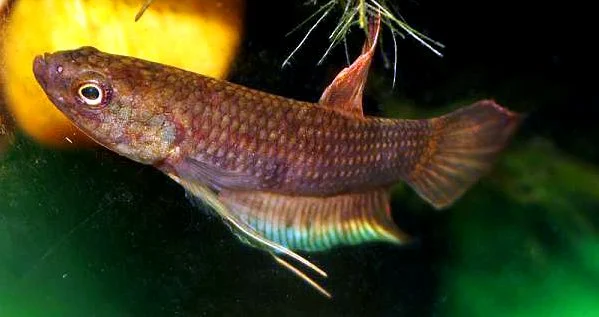 IUCN VUVulnerable
Dimidiata Betta
Betta dimidiata
- Origin
- Kapuas basin, West Kalimantan
- Ecology
- Paternal mouthbrooder
- Habitat
- Lowland forest streams and quiet margins within the Kapuas basin
- Conservation note
- Basin-specific populations should be bred and recorded separately
This slender West Kalimantan species is known for elongated unpaired fins and subtle metallic colour. It illustrates why the export value of wild Betta should rest on verified identity, behaviour, and lineage—not only dramatic colour.
Photo: Acapella / Wikimedia Commons · CC BY-SA 3.0.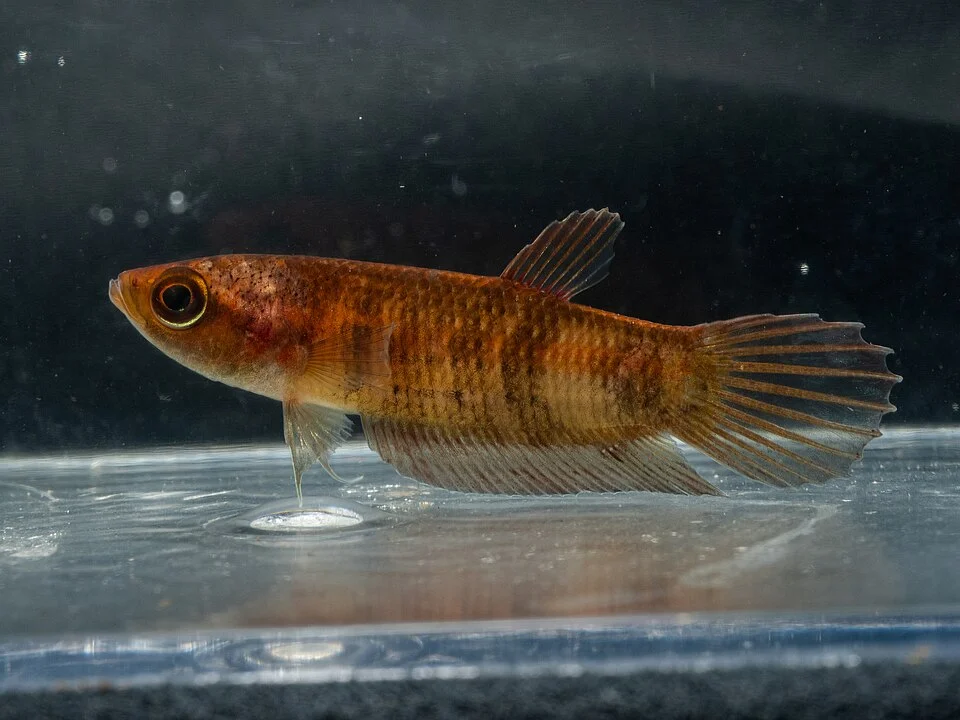 IUCN LCLeast Concern
Giant Betta
Betta anabatoides
- Origin
- Southern and central Kalimantan drainages
- Ecology
- Paternal mouthbrooder
- Habitat
- Slow forest waters, swamps, and vegetated margins in southern Kalimantan
- Conservation note
- Broad historical identifications make specimen-level identity especially important
A comparatively robust mouthbrooder with subdued natural colour and a strong behavioural story. Correct locality is essential because historically broad identifications have been refined as closely related Kalimantan populations were revised.
Photo: Justin Philbois / iNaturalist / Wikimedia Commons · CC0.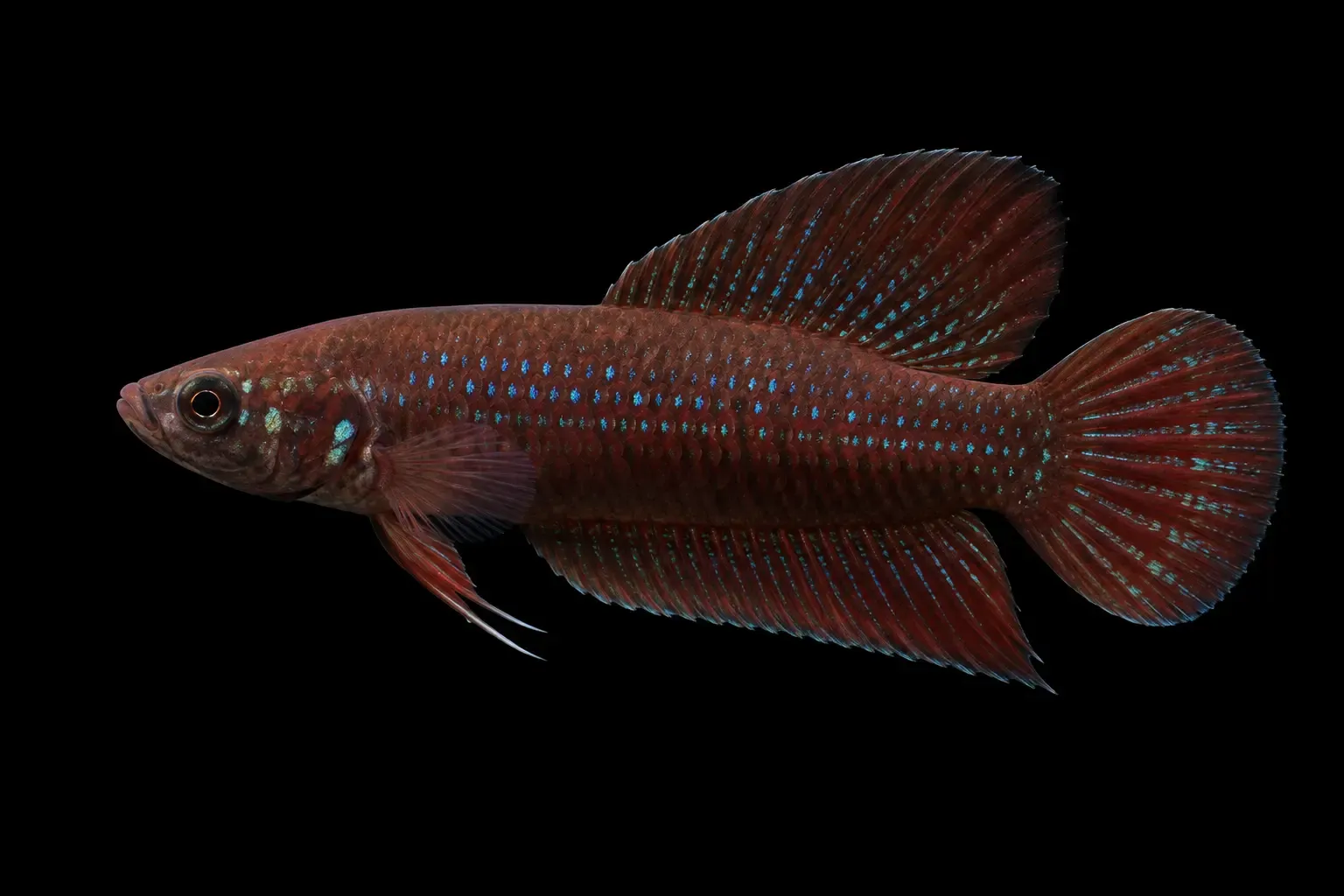 IUCN VUVulnerable
Uberis Betta
Betta uberis
- Origin
- Peat-swamp habitats of Kalimantan
- Ecology
- Bubble-nester
- Habitat
- Very acidic blackwater peat swamps with dense leaf litter
- Conservation note
- Habitat specialist; peat loss and undocumented collection increase risk
A small red member of the coccina complex associated with blackwater peat habitat. Any commercial line still needs a precise locality and must remain separate from similar red bubble-nesters.
Source: FishBase species context · Not a specimen photograph, diagnostic voucher, or current LIMNIC stock.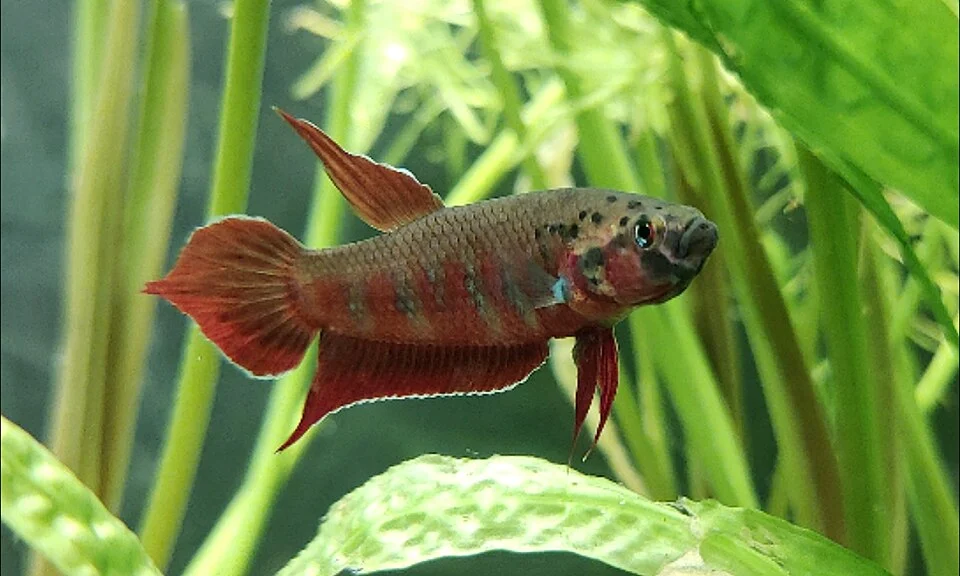 IUCN ENEndangered
Toba Betta
Betta rubra
- Origin
- North-western Sumatra, including Aceh
- Ecology
- Paternal mouthbrooder
- Habitat
- Shallow forest streams and vegetated margins with slow current
- Conservation note
- Separate locality lines from similar members of the rubra complex
Adult males combine a deep red body with dark bars and iridescent fin detail. Recent work in Aceh underlines that distribution, identity, and conservation must be assessed from documented populations rather than the trade name alone.
Photo: Vycro567 / Wikimedia Commons · CC BY-SA 4.0.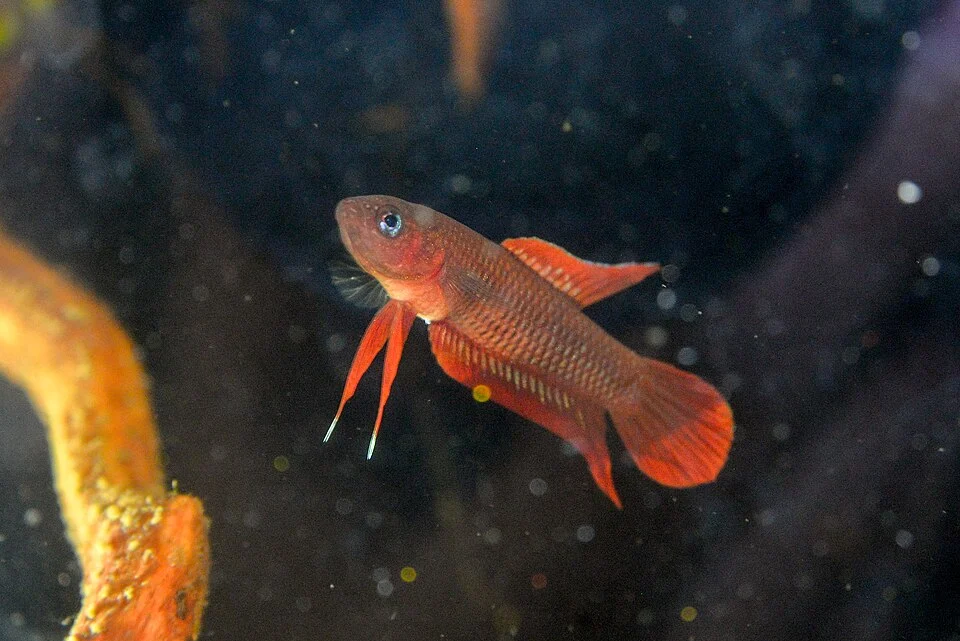 IUCN CRCritically Endangered
Bangka Red Betta
Betta burdigala
- Origin
- Bangka Island, Bangka–Belitung
- Ecology
- Bubble-nester
- Habitat
- Acidic peat-swamp forest and blackwater pools with heavy cover
- Conservation note
- Island endemic with a highly restricted habitat; conservation-led captive breeding is essential
This compact red bubble-nester represents one of Indonesia’s most geographically restricted Betta stories. Its appeal must never be separated from Bangka provenance, peat-swamp protection, legal sourcing, and careful management of captive founders.
Photo: YIE BABEL / Wikimedia Commons · CC BY-SA 4.0.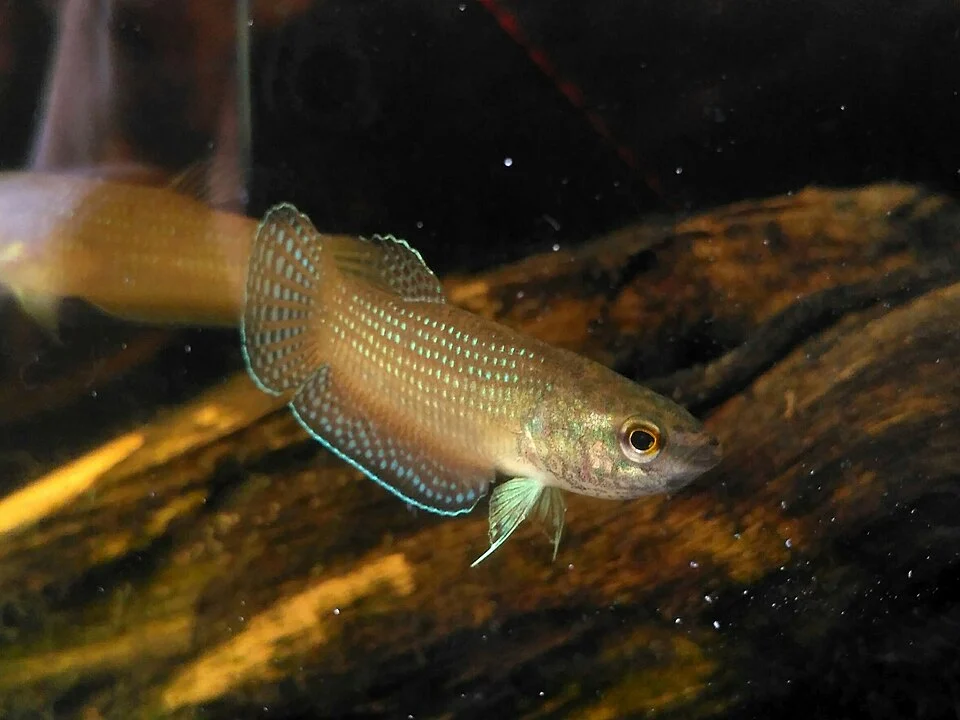 IUCN LCLeast Concern
Edith’s Betta
Betta edithae
- Origin
- Sumatra, Riau islands, and parts of Indonesian Kalimantan
- Ecology
- Paternal mouthbrooder
- Habitat
- Lowland streams, swamp margins, and slow vegetated waters
- Conservation note
- Relatively widespread, but locality remains important for trustworthy captive records
A medium-sized mouthbrooder with understated bronze colour, iridescent scales, and behaviour that rewards close observation. The photographed male comes from Kotabumi, Lampung—an example of the locality precision a credible collection should retain.
Photo: Ahsan al hidayat / Wikimedia Commons · CC BY-SA 4.0.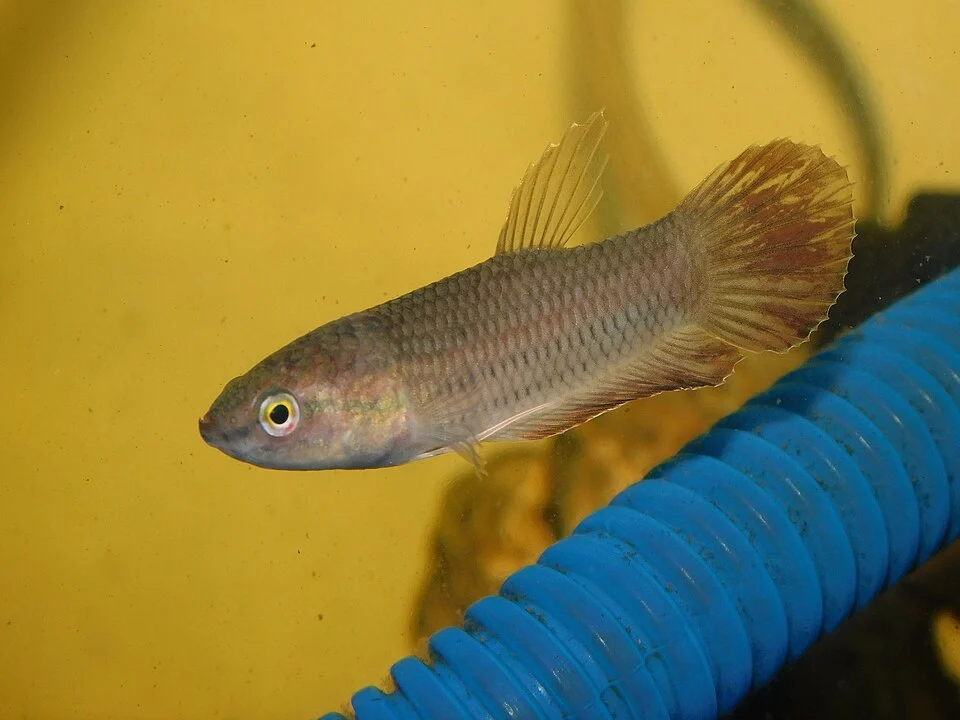 IUCN NTNear Threatened
Spotted Betta
Betta picta
- Origin
- Western Java
- Ecology
- Paternal mouthbrooder
- Habitat
- Shallow upland and foothill streams with cover along the banks
- Conservation note
- Native Javan populations require locality records and protection from habitat degradation
An historically important Javan mouthbrooder whose subtle pattern and parental behaviour make it ideal for education-led specialist keeping. A modern photograph from West Java anchors the species to place rather than presenting it as a generic brown Betta.
Photo: Ganjar Cahyadi / iNaturalist / Wikimedia Commons · CC BY 4.0.INDONESIA-WIDE WORKING CHECKLIST
Beyond the selected species
The illustrated field guide highlights selected species; its visual reconstructions do not establish specimen identity. This broader working checklist brings together 49 described Betta reported from Indonesian regions in the cited taxonomic literature. It is arranged by geography for orientation, not as a legal export list or a substitute for specimen-level identification.
Indonesian Kalimantan
29 species across 11 species complexes in the 2026 Kalimantan review
- Betta antoniakarensis complex
- Betta balungaakarensis complex
- Betta obscuraakarensis complex
- Betta pinguisakarensis complex
- Betta albimarginataalbimarginata complex
- Betta channoidesalbimarginata complex
- Betta anabatoidesanabatoides complex
- Betta midasanabatoides complex
- Betta simorumbellica complex
- Betta brownorumcoccina complex
- Betta hendracoccina complex
- Betta rutilanscoccina complex
- Betta uberiscoccina complex
- Betta edithaeedithae complex
- Betta foerschifoerschi complex
- Betta mandorfoerschi complex
- Betta strohifoerschi complex
- Betta dimidiatadimidiata complex
- Betta krataiosdimidiata complex
- Betta taeniatapicta complex
- Betta breviobesapugnax complex
- Betta enisaepugnax complex
- Betta lehipugnax complex
- Betta compunctaunimaculata complex
- Betta ideiiunimaculata complex
- Betta ocellataunimaculata complex
- Betta pallifinaunimaculata complex
- Betta patotiunimaculata complex
- Betta unimaculataunimaculata complex
Sumatra and Aceh
Mainland Sumatran records and recently described peat-swamp lineages
- Betta bellicabellica complex
- Betta coccinacoccina complex
- Betta cracenspugnax complex
- Betta dennisyongirubra complex
- Betta falxpicta complex
- Betta fuscapugnax complex
- Betta iaspiscoccina complex
- Betta mulyadiicoccina complex
- Betta pardalotoswaseri complex
- Betta rajapugnax complex
- Betta renatawaseri complex
- Betta rubrarubra complex
Bangka–Belitung
Island and peat-swamp endemics with highly restricted known ranges
- Betta burdigalacoccina complex
- Betta chloropharynxwaseri complex
- Betta schalleripugnax complex
Riau, Bintan and Natuna islands
Species documented from the Riau–Natuna and Singkep island region
- Betta andreiwaseri complex
- Betta aurigansakarensis complex
- Betta miniopinnacoccina complex
- Betta spilotogenawaseri complex
Java
A familiar Indonesian mouthbrooder whose locality still matters
- Betta pictapicta complex
Read the species, locality, and lineage together.
Take these questions into your further reading.
- Is the fish identified by an accepted scientific name, or only by a trade name, colour, or species-group label?
- Which country, island, river basin, collection locality, and captive generation can be documented without guessing?
- Does the evidence distinguish a native population from an introduced, translocated, or domesticated Betta record?
This is a learning checklist, not a treatment or husbandry protocol.
Sources & further reading
- The fishes of the inland waters of Southeast Asia: a catalogue and core bibliography of the fishes known to occur in freshwaters, mangroves and estuaries. The Raffles Bulletin of Zoology. 2013;Supplement 27:1–663. Available from: https://digitalgems.nus.edu.sg/view/530597/the-fishes-of-the-inland-waters-of-southeast-asia-a-catalogue-and-core-bibliography-of-the-fishes-known-to-occur-in-freshwaters-mangroves-and-estuaries
- Bioecology, conservation status and breeding efforts of wild Betta fish (Teleostei: Osphronemidae) in Kalimantan, Indonesia. Aquatic Conservation: Marine and Freshwater Ecosystems. 2026;36(6):e70399. doi:10.1002/aqc.70399
- The labyrinth fishes (Teleostei: Anabantoidei, Channoidei) of Sumatra, Indonesia. The Raffles Bulletin of Zoology. 2005;Supplement 13:115–138. Available from: https://lkcnhm.nus.edu.sg/volumes/supplement-no-13-2005/
- Southeast Asian mouth-brooding Betta fighting fish species and their phylogenetic relationships based on mitochondrial COI and nuclear ITS1 DNA sequences and analyses. Meta Gene. 2014;2:862–879. doi:10.1016/j.mgene.2014.10.007
- Redescription of Betta anabatoides Bleeker, and a new species of Betta from West Kalimantan, Borneo. Zootaxa. 2009;2165:59–68. doi:10.5281/zenodo.189074
- Six new species of fighting fish (Teleostei: Osphronemidae: Betta) from Borneo. Ichthyological Exploration of Freshwaters. 2006;17(2):97–114. Available from: https://researcharchive.calacademy.org/research/ichthyology/catalog/getref.asp?id=28764
- Phylogenetic analysis of Betta coccina complex from Peninsular Malaysia and Sumatra Island with descriptions of two new species. ZooKeys. 2025;1238:161–181. doi:10.3897/zookeys.1238.142857
- Diversity, distribution, and conservation status of Betta fish (Teleostei: Osphronemidae) in Aceh waters, Indonesia. European Zoological Journal. 2022;89(1):142–151. doi:10.1080/24750263.2022.2029587
- Freshwater fishes of Southeast Asia: potential for the aquarium fish trade and conservation issues. Aquarium Sciences and Conservation. 1997;1(2):79–90. doi:10.1023/A:1018335617835
- A new species of black water fighting fish from Singkep Island (Teleostei: Osphronemidae). The Raffles Bulletin of Zoology. 2023;71:491–495. Available from: https://lkcnhm.nus.edu.sg/wp-content/uploads/sites/10/2023/08/RBZ-2023-0036.pdf
Sources reviewed on 1 September 2026. References support this introduction; they do not imply endorsement of LIMNIC. For species-specific care or health concerns, consult an appropriate specialist.