

Water Science
Oxygen: the invisible part of freshwater life
A short introduction to dissolved oxygen, temperature, and why water quality is more than clarity.
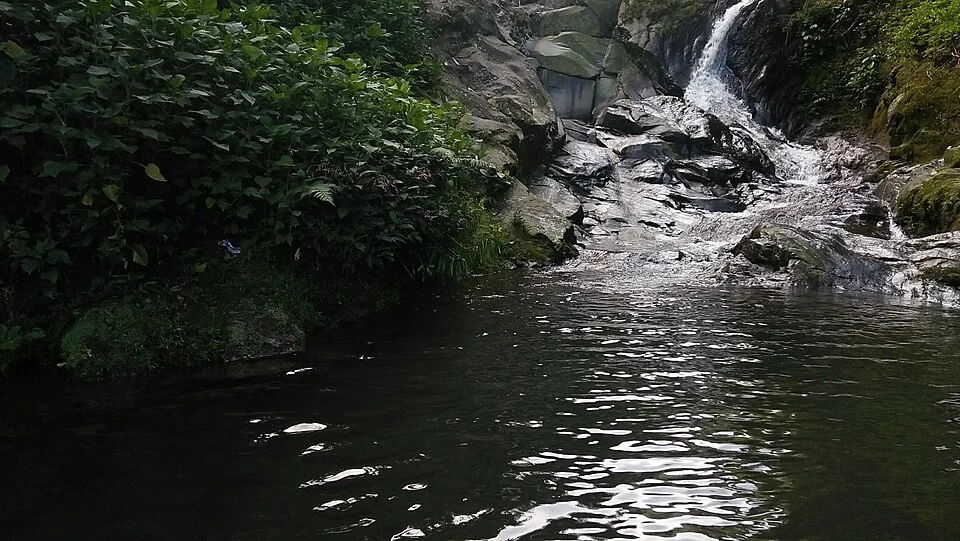
What dissolved oxygen means
Dissolved oxygen is oxygen gas present in water and available to aquatic organisms. It is not the oxygen chemically bound within a water molecule. Fish and many other freshwater organisms depend on this dissolved supply.[1,3]
Oxygen can enter water from the atmosphere, and photosynthesis also influences its concentration. The oxygen balance is dynamic rather than a permanent property of a river, lake, or aquarium.[1,3]
Temperature and decomposition matter
At otherwise comparable conditions, colder water can hold more dissolved oxygen than warmer water. Microorganisms also consume oxygen while decomposing organic matter. A combination of warm conditions, limited mixing, and heavy organic loading can therefore put pressure on oxygen availability.[1,3]
This does not mean that all freshwater species need cold or fast-flowing water. Habitat requirements differ, so the goal is to understand the species and system rather than apply one setting to every aquarium.[2,3]
Read the whole system
Water-quality management brings measurements and observation together. Temperature, oxygen, pH, waste loading, and biological filtration interact; one satisfactory reading does not describe the whole system.[2,3]
Keep a record of readings and changes in behaviour or feeding. These observations give a fish-health professional more useful context if a problem develops. This introduction is not a universal oxygen target or an emergency treatment guide.[2]
Ask what the surface cannot show.
Take these questions into your further reading.
- Are you looking at a dissolved-oxygen measurement, or inferring a condition from bubbles and surface movement?
- What temperature, time of day, and aquarium conditions were recorded with that observation?
- What reliable, species-specific information would help you understand the oxygen needs of your fish or shrimp?
This is a learning checklist, not a treatment or husbandry protocol.
Sources & further reading
- Dissolved oxygen and water. Water Science School. 2018 [cited 1 September 2026]. Available from: https://www.usgs.gov/water-science-school/science/dissolved-oxygen-and-water
- Water quality requirements for reuse systems. Aquacultural Engineering. 2006;34(3):143–156. doi:10.1016/j.aquaeng.2005.08.011
- Dissolved oxygen and aeration in Ictalurid catfish aquaculture. Journal of the World Aquaculture Society. 2018;49(1):7–70. doi:10.1111/jwas.12469
Sources reviewed on 1 September 2026. References support this introduction; they do not imply endorsement of LIMNIC. For species-specific care or health concerns, consult an appropriate specialist.