
Water comes first
Plan soft, acidic water with very low mineral content. Confirm requirements for the exact species and breeding line.

LIMNIC / FISH COLLECTION
Licorice gouramis. Local origins. Specialist care.
Enter the species journeyA LIMNIC SIGNATURE COLLECTION
Browse the speciesExplore the Indonesian species register and a separate Malaysian reference profile. Their fin patterns, courtship and local origins reward close attention. Each profile brings together identity, care context and sources.
Plan soft, acidic water with very low mineral content. Confirm requirements for the exact species and breeding line.
A reliable supply of small live foods is a central part of specialist Parosphromenus care.
Record the species and locality. Similar-looking females and trade names make mixed lines difficult to identify.
Reference illustrations support exploration; they are not photographs of available stock.
Reported categories still need a direct assessment check. Status review does not mean Not Evaluated. Read the status guide.
Fish SL excludes the tail fin; TL follows source endpoints, usually to the tail tip. CL measures the carapace only. Values are not converted between methods. Where a maximum is unverified, the largest examined specimen remains labelled as a specimen, not an adult maximum or a guaranteed final size.
Water ranges retain their source and scope: species, genus or group. Habitat measurements and experimental conditions are labelled separately from aquarium guidance. Missing numbers are not estimated. Prepared food is not always accepted; adapt food size to life stage and check feeding response. This summary does not replace system planning, quarantine, compatibility or adult space.
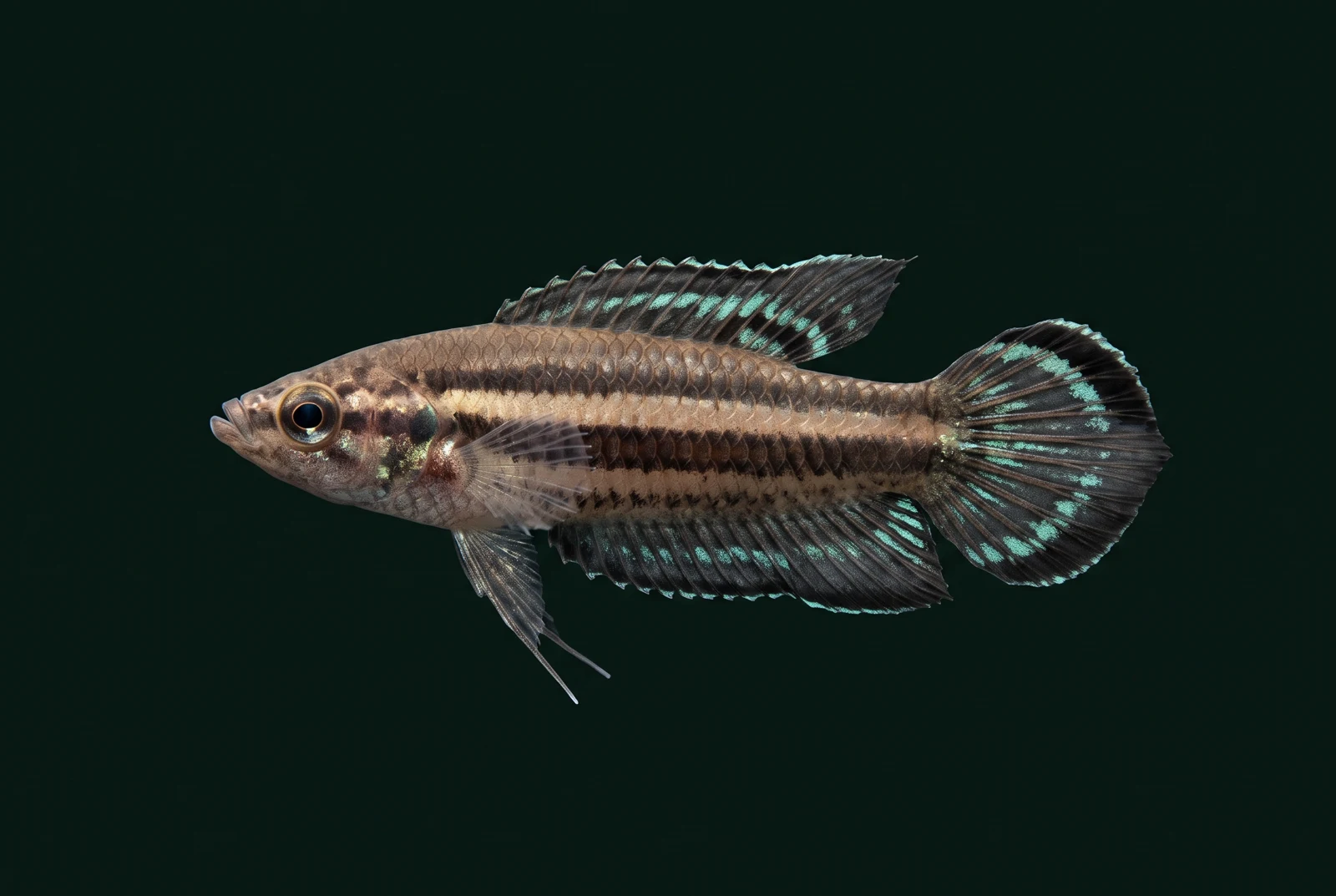
Harvey’s Licorice Gourami
Description
4 cm · reported maximum; measurement unspecified
Temperature 22–24 °C · pH 4–6 · Conductivity <100 µS/cm · KH Undetectablespecies guidance
Natural food: Live grindal/microworm; Artemia and Daphnia.Prepared food: Dry/frozen acceptance unreliable.Food guidance at genus level
Biology: mature biofilter; species-specific microbial counts are not established.
Use very soft acidic water, shelter and small breeding caves. The specialist account recommends 22–24°C; avoid sustained high temperatures and verify the source population’s established care.
Species advice overrides the warmer genus table; avoid 27–28 °C routine maintenance. Food guidance remains genus-level.
Omitted parameters have no verified range in the sources checked. Habitat or experimental measurements are not safe keeping limits. GH, KH, TDS and conductivity are not interchangeable.
General system guidance: target free ammonia (NH₃) and nitrite (NO₂⁻) at 0 mg/L; account for test detection limits. These are chemical measurements, not microbial counts or each species’ tolerance limits. OATA · 2022. Assess biofilter function through waste processing and water tests, not clarity alone. Biofiltration reference.
Size checked: . Water/food checked: .
Library profile · not for sale
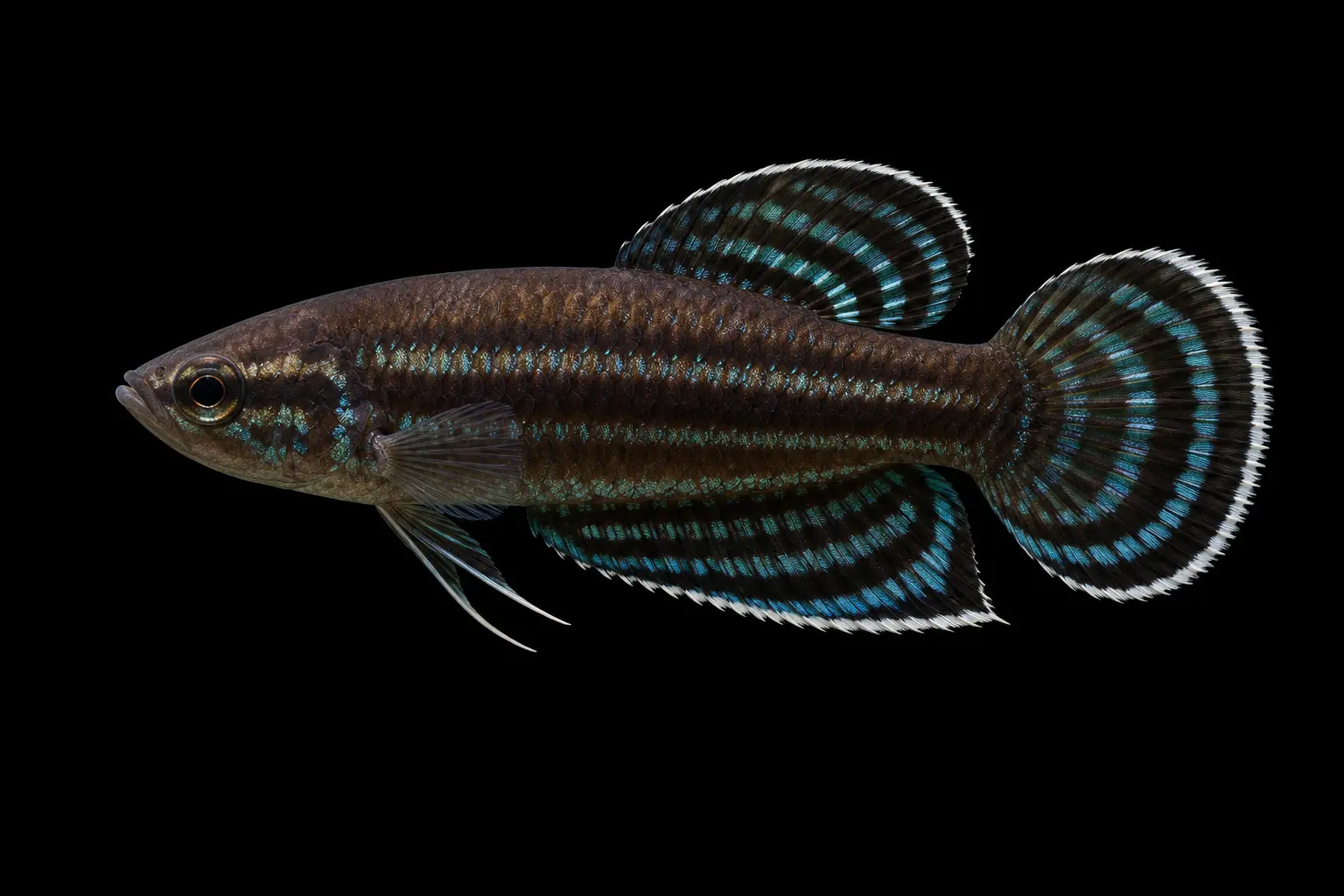
Anjungan Licorice Gourami
Description
3.5 cm TL · reported maximum
Temperature 25–30 °C · pH 4–6 · Conductivity 3–75 µS/cm · GH 0 °dGH (test reading) · KH 0 °dKH (test reading)genus guidance
Natural food: Live grindal/microworm; Artemia and Daphnia.Prepared food: Dry/frozen acceptance unreliable.Food guidance at genus level
Biology: mature biofilter; species-specific microbial counts are not established.
Use a sheltered blackwater setup with very soft acidic water, leaf cover and small breeding caves. Preserve locality records and confirm the established conditions of the breeding line.
Genus guidance, not a validated protocol for every species; temperature varies with species and season. Zero hardness means below kit detection.
Omitted parameters have no verified range in the sources checked. Habitat or experimental measurements are not safe keeping limits. GH, KH, TDS and conductivity are not interchangeable.
General system guidance: target free ammonia (NH₃) and nitrite (NO₂⁻) at 0 mg/L; account for test detection limits. These are chemical measurements, not microbial counts or each species’ tolerance limits. OATA · 2022. Assess biofilter function through waste processing and water tests, not clarity alone. Biofiltration reference.
Size checked: . Water/food checked: .
Library profile · not for sale
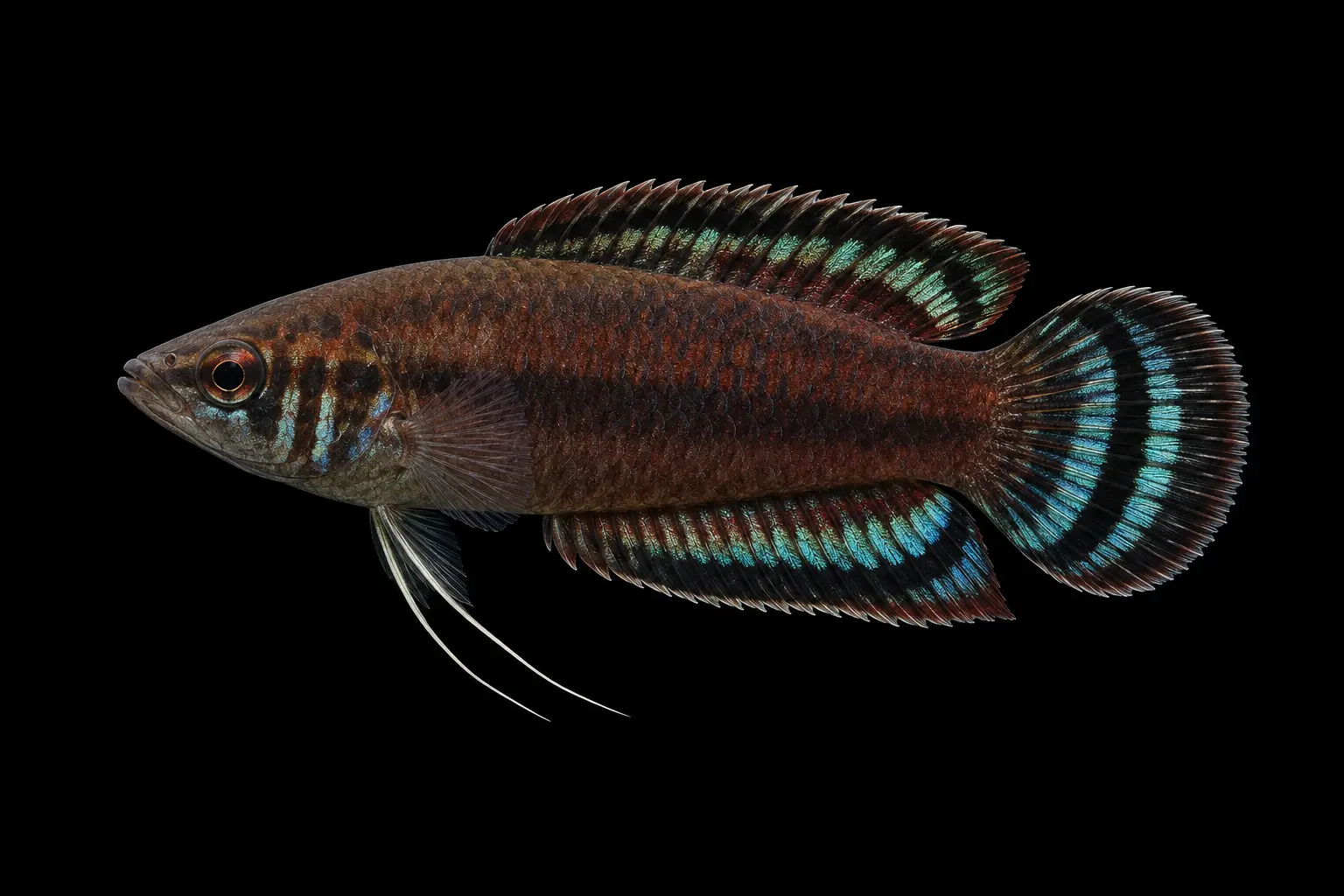
Bintan Licorice Gourami
Description
3.5 cm TL · reported maximum
Temperature 25–30 °C · pH 4–6 · Conductivity 3–75 µS/cm · GH 0 °dGH (test reading) · KH 0 °dKH (test reading)genus guidance
Natural food: Live grindal/microworm; Artemia and Daphnia.Prepared food: Dry/frozen acceptance unreliable.Food guidance at genus level
Biology: mature biofilter; species-specific microbial counts are not established.
Maintain very soft acidic water and sheltered breeding territories. Keep locality and identity records, and confirm the breeding line’s proven feeding and water conditions before combining adults.
Genus guidance, not a validated protocol for every species; temperature varies with species and season. Zero hardness means below kit detection.
Omitted parameters have no verified range in the sources checked. Habitat or experimental measurements are not safe keeping limits. GH, KH, TDS and conductivity are not interchangeable.
General system guidance: target free ammonia (NH₃) and nitrite (NO₂⁻) at 0 mg/L; account for test detection limits. These are chemical measurements, not microbial counts or each species’ tolerance limits. OATA · 2022. Assess biofilter function through waste processing and water tests, not clarity alone. Biofiltration reference.
Size checked: . Water/food checked: .
Library profile · not for sale
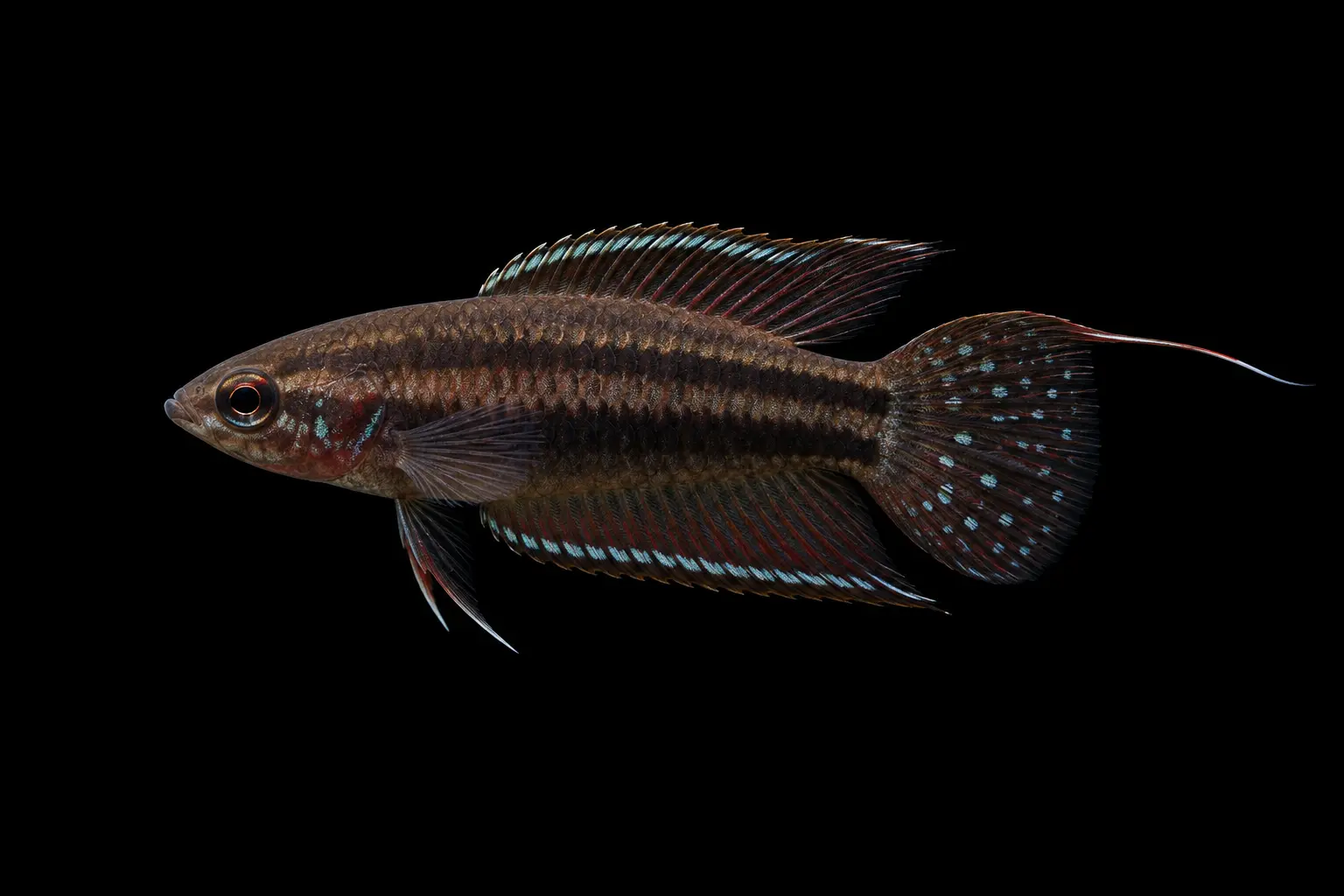
Deissner’s Licorice Gourami
Description
5 cm TL · reported maximum
Temperature 25–30 °C · pH 4–6 · Conductivity 3–75 µS/cm · GH 0 °dGH (test reading) · KH 0 °dKH (test reading)genus guidance
Natural food: Live grindal/microworm; Artemia and Daphnia.Prepared food: Dry/frozen acceptance unreliable.Food guidance at genus level
Biology: mature biofilter; species-specific microbial counts are not established.
Allow more adult space than for the smallest Parosphromenus, with sheltered territories and breeding caves. Maintain very soft acidic water and verify identity; trade names are often unreliable.
Genus guidance, not a validated protocol for every species; temperature varies with species and season. Zero hardness means below kit detection.
Omitted parameters have no verified range in the sources checked. Habitat or experimental measurements are not safe keeping limits. GH, KH, TDS and conductivity are not interchangeable.
General system guidance: target free ammonia (NH₃) and nitrite (NO₂⁻) at 0 mg/L; account for test detection limits. These are chemical measurements, not microbial counts or each species’ tolerance limits. OATA · 2022. Assess biofilter function through waste processing and water tests, not clarity alone. Biofiltration reference.
Size checked: . Water/food checked: .
Library profile · not for sale
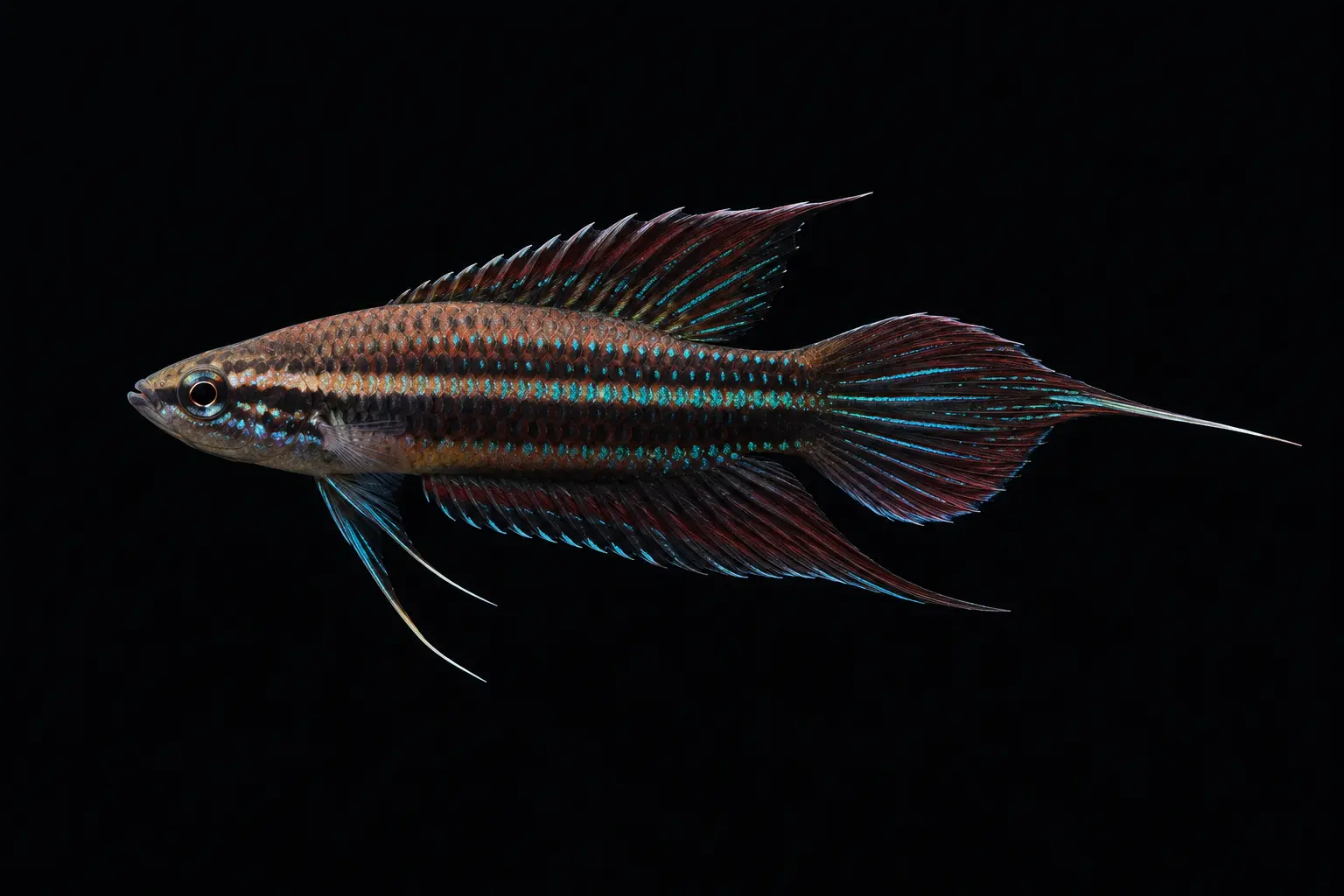
Filament Licorice Gourami
Description
About 4.5 cm TL · specialist size; maximum unverifiedKeeping reference · not a measured maximum
Temperature 25–30 °C · pH 4–6 · Conductivity 3–75 µS/cm · GH 0 °dGH (test reading) · KH 0 °dKH (test reading)genus guidance
Natural food: Live grindal/microworm; Artemia and Daphnia.Prepared food: Dry/frozen acceptance unreliable.Food guidance at genus level
Biology: mature biofilter; species-specific microbial counts are not established.
Provide very soft acidic water, leaf cover, breeding caves and appropriate live foods. Check intake closely; non-live food alone is unreliable for sustained Parosphromenus husbandry.
Genus-level guidance
Genus guidance, not a validated protocol for every species; temperature varies with species and season. Zero hardness means below kit detection.
The specialist account gives an overall length, without calling it a maximum. Care is genus guidance from EAZA.
Omitted parameters have no verified range in the sources checked. Habitat or experimental measurements are not safe keeping limits. GH, KH, TDS and conductivity are not interchangeable.
General system guidance: target free ammonia (NH₃) and nitrite (NO₂⁻) at 0 mg/L; account for test detection limits. These are chemical measurements, not microbial counts or each species’ tolerance limits. OATA · 2022. Assess biofilter function through waste processing and water tests, not clarity alone. Biofiltration reference.
Size checked: . Water/food checked: .
Library profile · not for sale
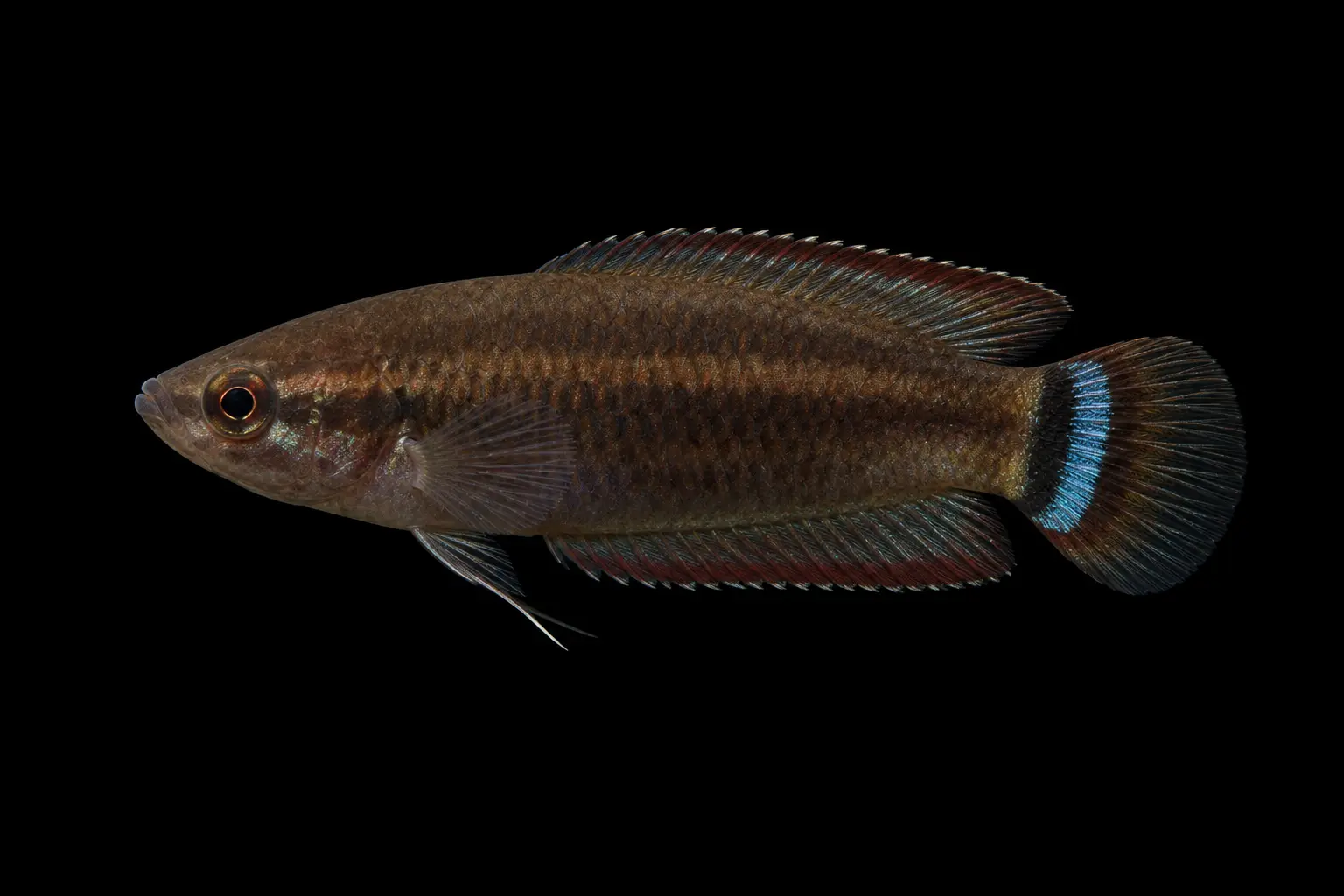
Gunawan’s Licorice Gourami
Description
4.5 cm TL · reported aquarium maximum
Temperature 25–30 °C · pH 4–6 · Conductivity 3–75 µS/cm · GH 0 °dGH (test reading) · KH 0 °dKH (test reading)genus guidance
Natural food: Live grindal/microworm; Artemia and Daphnia.Prepared food: Dry/frozen acceptance unreliable.Food guidance at genus level
Biology: mature biofilter; species-specific microbial counts are not established.
Use very soft acidic water and sheltered breeding territories. Give adults adequate permanent space, preserve locality records and confirm the line’s established feeding and breeding routine.
Genus guidance, not a validated protocol for every species; temperature varies with species and season. Zero hardness means below kit detection.
The size account separates wild and aquarium fish; the displayed figure is its aquarium report, not a universal growth ceiling.
Omitted parameters have no verified range in the sources checked. Habitat or experimental measurements are not safe keeping limits. GH, KH, TDS and conductivity are not interchangeable.
General system guidance: target free ammonia (NH₃) and nitrite (NO₂⁻) at 0 mg/L; account for test detection limits. These are chemical measurements, not microbial counts or each species’ tolerance limits. OATA · 2022. Assess biofilter function through waste processing and water tests, not clarity alone. Biofiltration reference.
Size checked: . Water/food checked: .
Library profile · not for sale
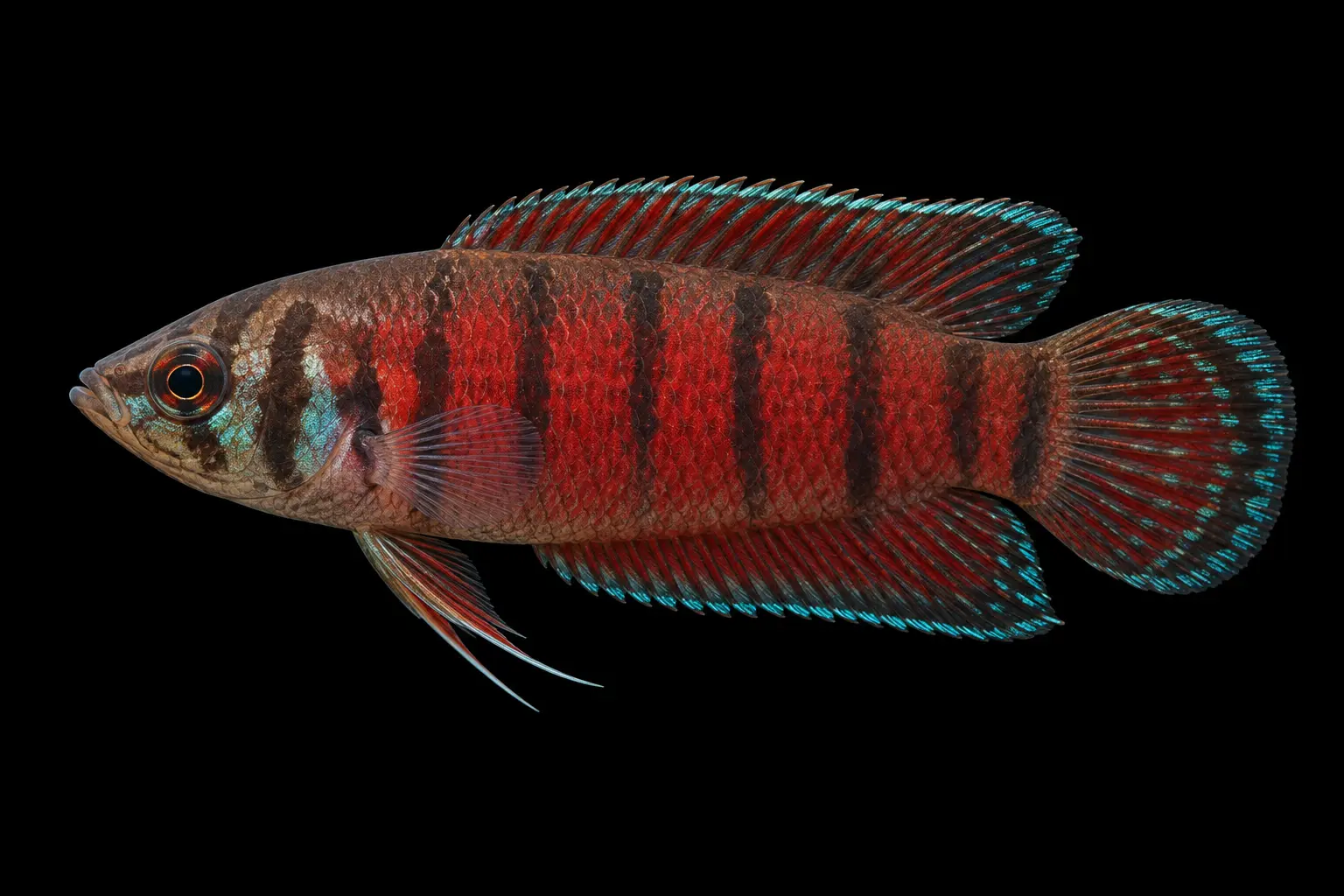
Juelin’s Licorice Gourami
Description
3.23 cm SL · examined type specimen; maximum unverifiedExamined specimens · not an adult maximum
Temperature 25–30 °C · pH 4–6 · Conductivity 3–75 µS/cm · GH 0 °dGH (test reading) · KH 0 °dKH (test reading)genus guidance
Natural food: Live grindal/microworm; Artemia and Daphnia.Prepared food: Dry/frozen acceptance unreliable.Food guidance at genus level
Biology: mature biofilter; species-specific microbial counts are not established.
Provide very soft acidic water, leaf cover, breeding caves and appropriate live foods. Check intake closely; non-live food alone is unreliable for sustained Parosphromenus husbandry.
Genus-level guidance
Genus-level interim guidance; a species-specific captive water protocol was not verified. Zero hardness means below kit detection.
The largest listed paratype is 32.3 mm SL; the smaller holotype does not set an adult maximum. Care is genus guidance, not a verified species protocol.
Omitted parameters have no verified range in the sources checked. Habitat or experimental measurements are not safe keeping limits. GH, KH, TDS and conductivity are not interchangeable.
General system guidance: target free ammonia (NH₃) and nitrite (NO₂⁻) at 0 mg/L; account for test detection limits. These are chemical measurements, not microbial counts or each species’ tolerance limits. OATA · 2022. Assess biofilter function through waste processing and water tests, not clarity alone. Biofiltration reference.
Size checked: . Water/food checked: .
Library profile · not for sale
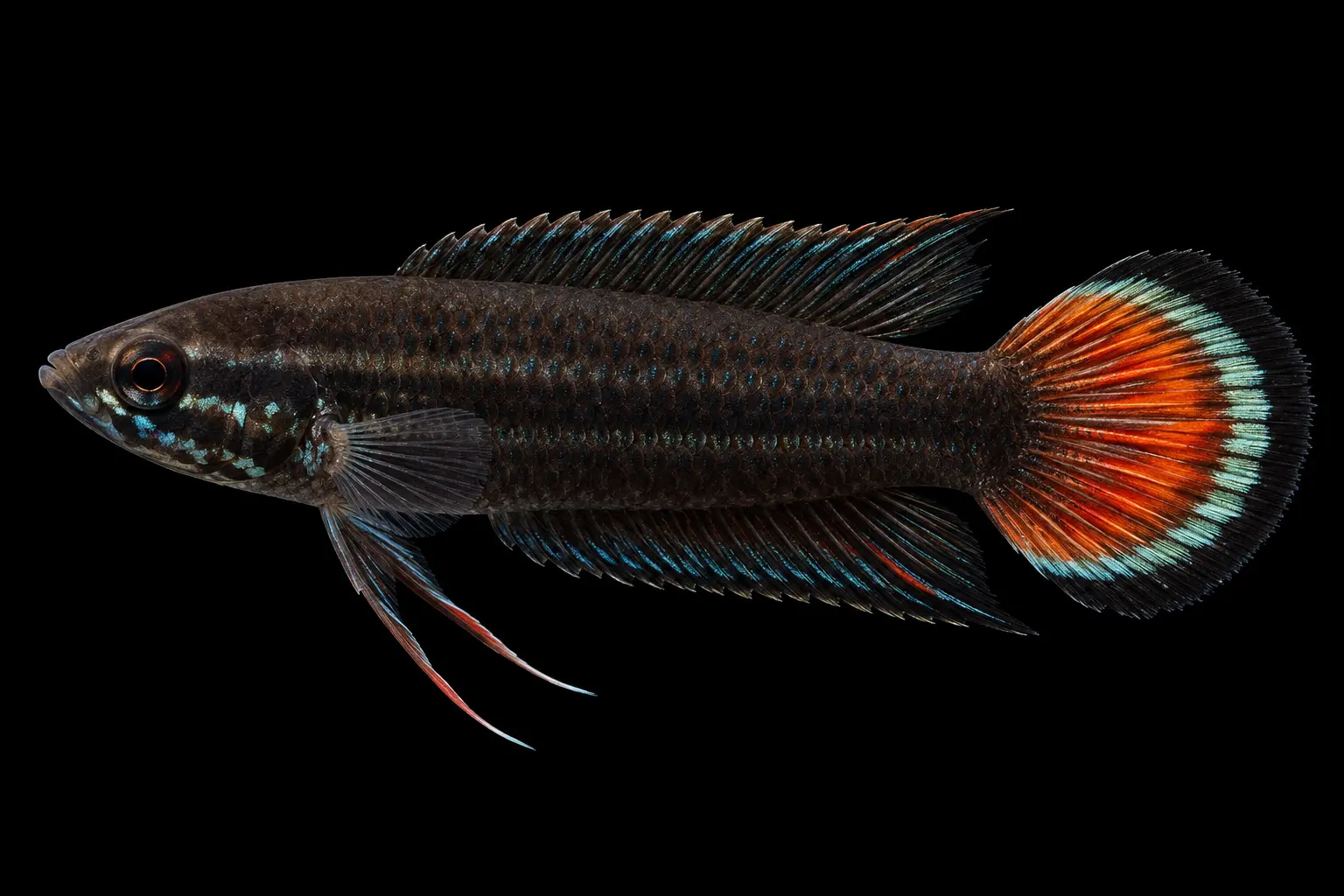
Kishi’s Licorice Gourami
Description
3.21 cm SL · examined type specimen; maximum unverifiedExamined specimens · not an adult maximum
Temperature 25–30 °C · pH 4–6 · Conductivity 3–75 µS/cm · GH 0 °dGH (test reading) · KH 0 °dKH (test reading)genus guidance
Natural food: Live grindal/microworm; Artemia and Daphnia.Prepared food: Dry/frozen acceptance unreliable.Food guidance at genus level
Biology: mature biofilter; species-specific microbial counts are not established.
Provide very soft acidic water, leaf cover, breeding caves and appropriate live foods. Check intake closely; non-live food alone is unreliable for sustained Parosphromenus husbandry.
Genus-level guidance
Genus-level interim guidance; a species-specific captive water protocol was not verified. Zero hardness means below kit detection.
The largest listed paratype is 32.1 mm SL. The specialist species page has no care protocol; care is explicitly genus guidance.
Omitted parameters have no verified range in the sources checked. Habitat or experimental measurements are not safe keeping limits. GH, KH, TDS and conductivity are not interchangeable.
General system guidance: target free ammonia (NH₃) and nitrite (NO₂⁻) at 0 mg/L; account for test detection limits. These are chemical measurements, not microbial counts or each species’ tolerance limits. OATA · 2022. Assess biofilter function through waste processing and water tests, not clarity alone. Biofiltration reference.
Size checked: . Water/food checked: .
Library profile · not for sale
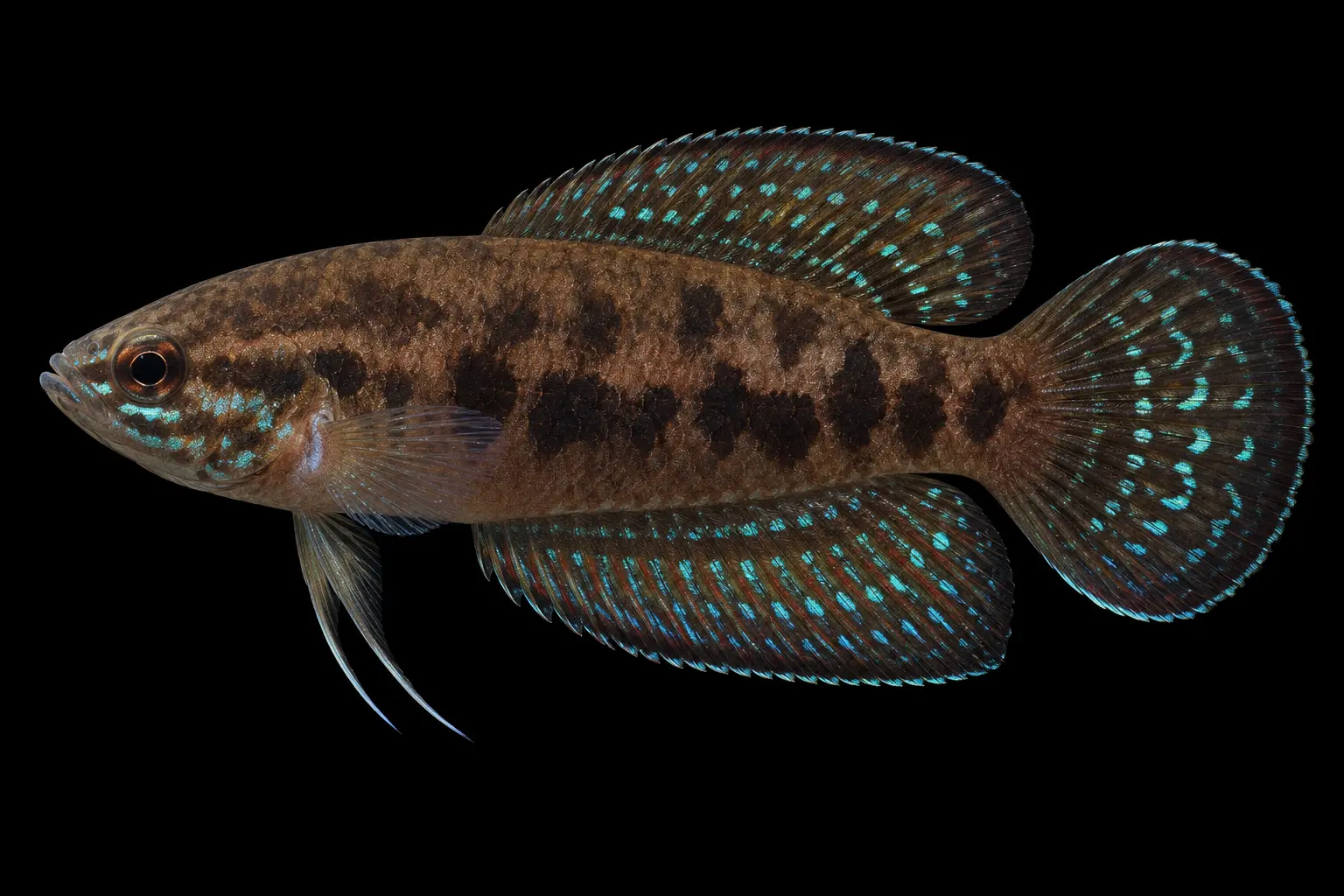
Linke’s Licorice Gourami
Description
4.5–5 cm · specialist size, with fin extension; convention unclearKeeping reference · not a measured maximum
Temperature 25–30 °C · pH 4–6 · Conductivity 3–75 µS/cm · GH 0 °dGH (test reading) · KH 0 °dKH (test reading)genus guidance
Natural food: Live grindal/microworm; Artemia and Daphnia.Prepared food: Dry/frozen acceptance unreliable.Food guidance at genus level
Biology: mature biofilter; species-specific microbial counts are not established.
Use standard specialist Parosphromenus care with very soft acidic water and sheltered breeding caves. Its relative robustness does not replace attention to water quality or the breeding line’s history.
Genus guidance, not a validated protocol for every species; temperature varies with species and season. Zero hardness means below kit detection.
The account reports 4.5 cm overall and up to 5 cm with a fin filament, then separately discusses caudal extension. The convention is retained as unclear.
Omitted parameters have no verified range in the sources checked. Habitat or experimental measurements are not safe keeping limits. GH, KH, TDS and conductivity are not interchangeable.
General system guidance: target free ammonia (NH₃) and nitrite (NO₂⁻) at 0 mg/L; account for test detection limits. These are chemical measurements, not microbial counts or each species’ tolerance limits. OATA · 2022. Assess biofilter function through waste processing and water tests, not clarity alone. Biofiltration reference.
Size checked: . Water/food checked: .
Library profile · not for sale
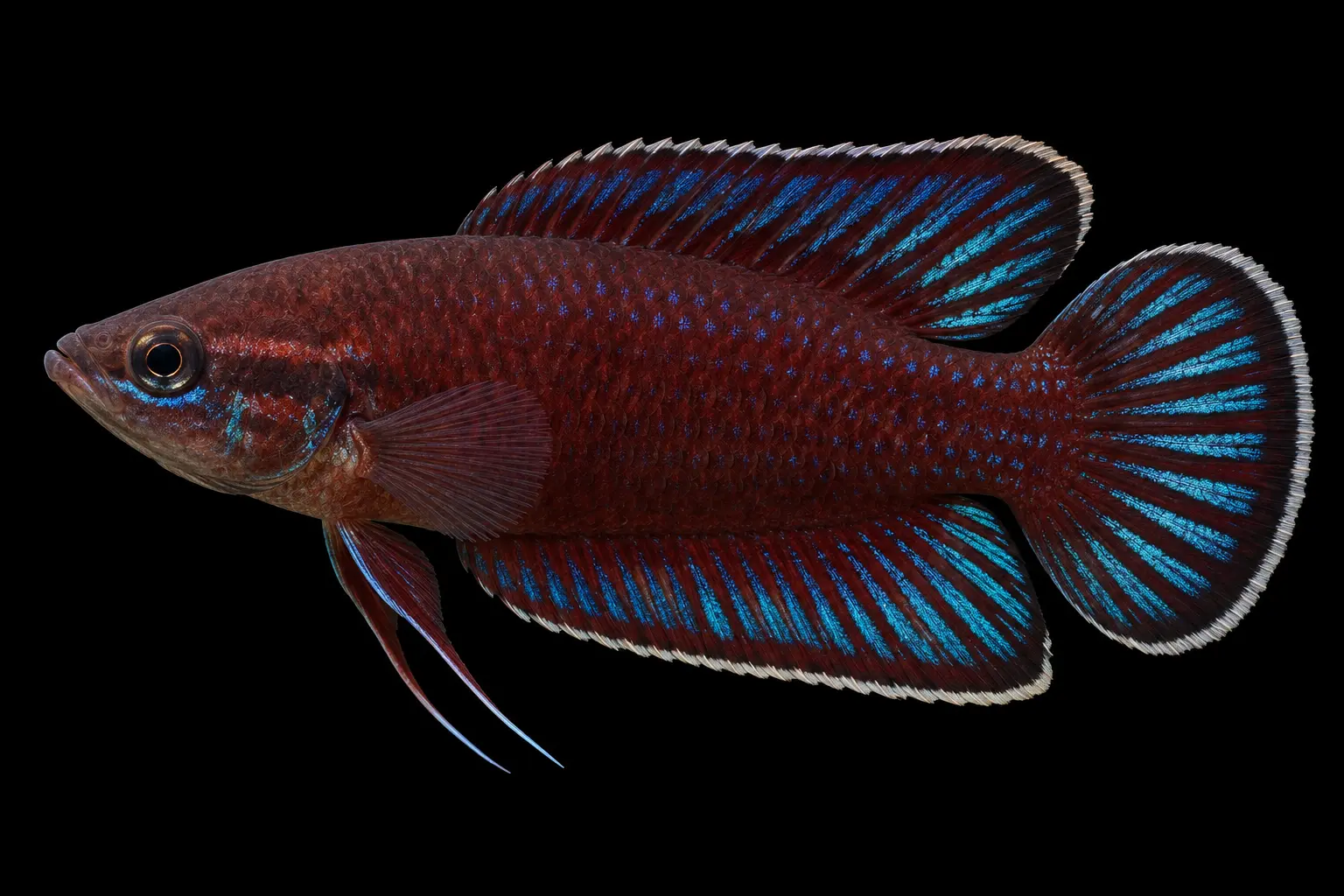
Opal Licorice Gourami
Description
3.5 cm TL · reported maximum
Temperature 25–30 °C · pH 4–6 · Conductivity 3–75 µS/cm · GH 0 °dGH (test reading) · KH 0 °dKH (test reading)genus guidance
Natural food: Live grindal/microworm; Artemia and Daphnia.Prepared food: Dry/frozen acceptance unreliable.Food guidance at genus level
Biology: mature biofilter; species-specific microbial counts are not established.
Maintain very soft acidic water, suitable humic cover and low microbial load around eggs. Preserve locality records; breeding success may differ among populations and remains incompletely understood.
Genus guidance, not a validated protocol for every species; temperature varies with species and season. Zero hardness means below kit detection. The species sheet recommends pH ≤4.5 for breeding; this is separate from general maintenance.
Omitted parameters have no verified range in the sources checked. Habitat or experimental measurements are not safe keeping limits. GH, KH, TDS and conductivity are not interchangeable.
General system guidance: target free ammonia (NH₃) and nitrite (NO₂⁻) at 0 mg/L; account for test detection limits. These are chemical measurements, not microbial counts or each species’ tolerance limits. OATA · 2022. Assess biofilter function through waste processing and water tests, not clarity alone. Biofiltration reference.
Size checked: . Water/food checked: .
Library profile · not for sale
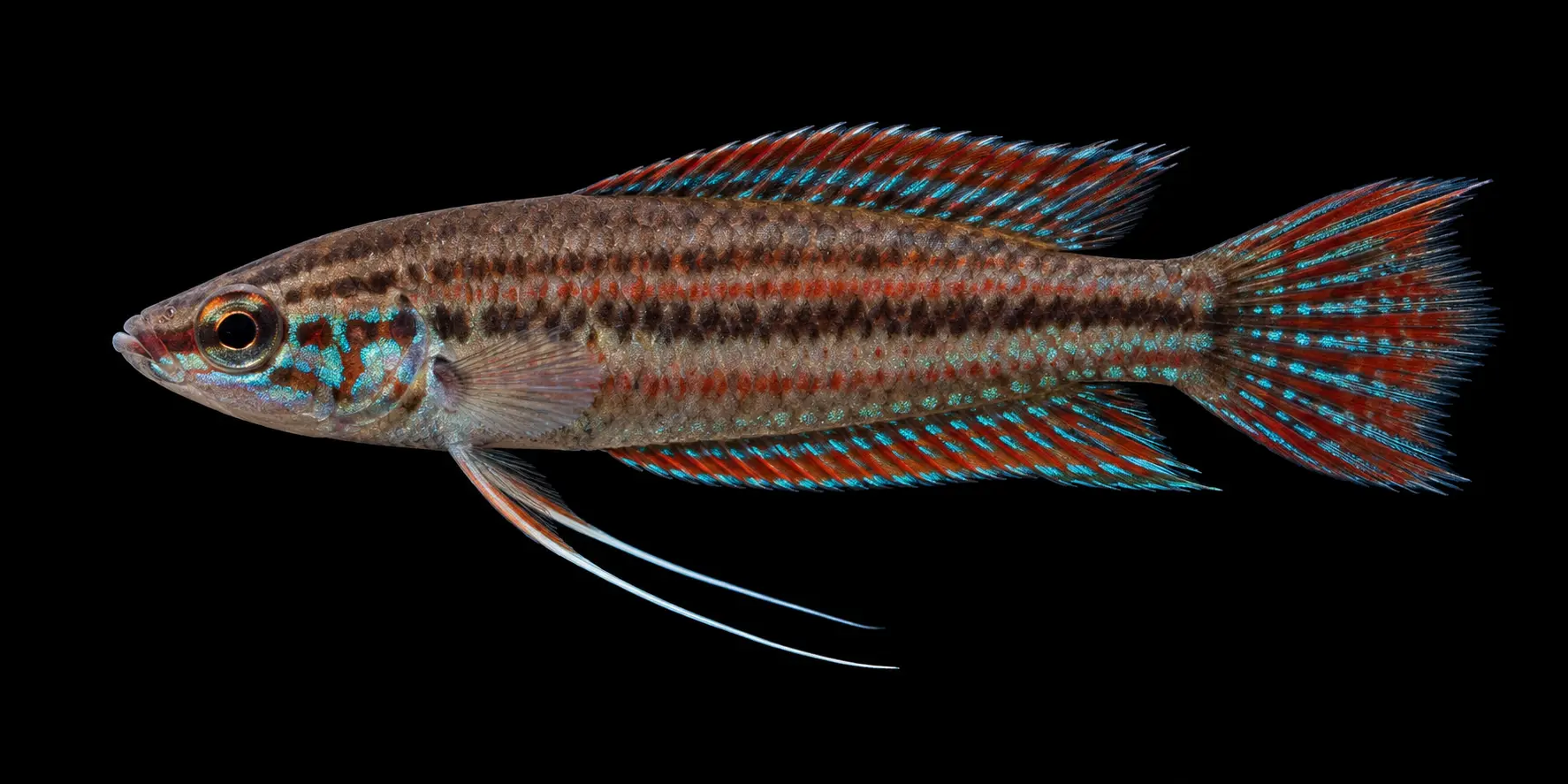
Ornate-tailed Licorice Gourami
Description
3.5 cm TL · reported maximum
Temperature 25–30 °C · pH 4–6 · GH 0 °dGH (test reading) · KH 0 °dKH (test reading)genus guidance
Conductivity ≤40 µS/cmspecies guidance
Natural food: Live grindal/microworm; Artemia and Daphnia.Prepared food: Dry/frozen acceptance unreliable.Food guidance at genus level
Biology: mature biofilter; species-specific microbial counts are not established.
Prepare a quiet specialist setup with very low mineral content, acidic water and breeding caves. Allow courtship space and monitor eggs carefully; successful breeding can be difficult.
Conductivity is species guidance; other numbers are genus guidance. More acidic breeding reports are not general maintenance targets.
Omitted parameters have no verified range in the sources checked. Habitat or experimental measurements are not safe keeping limits. GH, KH, TDS and conductivity are not interchangeable.
General system guidance: target free ammonia (NH₃) and nitrite (NO₂⁻) at 0 mg/L; account for test detection limits. These are chemical measurements, not microbial counts or each species’ tolerance limits. OATA · 2022. Assess biofilter function through waste processing and water tests, not clarity alone. Biofiltration reference.
Size checked: . Water/food checked: .
Library profile · not for sale
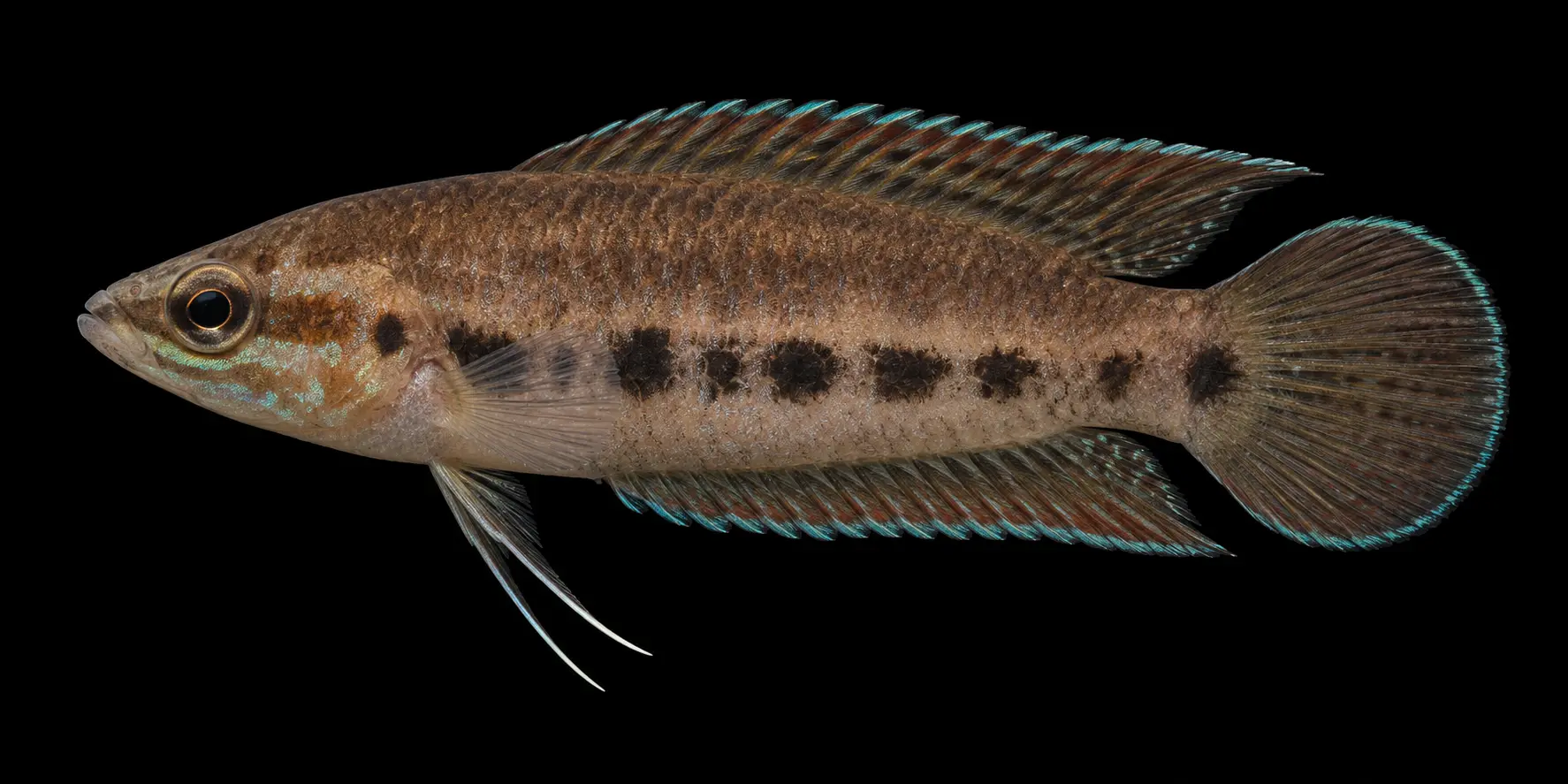
Pahu Licorice Gourami
Description
4 cm TL · reported maximum
Temperature 25–30 °C · pH 4–6 · Conductivity 3–75 µS/cm · GH 0 °dGH (test reading) · KH 0 °dKH (test reading)genus guidance
Natural food: Live grindal/microworm; Artemia and Daphnia.Prepared food: Dry/frozen acceptance unreliable.Food guidance at genus level
Biology: mature biofilter; species-specific microbial counts are not established.
Use very soft acidic water and suitable breeding caves. Check the actual line’s established care and reproductive history; specialist experience is limited and breeding outcomes can vary.
Genus guidance, not a validated protocol for every species; temperature varies with species and season. Zero hardness means below kit detection.
Omitted parameters have no verified range in the sources checked. Habitat or experimental measurements are not safe keeping limits. GH, KH, TDS and conductivity are not interchangeable.
General system guidance: target free ammonia (NH₃) and nitrite (NO₂⁻) at 0 mg/L; account for test detection limits. These are chemical measurements, not microbial counts or each species’ tolerance limits. OATA · 2022. Assess biofilter function through waste processing and water tests, not clarity alone. Biofiltration reference.
Size checked: . Water/food checked: .
Library profile · not for sale
Explore freely. Orders, prices and availability have not opened yet.
Page 1 of 2 · 16 matching catalogue records
Explore identity, origin and care context on each species profile. Confirmed stock and ordering will follow when the programme is ready.