Species library · Explore freely. Orders are not open.

LIMNIC / FISH COLLECTION

Tropical Fish

Explore freshwater fishes from forest streams to ancient lakes, with each species’ origin stated individually.

Enter the species journey
01 / CONSOLIDATED COLLECTIONINDONESIAN FOCUS · REGIONAL CONTEXT

One collection.
Many freshwater worlds.

Ricefishes, sailfins, rainbowfishes, gouramis, rasboras, barbs, loaches, catfish, halfbeaks, licorice gouramis and hillstream loaches now sit in one continuous Tropical Fish catalogue.

Browse by group or search a species and its recorded origin. The collection centres on Indonesia and also retains regional profiles, including the Malaysian Parosphromenus harveyi. Inclusion here does not establish Indonesian native status. Each profile links to its habitat, sources and conservation record.

02 / CONSOLIDATED VISUAL CATALOGUE

Freshwater diversity, in context.

86 illustrated species profiles, including Parosphromenus and Gastromyzon. Open a profile to explore its origin, care context and sources.

86 records

Reading descriptions & sources

Fish SL excludes the tail fin; TL follows source endpoints, usually to the tail tip. CL measures the carapace only. Values are not converted between methods. Where a maximum is unverified, the largest examined specimen remains labelled as a specimen, not an adult maximum or a guaranteed final size.

Water ranges retain their source and scope: species, genus or group. Habitat measurements and experimental conditions are labelled separately from aquarium guidance. Missing numbers are not estimated. Prepared food is not always accepted; adapt food size to life stage and check feeding response. This summary does not replace system planning, quarantine, compatibility or adult space.

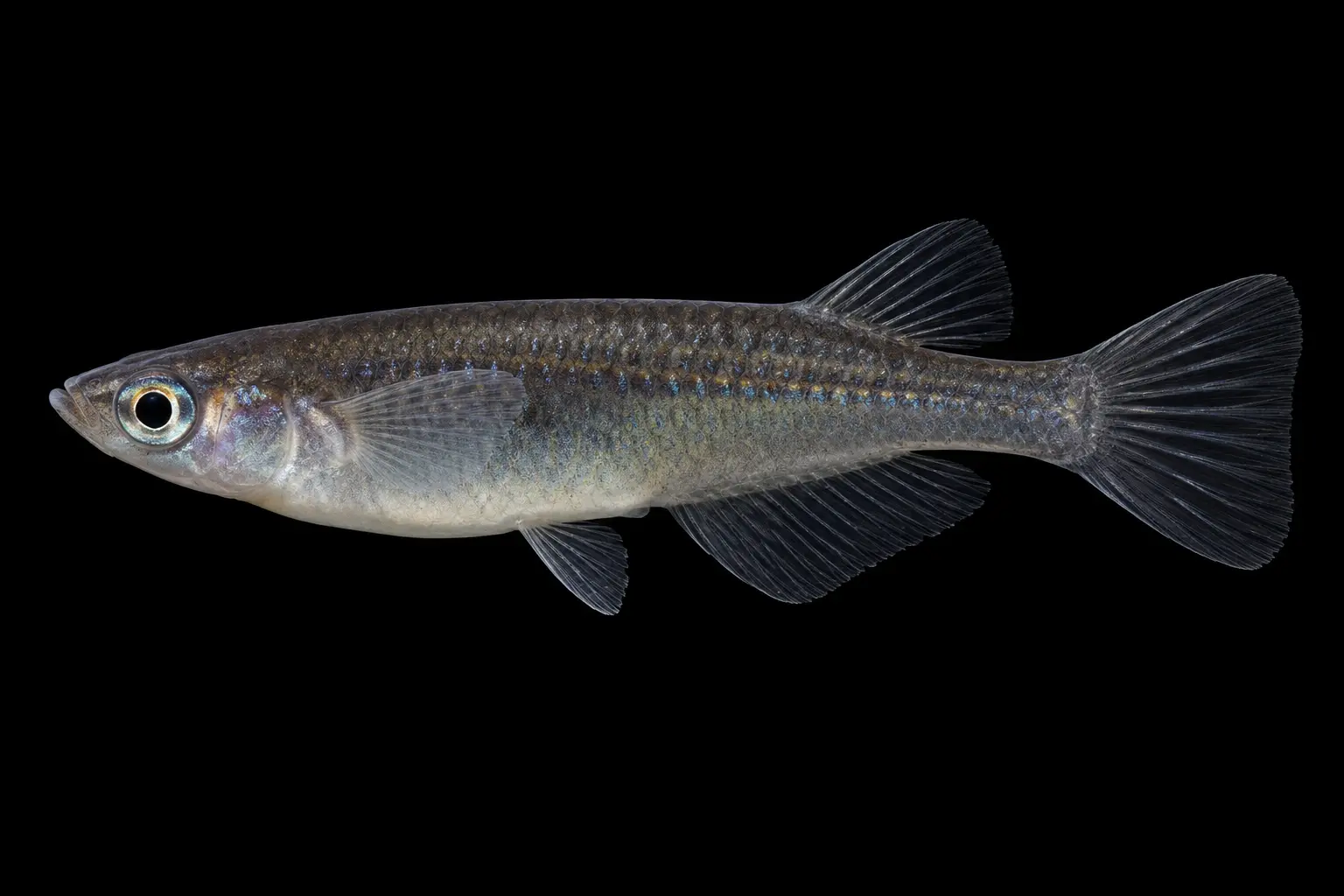
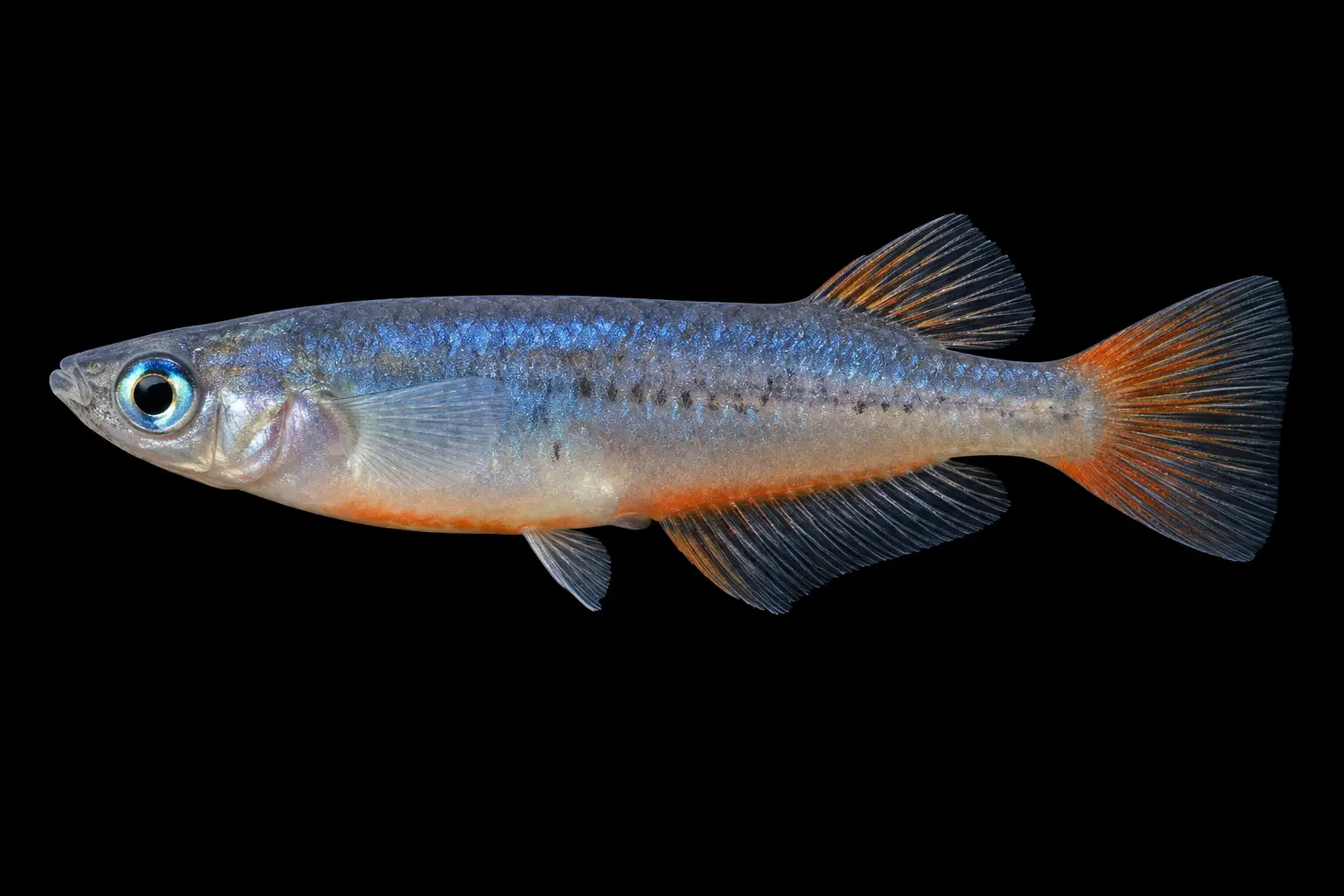
Oryzias woworae

Oryzias woworae

Daisy’s Ricefish

Origin
Muna Island, Southeast Sulawesi
Habitat evidence
Habitat review pending

Description

Largest examined specimen: 2.8 cm SLExamined specimens · not an adult maximum

Temperature 24–28 °C · KH >4 °dKH · Dissolved O₂ >5 mg/Lgroup guidance

pH 7.0–8.5habitat record — not an aquarium target

Natural food: Artemia nauplii, Daphnia, copepodsPrepared food: Mouth-sized powder/flakes/granulesFood guidance at group level

Biology: mature biofilter; species-specific microbial counts are not established.

Sources & limits

Keep a peaceful group in clean, oxygenated freshwater with plants and open swimming space. Maintain stable, buffered conditions and offer tiny prepared, live, or frozen foods.

Genus-level guidance

River/lake group husbandry; pH is a habitat range. KH/O₂ have lower bounds only, not invented upper limits.

Omitted parameters have no verified range in the sources checked. Habitat or experimental measurements are not safe keeping limits. GH, KH, TDS and conductivity are not interchangeable.

General system guidance: target free ammonia (NH₃) and nitrite (NO₂⁻) at 0 mg/L; account for test detection limits. These are chemical measurements, not microbial counts or each species’ tolerance limits. OATA · 2022. Assess biofilter function through waste processing and water tests, not clarity alone. Biofiltration reference.

Size checked: . Water/food checked: .

Status reviewAssessment not verified

Library profile · not for sale
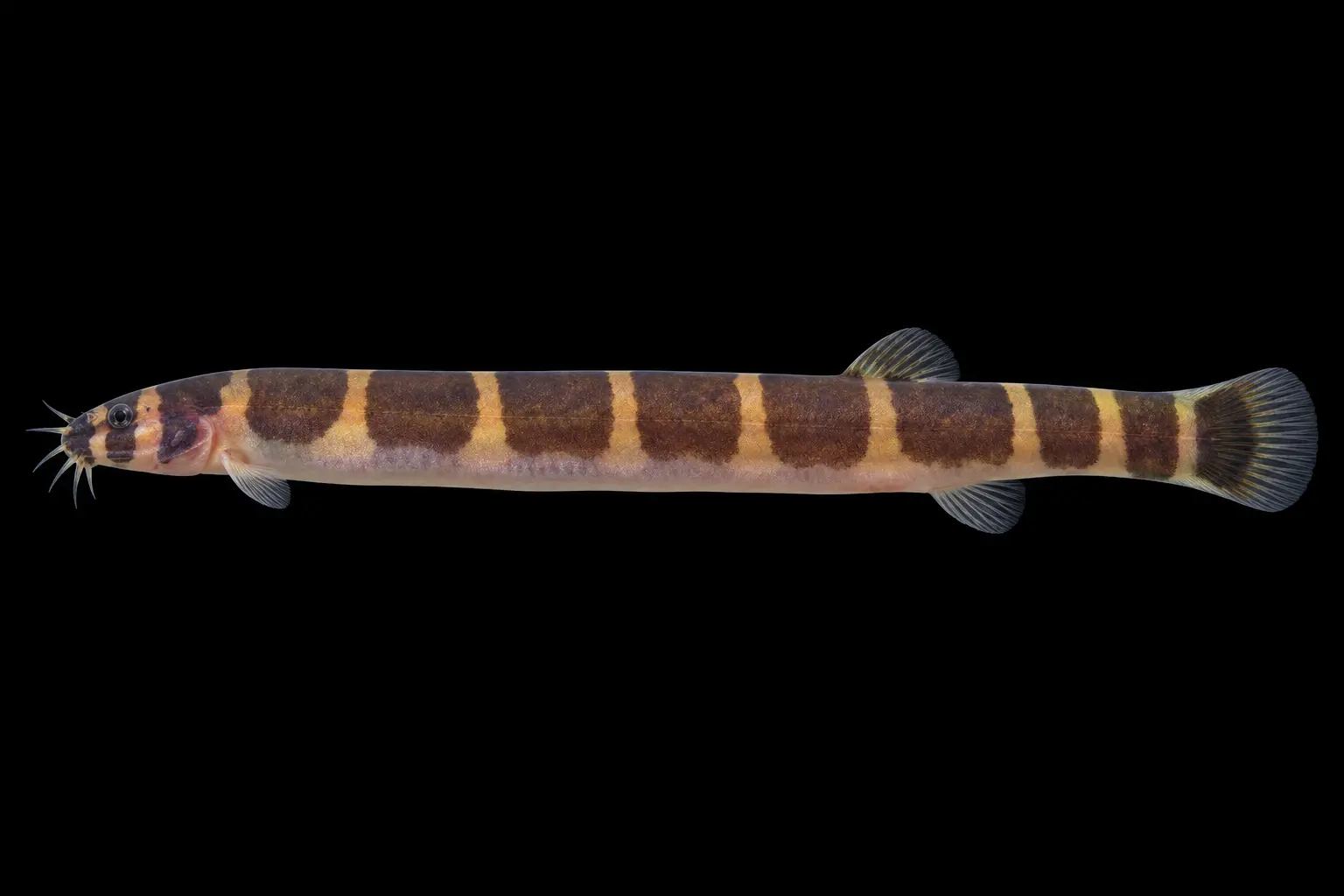
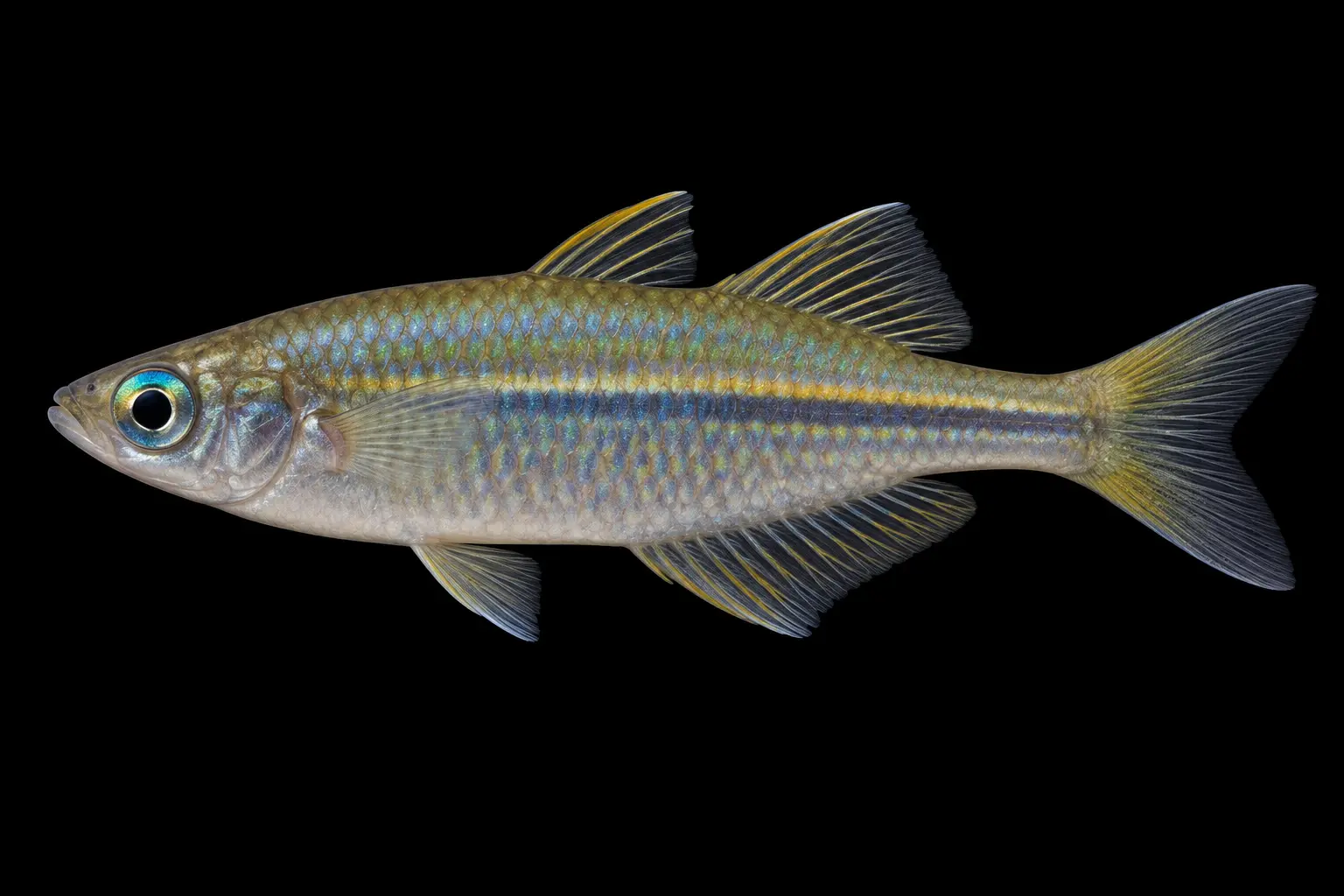
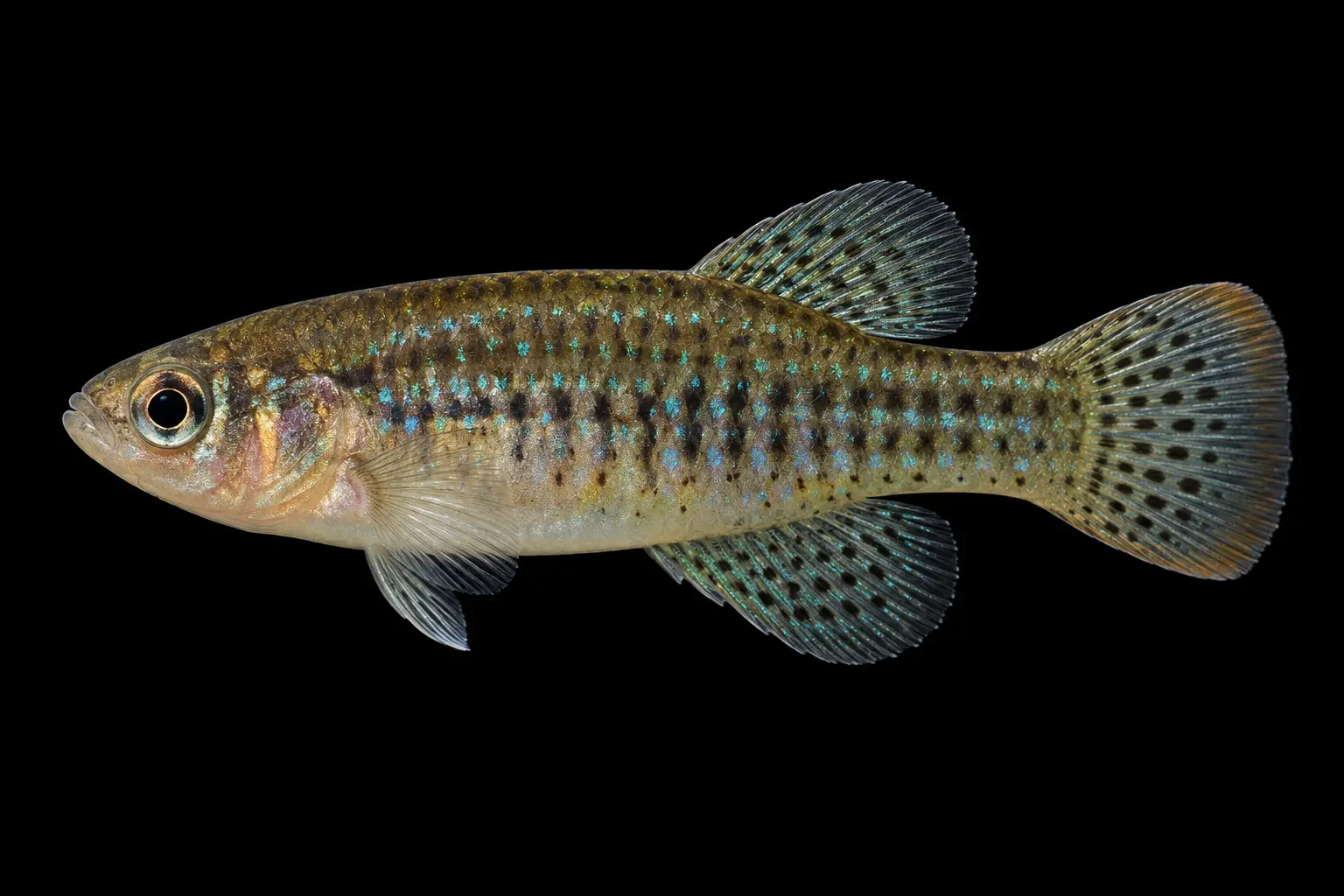
Oryzias nigrimas

Oryzias nigrimas

Black Buntingi

Origin
Lake Poso, Central Sulawesi
Habitat evidence
Habitat review pending

Description

Largest examined specimen: 5.1 cm SLExamined specimens · not an adult maximum

Temperature 25–30 °C · KH >4 °dKH · Dissolved O₂ >5 mg/Lgroup guidance

pH 7.0–8.5habitat record — not an aquarium target

Natural food: Artemia nauplii, Daphnia, copepodsPrepared food: Mouth-sized powder/flakes/granulesFood guidance at group level

Biology: mature biofilter; species-specific microbial counts are not established.

Sources & limits

Provide a spacious aquarium for an active school, with open water, planted margins, and strong oxygenation. Maintain warm, buffered alkaline freshwater and feed suitably small varied foods.

River/lake group husbandry; pH is a habitat range. KH/O₂ have lower bounds only, not invented upper limits. Offer several small meals.

Omitted parameters have no verified range in the sources checked. Habitat or experimental measurements are not safe keeping limits. GH, KH, TDS and conductivity are not interchangeable.

General system guidance: target free ammonia (NH₃) and nitrite (NO₂⁻) at 0 mg/L; account for test detection limits. These are chemical measurements, not microbial counts or each species’ tolerance limits. OATA · 2022. Assess biofilter function through waste processing and water tests, not clarity alone. Biofiltration reference.

Size checked: . Water/food checked: .

Status reviewAssessment not verified

Library profile · not for sale
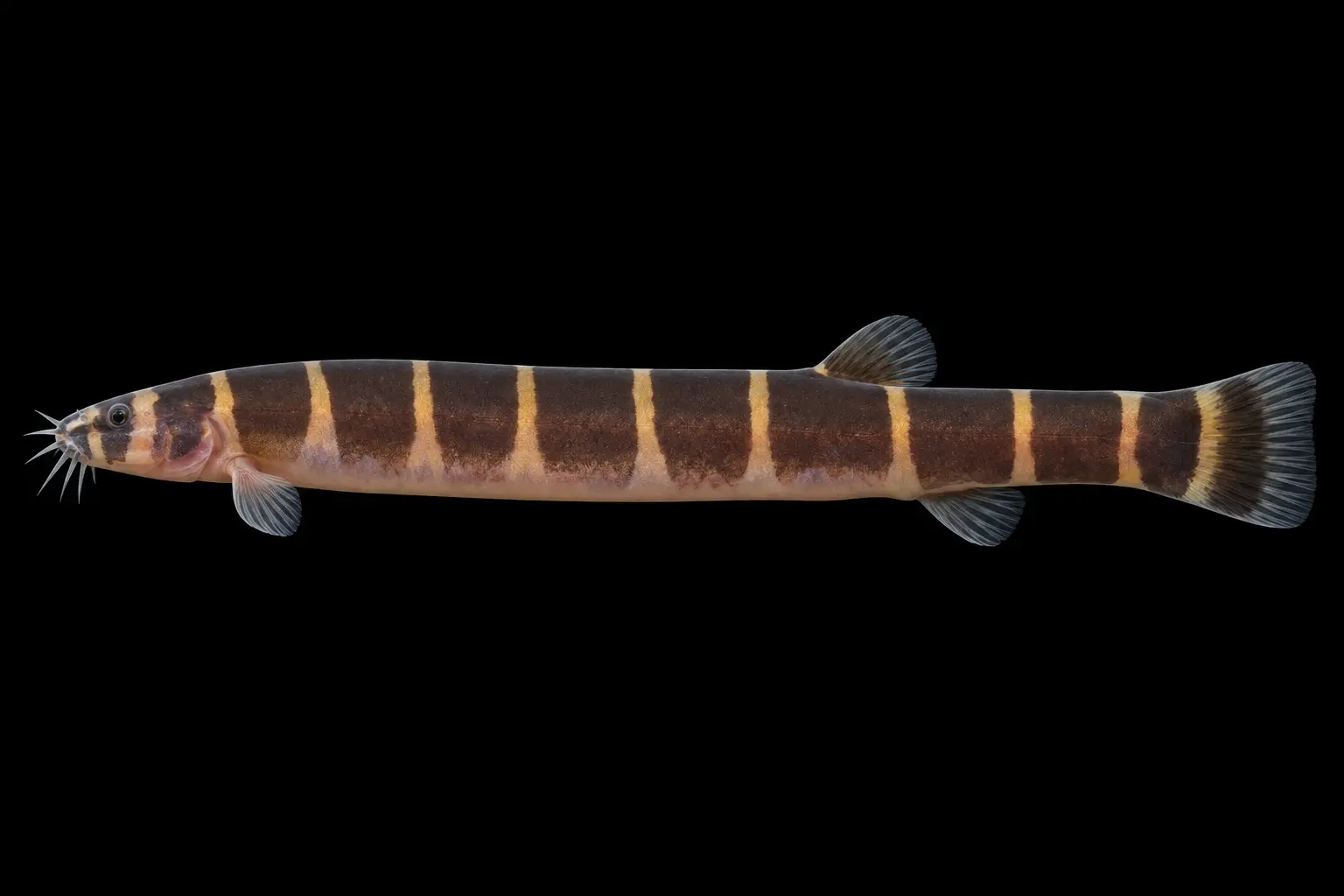
Marosatherina ladigesi

Marosatherina ladigesi

Celebes Rainbowfish

Origin
South Sulawesi karst streams
Habitat evidence
Habitat review pending

Description

Reported maximum: 8 cm SL

Temperature 22–28 °C · pH 7.0–8.0 · GH 10–25 °dGHspecies guidance

Natural food: Daphnia, bloodworm, ArtemiaPrepared food: Flakes/granulesFood guidance at group level

Biology: mature biofilter; species-specific microbial counts are not established.

Sources & limits

Keep a group with peaceful companions, planted refuges, and open swimming space. Use clean, mineral-containing neutral to alkaline water; provide varied small foods and maintain a secure cover.

Group-level guidance

Water: species account. Named foods: rainbowfish group guidance; verify acceptance. These are aquarium guidance, not wild limits.

Omitted parameters have no verified range in the sources checked. Habitat or experimental measurements are not safe keeping limits. GH, KH, TDS and conductivity are not interchangeable.

General system guidance: target free ammonia (NH₃) and nitrite (NO₂⁻) at 0 mg/L; account for test detection limits. These are chemical measurements, not microbial counts or each species’ tolerance limits. OATA · 2022. Assess biofilter function through waste processing and water tests, not clarity alone. Biofiltration reference.

Size checked: . Water/food checked: .

Status reviewAssessment not verified

Library profile · not for sale
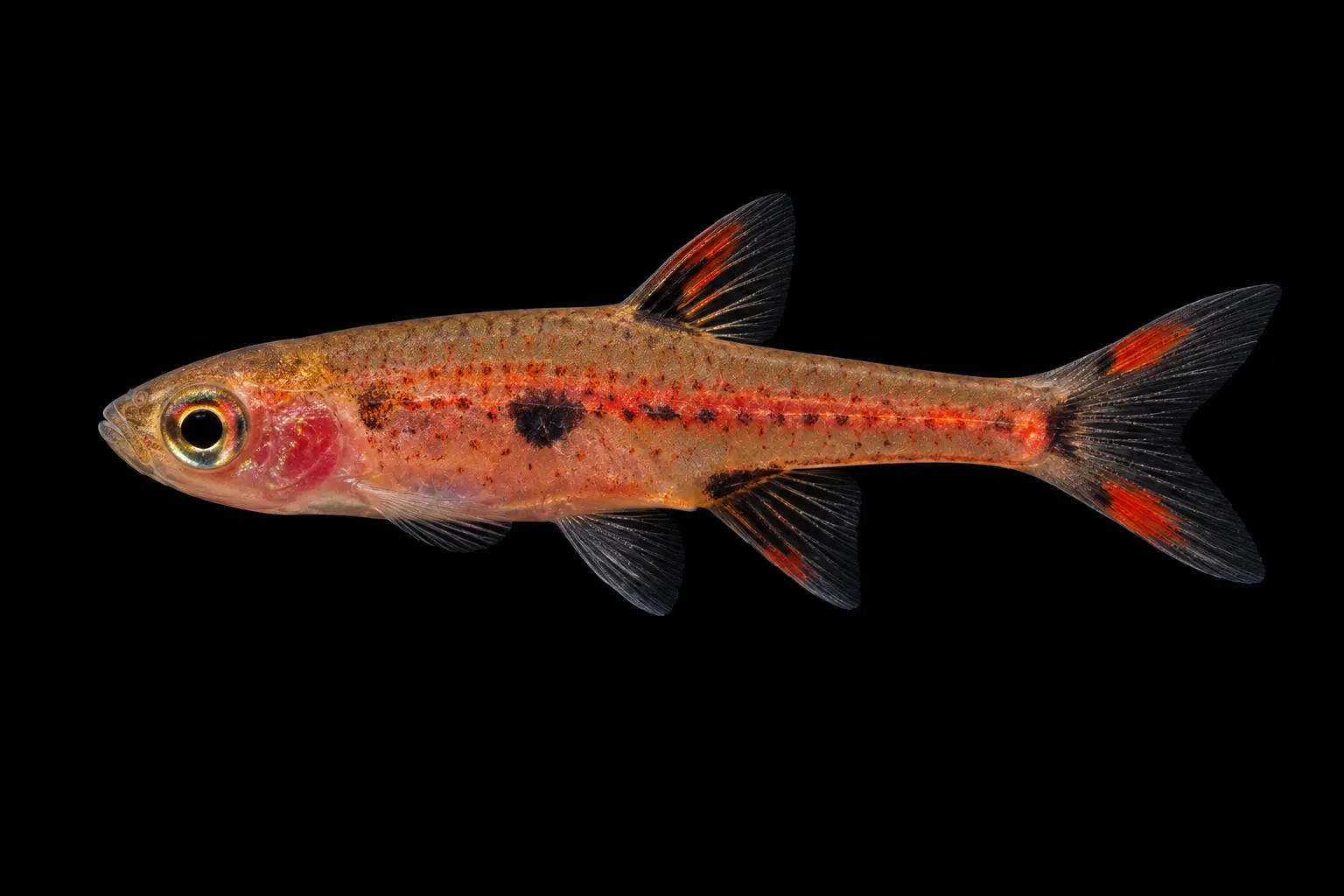
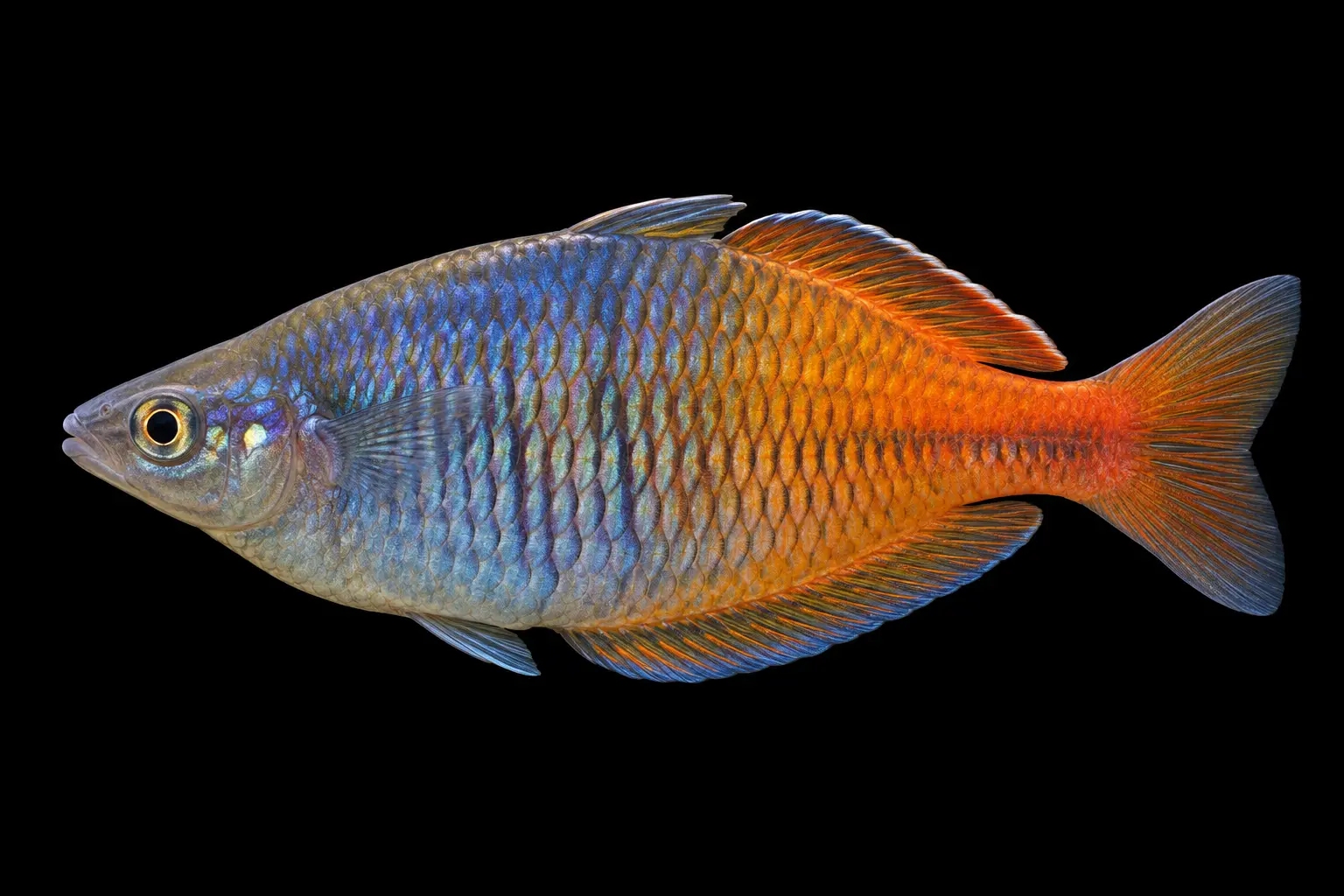
Melanotaenia boesemani

Melanotaenia boesemani

Boeseman’s Rainbowfish

Origin
Ayamaru region, West Papua
Habitat evidence
Habitat review pending

Description

Reported maximum: 12 cm (measurement unspecified)

Temperature 27–30 °C · pH 7.0–8.0 · GH 10–20 °dGHspecies guidance

Natural food: Daphnia, bloodworm, ArtemiaPrepared food: Flakes/granulesFood guidance at group level

Biology: mature biofilter; species-specific microbial counts are not established.

Sources & limits

Keep an active group in a spacious planted aquarium with open swimming lanes. Maintain stable water chemistry suited to the stock, good oxygenation, and a varied diet.

Water: species account. Named foods: rainbowfish group guidance; verify acceptance. These are aquarium guidance, not wild limits.

FishBase records 9 cm SL; ANGFA reports 12 cm without defining the measurement. These figures are not directly comparable.

Omitted parameters have no verified range in the sources checked. Habitat or experimental measurements are not safe keeping limits. GH, KH, TDS and conductivity are not interchangeable.

General system guidance: target free ammonia (NH₃) and nitrite (NO₂⁻) at 0 mg/L; account for test detection limits. These are chemical measurements, not microbial counts or each species’ tolerance limits. OATA · 2022. Assess biofilter function through waste processing and water tests, not clarity alone. Biofiltration reference.

Size checked: . Water/food checked: .

Reported ENDirect assessment review pending

Library profile · not for sale

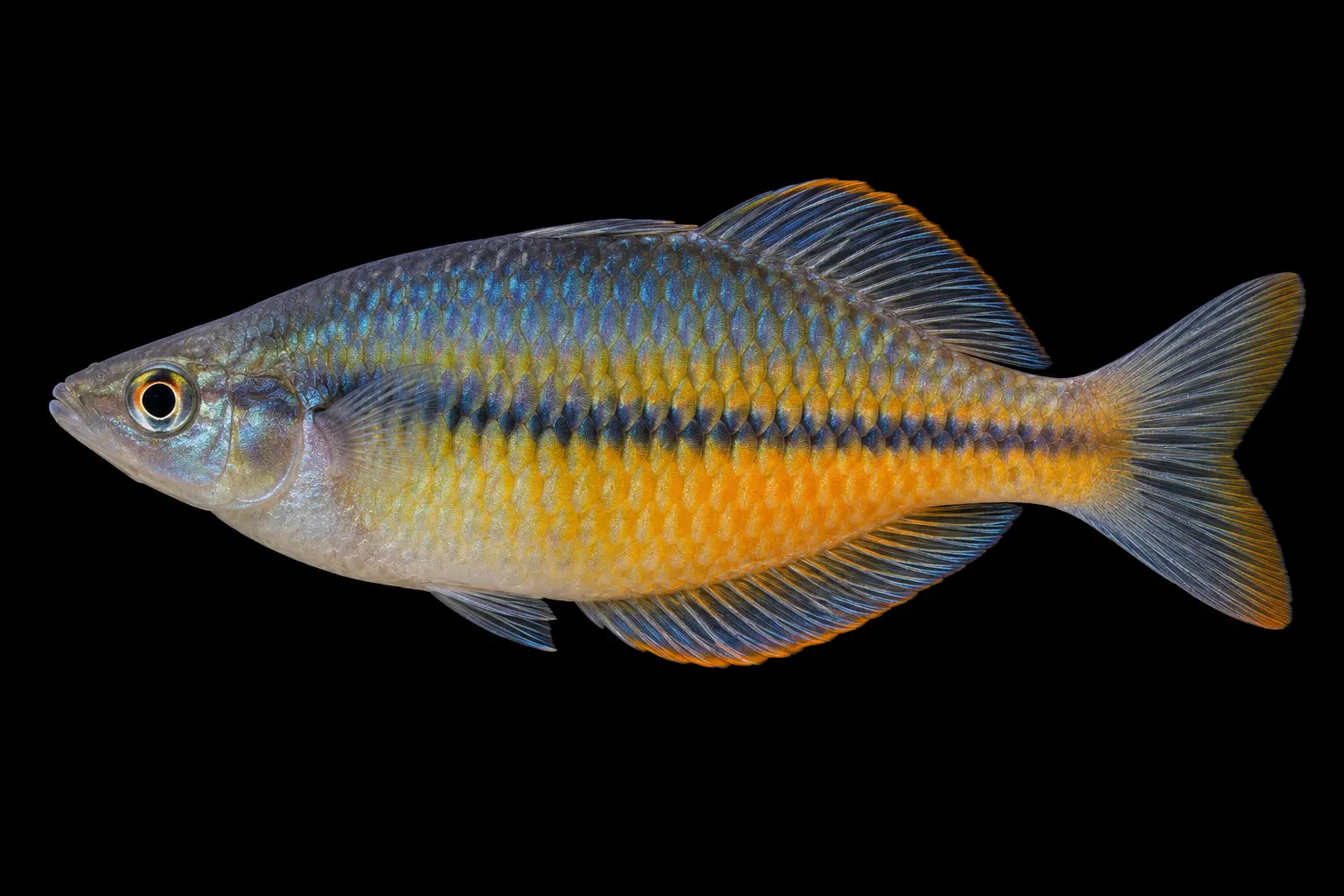
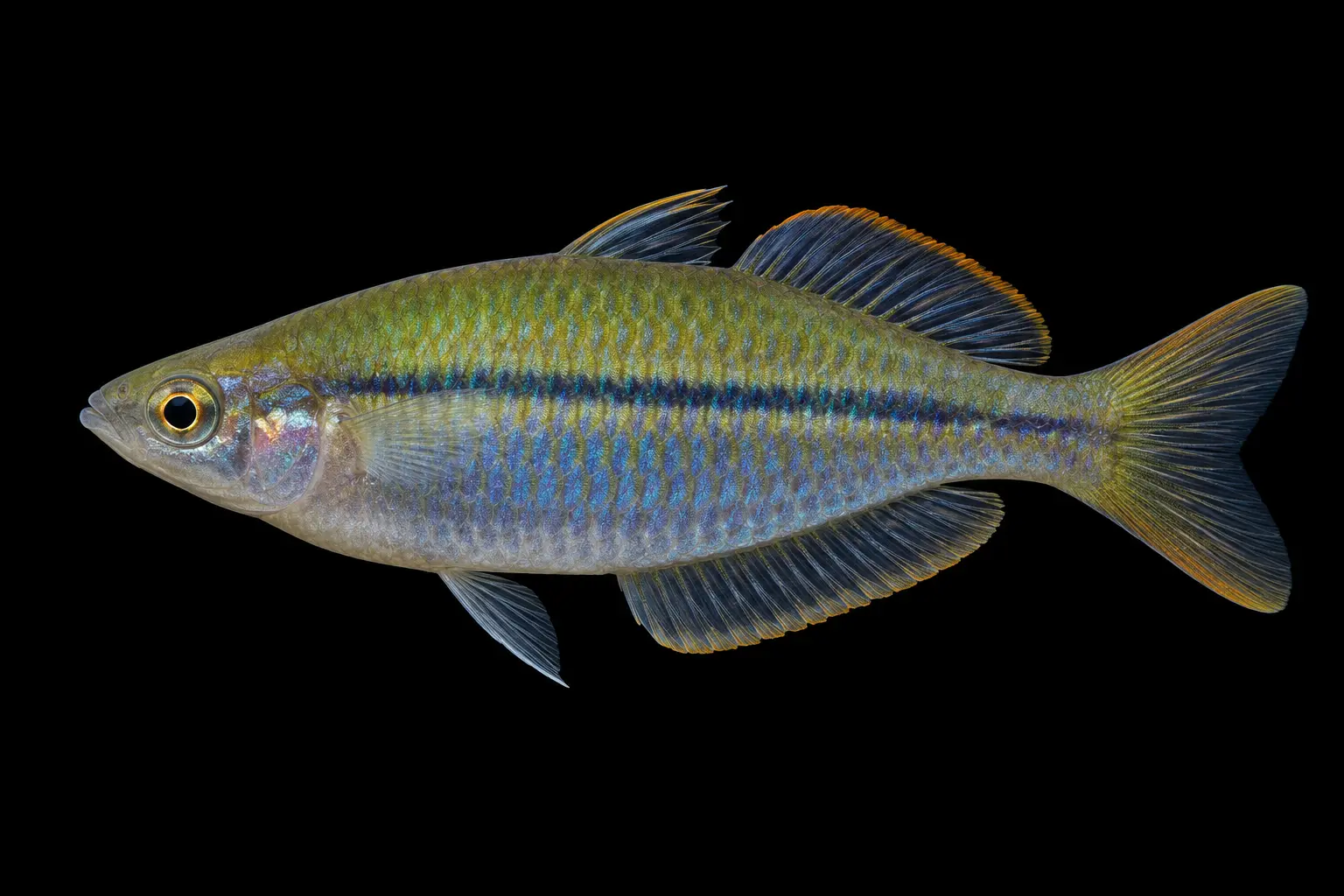
Melanotaenia praecox

Melanotaenia praecox

Dwarf Neon Rainbowfish

Origin
Mamberamo system, Papua
Habitat evidence
Habitat review pending

Description

Reported maximum: 8 cm (measurement unspecified)

Temperature 23–28 °C · pH 6.8–7.5 · GH 5–15 °dGHspecies guidance

Natural food: Daphnia, bloodworm, ArtemiaPrepared food: Flakes/granulesFood guidance at group level

Biology: mature biofilter; species-specific microbial counts are not established.

Sources & limits

Keep a lively group with planted cover and open swimming space. Maintain clean, well-oxygenated water near neutral, feed varied small foods, and make regular matched water changes.

Water: species account. Named foods: rainbowfish group guidance; verify acceptance. These are aquarium guidance, not wild limits.

FishBase records 5 cm SL; the specialist account reports a maximum of 8 cm without specifying SL or TL.

Omitted parameters have no verified range in the sources checked. Habitat or experimental measurements are not safe keeping limits. GH, KH, TDS and conductivity are not interchangeable.

General system guidance: target free ammonia (NH₃) and nitrite (NO₂⁻) at 0 mg/L; account for test detection limits. These are chemical measurements, not microbial counts or each species’ tolerance limits. OATA · 2022. Assess biofilter function through waste processing and water tests, not clarity alone. Biofiltration reference.

Size checked: . Water/food checked: .

Reported LCDirect assessment review pending

Library profile · not for sale

Melanotaenia parva

Melanotaenia parva

Lake Kurumoi Rainbowfish

Origin
Lake Kurumoi, West Papua
Habitat evidence
Habitat review pending

Description

Reported maximum: 9–10 cm (measurement unspecified)

Specific water ranges are not yet verified.

Natural food: Daphnia, bloodworm, ArtemiaPrepared food: Flakes/granulesFood guidance at group level

Biology: mature biofilter; species-specific microbial counts are not established.

Sources & limits

Keep a group in a mature aquarium with planted margins and generous swimming space. Maintain stable, clean freshwater, offer varied small foods, and avoid crowding active adults.

Species-specific numerical aquarium ranges were not verified. Food is group guidance; confirm locality and acceptance.

FishBase records 6.7 cm SL; ANGFA reports 9–10 cm without defining the measurement. The displayed figure retains that uncertainty.

Omitted parameters have no verified range in the sources checked. Habitat or experimental measurements are not safe keeping limits. GH, KH, TDS and conductivity are not interchangeable.

General system guidance: target free ammonia (NH₃) and nitrite (NO₂⁻) at 0 mg/L; account for test detection limits. These are chemical measurements, not microbial counts or each species’ tolerance limits. OATA · 2022. Assess biofilter function through waste processing and water tests, not clarity alone. Biofiltration reference.

Size checked: . Water/food checked: .

Reported CRDirect assessment review pending

Library profile · not for sale

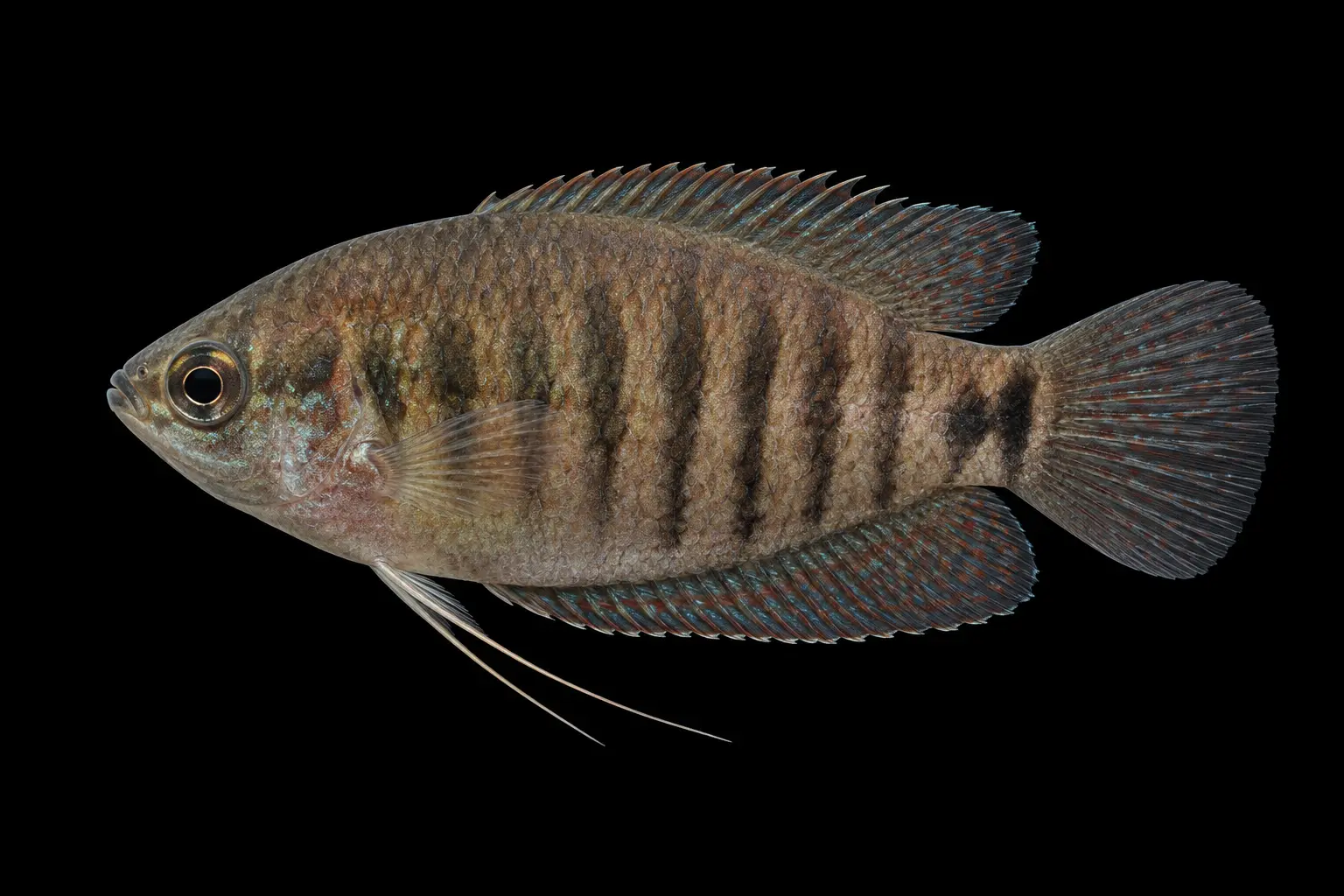
Sphaerichthys osphromenoides

Sphaerichthys osphromenoides

Chocolate Gourami

Origin
Sumatra and Kalimantan blackwaters
Habitat evidence
Habitat review pending

Description

Reported maximum: 6 cm TL

Temperature 26–31 °C · pH 4.0–6.5 · GH 0–3 °dGHspecies guidance

Natural food: Artemia nauplii, Daphnia, grindal/microwormPrepared food: Dried foods may be refused; acceptance must be demonstrated

Biology: mature biofilter; species-specific microbial counts are not established.

Sources & limits

Use very soft, acidic water in a mature, gently filtered aquarium with dense plants and sheltered areas. Keep peaceful companions, provide small varied foods, and maintain excellent cleanliness.

Wild-population soft-water guidance; maintain stable chemistry and verify feeding. Some captive lines have different histories.

Omitted parameters have no verified range in the sources checked. Habitat or experimental measurements are not safe keeping limits. GH, KH, TDS and conductivity are not interchangeable.

General system guidance: target free ammonia (NH₃) and nitrite (NO₂⁻) at 0 mg/L; account for test detection limits. These are chemical measurements, not microbial counts or each species’ tolerance limits. OATA · 2022. Assess biofilter function through waste processing and water tests, not clarity alone. Biofiltration reference.

Size checked: . Water/food checked: .

Status reviewAssessment not verified

Library profile · not for sale

Sphaerichthys vaillanti

Sphaerichthys vaillanti

Vaillant’s Chocolate Gourami

Origin
Kapuas basin, West Kalimantan
Habitat evidence
Habitat review pending

Description

Reported maximum: 3.9 cm SL

Temperature 21–25 °C · pH 3.5–6.5 · GH 0–3 °dGHspecies guidance

Natural food: Artemia nauplii, Daphnia, grindal/microwormPrepared food: Dried foods may be refused; acceptance must be demonstrated

Biology: mature biofilter; species-specific microbial counts are not established.

Sources & limits

Provide very soft, acidic water, dense planting, shaded retreats, and gentle filtration. Offer small live or accepted prepared foods; watch social aggression and maintain consistently clean water.

Wild-population soft-water guidance; maintain stable chemistry and verify feeding. Some captive lines have different histories.

FishBase records 3.9 cm SL; the IGL husbandry account describes adult males around 6 cm total length, a different measurement and claim.

Omitted parameters have no verified range in the sources checked. Habitat or experimental measurements are not safe keeping limits. GH, KH, TDS and conductivity are not interchangeable.

General system guidance: target free ammonia (NH₃) and nitrite (NO₂⁻) at 0 mg/L; account for test detection limits. These are chemical measurements, not microbial counts or each species’ tolerance limits. OATA · 2022. Assess biofilter function through waste processing and water tests, not clarity alone. Biofiltration reference.

Size checked: . Water/food checked: .

Status reviewAssessment not verified

Library profile · not for sale

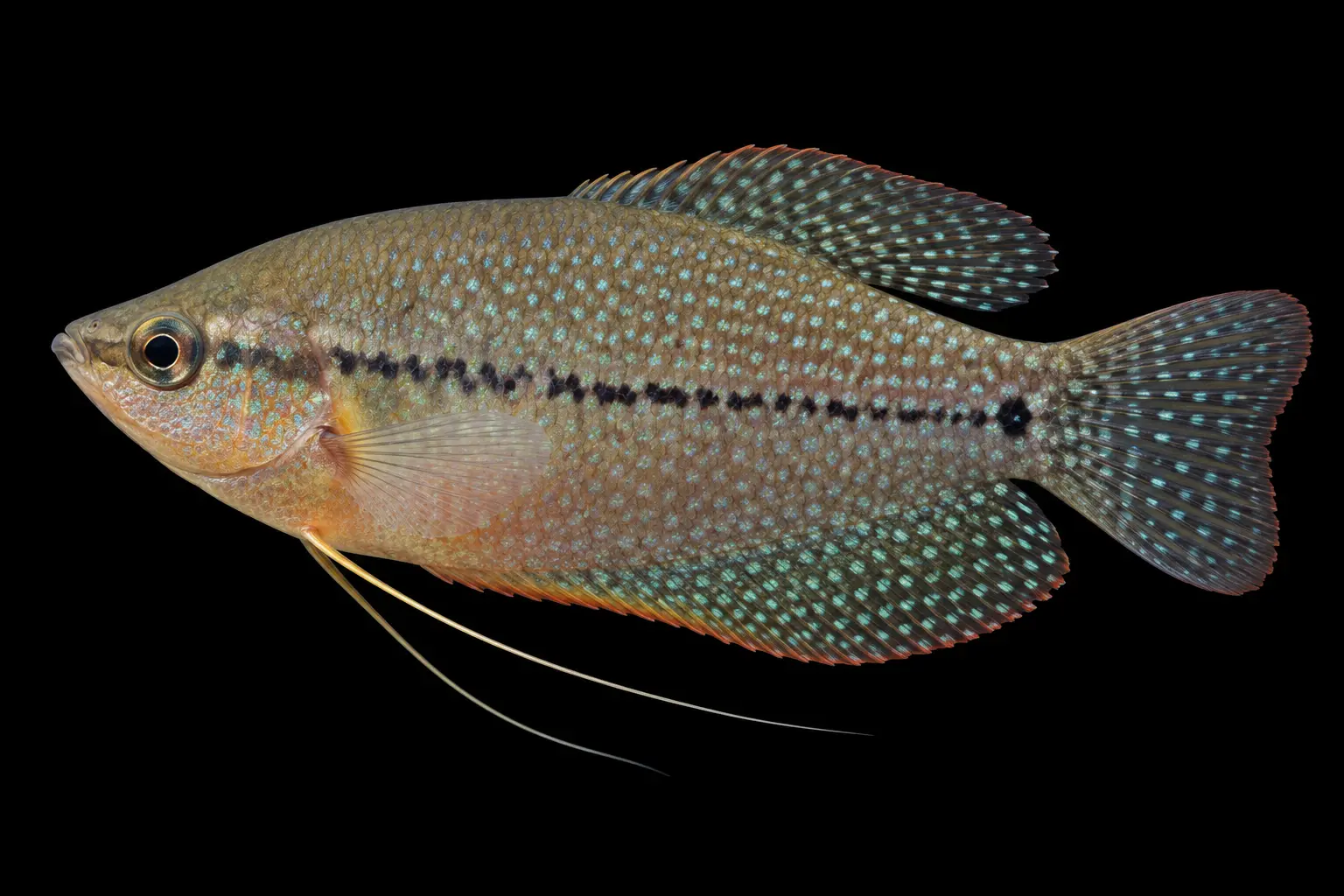
Trichopodus leerii

Trichopodus leerii

Pearl Gourami

Origin
Sumatra and Kalimantan; wider Sundaland range
Habitat evidence
Habitat review pending

Description

Reported maximum: 12 cm TL

Temperature 24–30 °C · pH 5.5–8.0 · GH 2–30 °dGHspecies guidance

Natural food: Daphnia, bloodworm, TubifexPrepared food: Flakes/granules/pelletsFood guidance at group level

Biology: mature biofilter; species-specific microbial counts are not established.

Sources & limits

Provide dense plants, shaded retreats, gentle flow, and unobstructed access to surface air. Choose peaceful companions and offer varied small foods while monitoring territorial behaviour during breeding.

Group-level guidance

Species water ranges; named foods follow group guidance for established aquarium gouramis. Confirm stock history.

Omitted parameters have no verified range in the sources checked. Habitat or experimental measurements are not safe keeping limits. GH, KH, TDS and conductivity are not interchangeable.

General system guidance: target free ammonia (NH₃) and nitrite (NO₂⁻) at 0 mg/L; account for test detection limits. These are chemical measurements, not microbial counts or each species’ tolerance limits. OATA · 2022. Assess biofilter function through waste processing and water tests, not clarity alone. Biofiltration reference.

Size checked: . Water/food checked: .

Status reviewAssessment not verified

Library profile · not for sale

Pangio kuhlii

Pangio kuhlii

Kuhli Loach

Origin
Java; closely related striped loaches occur across Sundaland
Habitat evidence
Habitat review pending

Description

Reported maximum: 12 cm TL

Temperature 21–26 °C · pH 3.5–7.0 · GH 0–8 °dGHspecies guidance

Natural food: Daphnia, Artemia, bloodworm, small wormsPrepared food: Small sinking dry foods

Biology: mature biofilter; species-specific microbial counts are not established.

Sources & limits

Keep a social group over soft sand with plentiful shaded shelters. Maintain clean, soft freshwater and gentle flow; provide sinking foods so shy bottom dwellers receive enough.

Group-level guidance

Specialist aquarium guidance; acclimation and provenance still matter. This is not a measured optimum or a breeding protocol.

Omitted parameters have no verified range in the sources checked. Habitat or experimental measurements are not safe keeping limits. GH, KH, TDS and conductivity are not interchangeable.

General system guidance: target free ammonia (NH₃) and nitrite (NO₂⁻) at 0 mg/L; account for test detection limits. These are chemical measurements, not microbial counts or each species’ tolerance limits. OATA · 2022. Assess biofilter function through waste processing and water tests, not clarity alone. Biofiltration reference.

Size checked: . Water/food checked: .

Status reviewAssessment not verified

Library profile · not for sale

Pangio semicincta

Pangio semicincta

Half-banded Kuhli Loach

Origin
Sumatra and Kalimantan records
Habitat evidence
Habitat review pending

Description

Maximum length not verifiedMaximum not verified

Temperature 21–26 °C · pH 3.5–7.0 · GH 0–8 °dGHspecies guidance

Natural food: Daphnia, Artemia, bloodworm, small wormsPrepared food: Small sinking dry foods

Biology: mature biofilter; species-specific microbial counts are not established.

Sources & limits

Keep a group on soft sand with shaded wood and sheltered crevices. Use a mature aquarium, gentle filtration, and sinking foods; check that secretive fish actually eat.

Group-level guidance

Specialist aquarium guidance; acclimation and provenance still matter. This is not a measured optimum or a breeding protocol.

The checked FishBase species account has no maximum-length field. A number from a different authorship entry was excluded.

Omitted parameters have no verified range in the sources checked. Habitat or experimental measurements are not safe keeping limits. GH, KH, TDS and conductivity are not interchangeable.

General system guidance: target free ammonia (NH₃) and nitrite (NO₂⁻) at 0 mg/L; account for test detection limits. These are chemical measurements, not microbial counts or each species’ tolerance limits. OATA · 2022. Assess biofilter function through waste processing and water tests, not clarity alone. Biofiltration reference.

Size checked: . Water/food checked: .

Status reviewAssessment not verified

Library profile · not for sale

Boraras brigittae

Boraras brigittae

Chili Rasbora

Origin
Southwestern Kalimantan blackwaters
Habitat evidence
Habitat review pending

Description

Reported maximum: 3.5 cm TL

Temperature 20–28 °C · pH 4.0–7.0 · GH 1–10 °dGHspecies guidance

Natural food: Small Daphnia, ArtemiaPrepared food: Mouth-sized flakes/granules

Biology: mature biofilter; species-specific microbial counts are not established.

Sources & limits

Keep a peaceful shoal in a mature, shaded aquarium with fine-leaved plants and gentle filtration. Provide soft, acidic freshwater and tiny foods; avoid competitive or predatory companions.

Group-level guidance

Specialist aquarium guidance; acclimation and provenance still matter. This is not a measured optimum or a breeding protocol.

Omitted parameters have no verified range in the sources checked. Habitat or experimental measurements are not safe keeping limits. GH, KH, TDS and conductivity are not interchangeable.

General system guidance: target free ammonia (NH₃) and nitrite (NO₂⁻) at 0 mg/L; account for test detection limits. These are chemical measurements, not microbial counts or each species’ tolerance limits. OATA · 2022. Assess biofilter function through waste processing and water tests, not clarity alone. Biofiltration reference.

Size checked: . Water/food checked: .

Status reviewAssessment not verified

Library profile · not for sale

Explore freely. Orders, prices and availability have not opened yet.

Page 1 of 8 · 86 matching catalogue records

JAVA & BALI / REGIONAL COLLECTION

Discover Java and Bali.

Six additional tropical species connect the catalogue to Java and Bali. Island records are stated individually: presence in Java does not automatically establish a native population in Bali. These are research profiles, subject to availability and verified provenance.

Large carnivores from Java are presented separately: Hampala macrolepidota · Hemibagrus nemurus.

Dahruddin et al. (2017) · Hasan et al. (2021) · Ng & Kottelat (2013)

GOURAMIS / INDONESIAN NATIVE RECORDS

Explore the gourami collection.

Eleven gourami and related labyrinth-fish species are documented here, alongside the separate licorice-gourami records. All four Sphaerichthys species are included. Colour forms such as blue, gold and opaline are grouped under Trichopodus trichopterus.

Native-range checks: snakeskin gourami (Trichopodus pectoralis) is introduced in Indonesia. Sparkling gourami (Trichopsis pumila) has conflicting Indonesian range records and is excluded from this confirmed list. Betta and pikeheads remain in their dedicated collections. Low & Lim (2012) · Catalog of Fishes: T. pumila

Expanded native-fish research register.

88 accepted-name records are grouped only for scanning. This is a curated ornamental-relevance register, not a claim to enumerate every freshwater fish in Indonesia.

Rasboras, barbs and algae grazers

13 taxa

Parosphromenus, Gastromyzon, gouramis and the Java–Bali additions have visual profiles and research register entries. Sources on each profile support identity and distribution; catalogue artwork cannot authenticate an animal.

03 / RESEARCH RECORD

Sources and verification rules.

Accepted names, native distribution, conservation assessment, image identity and image licence are checked as separate evidence fields.

  1. Dahruddin et al. (2017), freshwater fishes of Java and Bali: DNA barcodes, native records and introduced species.
  2. Hasan et al. (2021), updated Rasbora baliensis distribution checklist.
  3. Parenti (2008), ricefish revision and original locality records.
  4. Fricke, Eschmeyer & Van der Laan (eds), Catalog of Fishes — accepted names and original descriptions.
  5. Kottelat (2013), The Fishes of the Inland Waters of Southeast Asia — regional catalogue and core bibliography.
  6. Roberts (1989), The Freshwater Fishes of Western Borneo (Kalimantan Barat, Indonesia).
  7. Britz & Kottelat (2008), Paedocypris carbunculus from Central Kalimantan.
  8. Tan (2009), Rasbora patrickyapi from Central Kalimantan.
  9. Allen & Cross (1980), rainbowfishes of northern New Guinea, including the Lake Sentani and Tami taxa.
  10. Allen, Unmack & Hadiaty (2015), Melanotaenia rubrivittata and the Papuan rainbowfish research context.
  11. Shi et al. (2021), diagnoses of Parosphromenus juelinae and P. kishii from Indonesia.
  12. Schindler & Linke (2012), original descriptions of Parosphromenus gunawani and P. phoenicurus.
  13. FishBase — species-level distribution, ecology, size and current Red List summaries.
  14. Wikimedia Commons — item-level documentary references and reuse licences retained on applicable cards.

Care before collection.

Explore identity, origin and care context on each species profile. Confirmed stock and ordering will follow when the programme is ready.

Our approach
Back to Fish CollectionAbout LIMNIC