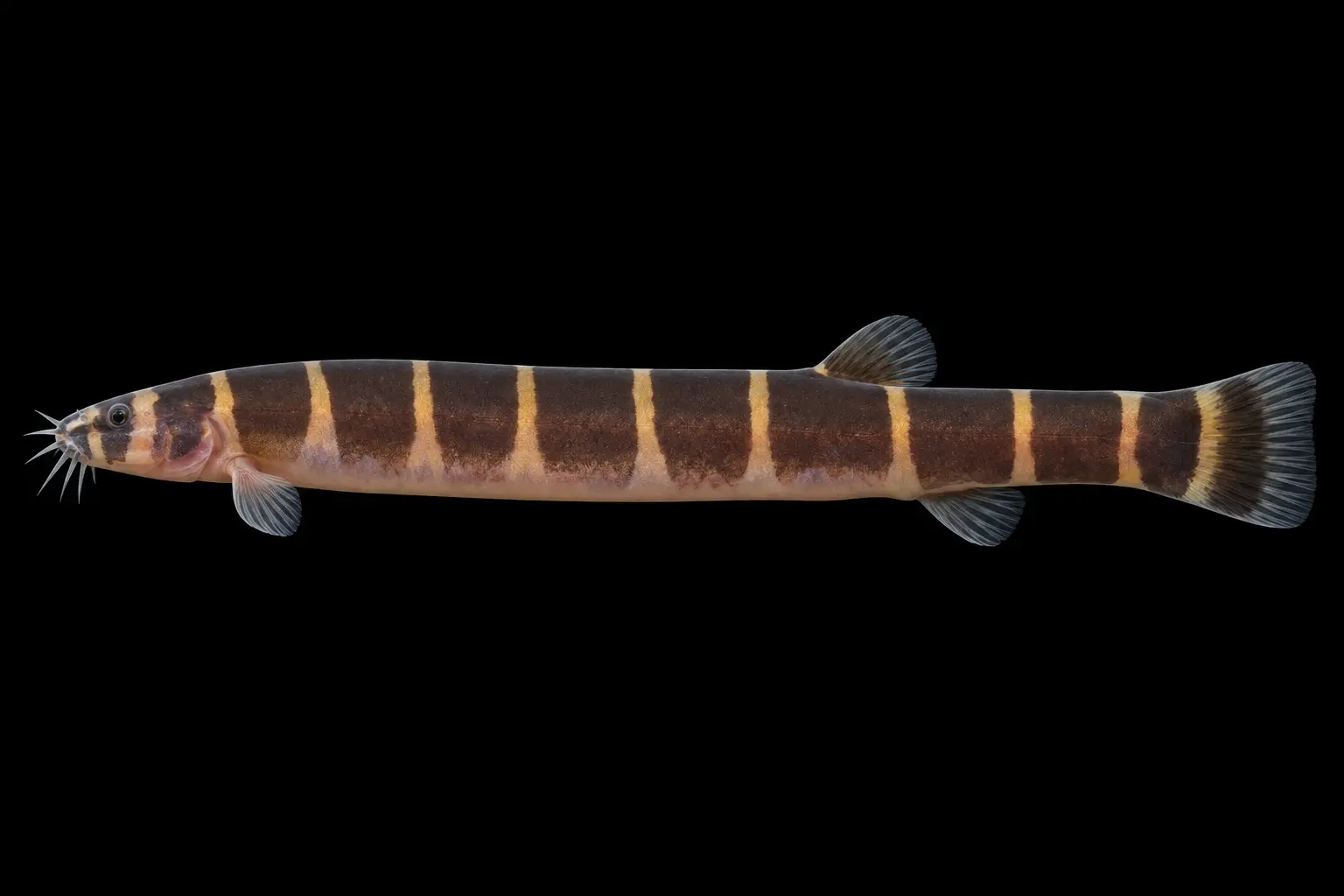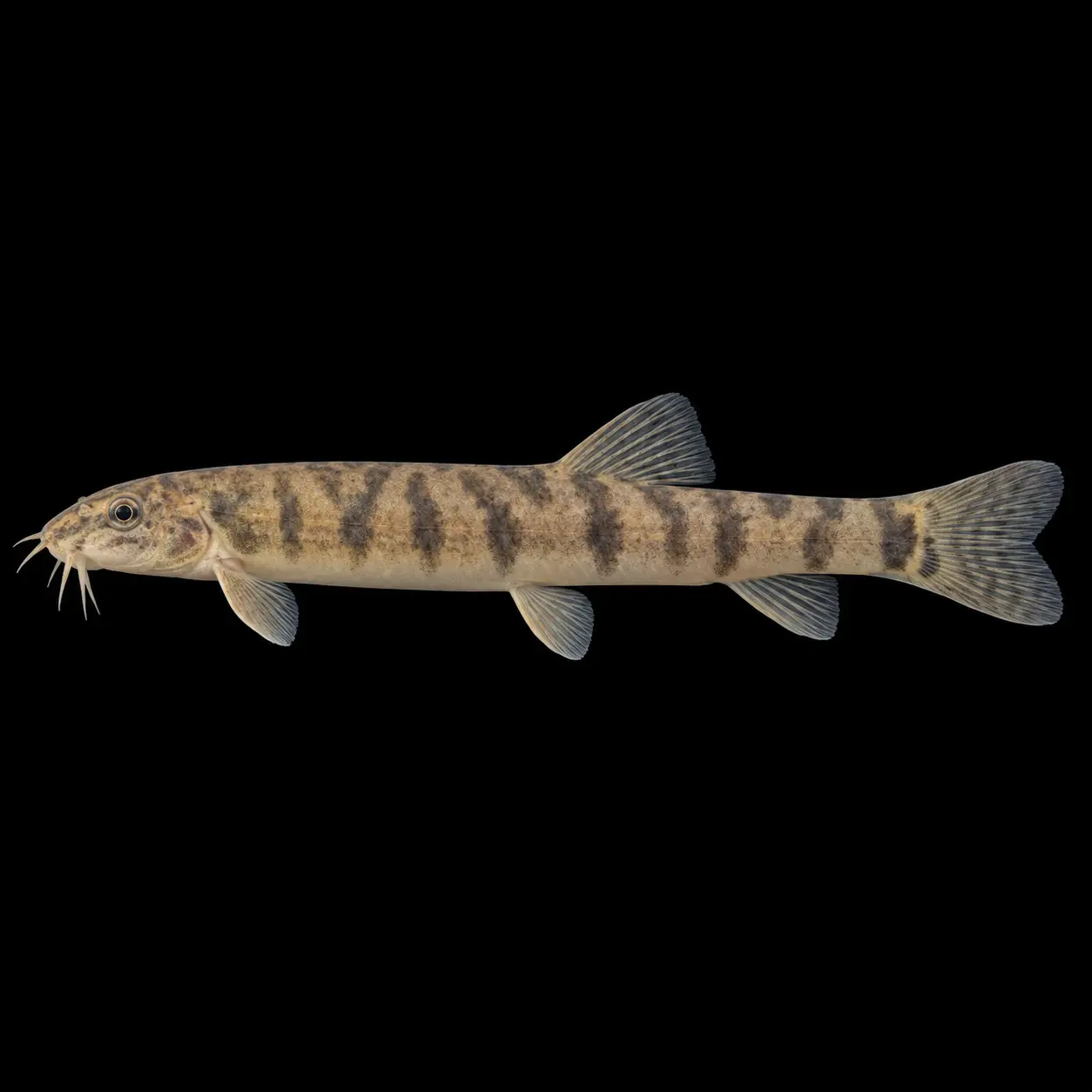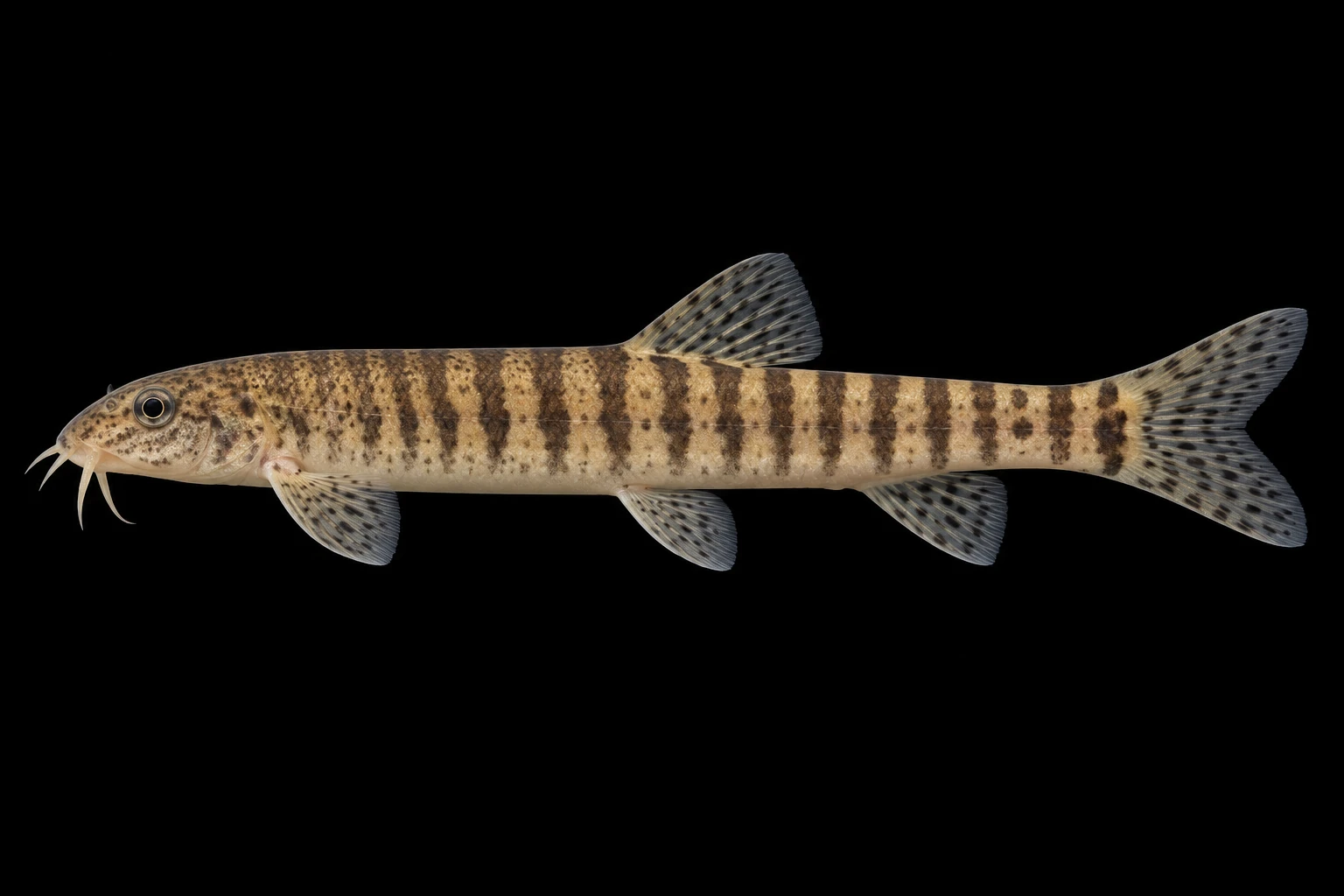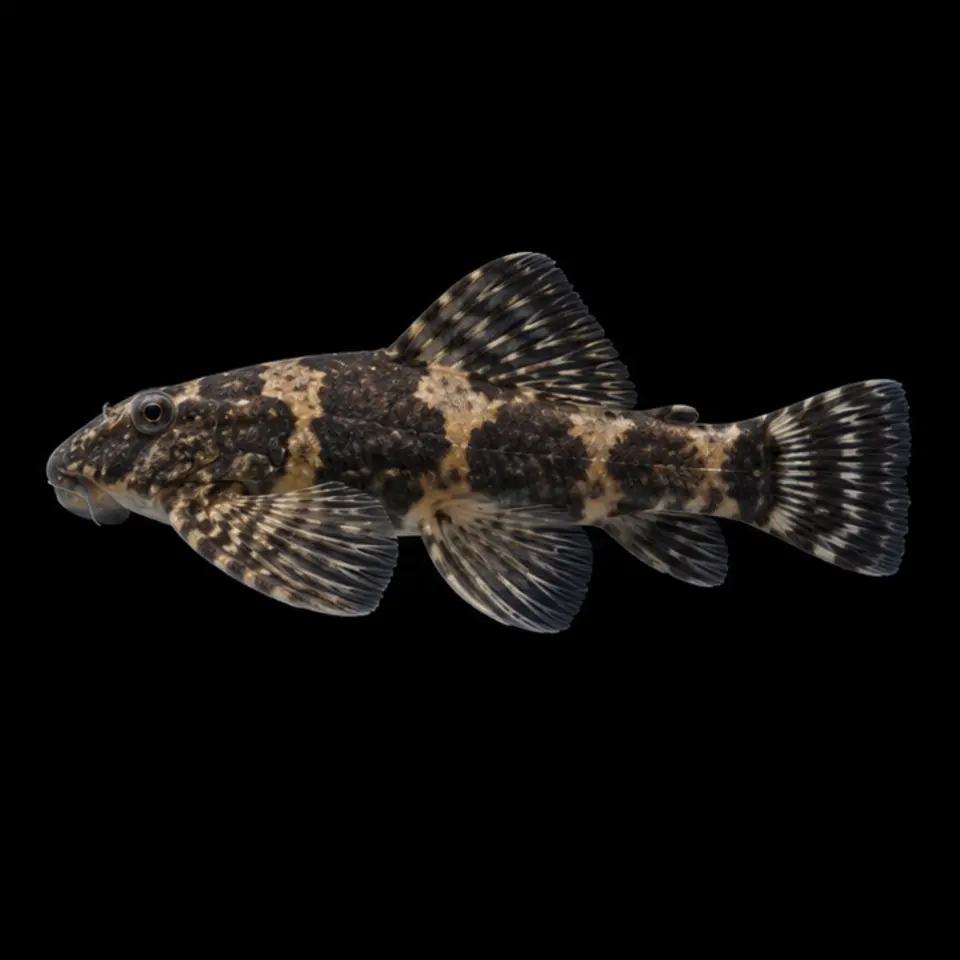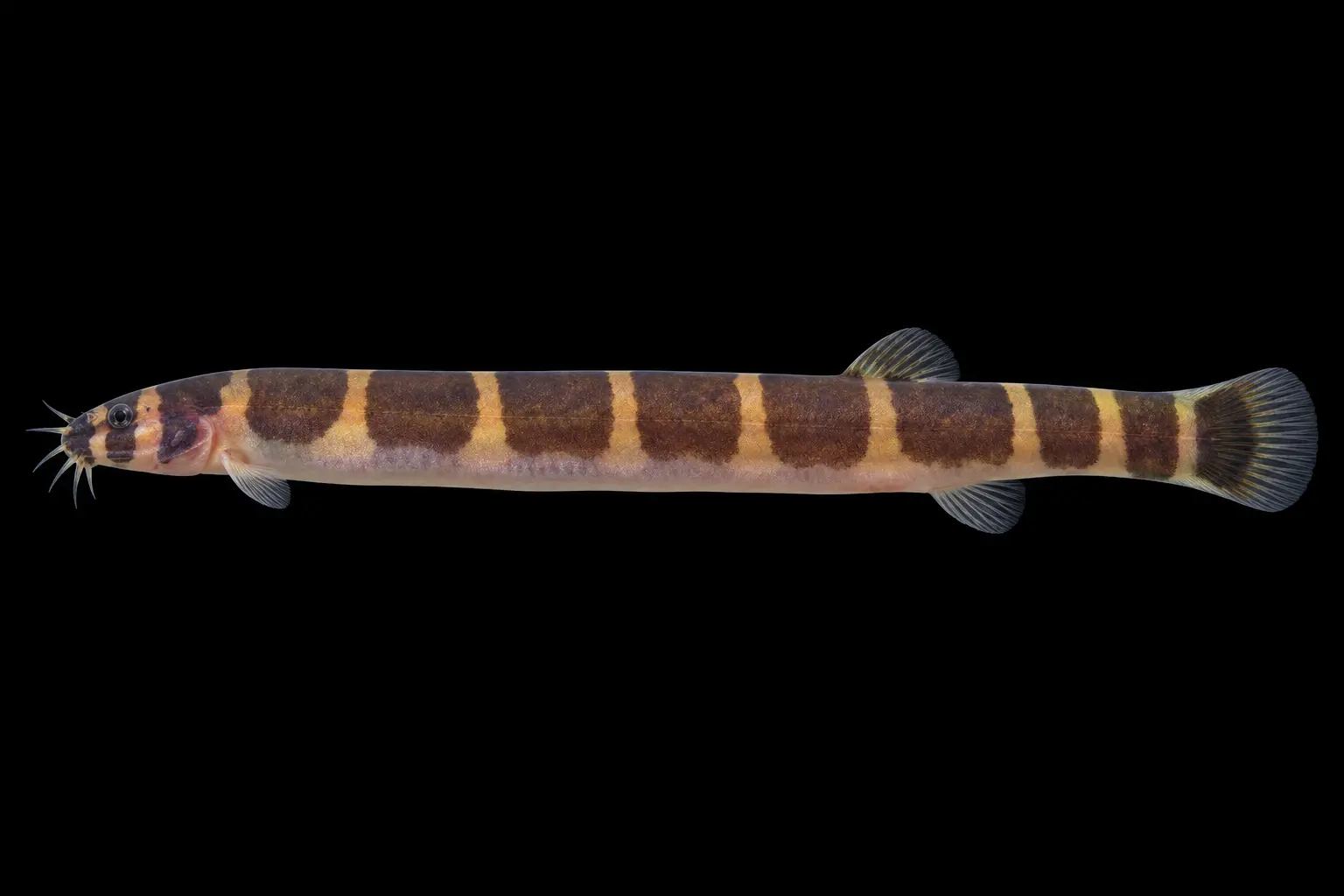
Identity and origin
- Origin
- Java; closely related striped loaches occur across Sundaland
- Identity
- Accepted species with frequent trade-name confusion
The name kuhli loach is applied broadly in commerce. A LIMNIC record must distinguish this accepted taxon from similar Pangio species.
Description
Reported maximum: 12 cm TL
Temperature 21–26 °C · pH 3.5–7.0 · GH 0–8 °dGHspecies guidance
Natural food: Daphnia, Artemia, bloodworm, small wormsPrepared food: Small sinking dry foods
Biology: mature biofilter; species-specific microbial counts are not established.
Sources & limits
Keep a social group over soft sand with plentiful shaded shelters. Maintain clean, soft freshwater and gentle flow; provide sinking foods so shy bottom dwellers receive enough.
Group-level guidance
Specialist aquarium guidance; acclimation and provenance still matter. This is not a measured optimum or a breeding protocol.
Omitted parameters have no verified range in the sources checked. Habitat or experimental measurements are not safe keeping limits. GH, KH, TDS and conductivity are not interchangeable.
General system guidance: target free ammonia (NH₃) and nitrite (NO₂⁻) at 0 mg/L; account for test detection limits. These are chemical measurements, not microbial counts or each species’ tolerance limits. OATA · 2022. Assess biofilter function through waste processing and water tests, not clarity alone. Biofiltration reference.
- FishBase species ecology; conservative aquarium guidance
- Seriously Fish — specialist aquarium guidance
Size checked: . Water/food checked: .
Before choosing this species
Care-planning notes. Confirm exact requirements for the species and source population.
- Confirm the adult size and social behaviour of the exact species before planning its aquarium.
- Establish biological filtration and stable water conditions before introducing animals.
- Ask for locality, captive history and the actual animal’s feeding record; a catalogue image cannot provide these.
Evidence record
Conservation record: A current assessment has not been verified for this profile. This does not establish Not Evaluated status or imply low risk. Conservation status does not establish legal protection, availability or permission to trade.
Catalogue inclusion confirms a research record, not current stock, legal export, or destination-country import permission.