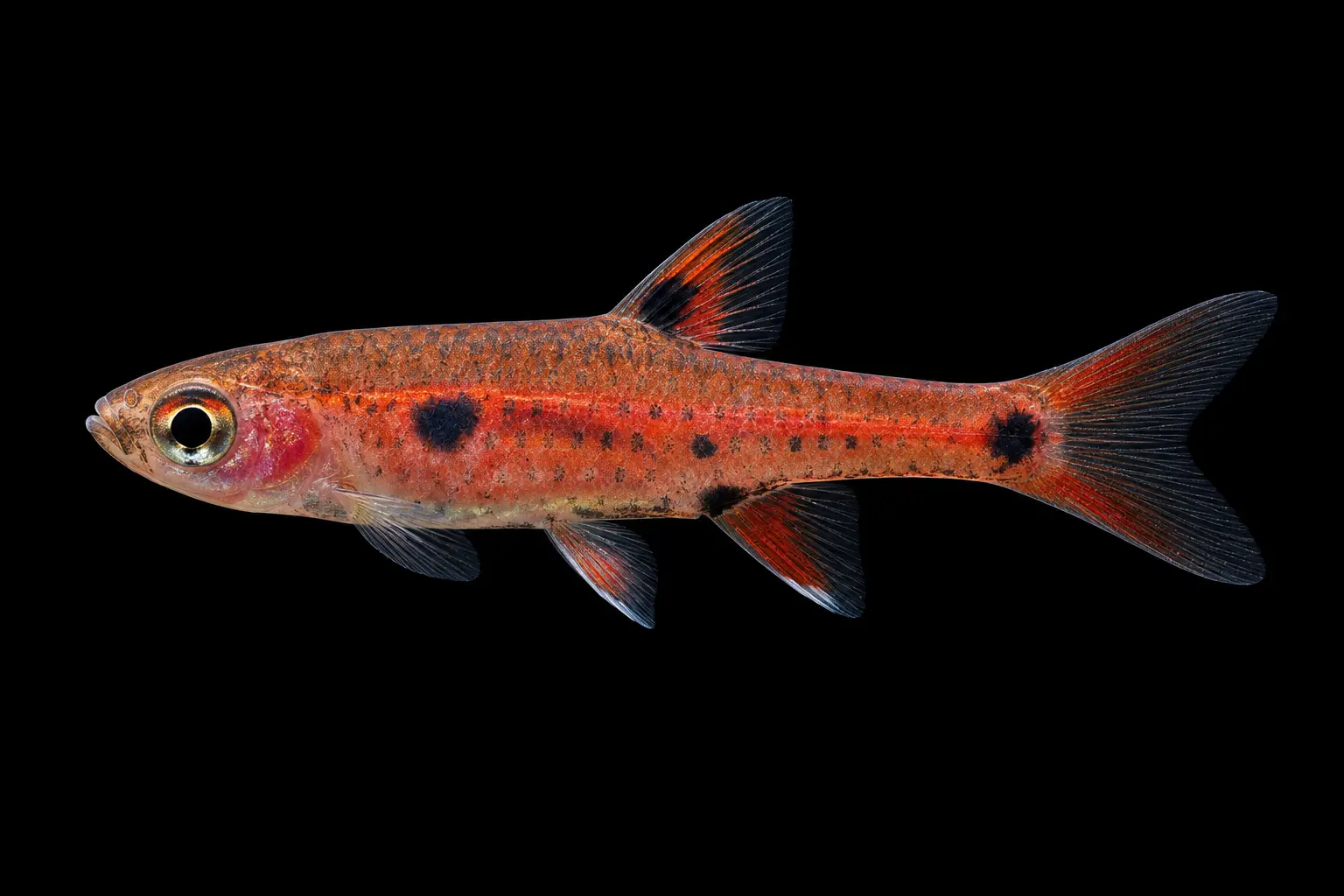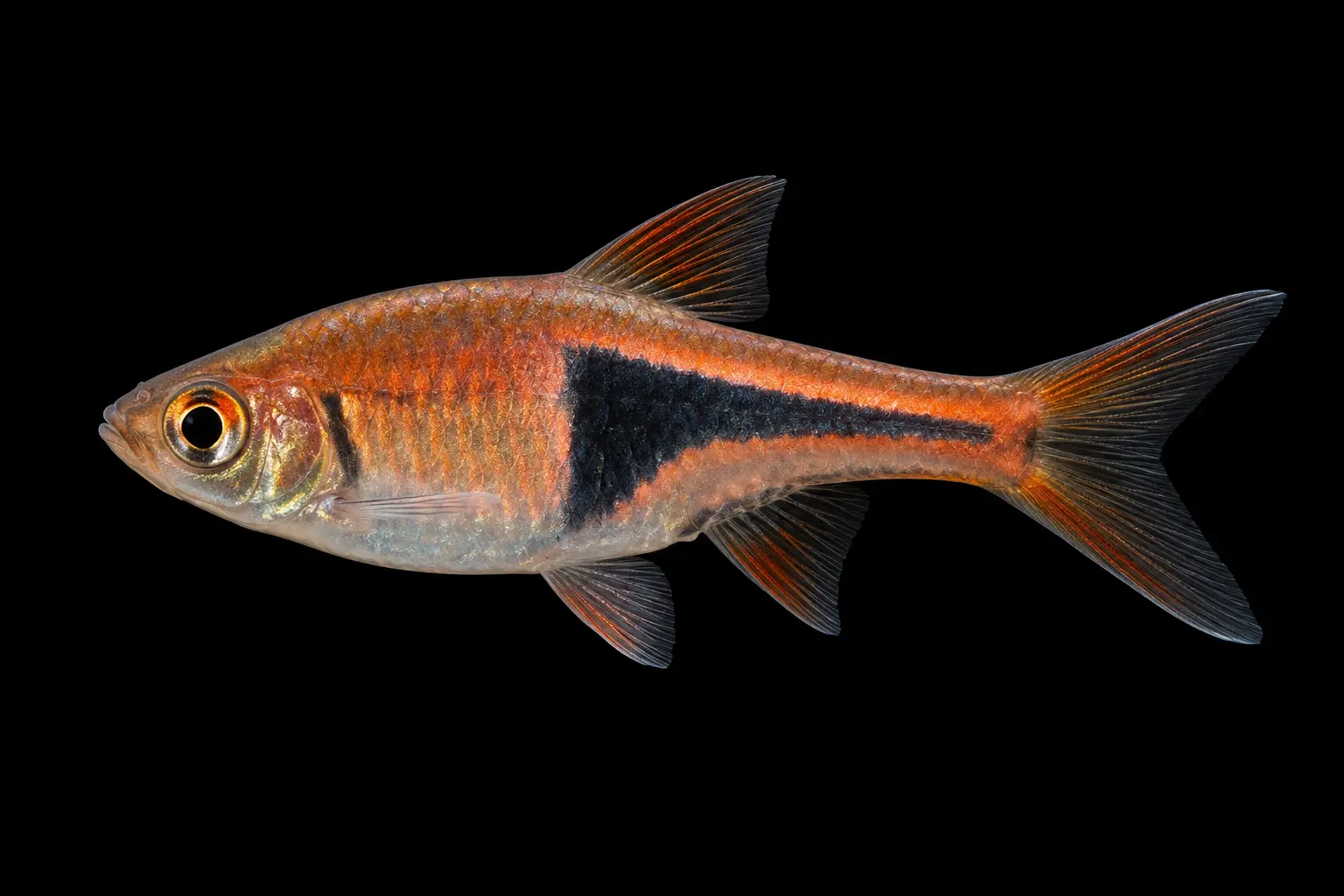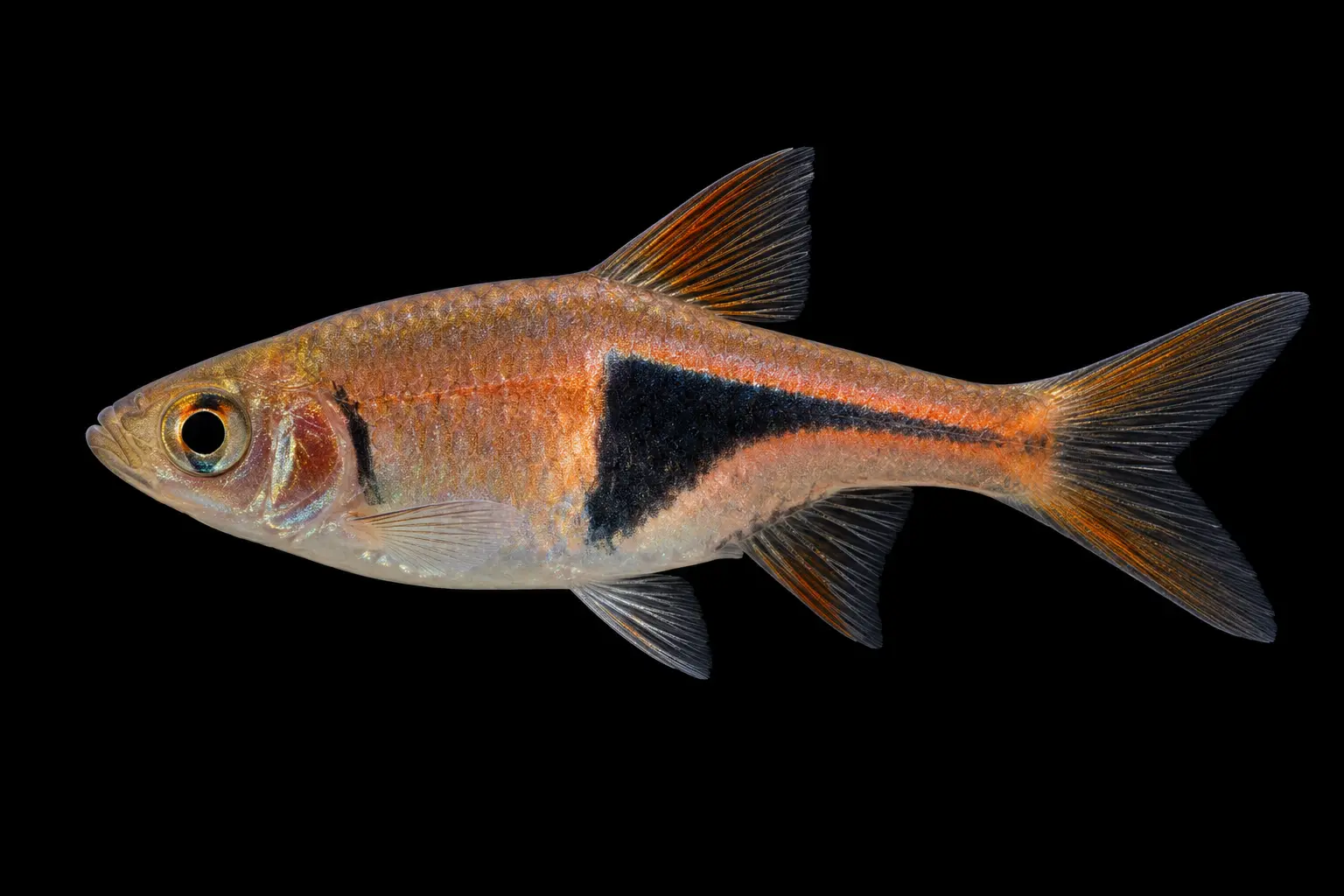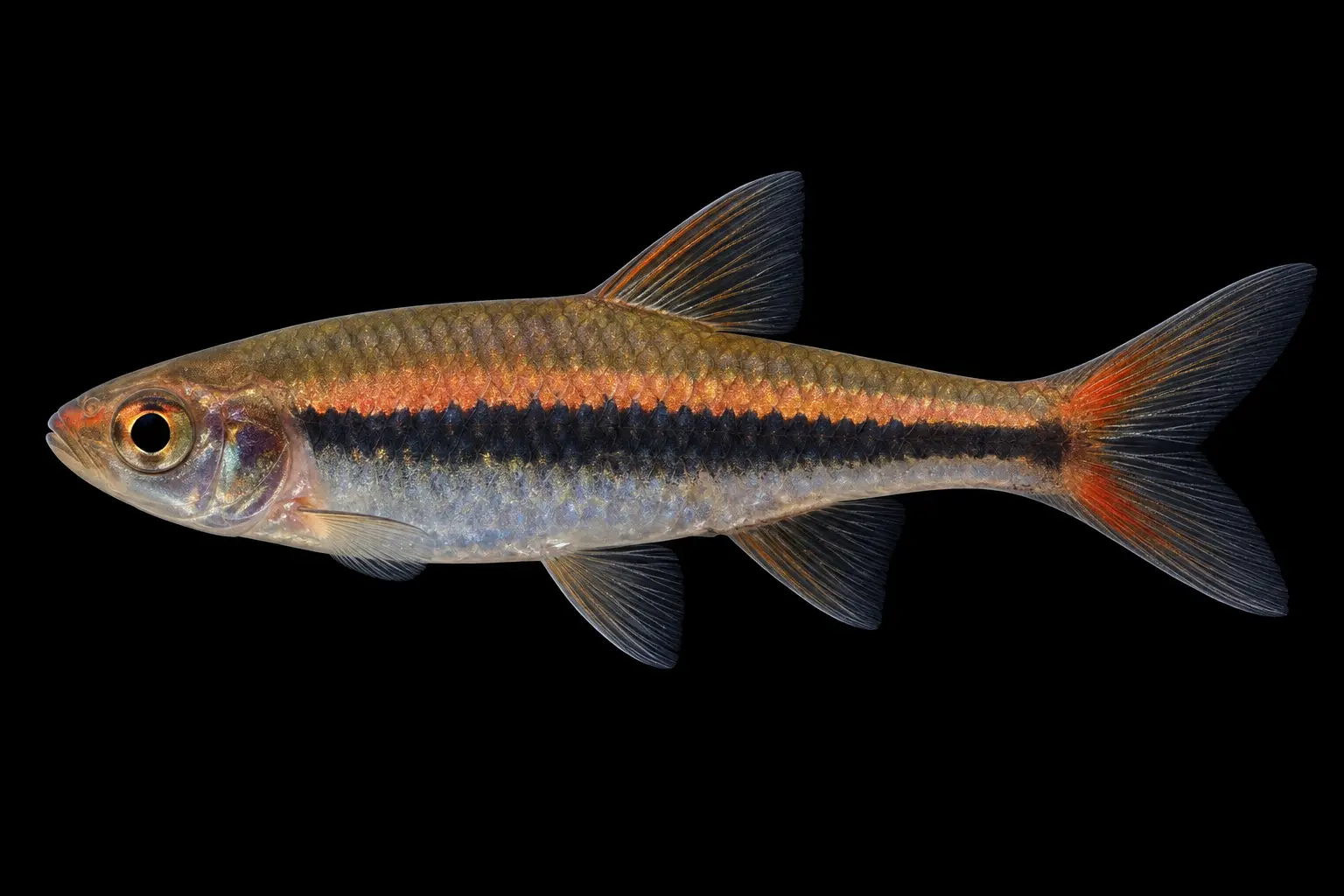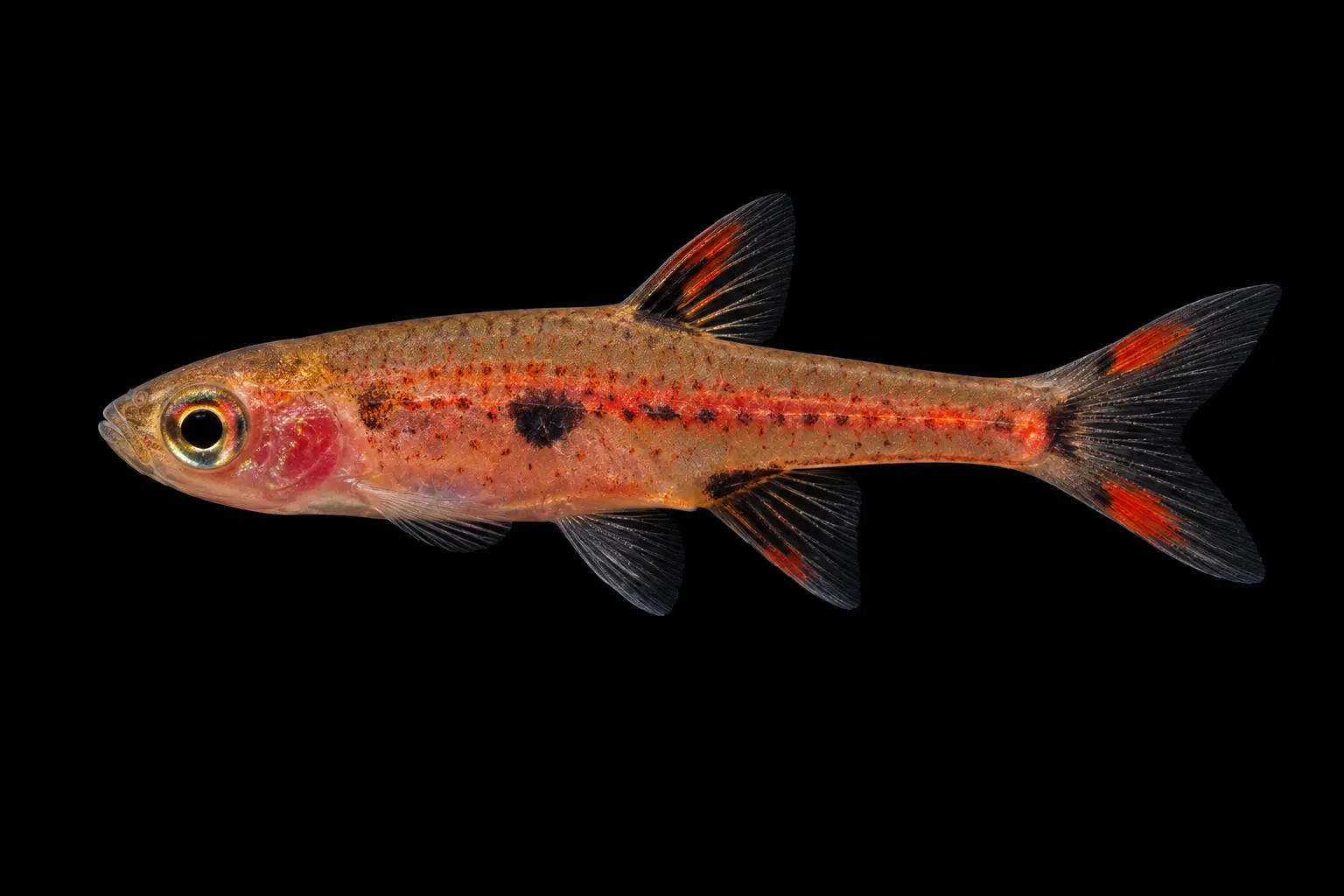
Identity and origin
- Origin
- Southwestern Kalimantan blackwaters
- Identity
- Tiny Bornean cyprinid
A highly popular nano fish associated with tannin-rich forest waters. Captive breeding can reduce pressure on vulnerable peat habitats.
Description
Reported maximum: 3.5 cm TL
Temperature 20–28 °C · pH 4.0–7.0 · GH 1–10 °dGHspecies guidance
Natural food: Small Daphnia, ArtemiaPrepared food: Mouth-sized flakes/granules
Biology: mature biofilter; species-specific microbial counts are not established.
Sources & limits
Keep a peaceful shoal in a mature, shaded aquarium with fine-leaved plants and gentle filtration. Provide soft, acidic freshwater and tiny foods; avoid competitive or predatory companions.
Group-level guidance
Specialist aquarium guidance; acclimation and provenance still matter. This is not a measured optimum or a breeding protocol.
Omitted parameters have no verified range in the sources checked. Habitat or experimental measurements are not safe keeping limits. GH, KH, TDS and conductivity are not interchangeable.
General system guidance: target free ammonia (NH₃) and nitrite (NO₂⁻) at 0 mg/L; account for test detection limits. These are chemical measurements, not microbial counts or each species’ tolerance limits. OATA · 2022. Assess biofilter function through waste processing and water tests, not clarity alone. Biofiltration reference.
- FishBase species ecology; conservative aquarium guidance
- Seriously Fish — specialist aquarium guidance
Size checked: . Water/food checked: .
Design for feeding and movement
Care-planning notes. Confirm exact requirements for the species and source population.
- Check adult dimensions and social needs for this species; small body size alone does not establish aquarium suitability.
- Provide swimming space and refuge, and choose companions with compatible feeding behaviour.
- Match food size to the animal and observe feeding directly, especially when keeping small species with faster feeders.
Evidence record
Conservation record: A current assessment has not been verified for this profile. This does not establish Not Evaluated status or imply low risk. Conservation status does not establish legal protection, availability or permission to trade.
Catalogue inclusion confirms a research record, not current stock, legal export, or destination-country import permission.