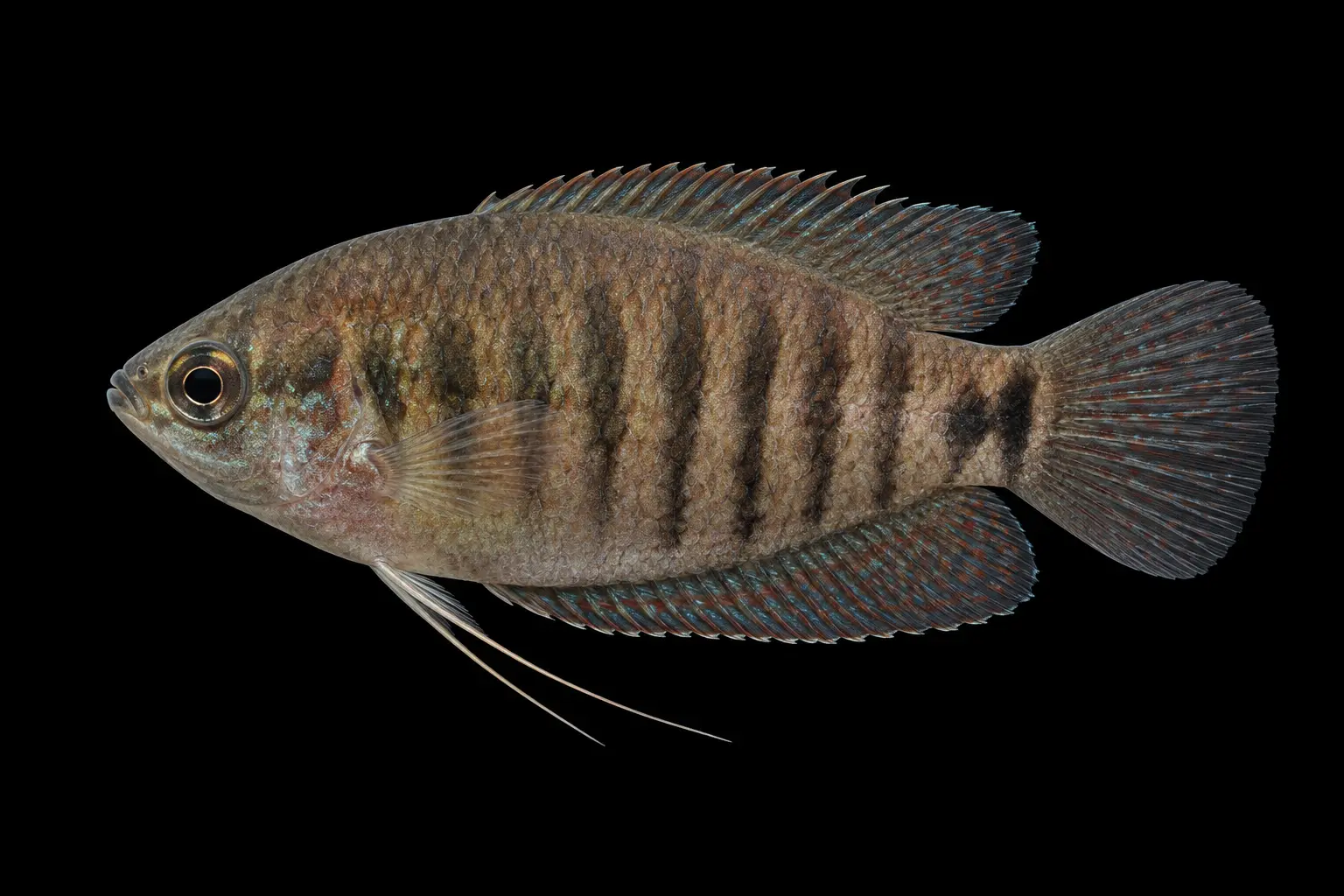
Identity and origin
- Origin
- Sumatra and Kalimantan blackwaters
- Identity
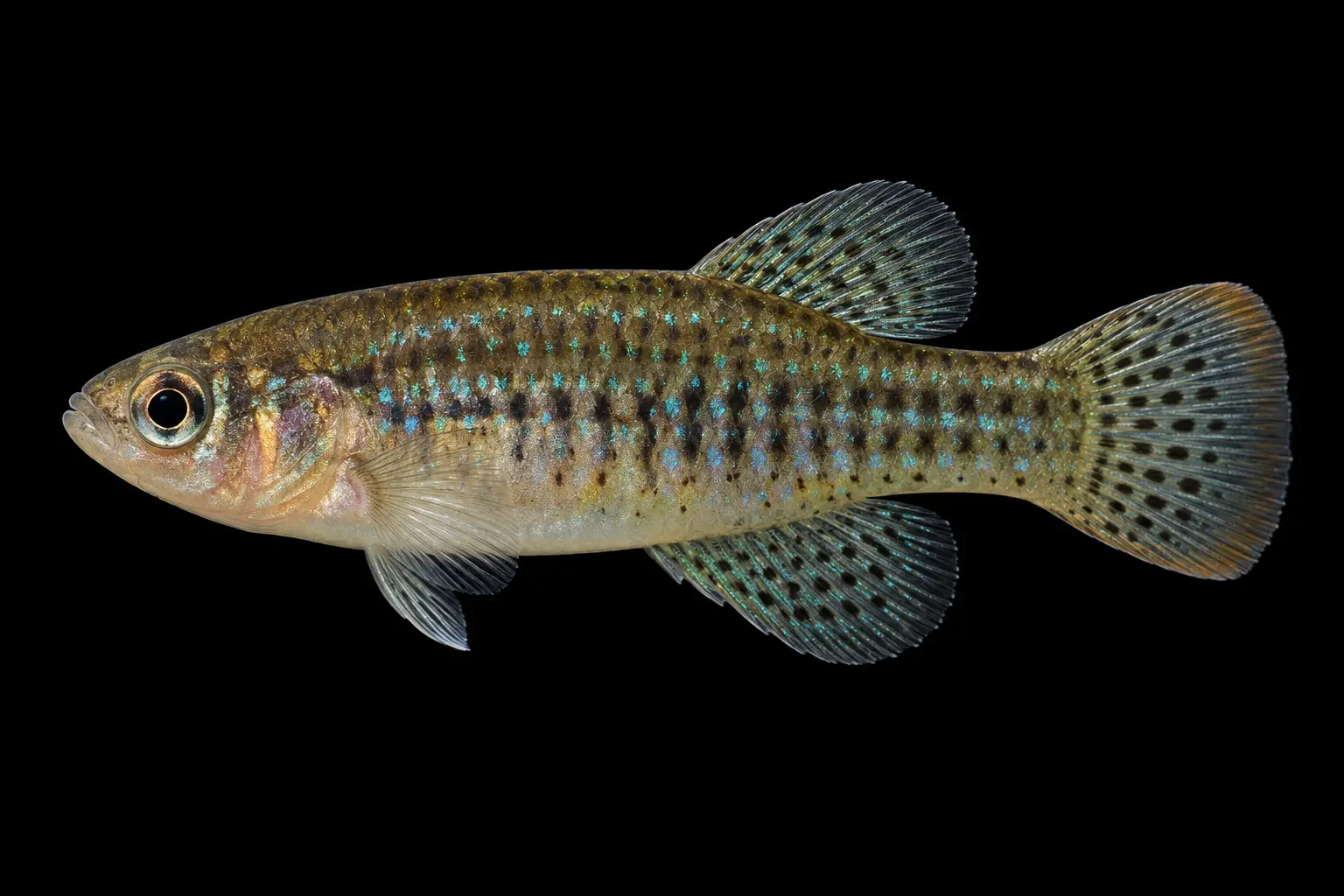
- Sundaland blackwater gourami
A soft, acidic-water mouthbrooder. The species is sensitive to poor water quality and requires provenance-aware husbandry.
Description
Reported maximum: 6 cm TL
Temperature 26–31 °C · pH 4.0–6.5 · GH 0–3 °dGHspecies guidance
Natural food: Artemia nauplii, Daphnia, grindal/microwormPrepared food: Dried foods may be refused; acceptance must be demonstrated
Biology: mature biofilter; species-specific microbial counts are not established.
Sources & limits
Use very soft, acidic water in a mature, gently filtered aquarium with dense plants and sheltered areas. Keep peaceful companions, provide small varied foods, and maintain excellent cleanliness.
Wild-population soft-water guidance; maintain stable chemistry and verify feeding. Some captive lines have different histories.
Omitted parameters have no verified range in the sources checked. Habitat or experimental measurements are not safe keeping limits. GH, KH, TDS and conductivity are not interchangeable.
General system guidance: target free ammonia (NH₃) and nitrite (NO₂⁻) at 0 mg/L; account for test detection limits. These are chemical measurements, not microbial counts or each species’ tolerance limits. OATA · 2022. Assess biofilter function through waste processing and water tests, not clarity alone. Biofiltration reference.
- FishBase: maximum length
- IGL specialist species husbandry account
- Seriously Fish — specialist aquarium guidance
Size checked: . Water/food checked: .
Before choosing this species
Care-planning notes. Confirm exact requirements for the species and source population.
- Confirm the adult size and social behaviour of the exact species before planning its aquarium.
- Establish biological filtration and stable water conditions before introducing animals.
- Ask for locality, captive history and the actual animal’s feeding record; a catalogue image cannot provide these.
Evidence record
Conservation record: A current assessment has not been verified for this profile. This does not establish Not Evaluated status or imply low risk. Conservation status does not establish legal protection, availability or permission to trade.
Catalogue inclusion confirms a research record, not current stock, legal export, or destination-country import permission.