Identity and origin
- Origin
- Sumatra, Java, Madura and Kalimantan; wider Southeast Asia
- Identity
- Native range follows the regional review by Low & Lim (2012)
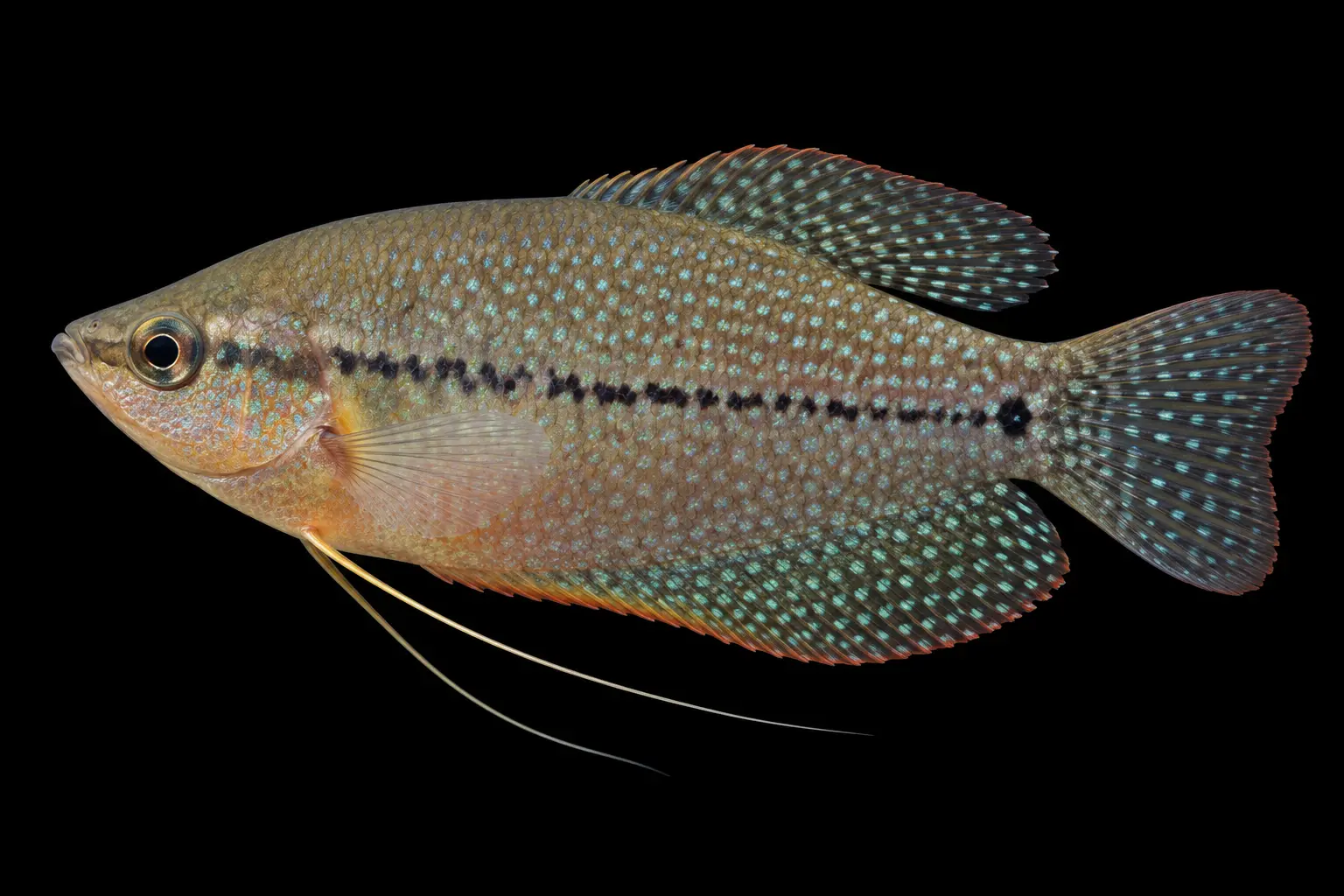
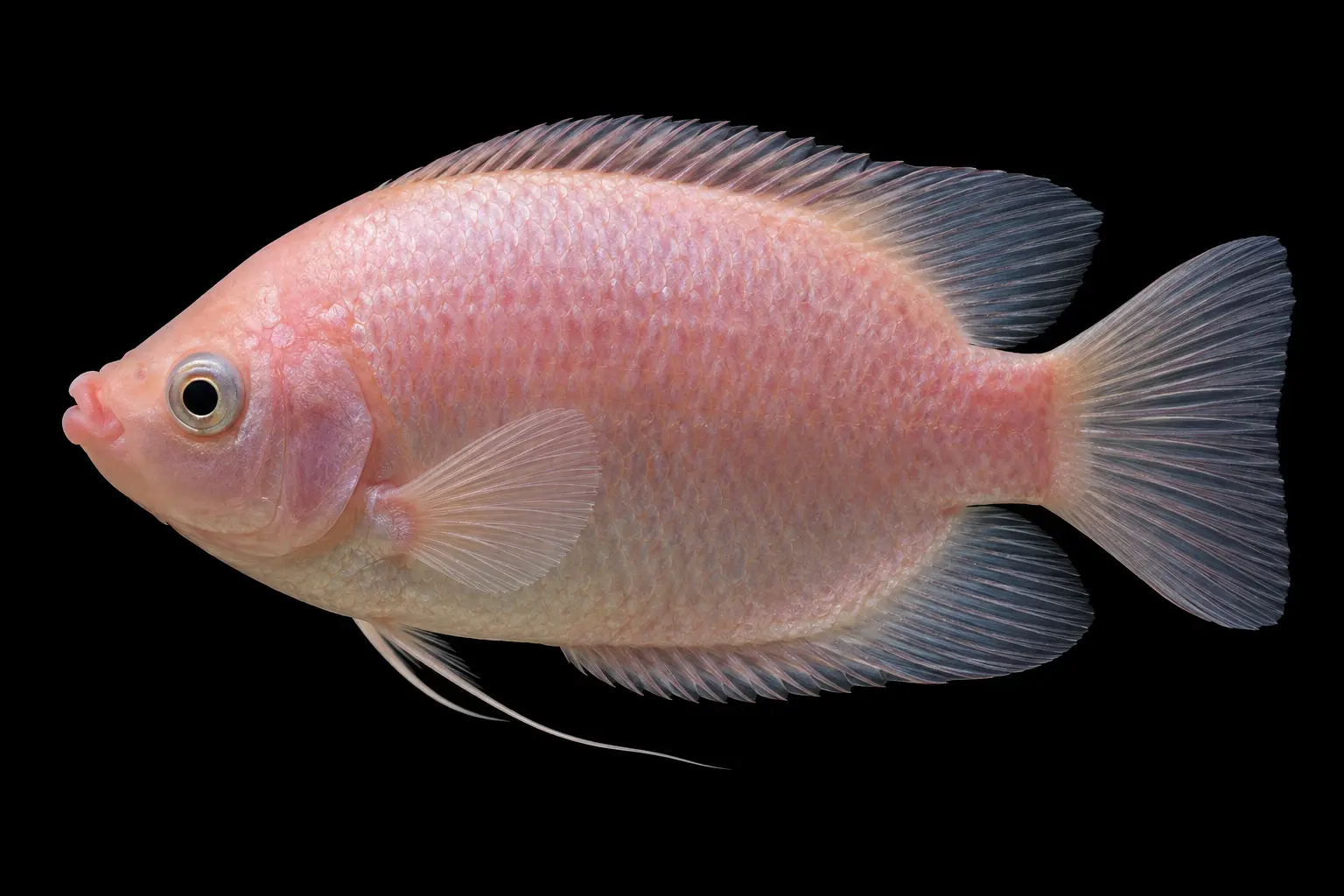
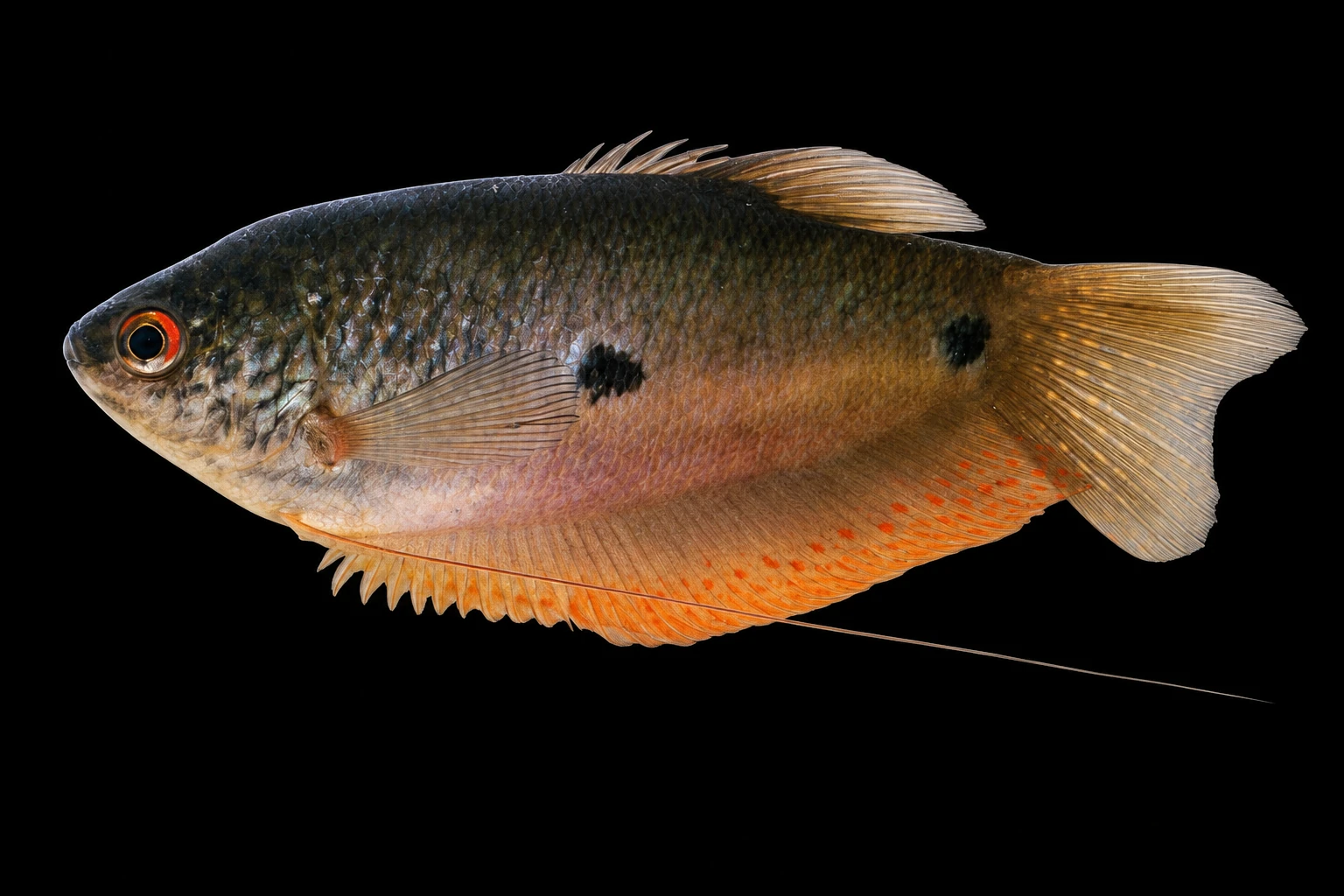
The familiar three-spot gourami includes blue, gold and opaline aquarium forms. These are colour selections of one species, not additional Indonesian species. Regional literature recognises Sundaic native populations; locality records remain essential because the fish has also been widely introduced. Current range summaries differ; this Indonesian inclusion follows the regional review cited below.
Habitat and care
Shallow, vegetated slow waters and wetlands. Habitat and identity reference
Allow surface access and cover, and plan for territorial adults. Colour alone does not establish Indonesian provenance.
Description
Reported maximum: 15 cm SL
Temperature 24–30 °C · pH 5.5–8.5 · GH 3–35 °dGHspecies guidance
Natural food: Daphnia, bloodworm, TubifexPrepared food: Flakes/granules/pelletsFood guidance at group level
Biology: mature biofilter; species-specific microbial counts are not established.
Sources & limits
Provide planted territories, shaded retreats, gentle flow, and free access to surface air. Feed varied foods and monitor aggression, especially between males or toward smaller aquarium companions.
Group-level guidance
Species water ranges; named foods follow group guidance for established aquarium gouramis. Confirm stock history.
Omitted parameters have no verified range in the sources checked. Habitat or experimental measurements are not safe keeping limits. GH, KH, TDS and conductivity are not interchangeable.
General system guidance: target free ammonia (NH₃) and nitrite (NO₂⁻) at 0 mg/L; account for test detection limits. These are chemical measurements, not microbial counts or each species’ tolerance limits. OATA · 2022. Assess biofilter function through waste processing and water tests, not clarity alone. Biofiltration reference.
Size checked: . Water/food checked: .
Before choosing this species
Care-planning notes. Confirm exact requirements for the species and source population.
- Confirm the adult size and social behaviour of the exact species before planning its aquarium.
- Establish biological filtration and stable water conditions before introducing animals.
- Ask for locality, captive history and the actual animal’s feeding record; a catalogue image cannot provide these.
Evidence record
Conservation record: Reported LC — Least Concern. The category is retained from a cited record. Verification of the direct assessment and its dates is not yet documented here. Open the retained source. Conservation status does not establish legal protection, availability or permission to trade.
Catalogue inclusion confirms a research record, not current stock, legal export, or destination-country import permission.