

Biodiversity & Responsibility
Responsible aquarists protect the waters beyond their tanks
How thoughtful ownership and responsible rehoming help protect freshwater ecosystems.
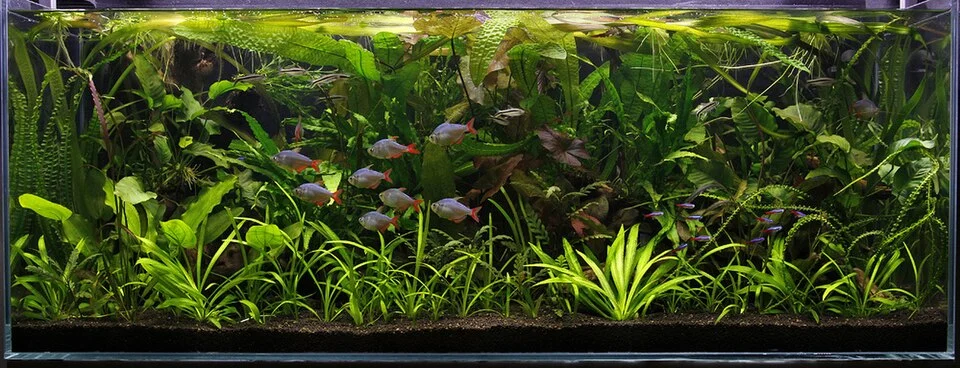
Never release aquarium animals
Releasing an unwanted aquarium fish into a river or pond is not a responsible alternative to care. It may fail to survive; if it establishes, it may harm wildlife and habitats. A release intended as kindness can create consequences far beyond the individual animal.[1,2]
The same caution applies to aquarium plants and other aquatic organisms. Keep them out of natural waterways rather than assuming they are harmless because they are small or familiar.[1,3]
Native does not mean safe to release
Even an aquarium animal belonging to a locally native species should not be released by its keeper. Captive animals may carry diseases or parasites. Conservation releases are not the same activity as disposing of unwanted pets.[3,4]
Before acquiring an animal, research its identity, adult needs, and the commitment involved. Ask questions early rather than waiting until a fish outgrows the care you can provide.[4]
Make a rehoming plan
If you can no longer care for a fish, ask a knowledgeable keeper, the original retailer, or a suitable rescue organisation whether they can accept it. Confirm that a new home can meet its needs before transferring responsibility.[4]
Keep aquarium contents contained, and seek local guidance on safe disposal of unwanted plants or other material. Small decisions at home can help prevent avoidable introductions into freshwater environments.[3,4]
Trace the responsibility behind a choice.
Take these questions into your further reading.
- What identity and sourcing information can a supplier document for the animal you are considering?
- What long-term care and rehoming arrangements would you need before acquiring it?
- Where can you find local guidance on keeping aquarium animals, plants, and water out of natural waterways?
This is a learning checklist, not a treatment or husbandry protocol.
Sources & further reading
- Beyond ballast water: aquarium and ornamental trades as sources of invasive species in aquatic ecosystems. Frontiers in Ecology and the Environment. 2004;2(3):131–138. doi:10.1890/1540-9295(2004)002[0131:BBWAAO]2.0.CO;2
- The aquarium trade as an invasion pathway in the Pacific Northwest. Fisheries. 2011;36(2):74–85. doi:10.1577/03632415.2011.10389070
- The freshwater aquarium trade as a vector for incidental invertebrate fauna. Biological Invasions. 2010;12(11):3757–3770. doi:10.1007/s10530-010-9768-x
- Don’t let it loose. Aquatic invasive species prevention guidance. 2024 [cited 1 September 2026]. Available from: https://www.dfo-mpo.gc.ca/species-especes/ais-eae/prevention/dlil-nlrp-eng.html
Editorial responsibility: LIMNIC. References are provided for further reading; a complete independent scientific review is not yet documented. The dates attached to individual references describe those records, not a review of the whole article.