

Indonesian Biodiversity
Sulawesi shrimp: living lineages from ancient lakes
Why Sulawesi’s ornamental shrimp must be understood through species, place, habitat, and conservation—not colour alone.
‘Sulawesi shrimp’ is not one animal
In the aquarium world, ‘Sulawesi shrimp’ is often used as a convenient collective name. Biologically, it covers multiple freshwater shrimp lineages from a large and geologically complex Indonesian island. Some belong to remarkable species flocks in the ancient lakes; others inhabit streams, springs, karst waters, or highland drainages. A trade label therefore cannot replace a scientific name or a locality record.[4]
Even the ancient-lake fauna is not one continuous population. Lake Poso and the Malili lake system represent separate evolutionary settings. Research in Lake Poso more than doubled the number of recognised endemic lacustrine Caridina there, while systematic work in the Malili lakes documented a different and especially diverse radiation. Treating all of these animals as interchangeable erases the geography that helps explain their evolution and their needs.[1,2]
Evolution written into habitat
Ancient lakes can persist long enough for colonising lineages to diversify within the lake environment. In the Malili system, genetic, morphological, and ecological evidence supports an adaptive radiation: closely related shrimp diversified while specialising on different ecological opportunities. Many described taxa have restricted distributions and species-specific colour patterns, but colour is only the visible surface of a deeper evolutionary history.[3]
Microhabitat is part of that history. Researchers have distinguished specialists associated with rock, wood, leaf litter, soft substrate, open water, and even freshwater sponges. These associations can involve differences in feeding structures and resource use. For aquarists and breeders, the practical lesson is not to copy a decorative aquascape; it is to understand that substrate, surface biology, shelter, flow, and food availability may be biologically connected.[2,3,4]
Identity must come before a care profile
Common names such as cardinal, harlequin, red line, or white orchid may help people navigate the hobby, but they are not a dependable taxonomic system. Colour can vary with age, condition, lighting, locality, and breeding history, while different species may appear superficially similar. A responsible profile should state the accepted scientific name when confirmed, the source locality when known, and whether the animals are wild-origin, captive-bred, or descendants of an established captive line.[1,2]
Good provenance records protect more than commercial credibility. They help prevent accidental mixing of distinct lineages, make breeding results interpretable, and allow care observations to be attached to the correct animal. When identity is uncertain, the honest label is an unresolved Caridina identification—not a confident species name inferred from a photograph or sales name alone.[1,4]
Water is a system, not a recipe
Sulawesi’s shrimp habitats are often reduced online to a few target numbers. That shortcut is risky. A pH or mineral reading says little on its own about dissolved oxygen, temperature stability, nitrogenous waste, microbial surfaces, acclimation history, or the chemistry in which a particular lineage was bred. Different Sulawesi waters and different species should not be collapsed into one universal parameter table.[2,3]
A better approach begins with species- and source-specific evidence, then builds a stable system around it. Mature biological filtration, oxygen availability, controlled organic loading, appropriate mineral composition, and established grazing surfaces matter together. Changes should be measured and gradual. A number copied from another aquarium is not proof that an animal has been prepared for that condition, and visual clarity is not proof of biological readiness.[3,4]
Rarity creates responsibility
Freshwater shrimp can be highly vulnerable because many species occupy small ranges and depend on specific habitats. A global assessment found substantial extinction risk across freshwater shrimp and identified pollution, habitat change, invasive species, and other human pressures among major threats. For a lake-endemic lineage, damage to one shoreline or catchment cannot always be offset by populations elsewhere.[5,1]
Captive breeding can contribute to a more responsible aquarium culture only when it is supported by lawful sourcing, traceable founders, biosecurity, and honest records. It should not be used as a blanket conservation claim, and captive stocks are not substitutes for protecting wild ecosystems. The strongest standard is simple: know what the animal is, know where the line came from, avoid unnecessary wild demand, never release captive animals, and communicate uncertainty as carefully as certainty.[5]
SPECIES FIELD GUIDE
Representative ornamental shrimp of Sulawesi’s ancient lakes
This is a curated introduction, not a complete checklist. It brings together visually distinctive species from Lake Poso and the Malili lake system while keeping scientific identity, lake provenance, ecology, and conservation responsibility in view.
 IUCN CRCritically Endangered
Cardinal Sulawesi Shrimp
Caridina dennerli
- Origin
- Lake Matano, Malili lake system
- Ecology
- Rock-associated ancient-lake endemic
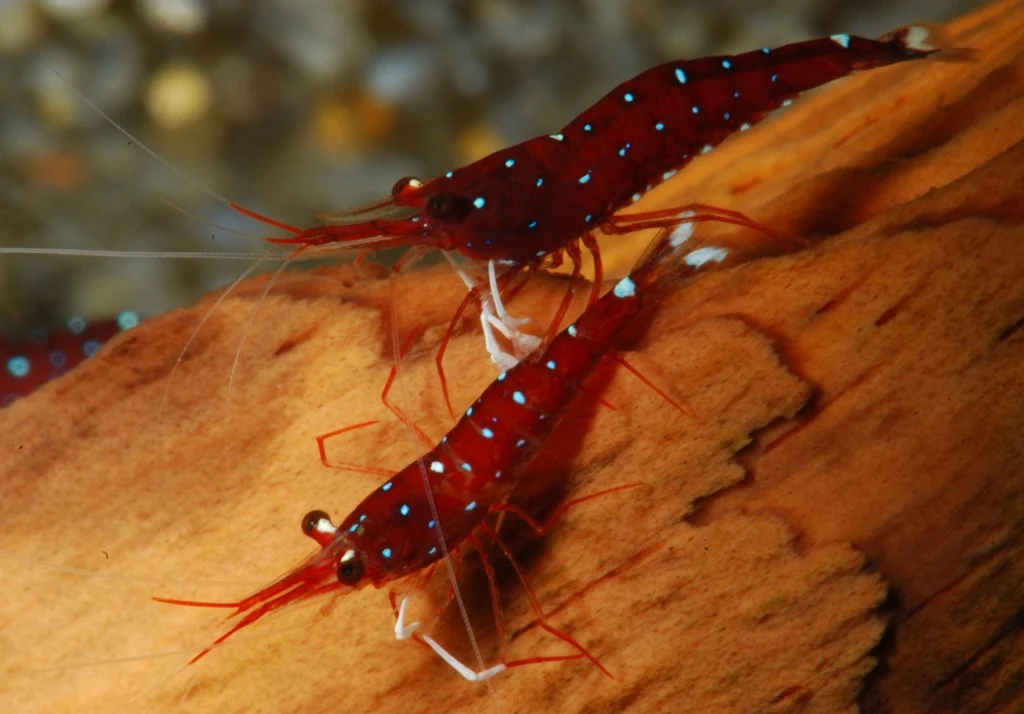
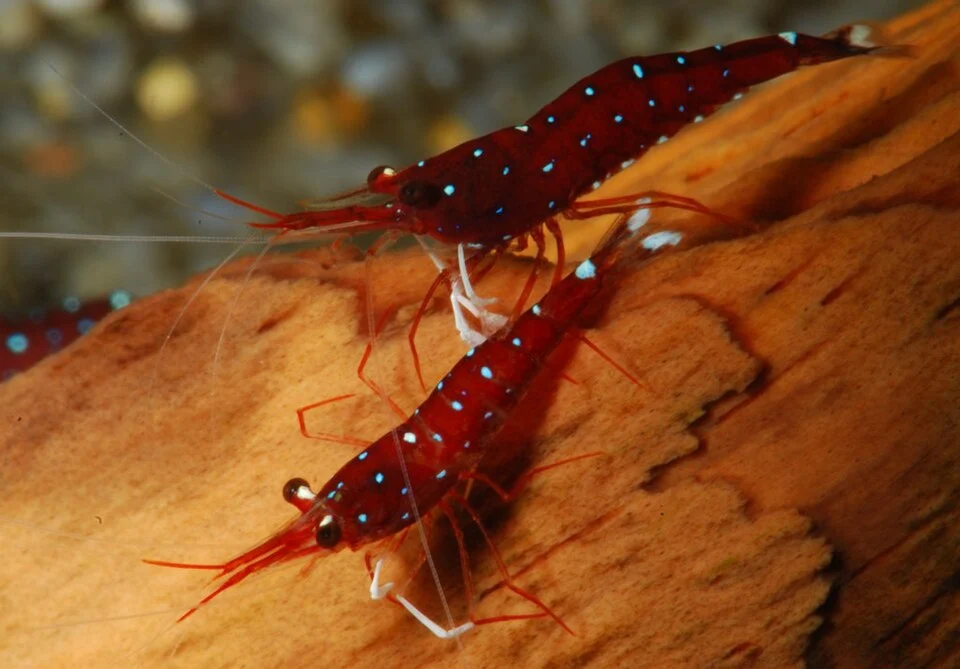
Deep red colour, blue-white spots, and white forelegs make the cardinal shrimp the best-known Sulawesi species internationally. Its Lake Matano origin also makes accurate identity, stable captive breeding, and responsible sourcing non-negotiable.
Photo: DirkBlankenhaus / Wikimedia Commons · CC BY-SA 3.0.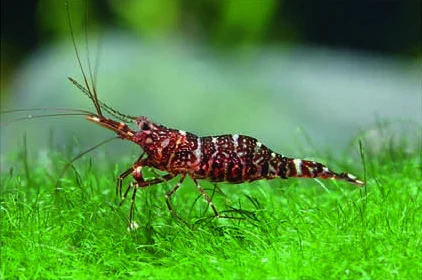 IUCN CRCritically Endangered
Red Orchid Shrimp
Caridina glaubrechti
- Origin
- Lake Towuti, Malili lake system
- Ecology
- Ancient-lake endemic
A richly patterned red-and-cream shrimp from Lake Towuti. Its visual complexity gives it strong specialist appeal, while similarity among trade names makes scientific identification and source records especially important.
Photo: Chris Lukhaup / Wikimedia Commons · CC BY 4.0.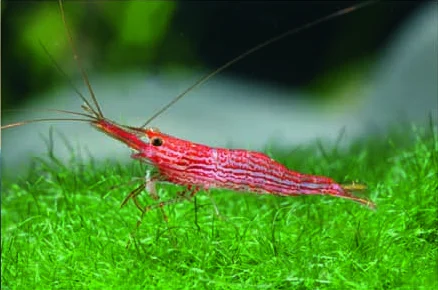 IUCN CRCritically Endangered
Red Line Sulawesi
Caridina striata
- Origin
- Lakes Towuti and Mahalona, Malili lake system, Sulawesi
- Ecology
- Ancient-lake endemic
A rock-associated shrimp recorded from lakes Towuti and Mahalona, with pale lateral stripes on a red body. Use the diagnostic description and provenance to distinguish it from visually similar shrimp; colour and a trade name alone do not authenticate a specimen.
Photo: K. von Rintelen & Y. Cai / Wikimedia Commons · CC BY 4.0.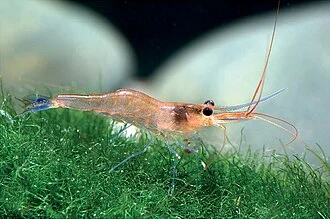 IUCN VUVulnerable
Blue Leg Poso Shrimp
Caridina caerulea
- Origin
- Lake Poso, Central Sulawesi
- Ecology
- Ancient-lake endemic
A translucent Lake Poso species with blue accents on the walking legs and rostrum. Its restrained colour rewards macro photography and close observation, expanding a collection beyond only bright-red trade favourites.
Photo: C. Lukhaup in Klotz et al. (2021) / Wikimedia Commons · CC BY 4.0.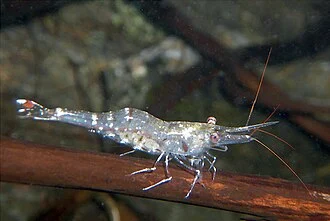 IUCN VUVulnerable
Poso White Orchid Shrimp
Caridina ensifera
- Origin
- Lake Poso, Central Sulawesi
- Ecology
- Ancient-lake endemic
This long-recognised Lake Poso species can appear translucent with pale spotting and delicate blue-white details. It demonstrates how common names can drift, so scientific names should lead every catalogue and breeding record.
Photo: W. Klotz in Klotz et al. (2021) / Wikimedia Commons · CC BY 4.0.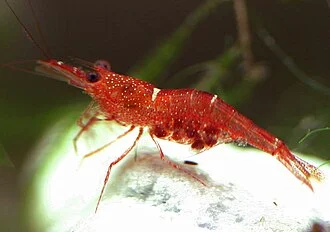 IUCN CRCritically Endangered
Orange Delight Shrimp
Caridina loehae
- Origin
- Malili lake system, South Sulawesi
- Ecology
- Ancient-lake endemic
Warm orange-red colour and pale speckling made this species an early ambassador for Sulawesi shrimp in the aquarium world. Its endemic origin means commercial interest should be channelled toward traceable, legally sourced captive lines.
Source: Planetinverts / Wikimedia Commons · Public domain.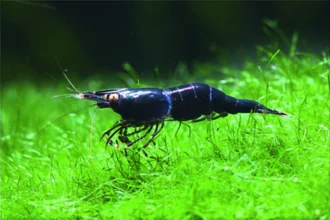 IUCN ENEndangered
Holthuis’s Sulawesi Shrimp
Caridina holthuisi
- Origin
- Malili lake system, South Sulawesi
- Ecology
- Ancient-lake endemic
A dark-bodied species with contrasting pale bands and fine patterning. It represents the less familiar side of the Malili radiation and is best presented through taxonomy, ecology, and provenance rather than an unstable sales nickname.
Photo: Chris Lukhaup / Wikimedia Commons · CC BY-SA 4.0.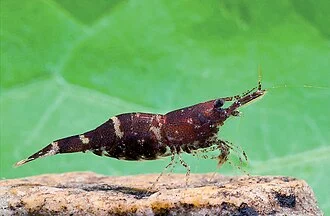 IUCN VUVulnerable
Sarasin’s Poso Shrimp
Caridina sarasinorum
- Origin
- Lake Poso, Central Sulawesi
- Ecology
- Ancient-lake endemic
A strongly marked Lake Poso shrimp whose pattern can vary between individuals and lines. It closes the guide with an important reminder: photographs support recognition, but formal identity depends on taxonomic evidence and documented origin.
Photo: Klotz et al. (2021) / Wikimedia Commons · CC BY 4.0.Read the name, place, and evidence together.
Take these questions into your further reading.
- Is the shrimp identified by a verified scientific name, or only by a trade name and colour pattern?
- What locality, captive lineage, and source history can be documented without guessing?
- Which parts of the proposed care plan come from species-specific evidence rather than a generic ‘Sulawesi’ recipe?
This is a learning checklist, not a treatment or husbandry protocol.
Sources & further reading
- Lake Poso’s shrimp fauna revisited: the description of five new species of the genus Caridina (Crustacea, Decapoda, Atyidae). ZooKeys. 2021;1009:81–122. doi:10.3897/zookeys.1009.54303
- Radiation of endemic species flocks in ancient lakes: systematic revision of the freshwater shrimp Caridina H. Milne Edwards, 1837 (Crustacea: Decapoda: Atyidae) from the ancient lakes of Sulawesi, Indonesia, with the description of eight new species. The Raffles Bulletin of Zoology. 2009;57(2):343–452. Available from: https://digitalgems.nus.edu.sg/view/316377/radiation-of-endemic-species-flocks-in-ancient-lakes-systematic-revision-of-the-freshwater-shrimp-caridina-h-milne-edwards-1837-crustacea-decapoda-atyidae-from-the-ancient-lakes-of-sulawesi-indonesia-with-the-description-of-eight-new-species
- Adaptive radiation and ecological diversification of Sulawesi’s ancient lake shrimps. Evolution. 2010;64(11):3287–3299. doi:10.1111/j.1558-5646.2010.01043.x
- Caridina clandestina, new species, an unusual new freshwater shrimp (Crustacea: Decapoda: Atyidae) from the remote high elevation Napu Valley of Sulawesi, Indonesia. The Raffles Bulletin of Zoology. 2023;71:12–25. doi:10.26107/RBZ-2023-0002
- Dead shrimp blues: a global assessment of extinction risk in freshwater shrimps (Crustacea: Decapoda: Caridea). PLOS ONE. 2015;10(3):e0120198. doi:10.1371/journal.pone.0120198
Sources reviewed on 1 September 2026. References support this introduction; they do not imply endorsement of LIMNIC. For species-specific care or health concerns, consult an appropriate specialist.