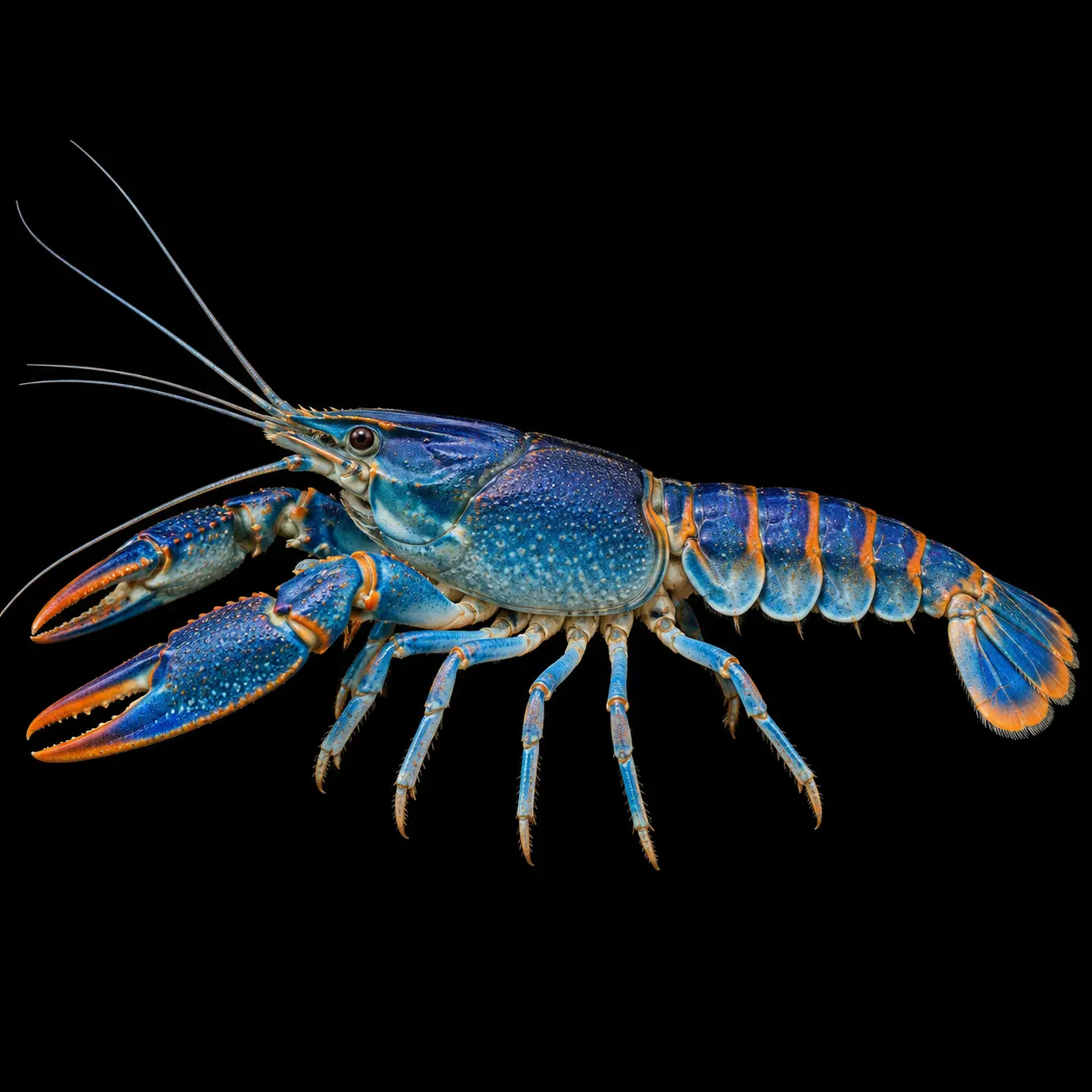
Identity and origin
- Origin
- Creeks of the Digul River drainage, Boven Digoel, Indonesian New Guinea
- Identity
- Restricted-range Papuan crayfish
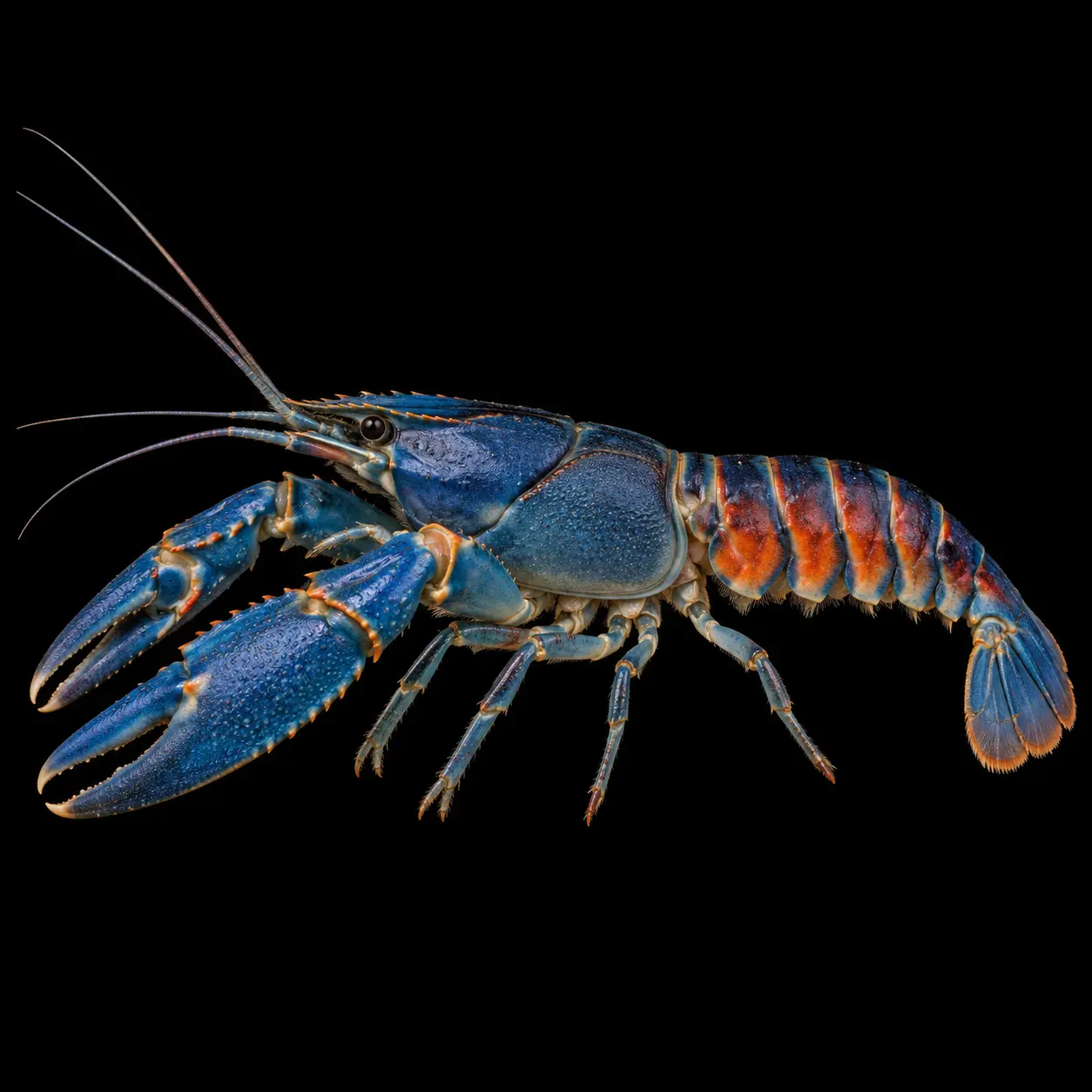
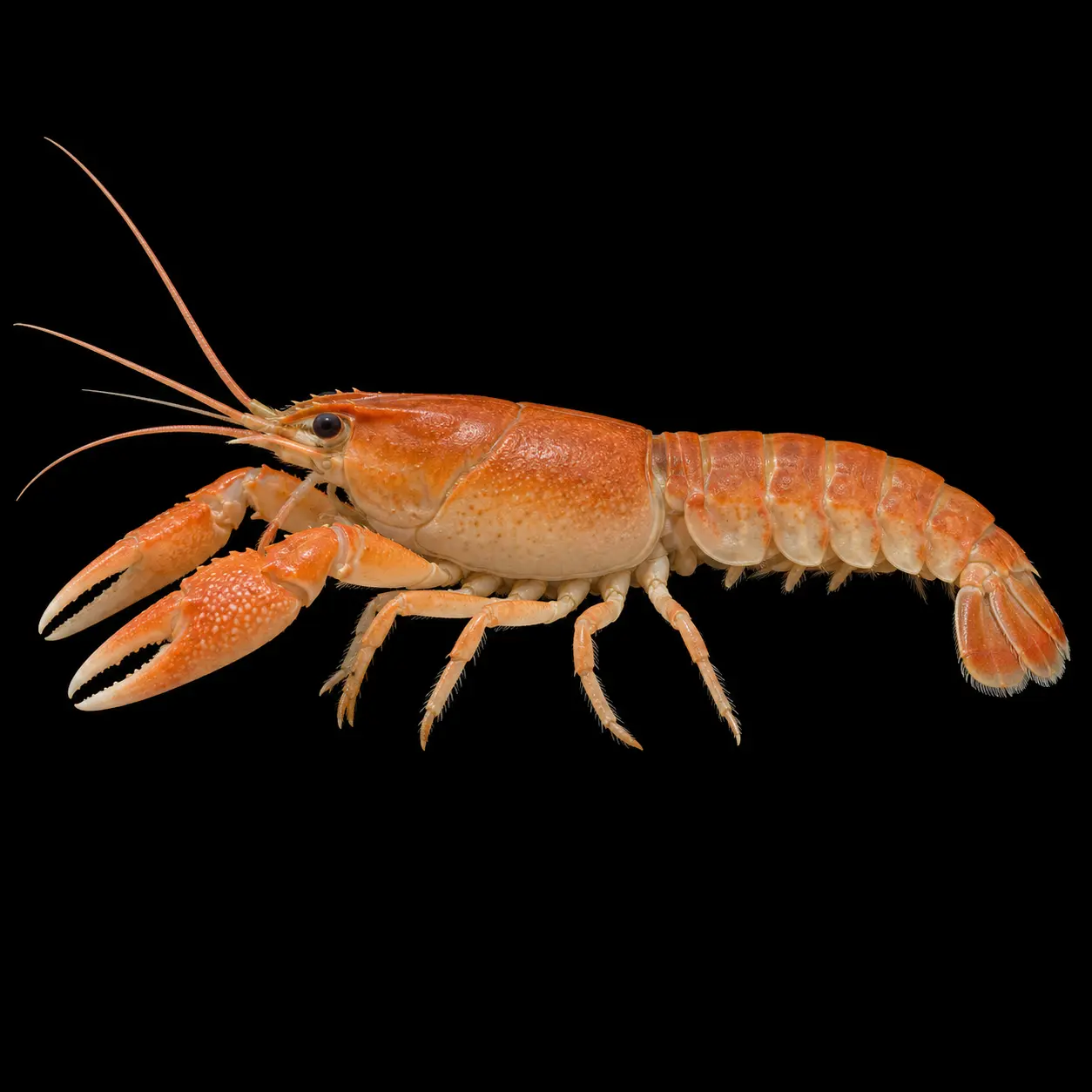
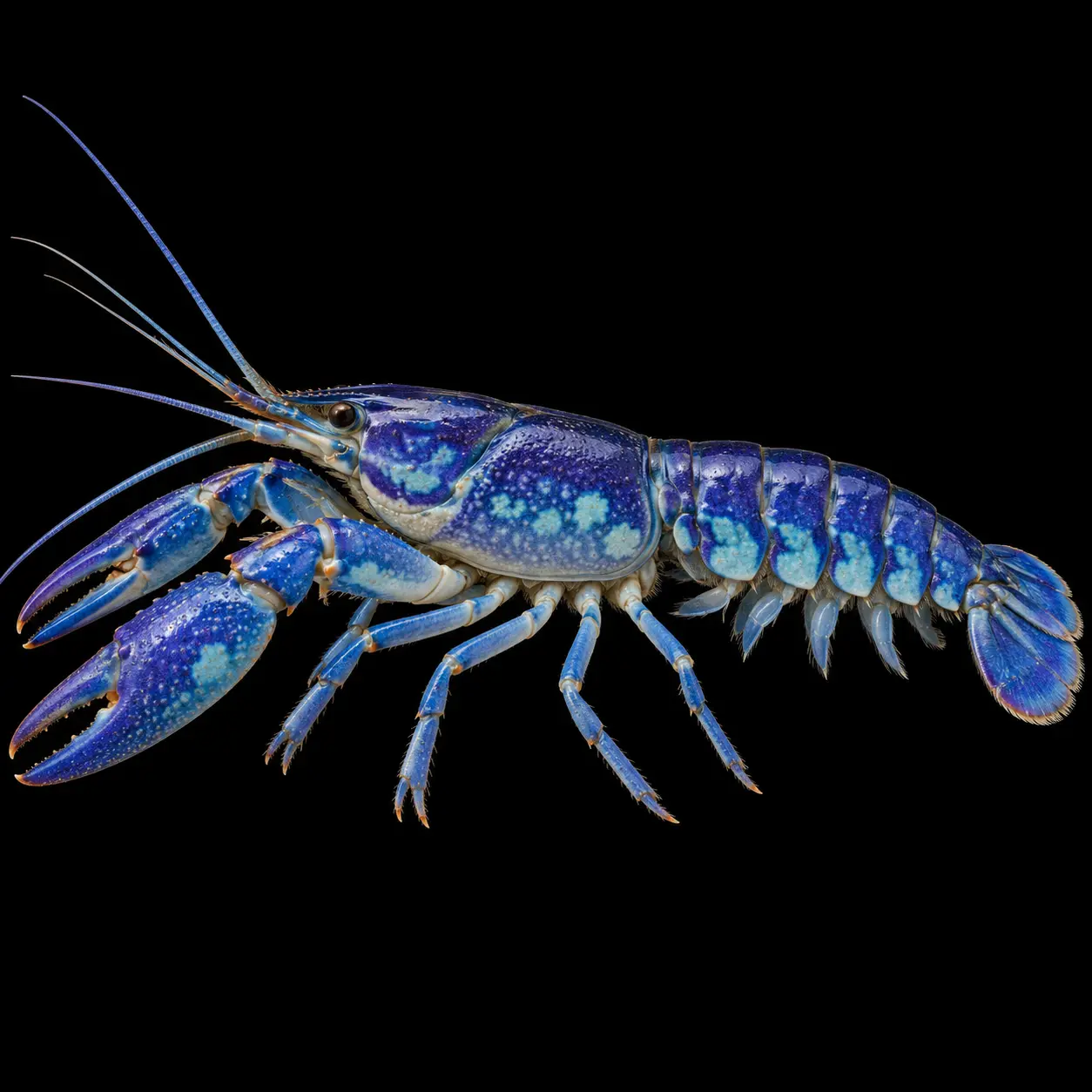
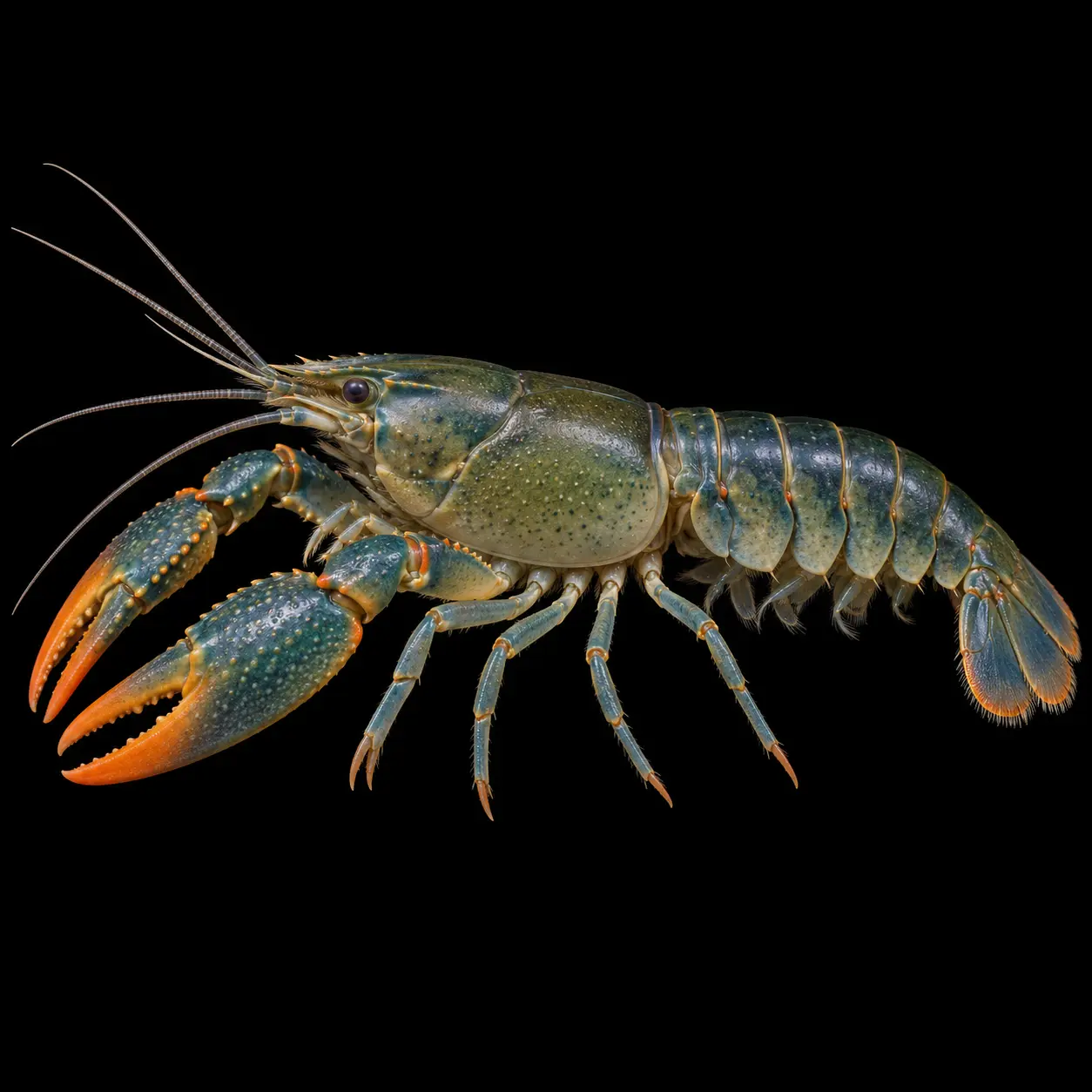
A strongly coloured aquarium-interest species separated taxonomically from other blue Papuan Cherax. Colour alone remains insufficient for identification.
Description
Largest examined specimen: 12.2 cm total length; species maximum unverified.Examined specimens · not an adult maximum
Temperature 25–27 °Chabitat record — not an aquarium target
Natural food: Courgette; cucumber.Prepared food: Sinking crustacean pellets; algae wafers.Food guidance at group level
Biology: mature biofilter; species-specific microbial counts are not established.
Sources & limits
Provide oxygenated moderate flow, rock or burrow-like shelters and stable water matched to verified Digul-drainage provenance. Use a secure lid, feed varied sinking foods, and protect moulting animals; mineral needs require locality-specific assessment.
Temperature is a field observation, not a captive target. Very acidic, low-conductivity habitat observations contradict a blanket hard alkaline Cherax recipe; numerical captive mineral ranges remain unverified.
The original description places C. alyciae in Boven Digoel creeks of the Digul drainage, and records very soft acidic habitat water. Provenance of any future captive batch still requires independent verification.
Omitted parameters have no verified range in the sources checked. Habitat or experimental measurements are not safe keeping limits. GH, KH, TDS and conductivity are not interchangeable.
General system guidance: target free ammonia (NH₃) and nitrite (NO₂⁻) at 0 mg/L; account for test detection limits. These are chemical measurements, not microbial counts or each species’ tolerance limits. OATA · 2022. Assess biofilter function through waste processing and water tests, not clarity alone. Biofiltration reference.
- Lukhaup et al. (2018), C. alyciae habitat observations
- OATA, general crayfish and freshwater-crab care
Size checked: . Water/food checked: .
Space, shelter and compatibility
Care-planning notes. Confirm exact requirements for the species and source population.
- Verify adult body and claw size; a small juvenile can grow into a powerful animal.
- Plan shelters and separation during vulnerable moulting stages. Do not assume compatibility with small fish or dwarf shrimp.
- Check the exact species and life cycle before designing a breeding system; related crustaceans can have different requirements.
Evidence record
Conservation record: A current assessment has not been verified for this profile. This does not establish Not Evaluated status or imply low risk. Open the retained source. Conservation status does not establish legal protection, availability or permission to trade.
Catalogue inclusion confirms a research record, not current stock, legal export, or destination-country import permission.