Identity and origin
- Origin
- Indonesia and the wider Indo-West Pacific
- Identity
- Large palaemonid; major aquaculture species
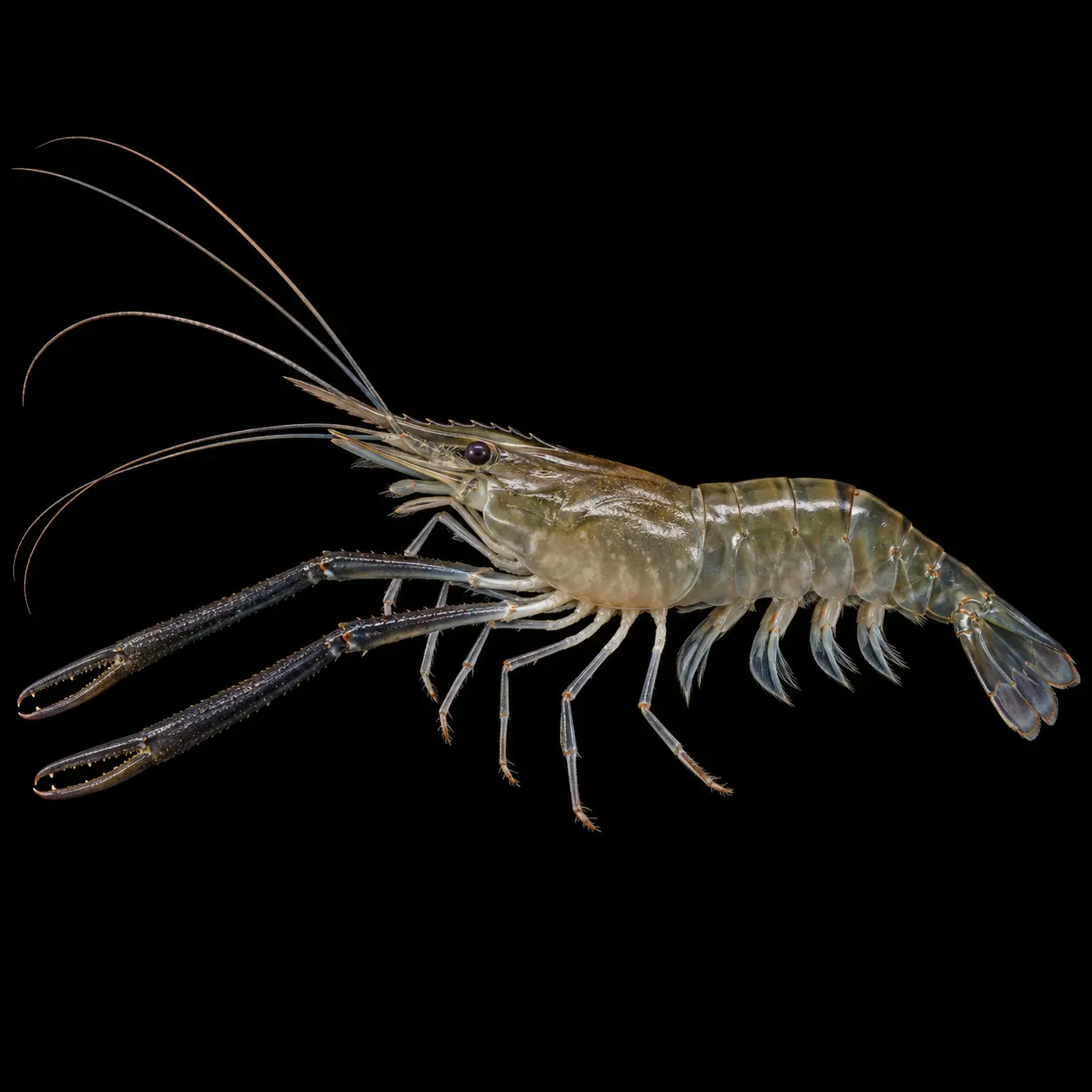
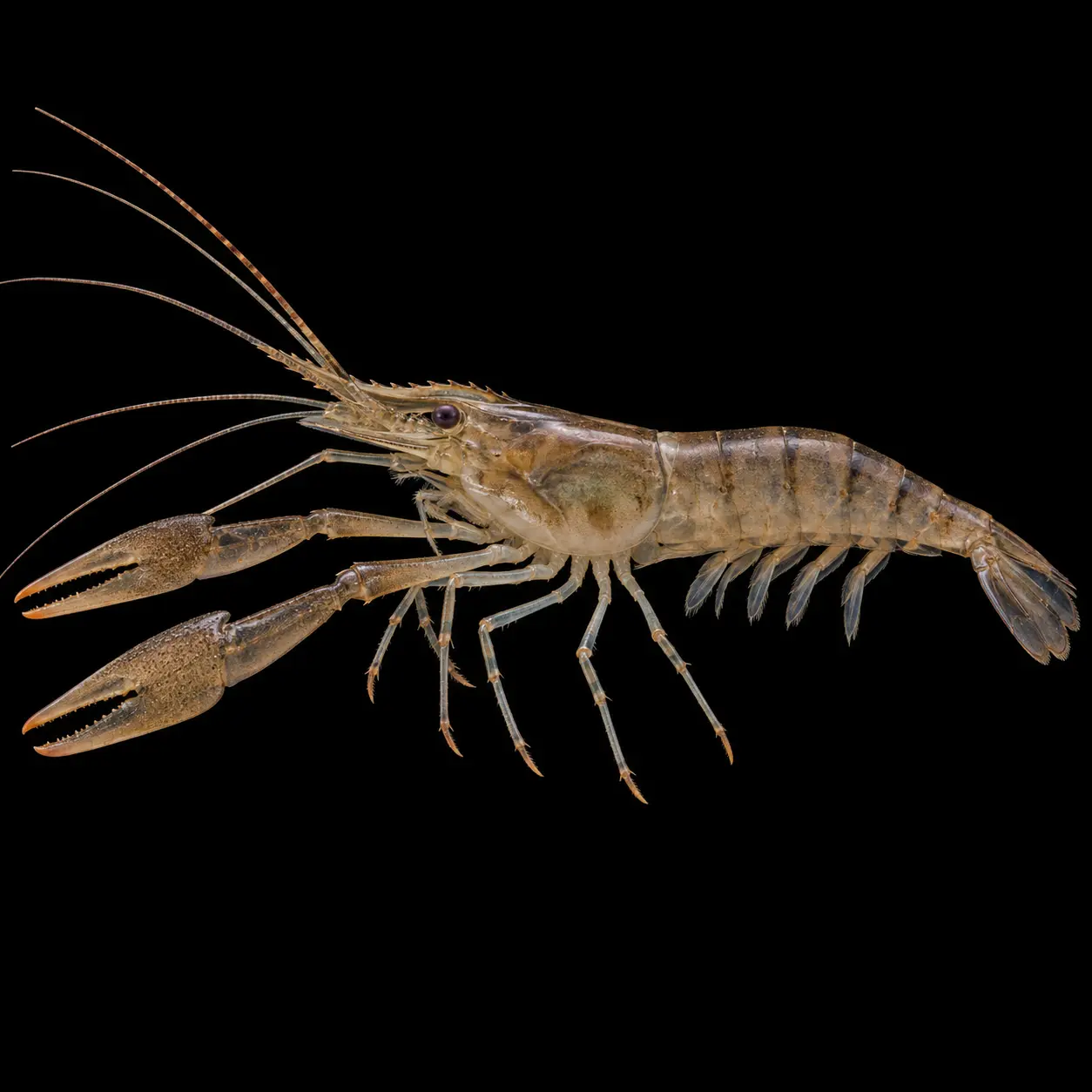
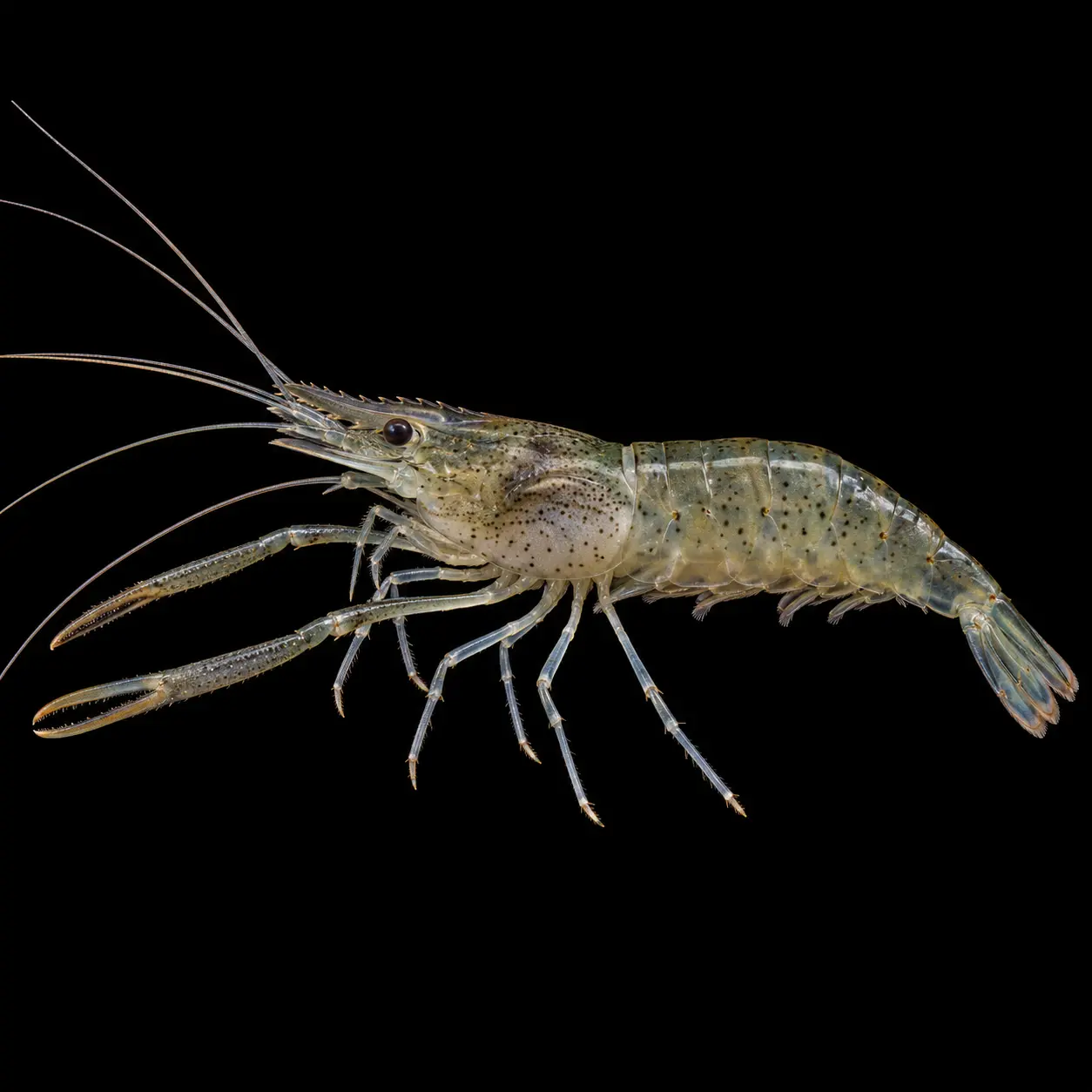
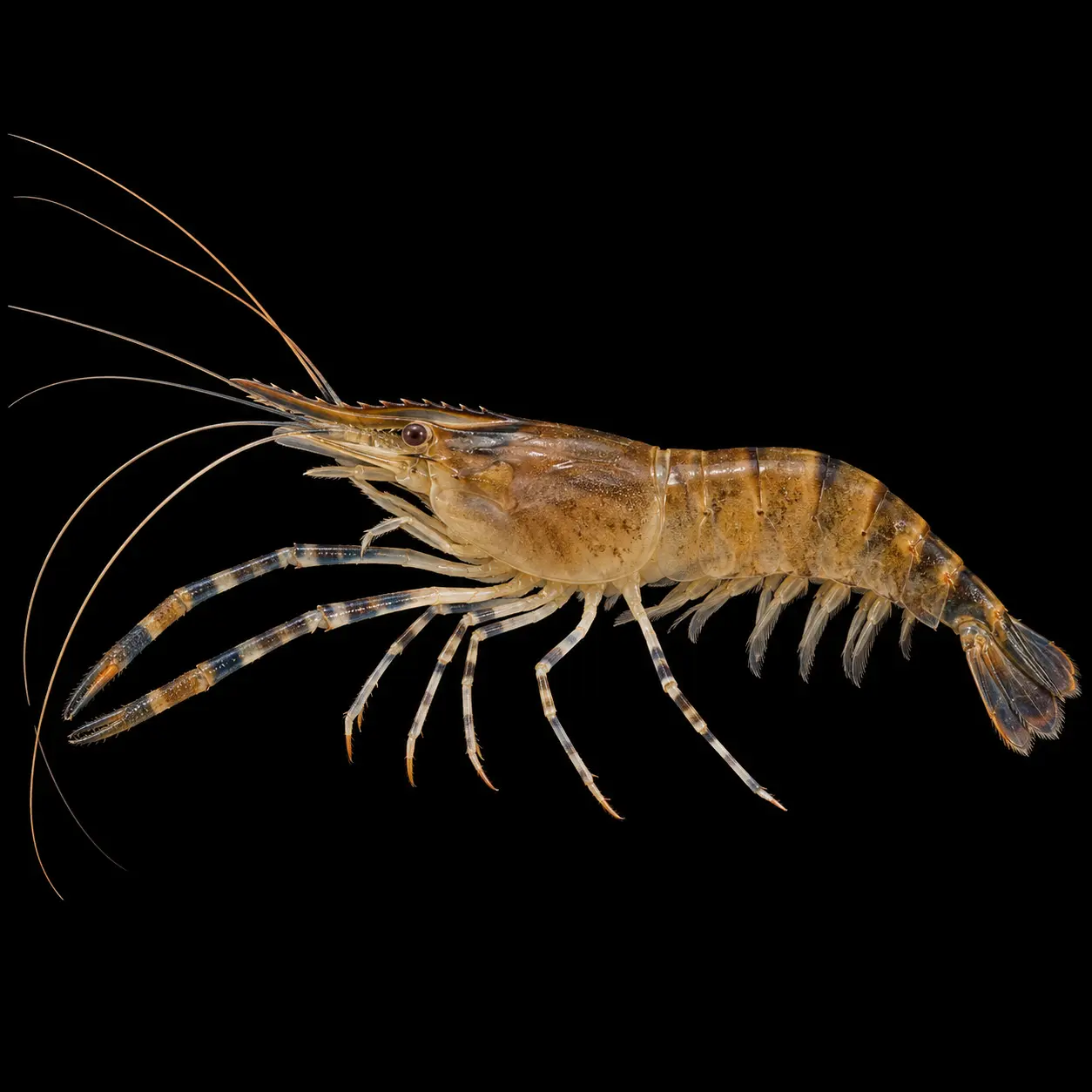
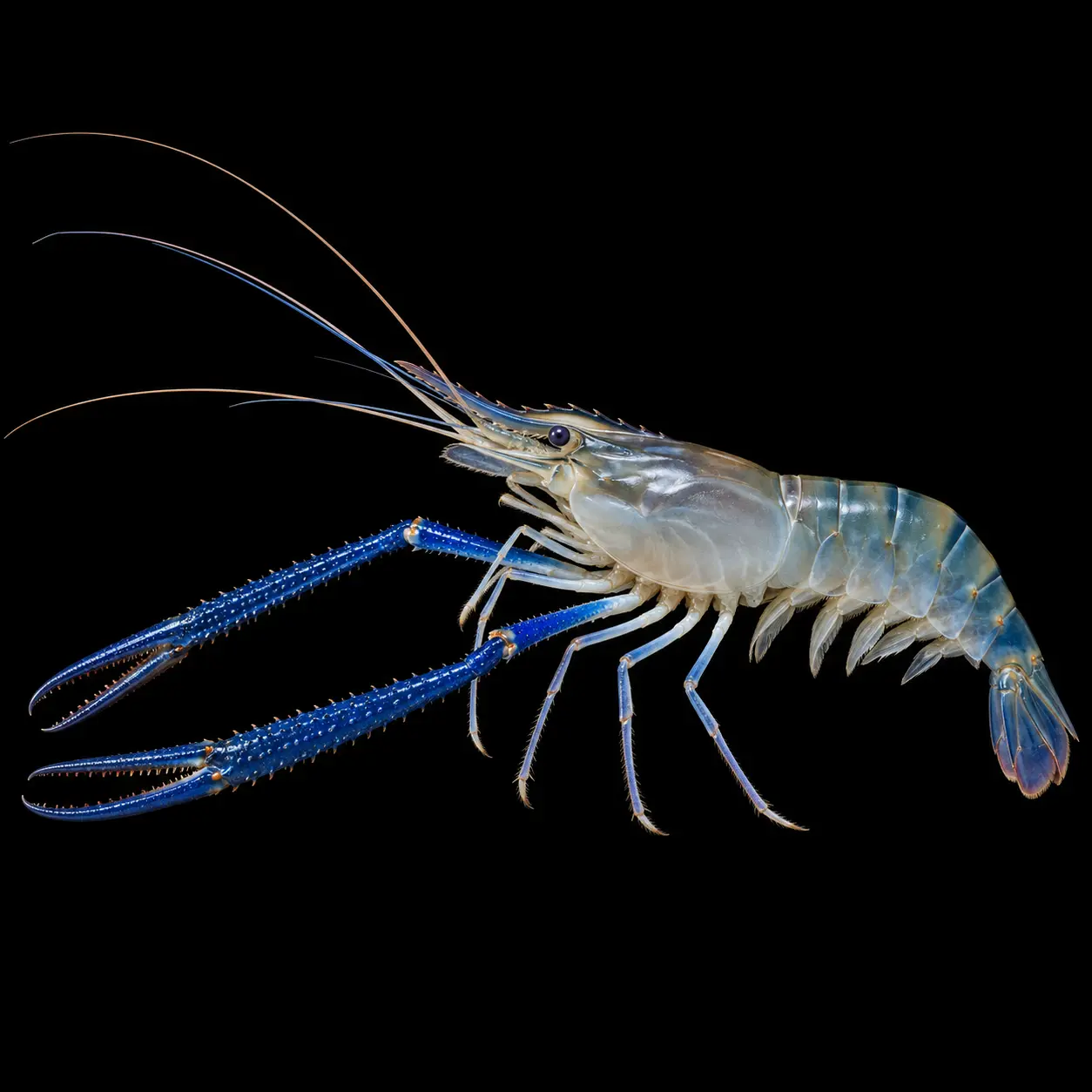
An imposing native prawn whose mature males develop extremely long second claws. It needs substantially more space than dwarf shrimp, can prey on small tankmates, and normally uses brackish water during larval development.
Description
Reported maximum: 32 cm total length.
Temperature 28–31 °C · pH 7.0–8.5 · Dissolved O₂ 3–7 mg/L · GH 30–150 mg/L as CaCO₃grow-out guidance · not larvae
Natural food: Earthworms; mollusc flesh.Prepared food: Water-stable prawn pellets.
Biology: mature biofilter; species-specific microbial counts are not established.
Sources & limits
Provide substantial floor space, strong oxygenation and filtration, individual shelters and a varied sinking diet. Separate vulnerable smaller animals; males compete and cannibalism occurs. Freshwater adults and brackish-water larvae require different systems.
FAO nursery/grow-out guidance only, not larval hatchery water. Hardness is reported as mg/L CaCO₃, not degrees. The oxygen range is the cited production guidance, not an instruction to reduce aeration.
Omitted parameters have no verified range in the sources checked. Habitat or experimental measurements are not safe keeping limits. GH, KH, TDS and conductivity are not interchangeable.
General system guidance: target free ammonia (NH₃) and nitrite (NO₂⁻) at 0 mg/L; account for test detection limits. These are chemical measurements, not microbial counts or each species’ tolerance limits. OATA · 2022. Assess biofilter function through waste processing and water tests, not clarity alone. Biofiltration reference.
- Holthuis (1980), FAO shrimp and prawn catalogue
- FAO (2002), freshwater-prawn farming manual
- FAO (2002), freshwater-prawn nursery/grow-out water, Table 5
- FAO (2002), freshwater-prawn feeding, section 6.3
Size checked: . Water/food checked: .
Space, shelter and compatibility
Care-planning notes. Confirm exact requirements for the species and source population.
- Verify adult body and claw size; a small juvenile can grow into a powerful animal.
- Plan shelters and separation during vulnerable moulting stages. Do not assume compatibility with small fish or dwarf shrimp.
- Check the exact species and life cycle before designing a breeding system; related crustaceans can have different requirements.
Evidence record
Conservation record: A current assessment has not been verified for this profile. This does not establish Not Evaluated status or imply low risk. Open the retained source. Conservation status does not establish legal protection, availability or permission to trade.
Catalogue inclusion confirms a research record, not current stock, legal export, or destination-country import permission.