Identity and origin
- Origin
- Southern Indonesian Papua; also Papua New Guinea and northern Australia
- Identity
- Native New Guinea–Australian rainbowfish
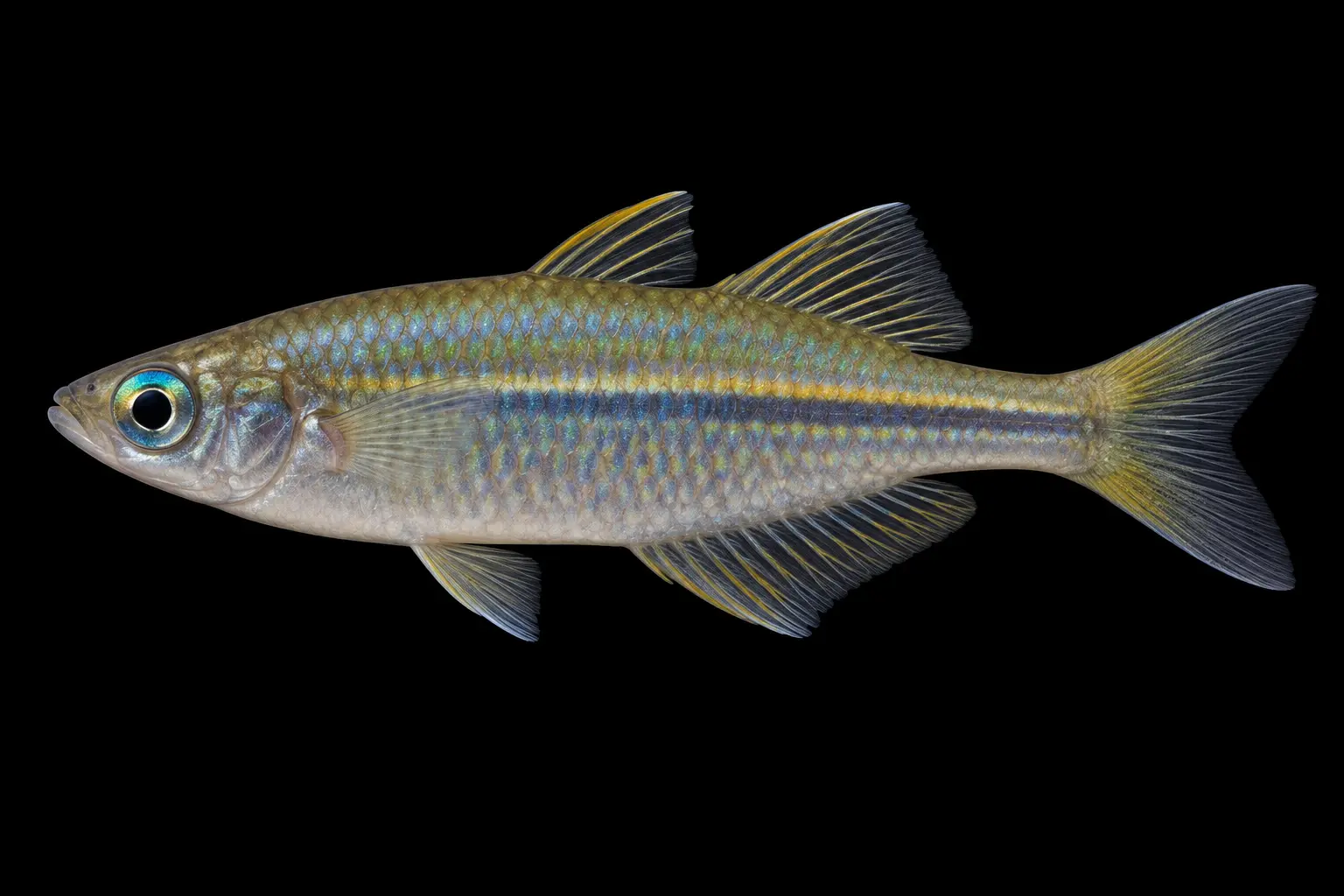
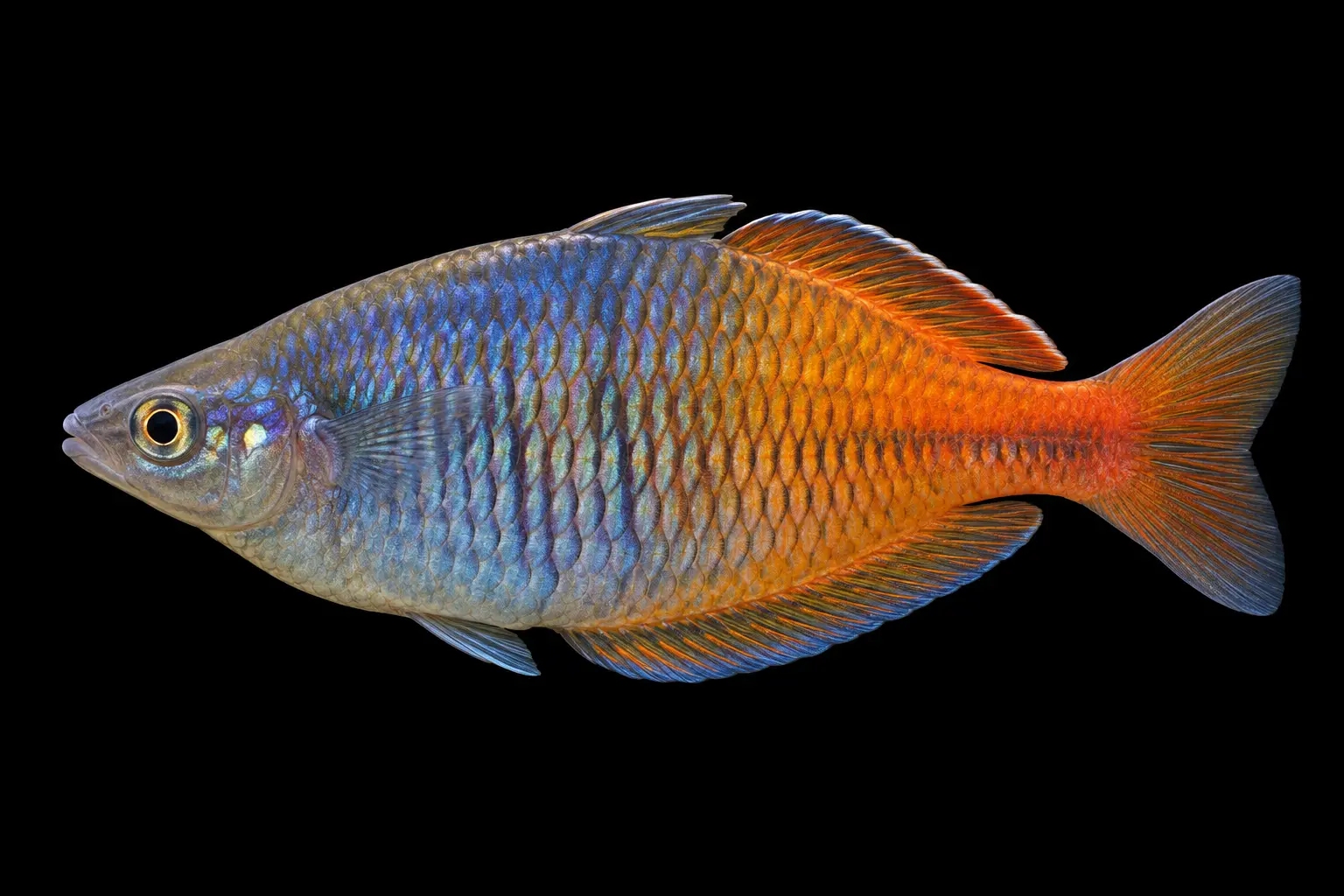
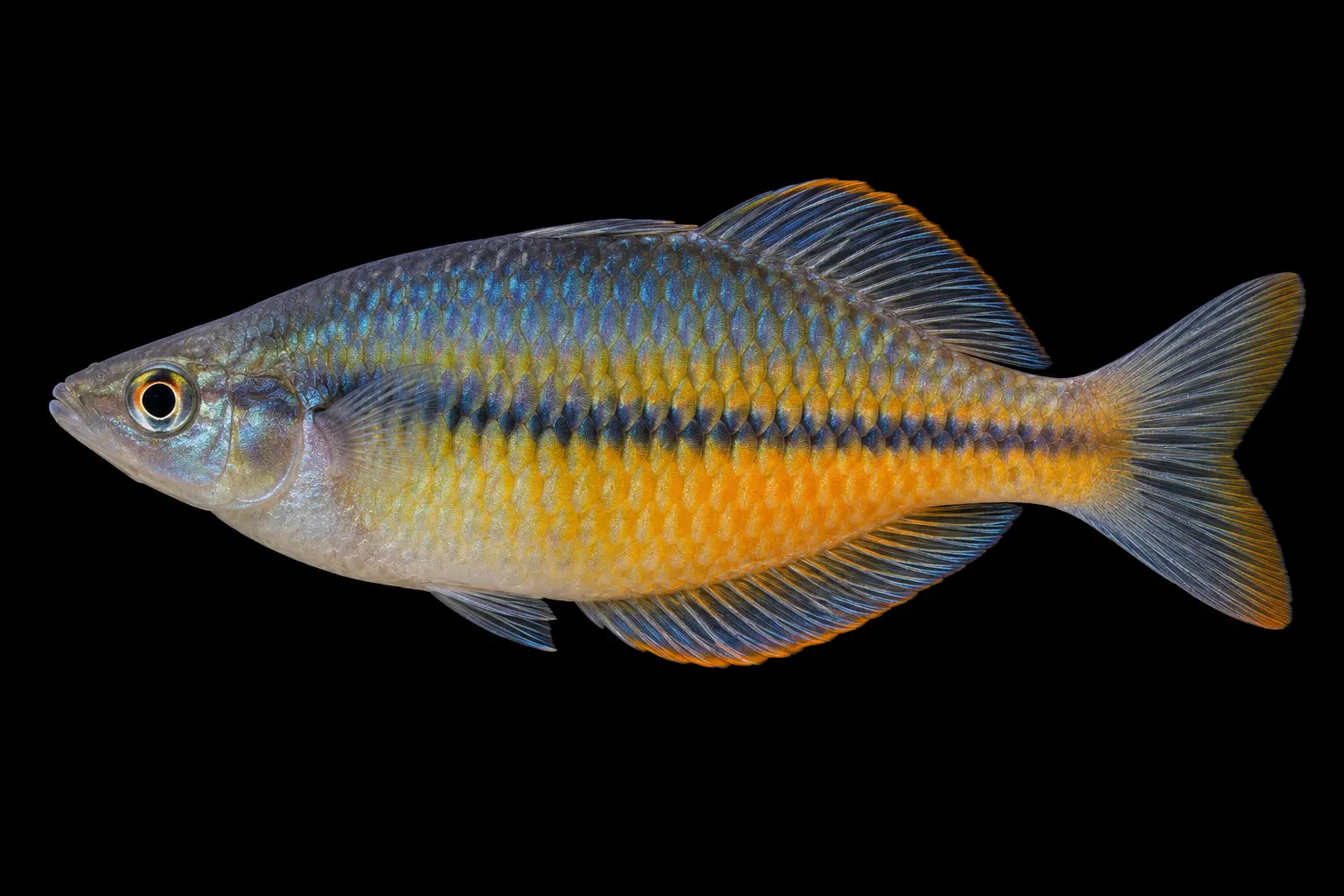
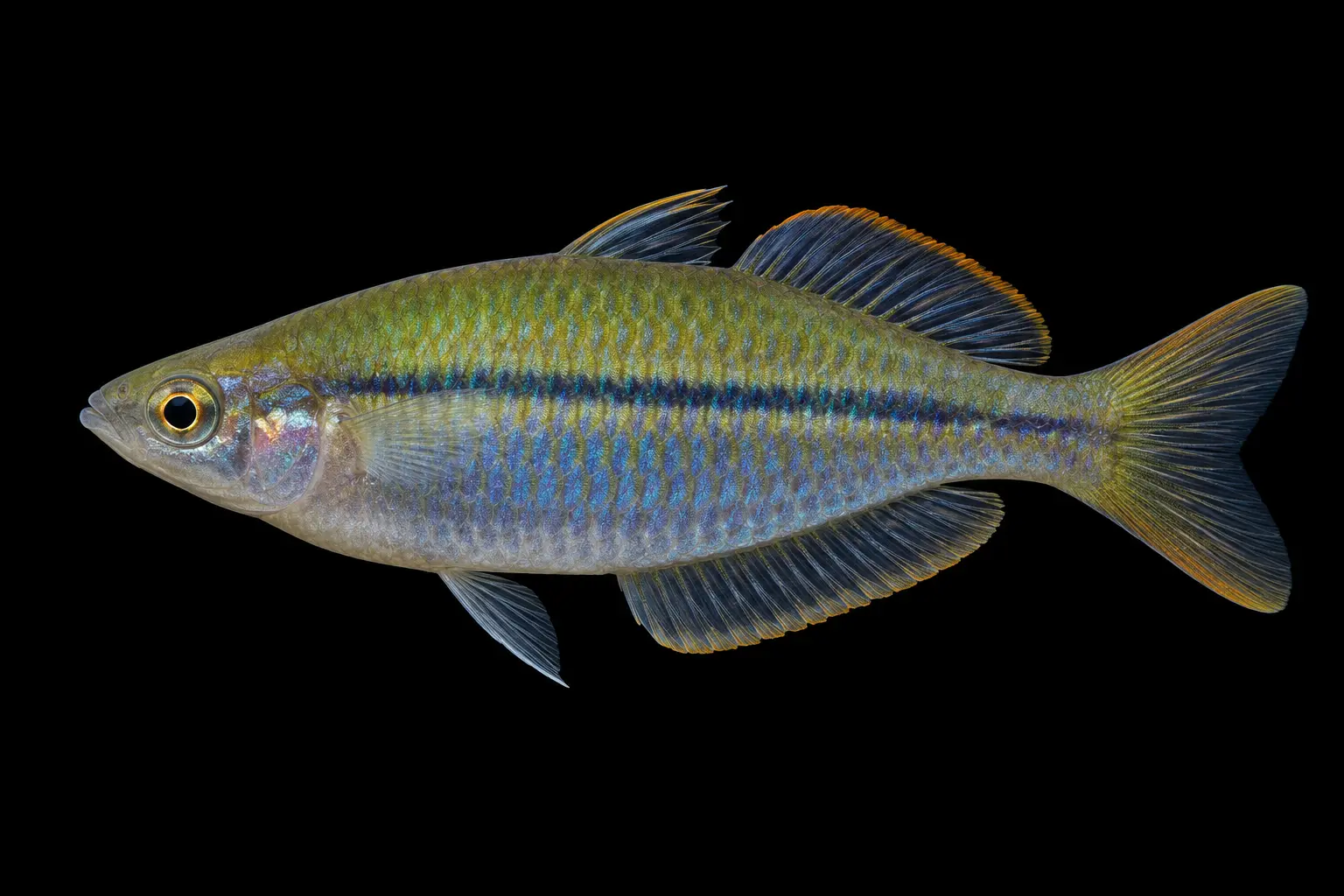
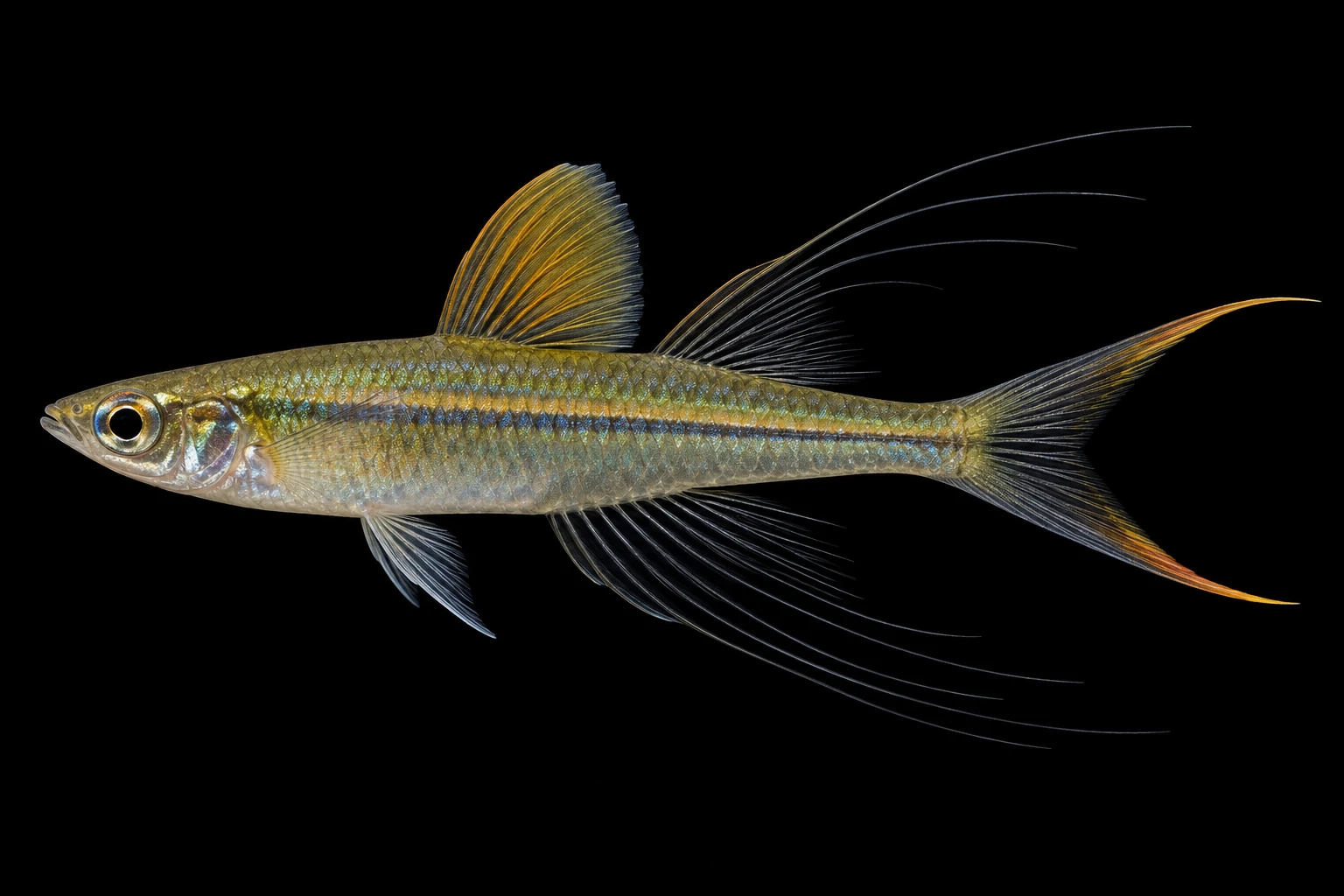
Males display elongated fin rays above and below a slender body. The published maximum body length is 4 cm standard length; fin extensions and total length are different measurements. An Indonesian locality must be documented separately from Australian or Papua New Guinean lines.
Habitat and care
Vegetated lowland swamps, ponds and slow streams. Habitat and identity reference
Plan a group, fine foods and calm feeding opportunities. Small size and delicate fins call for careful companion selection.
Description
Reported maximum: 5 cm (measurement unspecified)
Temperature 22–30 °C · pH 5.0–8.0 · GH 1–12 °dGHspecies guidance
Natural food: Daphnia/Moina, Artemia nauplii, microwormPrepared food: Finely crushed floating food
Biology: mature biofilter; species-specific microbial counts are not established.
Sources & limits
Keep a quiet group with dense fine-leaved plants and gentle filtration in soft, mildly acidic to neutral freshwater. Supply very small foods and prevent competition from faster feeding fish.
Specialist aquarium guidance; acclimation and provenance still matter. This is not a measured optimum or a breeding protocol.
FishBase lists 4 cm SL; the specialist account gives 5 cm maximum without defining the measurement.
Omitted parameters have no verified range in the sources checked. Habitat or experimental measurements are not safe keeping limits. GH, KH, TDS and conductivity are not interchangeable.
General system guidance: target free ammonia (NH₃) and nitrite (NO₂⁻) at 0 mg/L; account for test detection limits. These are chemical measurements, not microbial counts or each species’ tolerance limits. OATA · 2022. Assess biofilter function through waste processing and water tests, not clarity alone. Biofiltration reference.
Size checked: . Water/food checked: .
Design for feeding and movement
Care-planning notes. Confirm exact requirements for the species and source population.
- Check adult dimensions and social needs for this species; small body size alone does not establish aquarium suitability.
- Provide swimming space and refuge, and choose companions with compatible feeding behaviour.
- Match food size to the animal and observe feeding directly, especially when keeping small species with faster feeders.
Evidence record
Conservation record: A current assessment has not been verified for this profile. This does not establish Not Evaluated status or imply low risk. Conservation status does not establish legal protection, availability or permission to trade.
Catalogue inclusion confirms a research record, not current stock, legal export, or destination-country import permission.