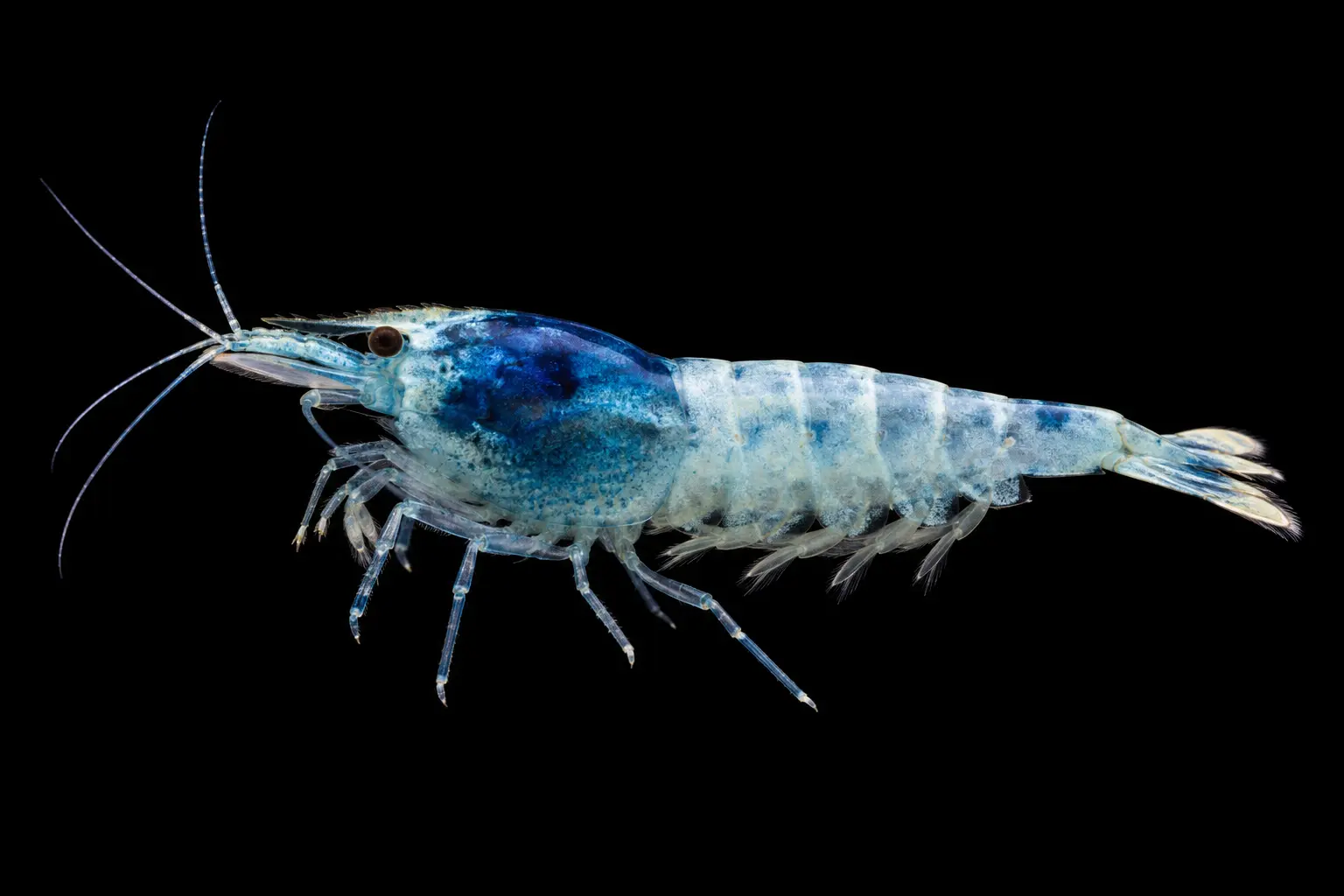
Identity and origin
- Origin
- Captive-bred ornamental line; East Asian bee or tiger shrimp ancestry
- Identity
- Aquarium breeding line—not a separate formally described species
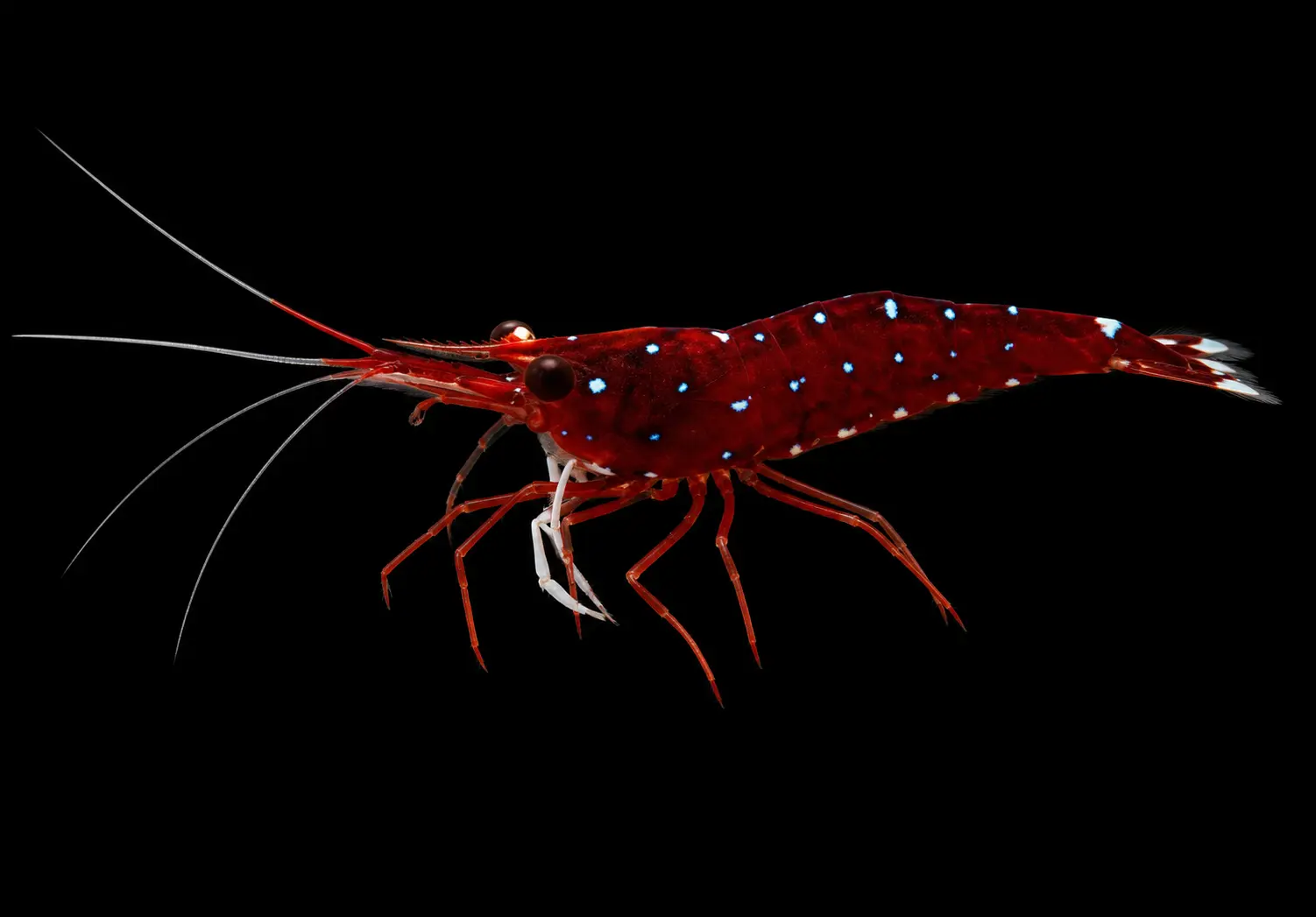
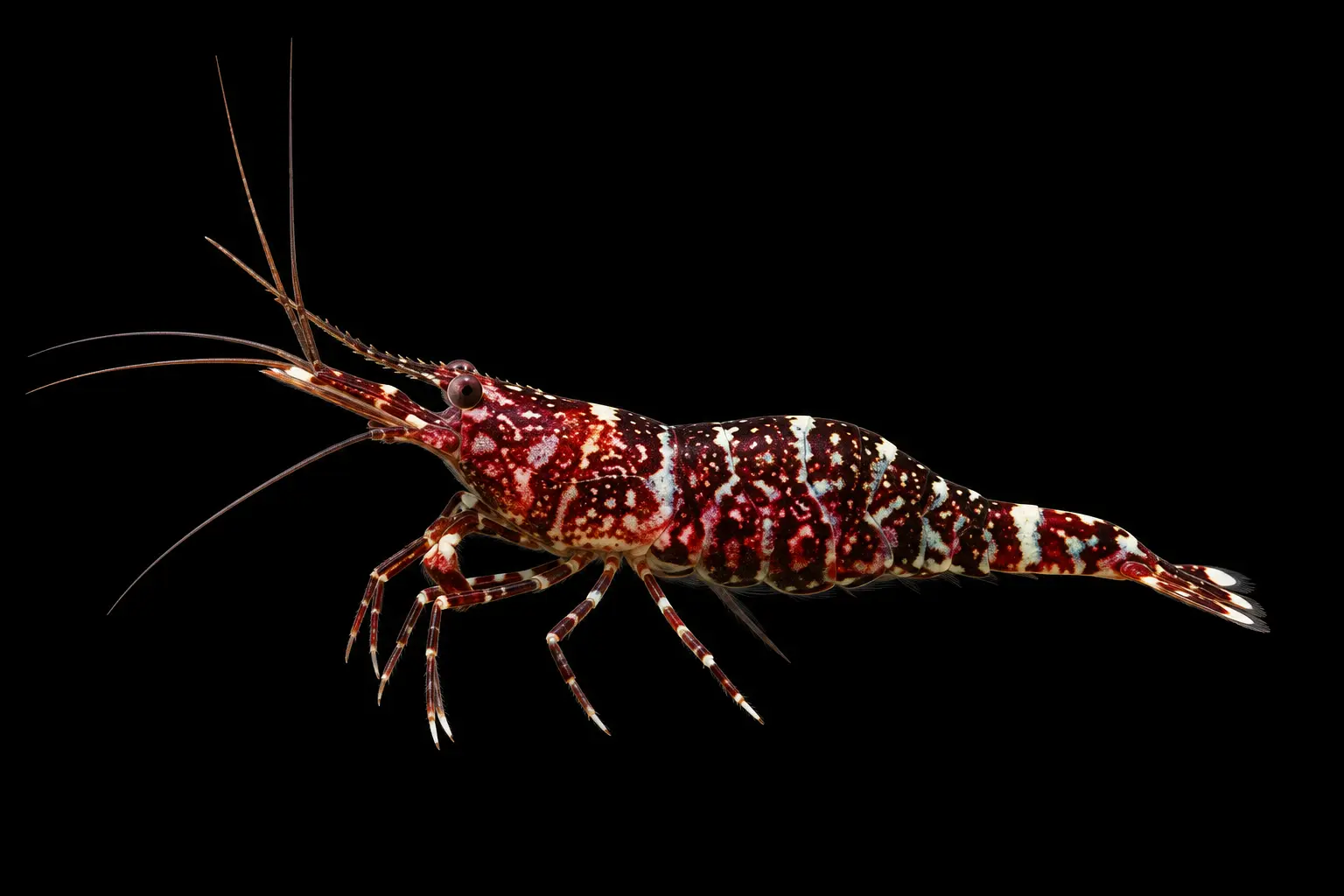
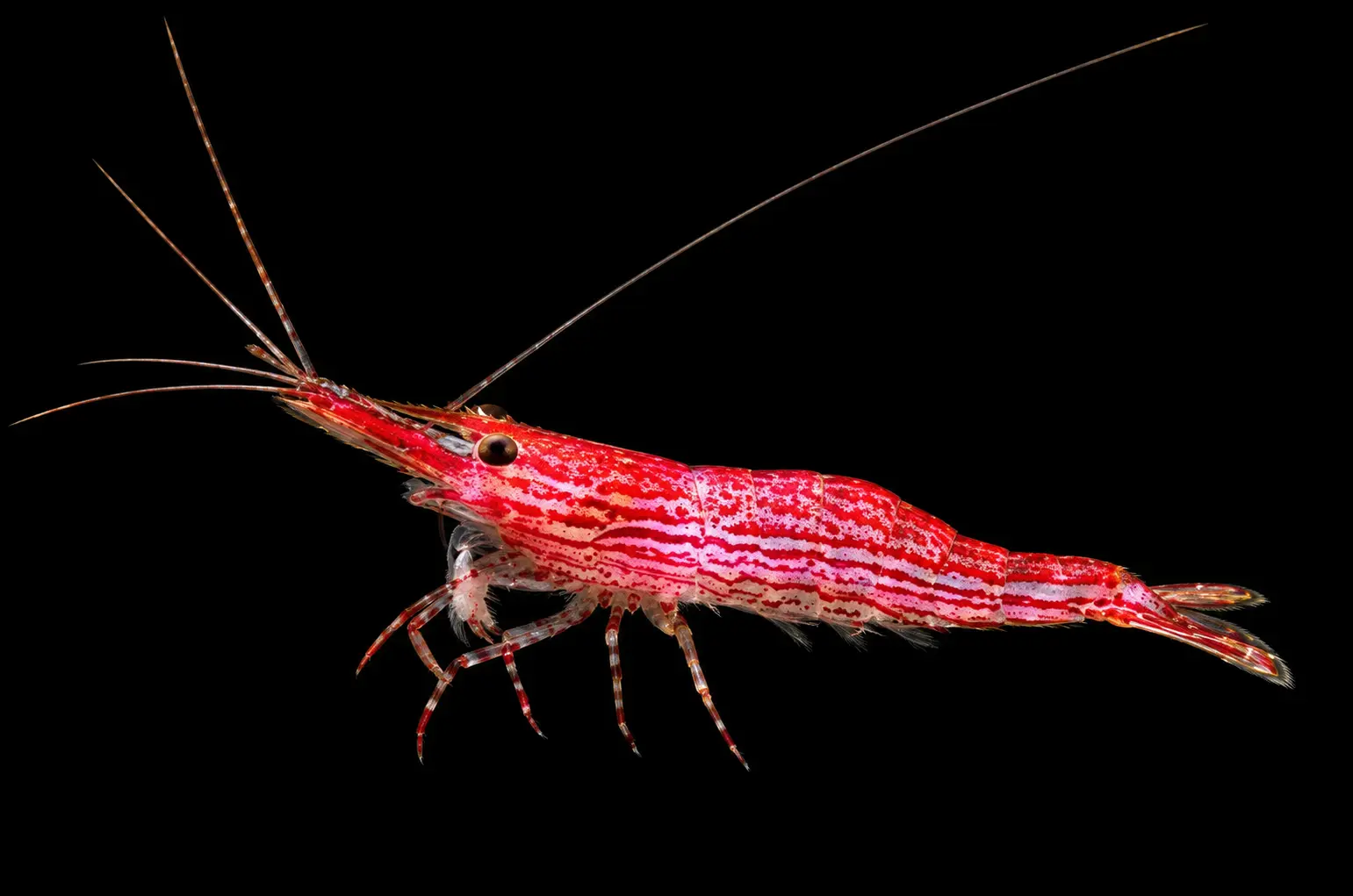
A pale-to-deep blue Taiwan Bee line. Colour intensity does not by itself confirm ancestry, health, or grade.
Description
Maximum total length unverified for these Taiwan Bee lines.Maximum not verified
Temperature 20–24 °Cgroup guidance
pH 6.0–6.5 · GH 5.5–6.5 °dGH · Conductivity 250–290 µS/cmmineral-product guidance · group
Natural food: Biofilm; clean dried leaves.Prepared food: Complete shrimp feed.Food guidance at group level
Biology: mature biofilter; species-specific microbial counts are not established.
Sources & limits
Maintain a mature bee-shrimp aquarium with stable soft acidic water, controlled remineralisation and plentiful biofilm. Match the breeder’s established conditions, feed conservatively, and avoid abrupt changes during acclimation or substrate replacement.
Group-level guidance
Bee-shrimp group guidance and manufacturer water preparation; not a strain-specific optimum or proof of ancestry. Confirm the breeder’s substrate and water before transfer.
Taiwan Bee trade lines are not verified here as pure wild C. cantonensis; ancestry and water needs should be confirmed with the breeder.
Omitted parameters have no verified range in the sources checked. Habitat or experimental measurements are not safe keeping limits. GH, KH, TDS and conductivity are not interchangeable.
General system guidance: target free ammonia (NH₃) and nitrite (NO₂⁻) at 0 mg/L; account for test detection limits. These are chemical measurements, not microbial counts or each species’ tolerance limits. OATA · 2022. Assess biofilter function through waste processing and water tests, not clarity alone. Biofiltration reference.
- Klotz & von Rintelen (2014); ornamental taxonomy context
- Manufacturer beginner shrimp guide
- Flanders Animal Welfare, Huisdierwijzer zoetwatergarnalen (2021), species table
- Manufacturer guidance — mineral preparation for bee shrimp
Size checked: . Water/food checked: .
Know the breeding line
Care-planning notes. Confirm exact requirements for the species and source population.
- Request the breeder’s established water and mineral conditions rather than applying a universal Caridina recipe.
- Use a stable, mature aquarium with grazing surfaces and a controlled feeding routine.
- A trade grade describes appearance; it does not establish a pure species, locality or conservation breeding programme.
Evidence record
Conservation record: A current assessment has not been verified for this profile. This does not establish Not Evaluated status or imply low risk. Conservation status does not establish legal protection, availability or permission to trade.
Catalogue inclusion confirms a research record, not current stock, legal export, or destination-country import permission.