Identity and origin
- Origin
- Lake Towuti, Sulawesi, Indonesia
- Identity
- Described freshwater species; lake/catchment endemic
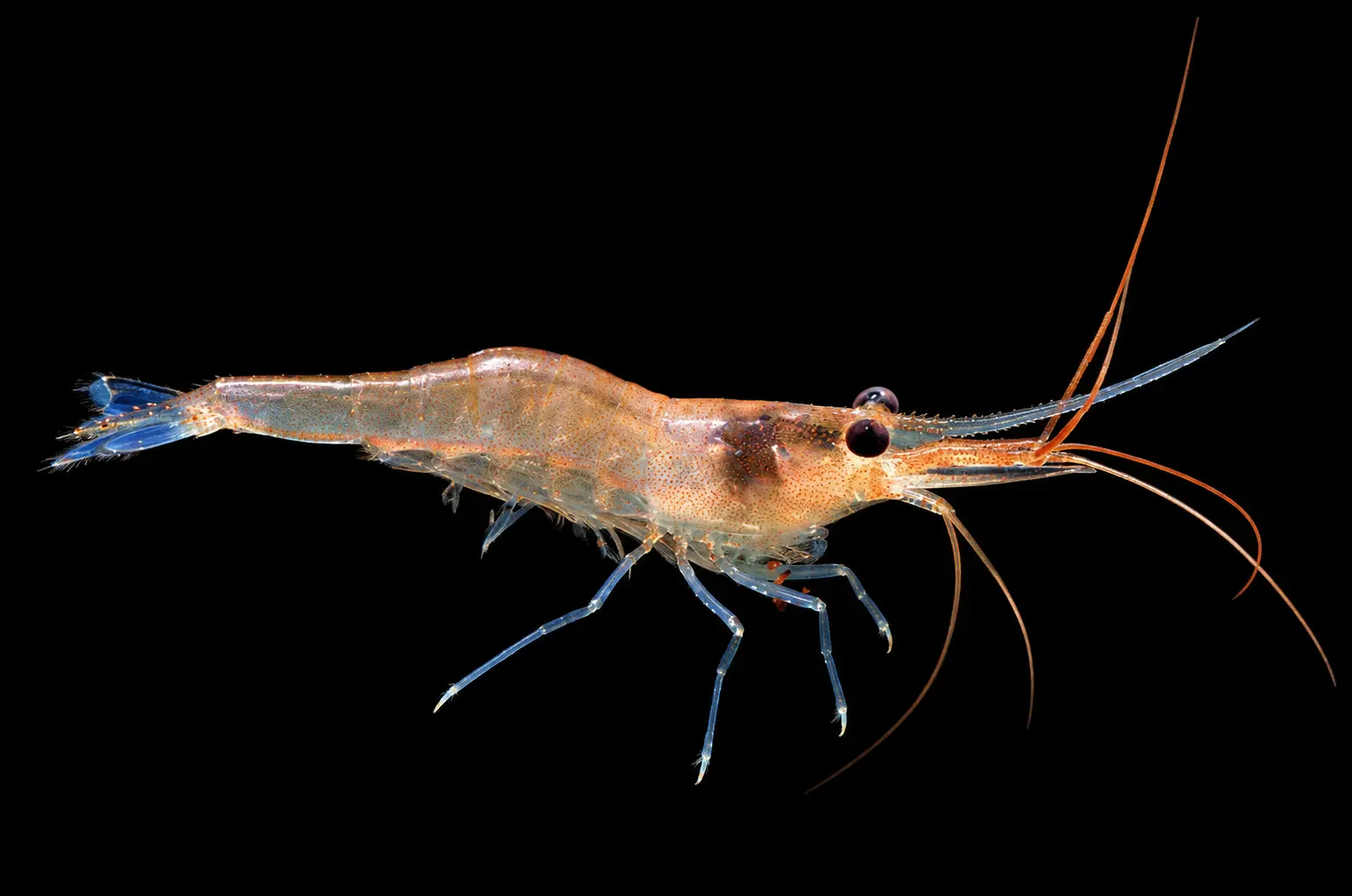
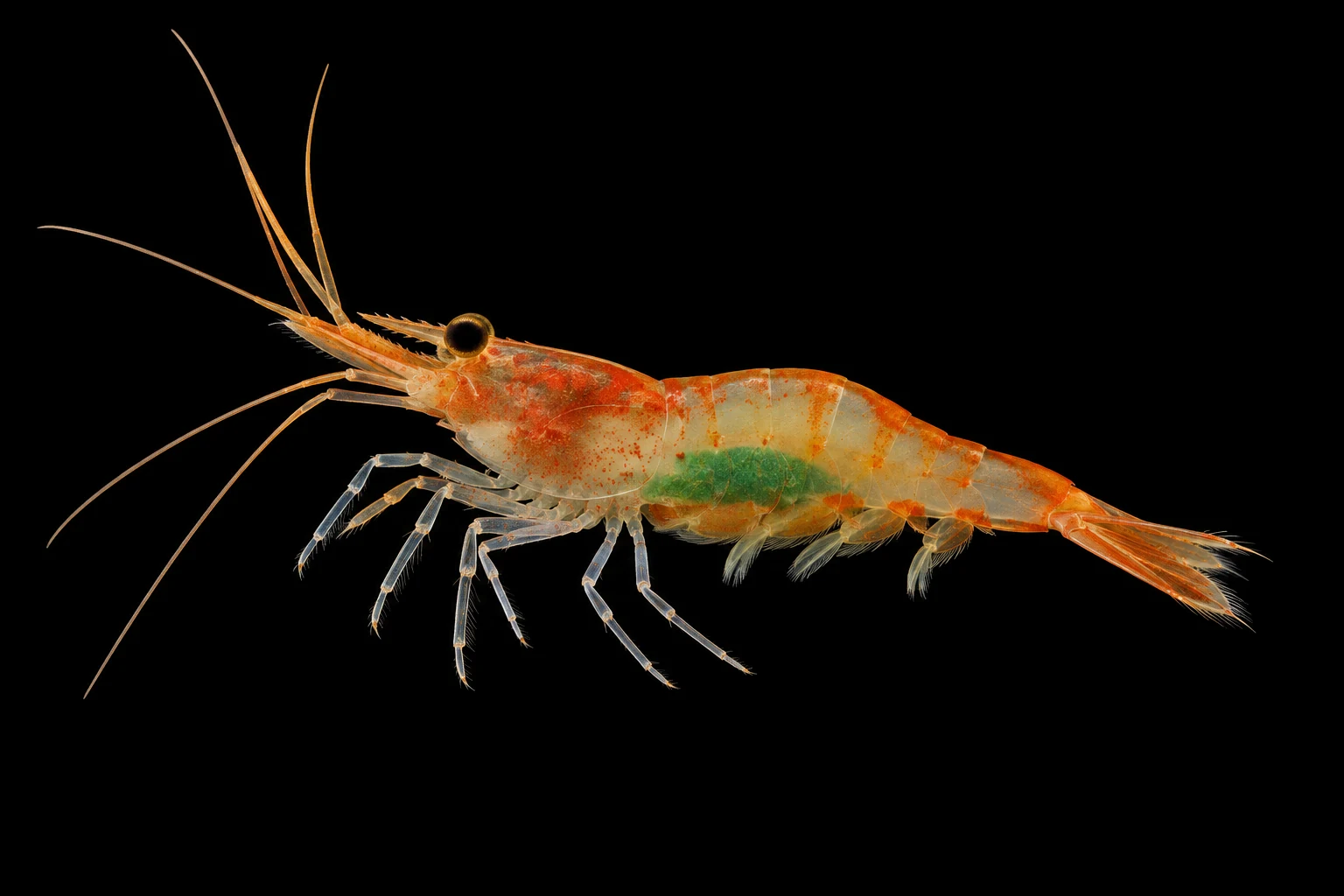
A translucent yellowish shrimp with a long rostrum and two conspicuous yellow abdominal bands. Its subdued body colour contrasts with the deeper red of C. spinata.
Habitat and care
Primarily deeper boulder habitat; sampled adults occurred below about 3 m. Habitat and identity reference
Specialist research profile. Match the documented microhabitat; reliable species-specific captive requirements have not been established by the sources used here. Lake depth, sponge association or shell use is ecological evidence, not a proven aquarium recipe.
Description
Examined series: up to 4.9 mm carapace; maximum total length unverified.Examined specimens · not an adult maximum
Temperature 27–31 °Chabitat record — not an aquarium target
Natural food: Species-specific food not verified.Prepared food: Acceptance unverified.
Biology: mature biofilter; species-specific microbial counts are not established.
Sources & limits
Provide mature large rocks and shaded crevices for this deeper-water Towuti specialist, plus smaller juvenile shelters. Maintain stable warm mineral water with oxygenation; avoid abrupt changes and confirm regular feeding.
Species-focused guidance · habitat inference, not a validated protocol
Malili lake observations only; not a validated aquarium range. Other water parameters and prepared-food acceptance for this species remain unverified.
Care is inferred from documented habitat; a complete species-specific aquarium protocol is not established.
Omitted parameters have no verified range in the sources checked. Habitat or experimental measurements are not safe keeping limits. GH, KH, TDS and conductivity are not interchangeable.
General system guidance: target free ammonia (NH₃) and nitrite (NO₂⁻) at 0 mg/L; account for test detection limits. These are chemical measurements, not microbial counts or each species’ tolerance limits. OATA · 2022. Assess biofilter function through waste processing and water tests, not clarity alone. Biofiltration reference.
Size checked: . Water/food checked: .
Plan before choosing
- Habitat
- Ancient lakes
- Planning context
- The cited source supports this broad habitat classification. A verified husbandry protocol is not yet available here; do not treat natural habitat observations as an aquarium recipe.
von Rintelen & Cai (2009), species distribution and ecology
Source check: . Independent husbandry review pending.
Before choosing this species
Care-planning notes. Confirm exact requirements for the species and source population.
- Confirm the adult size and social behaviour of the exact species before planning its aquarium.
- Establish biological filtration and stable water conditions before introducing animals.
- Ask for locality, captive history and the actual animal’s feeding record; a catalogue image cannot provide these.
Varieties and trade names
Sun Stripe
Common nameThe usual paired yellow abdominal bands are species appearance, not a separate taxon. Source
Evidence record
Conservation record: Reported CR — Critically Endangered. The category is retained from a cited record. Verification of the direct assessment and its dates is not yet documented here. Open the retained source. Conservation status does not establish legal protection, availability or permission to trade.
Catalogue inclusion confirms a research record, not current stock, legal export, or destination-country import permission.
- von Rintelen & Cai (2009), Raffles Bulletin of Zoology 57: 343–452.
- Klotz, W., von Rintelen, T., Wowor, D., Lukhaup, C. & von Rintelen, K. (2021). Lake Poso’s shrimp fauna revisited. ZooKeys 1009: 81–122.
- Sun, J. (2025). Sulawesi shrimp hobby in China. Sulawesi Keepers. First-hand aquarium names and breeding observations, not a taxonomic revision.
- Rejlková, M. & Sun, J. (2025). Crossbreeding Sulawesi shrimps. Sulawesi Keepers. Keeper-reported crosses; not controlled genetic verification.