Identity and origin
- Origin
- Indonesia within a broad Indo-Pacific coastal range
- Identity
- Accepted in Gracidina; formerly Caridina gracilirostris
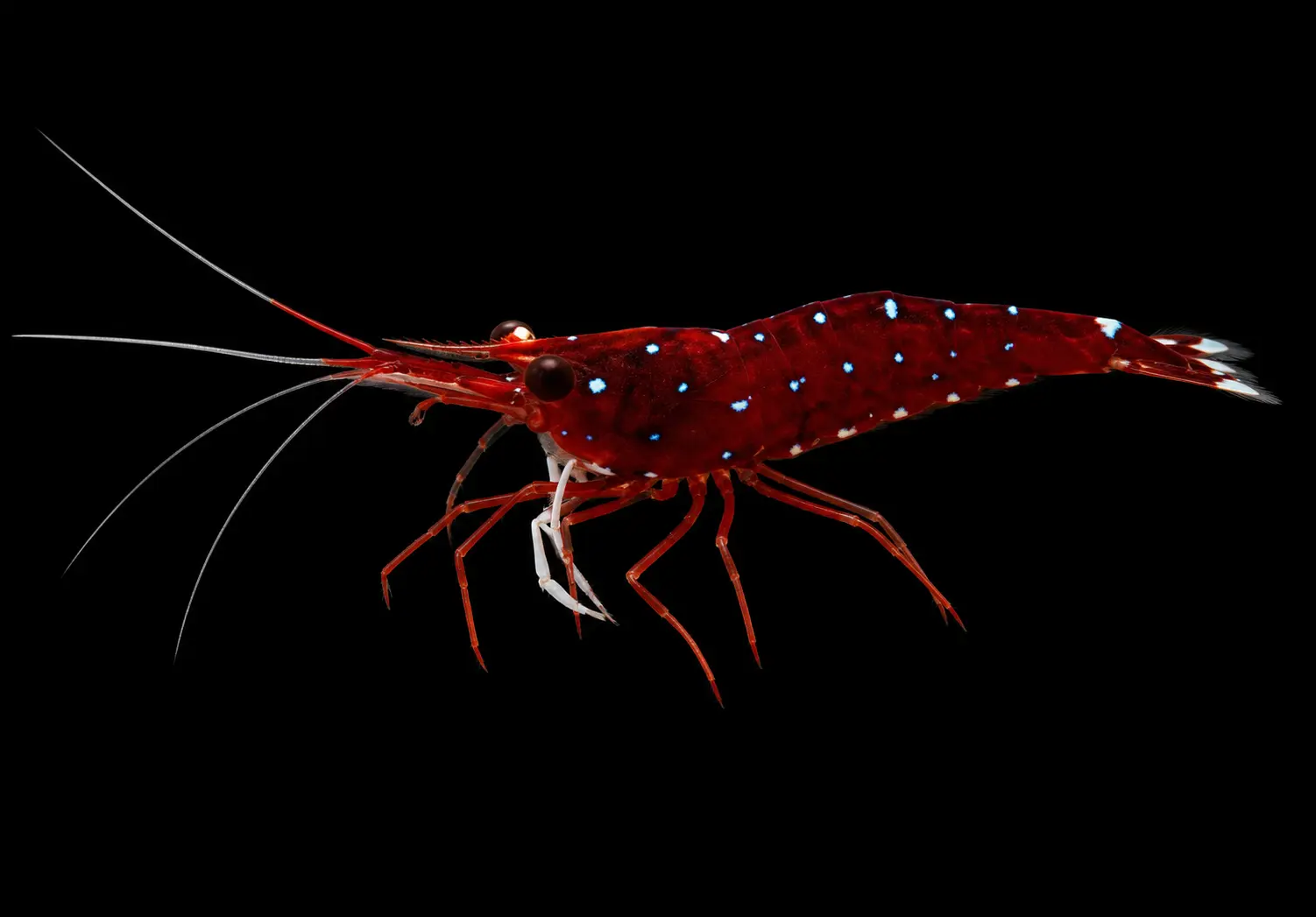
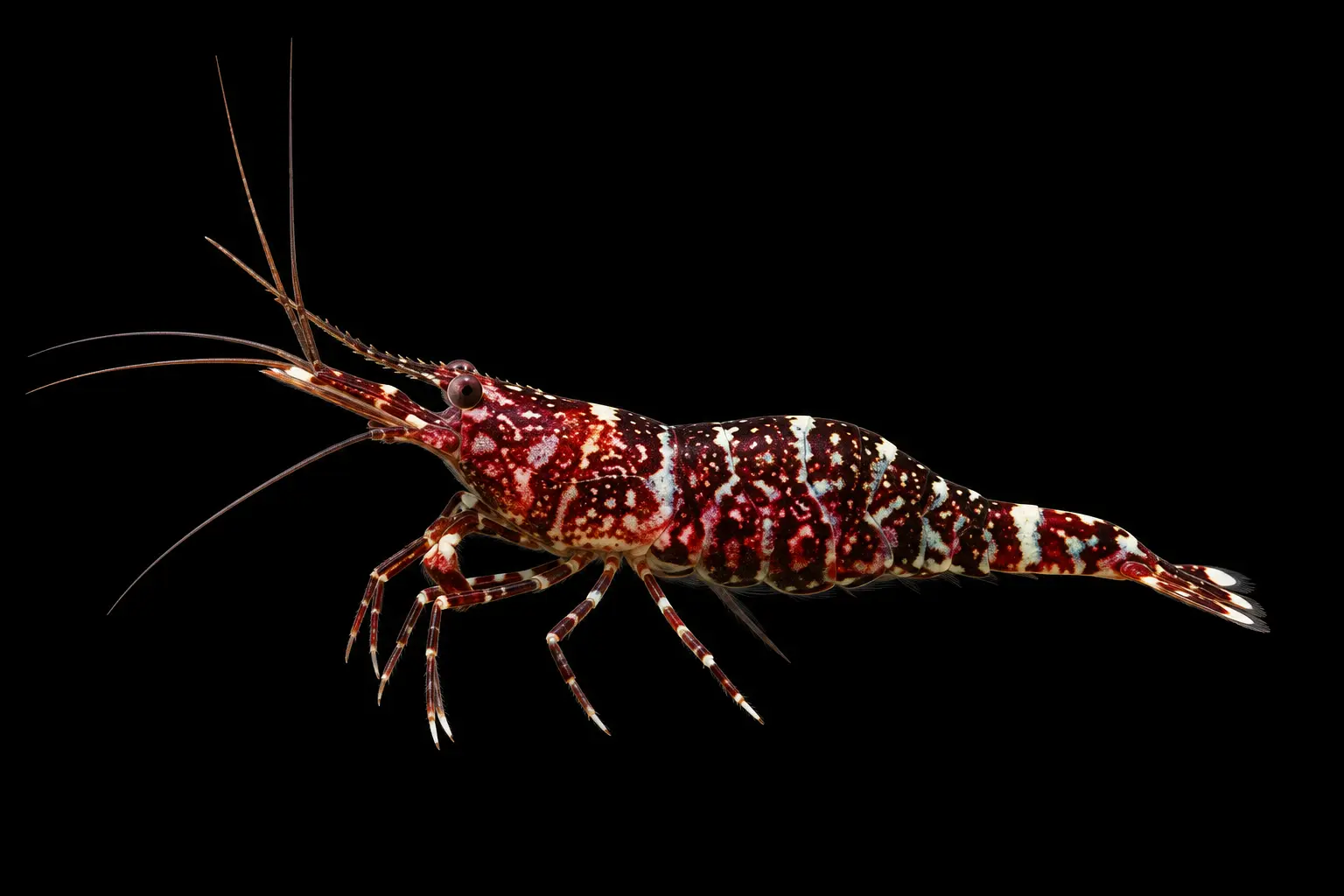
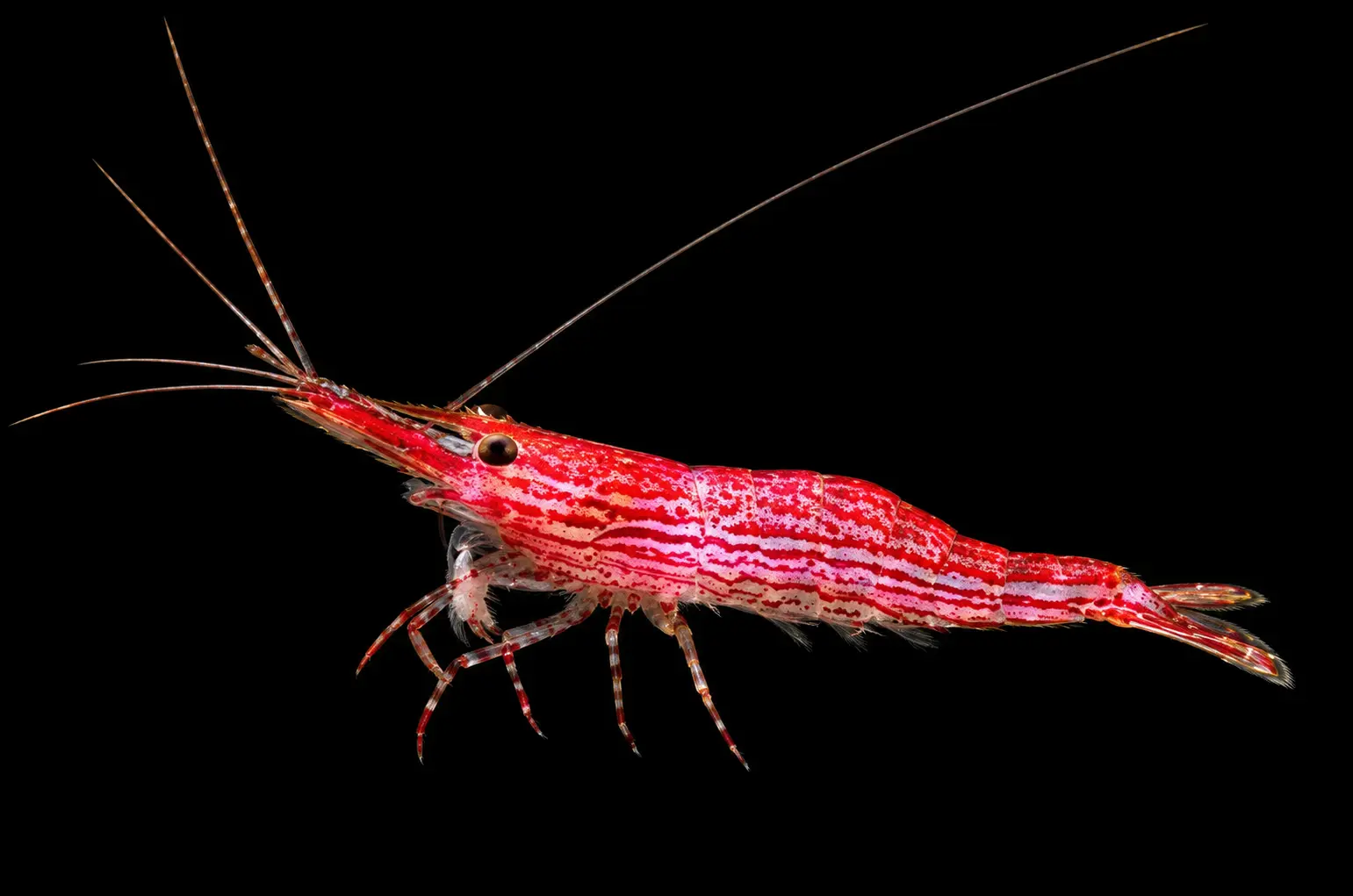
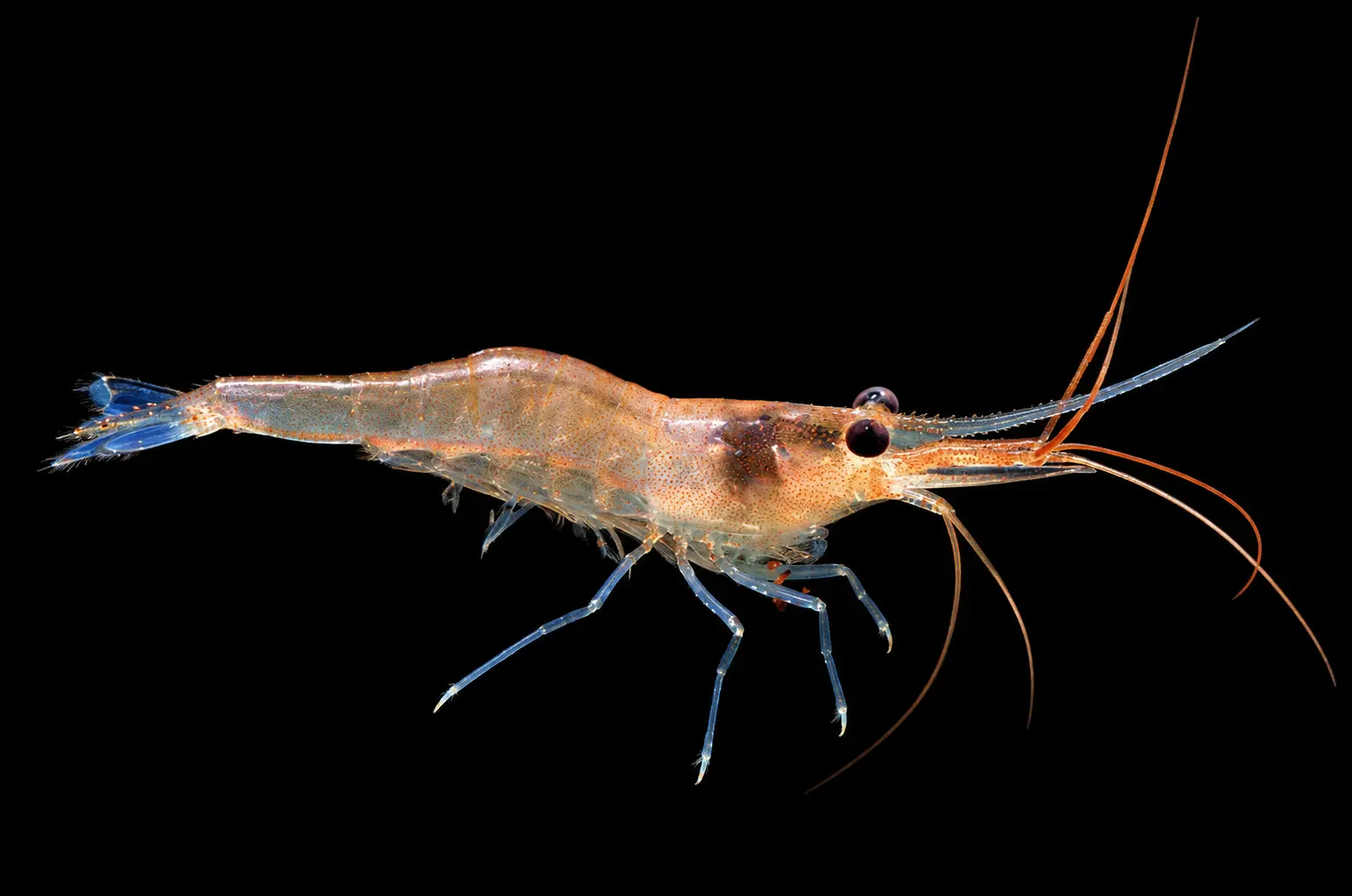
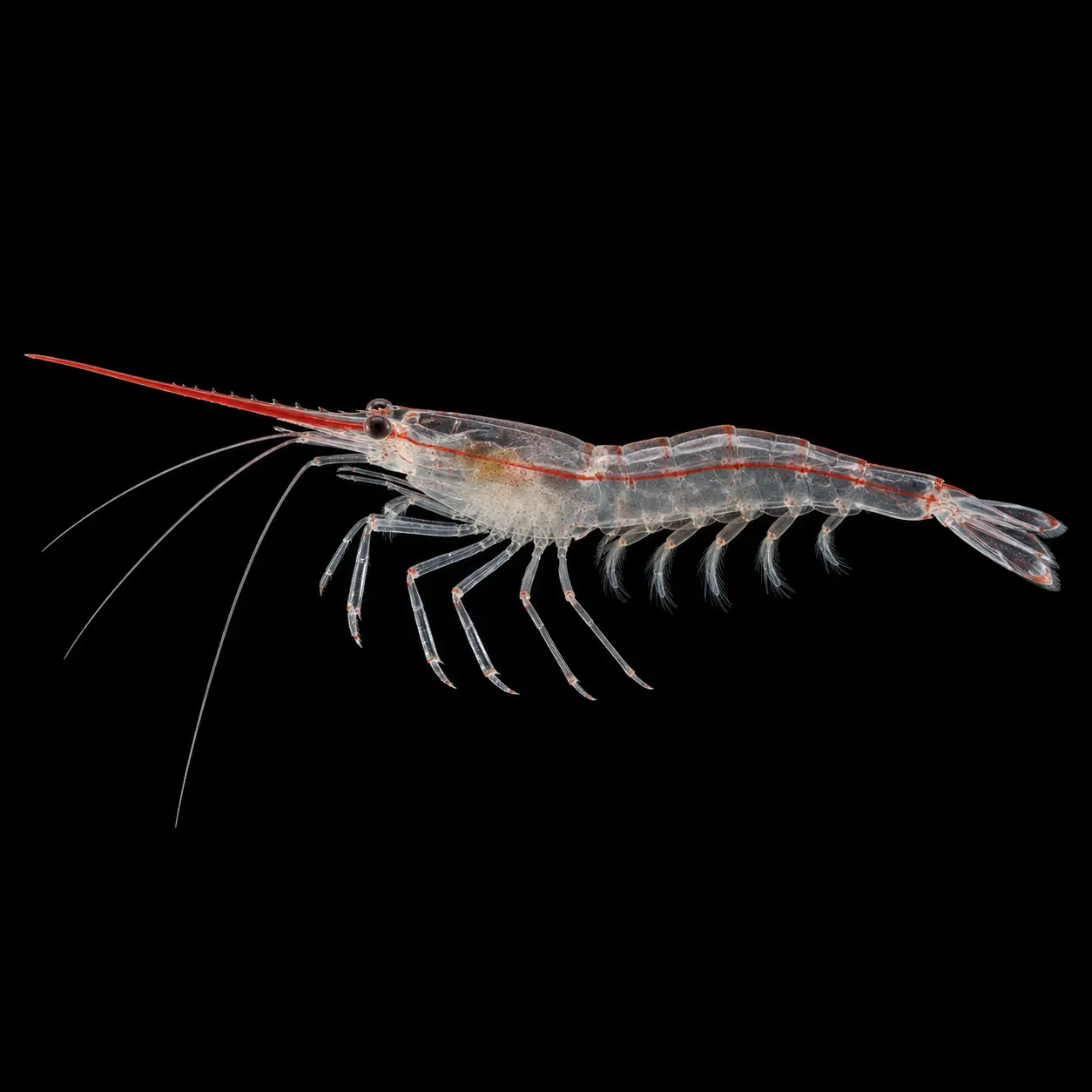
A transparent shrimp with a very long red rostrum. Adults use freshwater and mangrove-connected habitats while larvae need saline conditions; the current genus is Gracidina.
Description
Examined paralectotypes: up to 5.7 mm carapace; maximum total length unverified.Examined specimens · not an adult maximum
Specific water ranges are not yet verified.
Natural food: Grazing biofilm (group guidance).Prepared food: Shrimp pellet acceptance unverified for this taxon.Food guidance at group level
Biology: mature biofilter; species-specific microbial counts are not established.
Sources & limits
Provide mature plants and grazing biofilm with oxygenated water and shrimp-safe filtration. Match verified collection salinity, protect the delicate long rostrum during handling, and confirm larval requirements before planning aquarium breeding.
Species-specific adult-water ranges remain unverified. Larval salinity experiments must not be shown as adult aquarium targets; confirm taxonomic identity and provenance.
The 2026 genus update is retained. Specimen CL excludes the very long rostrum and is not whole-shrimp length; larval husbandry is not established by this habitat account.
Omitted parameters have no verified range in the sources checked. Habitat or experimental measurements are not safe keeping limits. GH, KH, TDS and conductivity are not interchangeable.
General system guidance: target free ammonia (NH₃) and nitrite (NO₂⁻) at 0 mg/L; account for test detection limits. These are chemical measurements, not microbial counts or each species’ tolerance limits. OATA · 2022. Assess biofilter function through waste processing and water tests, not clarity alone. Biofiltration reference.
Size checked: . Water/food checked: .
Before choosing this species
Care-planning notes. Confirm exact requirements for the species and source population.
- Confirm the adult size and social behaviour of the exact species before planning its aquarium.
- Establish biological filtration and stable water conditions before introducing animals.
- Ask for locality, captive history and the actual animal’s feeding record; a catalogue image cannot provide these.
Evidence record
Conservation record: Reported LC — Least Concern. The category is retained from a cited record. Verification of the direct assessment and its dates is not yet documented here. Open the retained source. Conservation status does not establish legal protection, availability or permission to trade.
Catalogue inclusion confirms a research record, not current stock, legal export, or destination-country import permission.