

LIMNIC / FISH COLLECTION
Fancy Betta
Fancy Betta. Eleven collection categories, shaped by our commitment to health, quality, and considered care.
A study in form.
Explore eleven ornamental Betta categories through their shape, movement and care. LIMNIC is preparing its collections; orders are not open.
Giant Betta, Females and Unique can overlap with fin-form categories. These are collection labels, not eleven separate species or a list of official show classes.
Explore our species research and collection plans. Orders and availability are not open yet.
Reading descriptions & sources
Fish SL excludes the tail fin; TL follows source endpoints, usually to the tail tip. CL measures the carapace only. Values are not converted between methods. Where a maximum is unverified, the largest examined specimen remains labelled as a specimen, not an adult maximum or a guaranteed final size.
Water ranges retain their source and scope: species, genus or group. Habitat measurements and experimental conditions are labelled separately from aquarium guidance. Missing numbers are not estimated. Prepared food is not always accepted; adapt food size to life stage and check feeding response. This summary does not replace system planning, quarantine, compatibility or adult space.
 FANCY BETTA
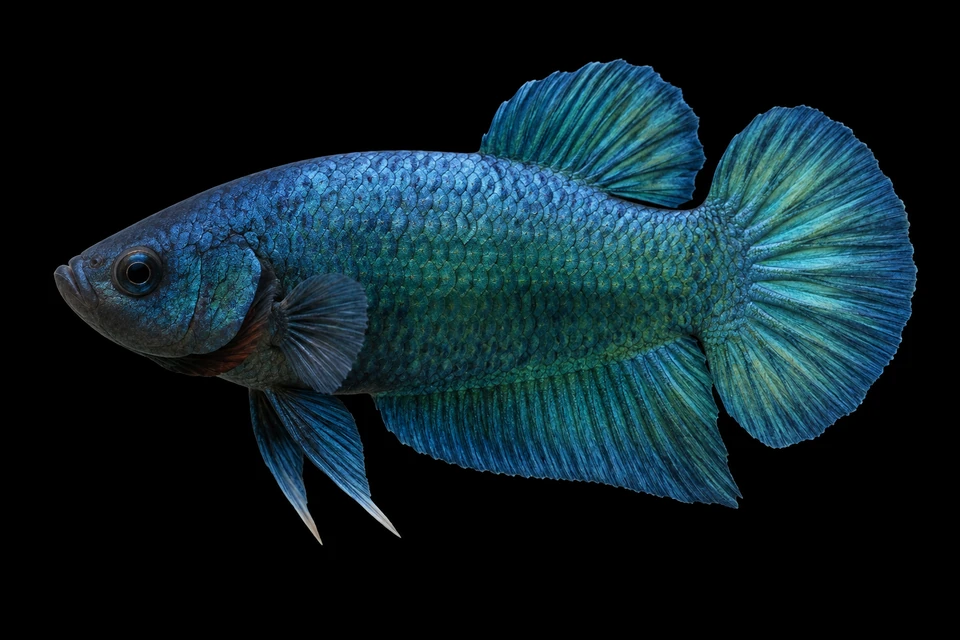
Giant Betta
A size-selected ornamental Betta category, separate from the wild species Betta anabatoides.
Description
Giant-line maximum requires measured breeding recordsMaximum not verified
Temperature 24–26 °C · pH 6.5–7.5group guidance
Natural food: Frozen Artemia, Daphnia, Tubifex or blackworms.Prepared food: Specialised Betta pellets/granules.Food guidance at group level
Biology: mature biofilter; species-specific microbial counts are not established.
Sources & limits
Use a warm, mature filtered aquarium with gentle flow, surface-air access and sheltered resting places. Keep males apart; protect fins and assess each individual’s movement and health.
Group-level guidance
Domestic B. splendens group guidance, not a separate species or form-specific trial. OATA hardness data await a retrievable full source.
Collection forms are not separate species. Tail length, sex and selected giant lines prevent one universal ornamental maximum; record actual stock measurements.
Omitted parameters have no verified range in the sources checked. Habitat or experimental measurements are not safe keeping limits. GH, KH, TDS and conductivity are not interchangeable.
General system guidance: target free ammonia (NH₃) and nitrite (NO₂⁻) at 0 mg/L; account for test detection limits. These are chemical measurements, not microbial counts or each species’ tolerance limits. OATA · 2022. Assess biofilter function through waste processing and water tests, not clarity alone. Biofiltration reference.
Size checked: . Water/food checked: .
Size needs measurement and breeding records; an illustration cannot establish whether a fish is a Giant.
 FANCY BETTA
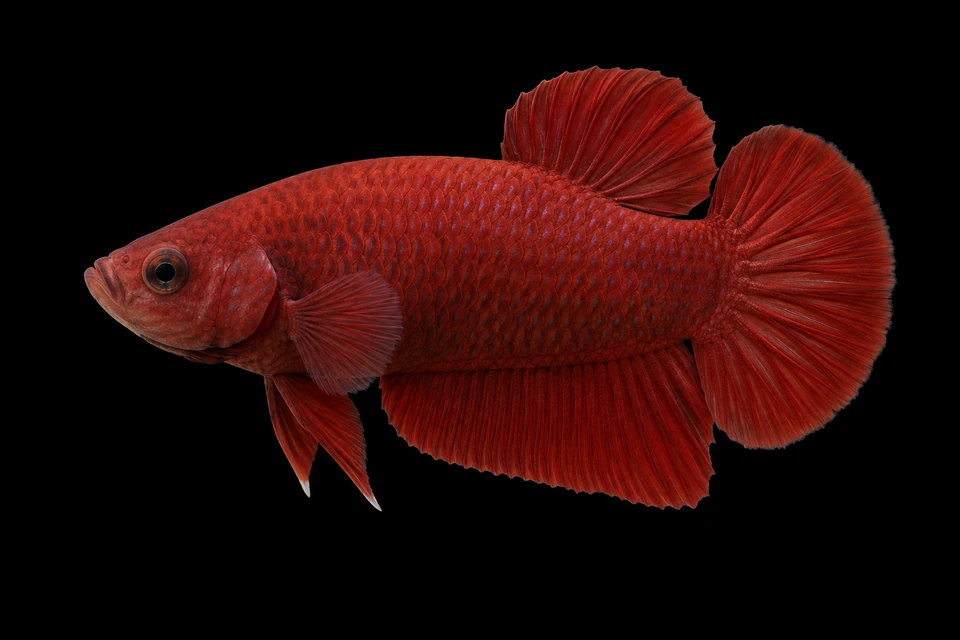
Plakat
Short-finned ornamental bettas, with different tail shapes and colour patterns.
Description
B. splendens species reference: 6.5 cm TL; not a form-specific maximumSpecies reference · form maximum unverified
Temperature 24–26 °C · pH 6.5–7.5group guidance
Natural food: Frozen Artemia, Daphnia, Tubifex or blackworms.Prepared food: Specialised Betta pellets/granules.Food guidance at group level
Biology: mature biofilter; species-specific microbial counts are not established.
Sources & limits
Use a warm, mature filtered aquarium with gentle flow, surface-air access and sheltered resting places. Keep males apart; protect fins and assess each individual’s movement and health.
Group-level guidance
Domestic B. splendens group guidance, not a separate species or form-specific trial. OATA hardness data await a retrievable full source.
Collection forms are not separate species. Tail length, sex and selected giant lines prevent one universal ornamental maximum; record actual stock measurements.
Omitted parameters have no verified range in the sources checked. Habitat or experimental measurements are not safe keeping limits. GH, KH, TDS and conductivity are not interchangeable.
General system guidance: target free ammonia (NH₃) and nitrite (NO₂⁻) at 0 mg/L; account for test detection limits. These are chemical measurements, not microbial counts or each species’ tolerance limits. OATA · 2022. Assess biofilter function through waste processing and water tests, not clarity alone. Biofiltration reference.
- FishBase, species reference; ornamental form limits not established
- OATA, ornamental Betta care
- RSPCA Australia, Dr Rob Jones (2024)
Size checked: . Water/food checked: .
Short fins do not make males suitable for housing together. Plan individual territories and secure covers.
 FANCY BETTA
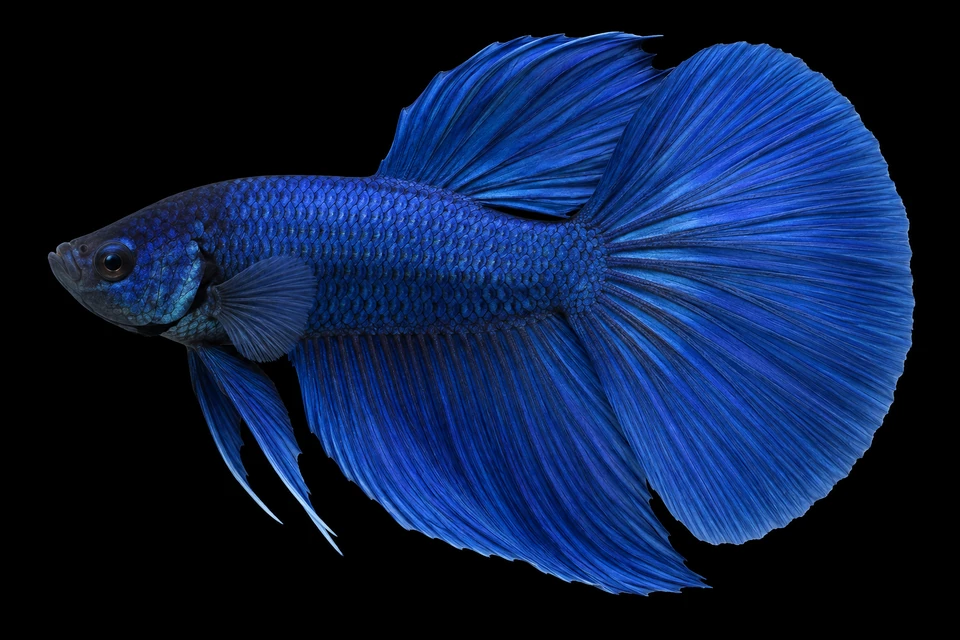
Halfmoon
A broad caudal fin forming a semicircle when fully displayed.
Description
B. splendens species reference: 6.5 cm TL; not a form-specific maximumSpecies reference · form maximum unverified
Temperature 24–26 °C · pH 6.5–7.5group guidance
Natural food: Frozen Artemia, Daphnia, Tubifex or blackworms.Prepared food: Specialised Betta pellets/granules.Food guidance at group level
Biology: mature biofilter; species-specific microbial counts are not established.
Sources & limits
Use a warm, mature filtered aquarium with gentle flow, surface-air access and sheltered resting places. Keep males apart; protect fins and assess each individual’s movement and health.
Group-level guidance
Domestic B. splendens group guidance, not a separate species or form-specific trial. OATA hardness data await a retrievable full source.
Collection forms are not separate species. Tail length, sex and selected giant lines prevent one universal ornamental maximum; record actual stock measurements.
Omitted parameters have no verified range in the sources checked. Habitat or experimental measurements are not safe keeping limits. GH, KH, TDS and conductivity are not interchangeable.
General system guidance: target free ammonia (NH₃) and nitrite (NO₂⁻) at 0 mg/L; account for test detection limits. These are chemical measurements, not microbial counts or each species’ tolerance limits. OATA · 2022. Assess biofilter function through waste processing and water tests, not clarity alone. Biofiltration reference.
- FishBase, species reference; ornamental form limits not established
- OATA, ornamental Betta care
- RSPCA Australia, Dr Rob Jones (2024)
Size checked: . Water/food checked: .
Observe comfortable swimming and intact fins. A category image cannot certify a specimen’s display angle or show quality.
 FANCY BETTA
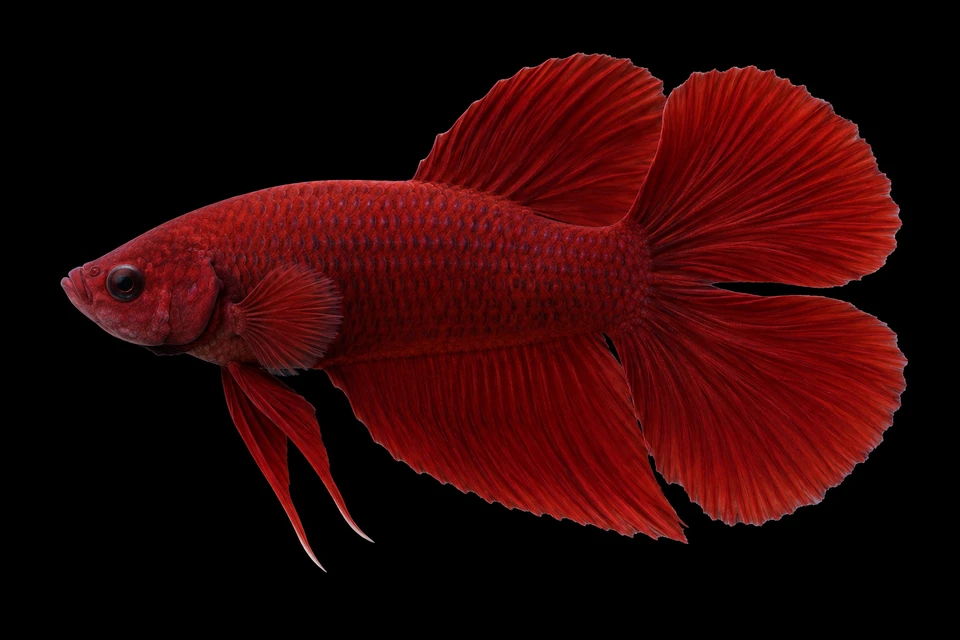
Double Tail
Two distinct caudal lobes, accompanied by a broad dorsal fin.
Description
B. splendens species reference: 6.5 cm TL; not a form-specific maximumSpecies reference · form maximum unverified
Temperature 24–26 °C · pH 6.5–7.5group guidance
Natural food: Frozen Artemia, Daphnia, Tubifex or blackworms.Prepared food: Specialised Betta pellets/granules.Food guidance at group level
Biology: mature biofilter; species-specific microbial counts are not established.
Sources & limits
Use a warm, mature filtered aquarium with gentle flow, surface-air access and sheltered resting places. Keep males apart; protect fins and assess each individual’s movement and health.
Group-level guidance
Domestic B. splendens group guidance, not a separate species or form-specific trial. OATA hardness data await a retrievable full source.
Collection forms are not separate species. Tail length, sex and selected giant lines prevent one universal ornamental maximum; record actual stock measurements.
Omitted parameters have no verified range in the sources checked. Habitat or experimental measurements are not safe keeping limits. GH, KH, TDS and conductivity are not interchangeable.
General system guidance: target free ammonia (NH₃) and nitrite (NO₂⁻) at 0 mg/L; account for test detection limits. These are chemical measurements, not microbial counts or each species’ tolerance limits. OATA · 2022. Assess biofilter function through waste processing and water tests, not clarity alone. Biofiltration reference.
- FishBase, species reference; ornamental form limits not established
- OATA, ornamental Betta care
- RSPCA Australia, Dr Rob Jones (2024)
Size checked: . Water/food checked: .
Evaluate the whole fish: body balance, movement and fin condition matter alongside the divided tail.
 FANCY BETTA
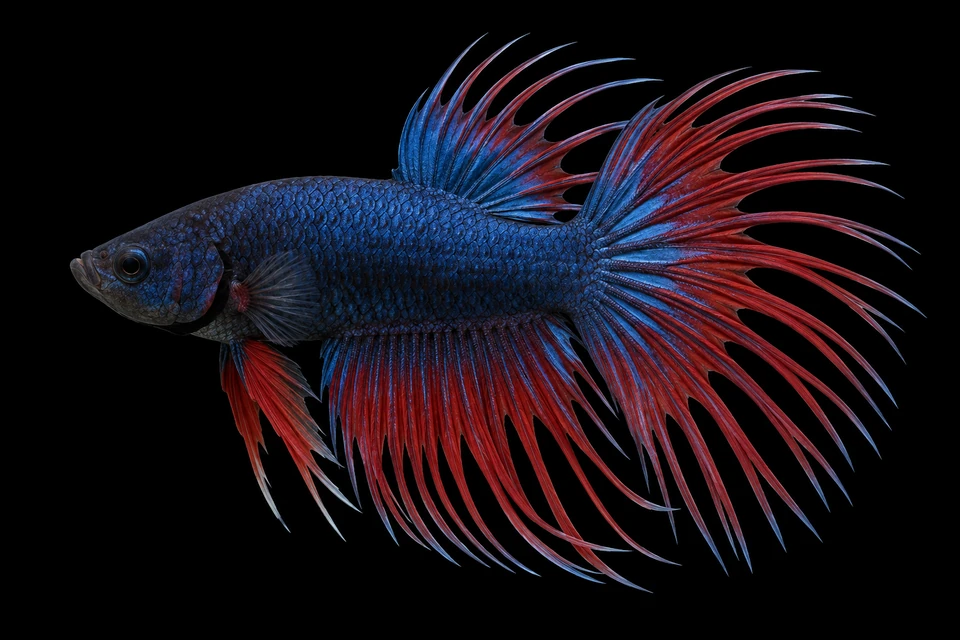
Crown Tail
Reduced fin webbing leaves prominent rays around the fin edges.
Description
B. splendens species reference: 6.5 cm TL; not a form-specific maximumSpecies reference · form maximum unverified
Temperature 24–26 °C · pH 6.5–7.5group guidance
Natural food: Frozen Artemia, Daphnia, Tubifex or blackworms.Prepared food: Specialised Betta pellets/granules.Food guidance at group level
Biology: mature biofilter; species-specific microbial counts are not established.
Sources & limits
Use a warm, mature filtered aquarium with gentle flow, surface-air access and sheltered resting places. Keep males apart; protect fins and assess each individual’s movement and health.
Group-level guidance
Domestic B. splendens group guidance, not a separate species or form-specific trial. OATA hardness data await a retrievable full source.
Collection forms are not separate species. Tail length, sex and selected giant lines prevent one universal ornamental maximum; record actual stock measurements.
Omitted parameters have no verified range in the sources checked. Habitat or experimental measurements are not safe keeping limits. GH, KH, TDS and conductivity are not interchangeable.
General system guidance: target free ammonia (NH₃) and nitrite (NO₂⁻) at 0 mg/L; account for test detection limits. These are chemical measurements, not microbial counts or each species’ tolerance limits. OATA · 2022. Assess biofilter function through waste processing and water tests, not clarity alone. Biofiltration reference.
- FishBase, species reference; ornamental form limits not established
- OATA, ornamental Betta care
- RSPCA Australia, Dr Rob Jones (2024)
Size checked: . Water/food checked: .
The characteristic ray pattern should be distinguished from damage. Check condition against the individual fish’s history.
 FANCY BETTA
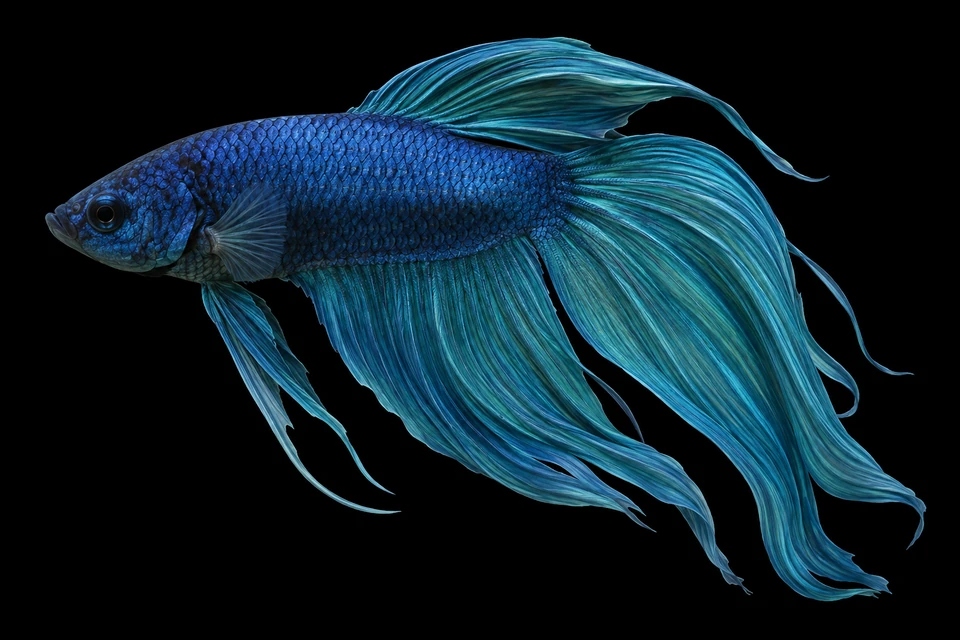
Veil Tail
A long, flowing tail with an asymmetrical, downward sweep.
Description
B. splendens species reference: 6.5 cm TL; not a form-specific maximumSpecies reference · form maximum unverified
Temperature 24–26 °C · pH 6.5–7.5group guidance
Natural food: Frozen Artemia, Daphnia, Tubifex or blackworms.Prepared food: Specialised Betta pellets/granules.Food guidance at group level
Biology: mature biofilter; species-specific microbial counts are not established.
Sources & limits
Use a warm, mature filtered aquarium with gentle flow, surface-air access and sheltered resting places. Keep males apart; protect fins and assess each individual’s movement and health.
Group-level guidance
Domestic B. splendens group guidance, not a separate species or form-specific trial. OATA hardness data await a retrievable full source.
Collection forms are not separate species. Tail length, sex and selected giant lines prevent one universal ornamental maximum; record actual stock measurements.
Omitted parameters have no verified range in the sources checked. Habitat or experimental measurements are not safe keeping limits. GH, KH, TDS and conductivity are not interchangeable.
General system guidance: target free ammonia (NH₃) and nitrite (NO₂⁻) at 0 mg/L; account for test detection limits. These are chemical measurements, not microbial counts or each species’ tolerance limits. OATA · 2022. Assess biofilter function through waste processing and water tests, not clarity alone. Biofiltration reference.
- FishBase, species reference; ornamental form limits not established
- OATA, ornamental Betta care
- RSPCA Australia, Dr Rob Jones (2024)
Size checked: . Water/food checked: .
Provide sheltered resting places and protect flowing fins from abrasive decoration and fin-nipping tankmates.
 FANCY BETTA
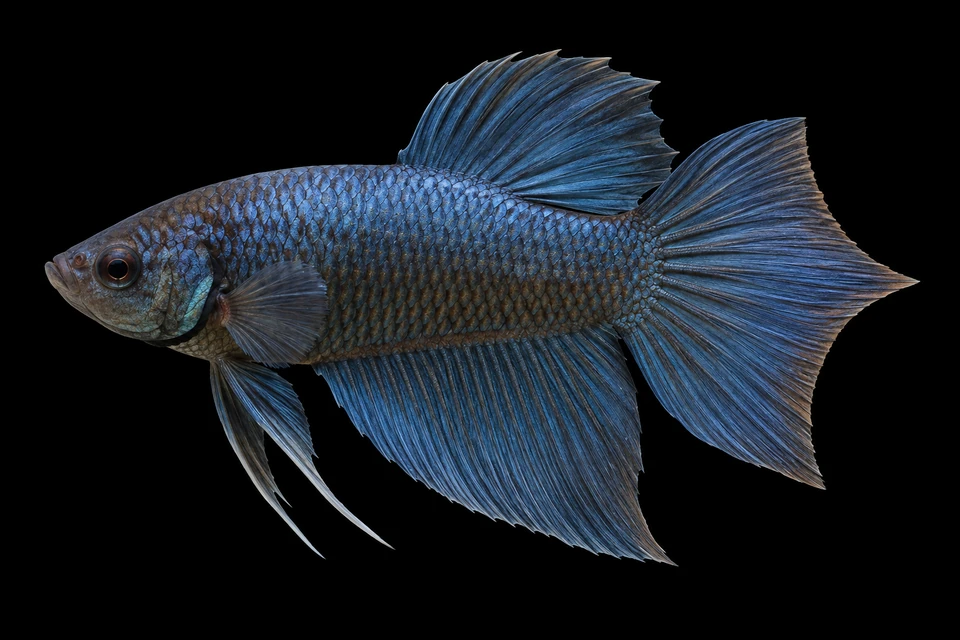
Spade Tail
A tail that narrows to a point, giving a spade-like outline.
Description
B. splendens species reference: 6.5 cm TL; not a form-specific maximumSpecies reference · form maximum unverified
Temperature 24–26 °C · pH 6.5–7.5group guidance
Natural food: Frozen Artemia, Daphnia, Tubifex or blackworms.Prepared food: Specialised Betta pellets/granules.Food guidance at group level
Biology: mature biofilter; species-specific microbial counts are not established.
Sources & limits
Use a warm, mature filtered aquarium with gentle flow, surface-air access and sheltered resting places. Keep males apart; protect fins and assess each individual’s movement and health.
Group-level guidance
Domestic B. splendens group guidance, not a separate species or form-specific trial. OATA hardness data await a retrievable full source.
Collection forms are not separate species. Tail length, sex and selected giant lines prevent one universal ornamental maximum; record actual stock measurements.
Omitted parameters have no verified range in the sources checked. Habitat or experimental measurements are not safe keeping limits. GH, KH, TDS and conductivity are not interchangeable.
General system guidance: target free ammonia (NH₃) and nitrite (NO₂⁻) at 0 mg/L; account for test detection limits. These are chemical measurements, not microbial counts or each species’ tolerance limits. OATA · 2022. Assess biofilter function through waste processing and water tests, not clarity alone. Biofiltration reference.
- FishBase, species reference; ornamental form limits not established
- OATA, ornamental Betta care
- RSPCA Australia, Dr Rob Jones (2024)
Size checked: . Water/food checked: .
This is a descriptive form label. Colour, sex and lineage need separate documentation.
 FANCY BETTA
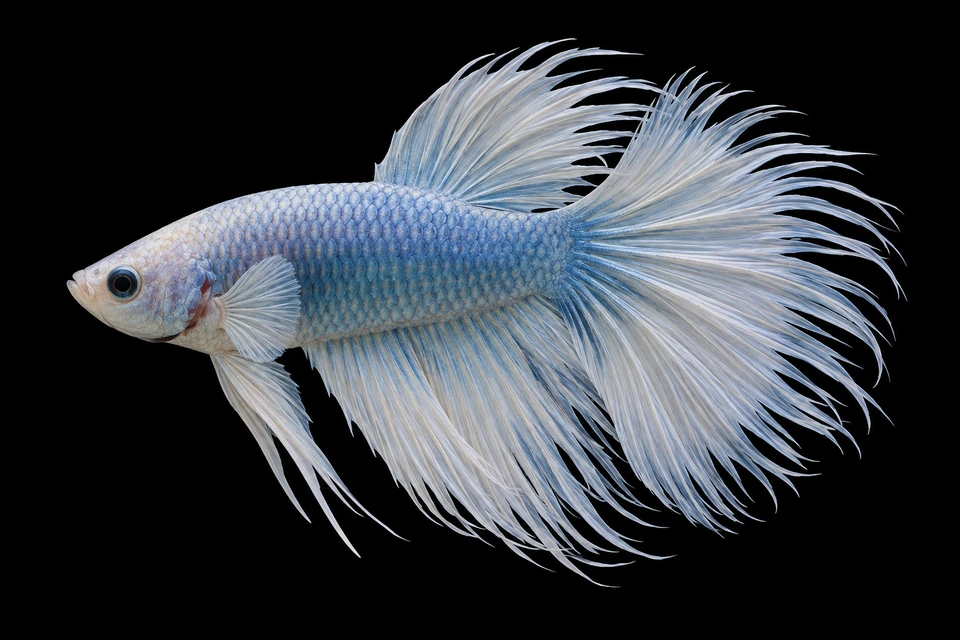
Feather Tail
A trade label for heavily branched fins with a feathered outline.
Description
B. splendens species reference: 6.5 cm TL; not a form-specific maximumSpecies reference · form maximum unverified
Temperature 24–26 °C · pH 6.5–7.5group guidance
Natural food: Frozen Artemia, Daphnia, Tubifex or blackworms.Prepared food: Specialised Betta pellets/granules.Food guidance at group level
Biology: mature biofilter; species-specific microbial counts are not established.
Sources & limits
Use a warm, mature filtered aquarium with gentle flow, surface-air access and sheltered resting places. Keep males apart; protect fins and assess each individual’s movement and health.
Group-level guidance
Domestic B. splendens group guidance, not a separate species or form-specific trial. OATA hardness data await a retrievable full source.
Collection forms are not separate species. Tail length, sex and selected giant lines prevent one universal ornamental maximum; record actual stock measurements.
Omitted parameters have no verified range in the sources checked. Habitat or experimental measurements are not safe keeping limits. GH, KH, TDS and conductivity are not interchangeable.
General system guidance: target free ammonia (NH₃) and nitrite (NO₂⁻) at 0 mg/L; account for test detection limits. These are chemical measurements, not microbial counts or each species’ tolerance limits. OATA · 2022. Assess biofilter function through waste processing and water tests, not clarity alone. Biofiltration reference.
- FishBase, species reference; ornamental form limits not established
- OATA, ornamental Betta care
- RSPCA Australia, Dr Rob Jones (2024)
Size checked: . Water/food checked: .
Our selection principle puts comfortable movement and sound fins first. An extreme outline alone is not a quality claim.
 FANCY BETTA
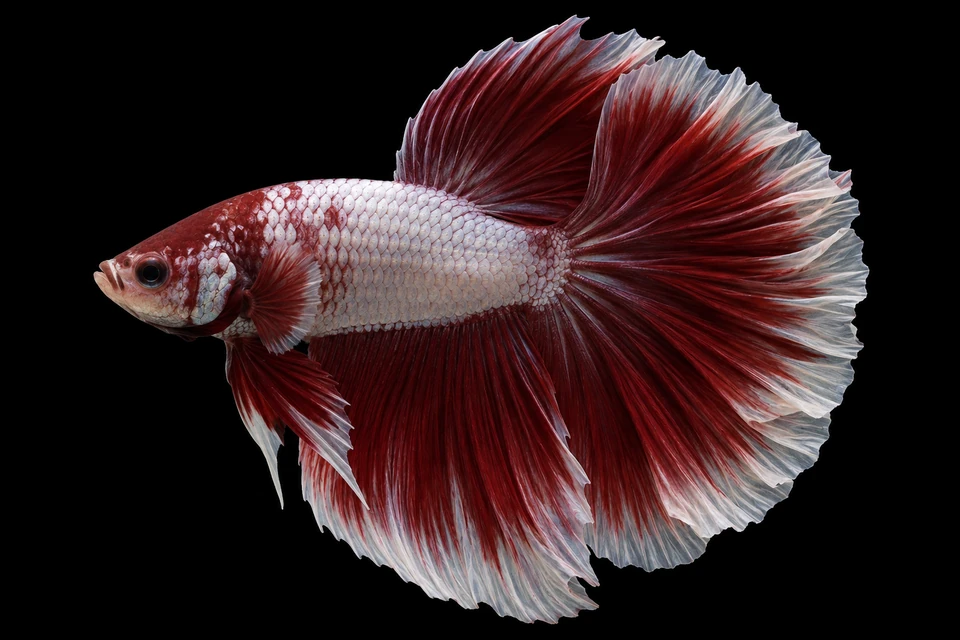
Rose Tail
A trade label for extensive branching and overlapping, ruffled tail tissue.
Description
B. splendens species reference: 6.5 cm TL; not a form-specific maximumSpecies reference · form maximum unverified
Temperature 24–26 °C · pH 6.5–7.5group guidance
Natural food: Frozen Artemia, Daphnia, Tubifex or blackworms.Prepared food: Specialised Betta pellets/granules.Food guidance at group level
Biology: mature biofilter; species-specific microbial counts are not established.
Sources & limits
Use a warm, mature filtered aquarium with gentle flow, surface-air access and sheltered resting places. Keep males apart; protect fins and assess each individual’s movement and health.
Group-level guidance
Domestic B. splendens group guidance, not a separate species or form-specific trial. OATA hardness data await a retrievable full source.
Collection forms are not separate species. Tail length, sex and selected giant lines prevent one universal ornamental maximum; record actual stock measurements.
Omitted parameters have no verified range in the sources checked. Habitat or experimental measurements are not safe keeping limits. GH, KH, TDS and conductivity are not interchangeable.
General system guidance: target free ammonia (NH₃) and nitrite (NO₂⁻) at 0 mg/L; account for test detection limits. These are chemical measurements, not microbial counts or each species’ tolerance limits. OATA · 2022. Assess biofilter function through waste processing and water tests, not clarity alone. Biofiltration reference.
- FishBase, species reference; ornamental form limits not established
- OATA, ornamental Betta care
- RSPCA Australia, Dr Rob Jones (2024)
Size checked: . Water/food checked: .
Our selection principle prioritises balanced form and normal activity. These illustrations do not endorse exaggerated finnage.
 FANCY BETTA
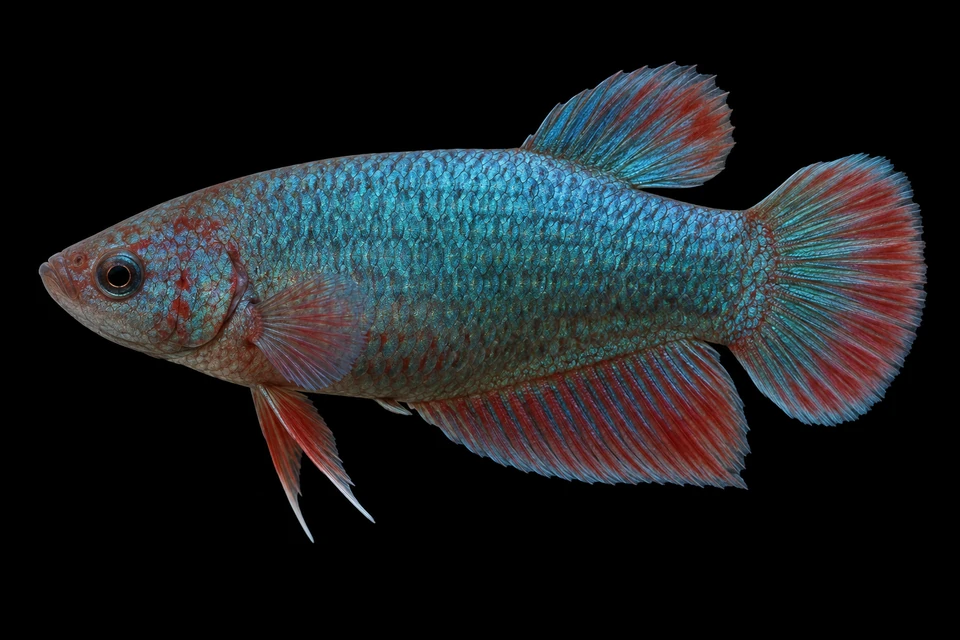
Females
Female ornamental bettas across multiple colours and fin forms.
Description
B. splendens species reference: 6.5 cm TL; not a form-specific maximumSpecies reference · form maximum unverified
Temperature 24–26 °C · pH 6.5–7.5group guidance
Natural food: Frozen Artemia, Daphnia, Tubifex or blackworms.Prepared food: Specialised Betta pellets/granules.Food guidance at group level
Biology: mature biofilter; species-specific microbial counts are not established.
Sources & limits
Use a warm, mature filtered aquarium with gentle flow, surface-air access and sheltered resting places. Keep males apart; protect fins and assess each individual’s movement and health.
Group-level guidance
Domestic B. splendens group guidance, not a separate species or form-specific trial. OATA hardness data await a retrievable full source.
Collection forms are not separate species. Tail length, sex and selected giant lines prevent one universal ornamental maximum; record actual stock measurements.
Omitted parameters have no verified range in the sources checked. Habitat or experimental measurements are not safe keeping limits. GH, KH, TDS and conductivity are not interchangeable.
General system guidance: target free ammonia (NH₃) and nitrite (NO₂⁻) at 0 mg/L; account for test detection limits. These are chemical measurements, not microbial counts or each species’ tolerance limits. OATA · 2022. Assess biofilter function through waste processing and water tests, not clarity alone. Biofiltration reference.
- FishBase, species reference; ornamental form limits not established
- OATA, ornamental Betta care
- RSPCA Australia, Dr Rob Jones (2024)
Size checked: . Water/food checked: .
This is a sex category, not a separate breed. A female label is not a promise of peaceful group housing.
 FANCY BETTA
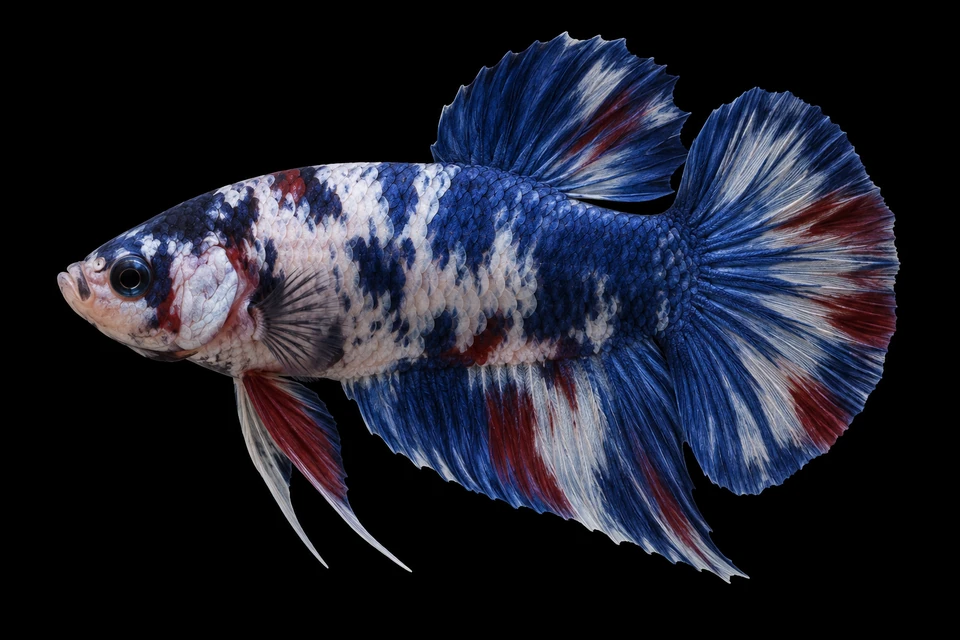
Unique
An editorial category for distinctive individuals and unusual combinations.
Description
B. splendens species reference: 6.5 cm TL; not a form-specific maximumSpecies reference · form maximum unverified
Temperature 24–26 °C · pH 6.5–7.5group guidance
Natural food: Frozen Artemia, Daphnia, Tubifex or blackworms.Prepared food: Specialised Betta pellets/granules.Food guidance at group level
Biology: mature biofilter; species-specific microbial counts are not established.
Sources & limits
Use a warm, mature filtered aquarium with gentle flow, surface-air access and sheltered resting places. Keep males apart; protect fins and assess each individual’s movement and health.
Group-level guidance
Domestic B. splendens group guidance, not a separate species or form-specific trial. OATA hardness data await a retrievable full source.
Collection forms are not separate species. Tail length, sex and selected giant lines prevent one universal ornamental maximum; record actual stock measurements.
Omitted parameters have no verified range in the sources checked. Habitat or experimental measurements are not safe keeping limits. GH, KH, TDS and conductivity are not interchangeable.
General system guidance: target free ammonia (NH₃) and nitrite (NO₂⁻) at 0 mg/L; account for test detection limits. These are chemical measurements, not microbial counts or each species’ tolerance limits. OATA · 2022. Assess biofilter function through waste processing and water tests, not clarity alone. Biofiltration reference.
- FishBase, species reference; ornamental form limits not established
- OATA, ornamental Betta care
- RSPCA Australia, Dr Rob Jones (2024)
Size checked: . Water/food checked: .
Future entries will identify the actual form and documented lineage. “Unique” is not a scientific name or certified grade.
FORM, HEALTH & EVIDENCE
Plan a warm, filtered, established aquarium with access to the surface. Keep males apart, avoid fin-nipping companions, and assess breathing, movement and body condition before appearance. Future stock profiles will use actual photographs and confirmed individual details.
Further reading: International Betta Congress standards · OATA Betta care
Understand the nitrogen cycleCare before collection.
Explore identity, origin and care context on each species profile. Confirmed stock and ordering will follow when the programme is ready.