Identity and origin
- Origin
- Sebuku drainage; Malinau locality records, North Kalimantan
- Identity
- Described Indonesian species; locality lines must remain distinct
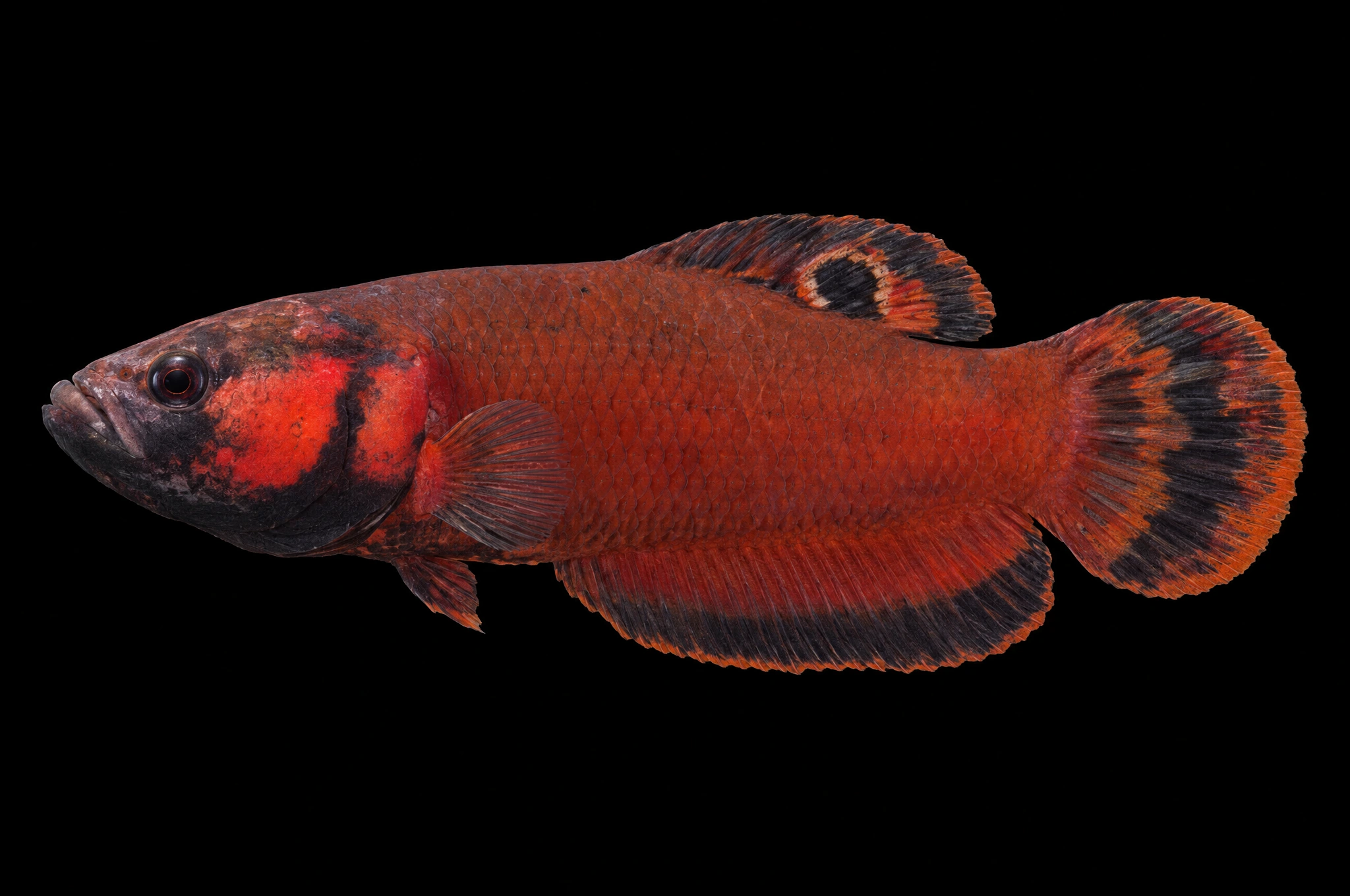
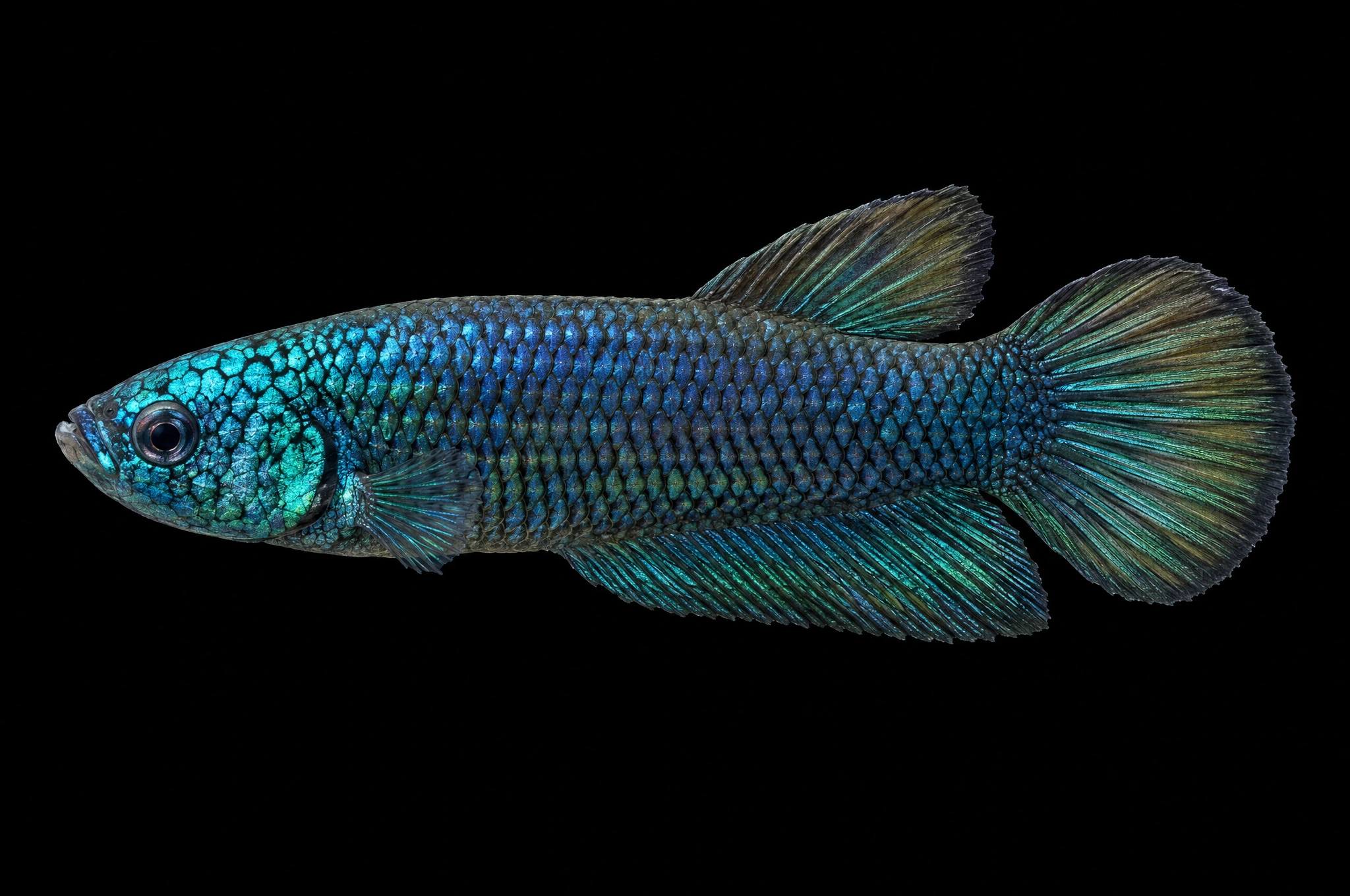
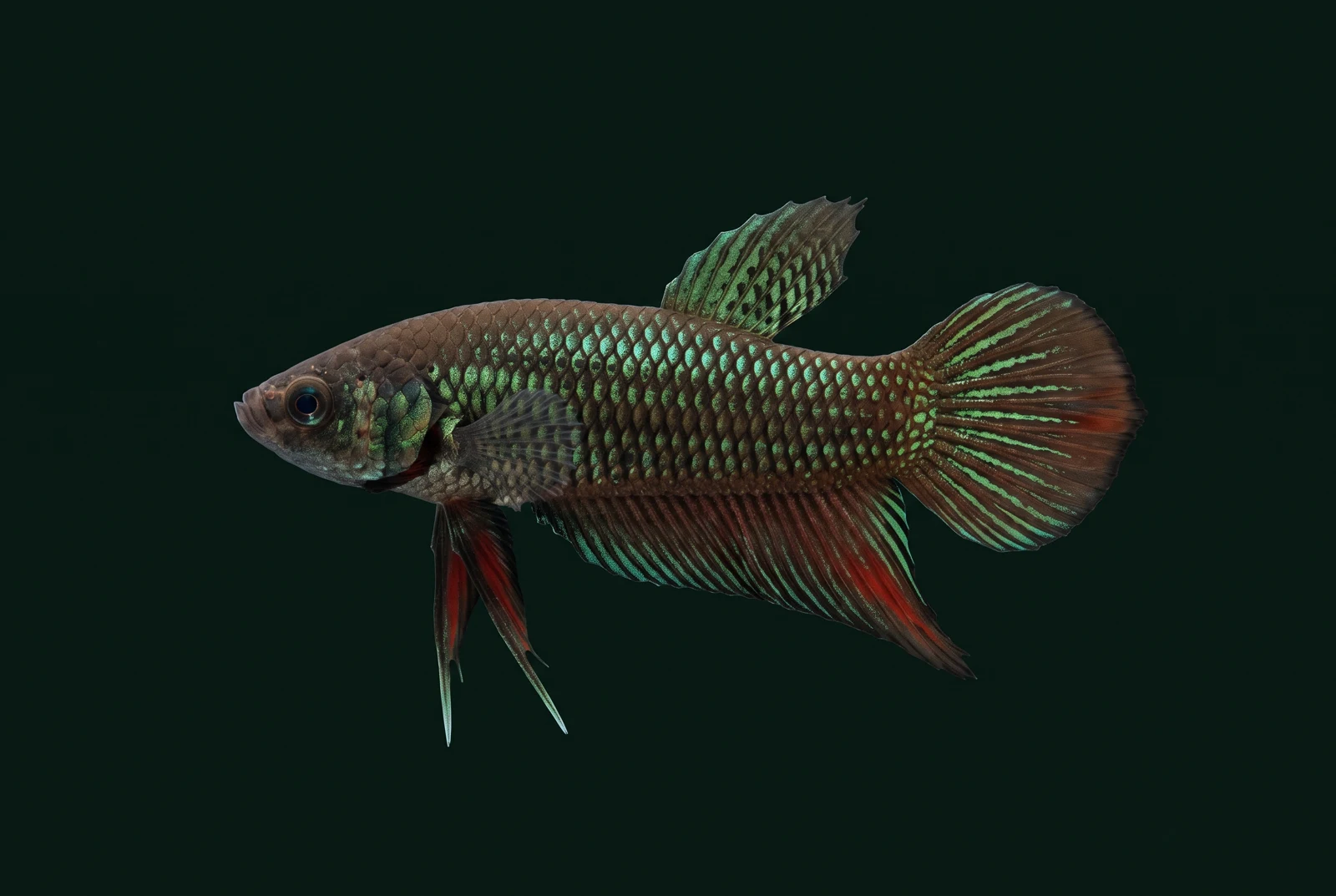
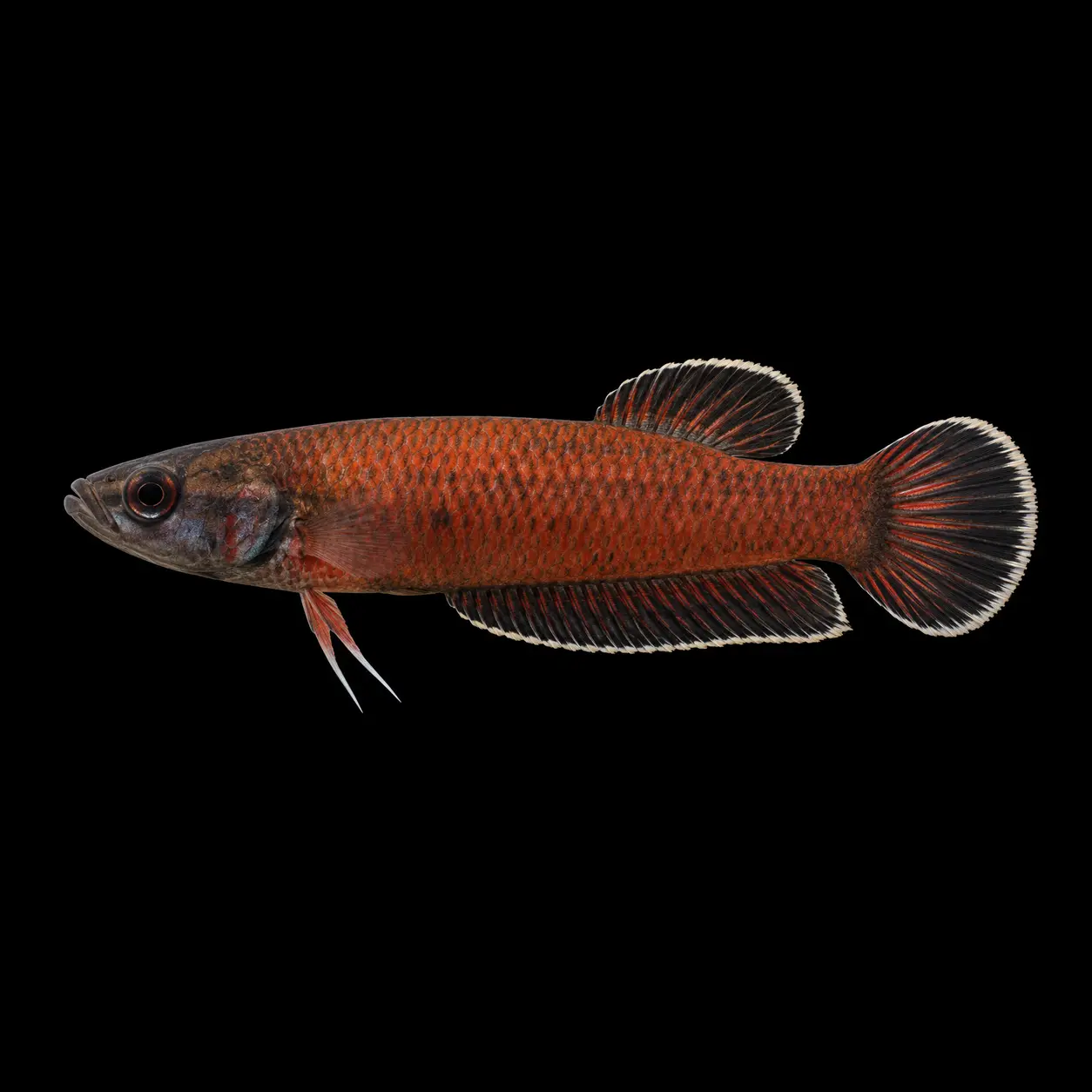
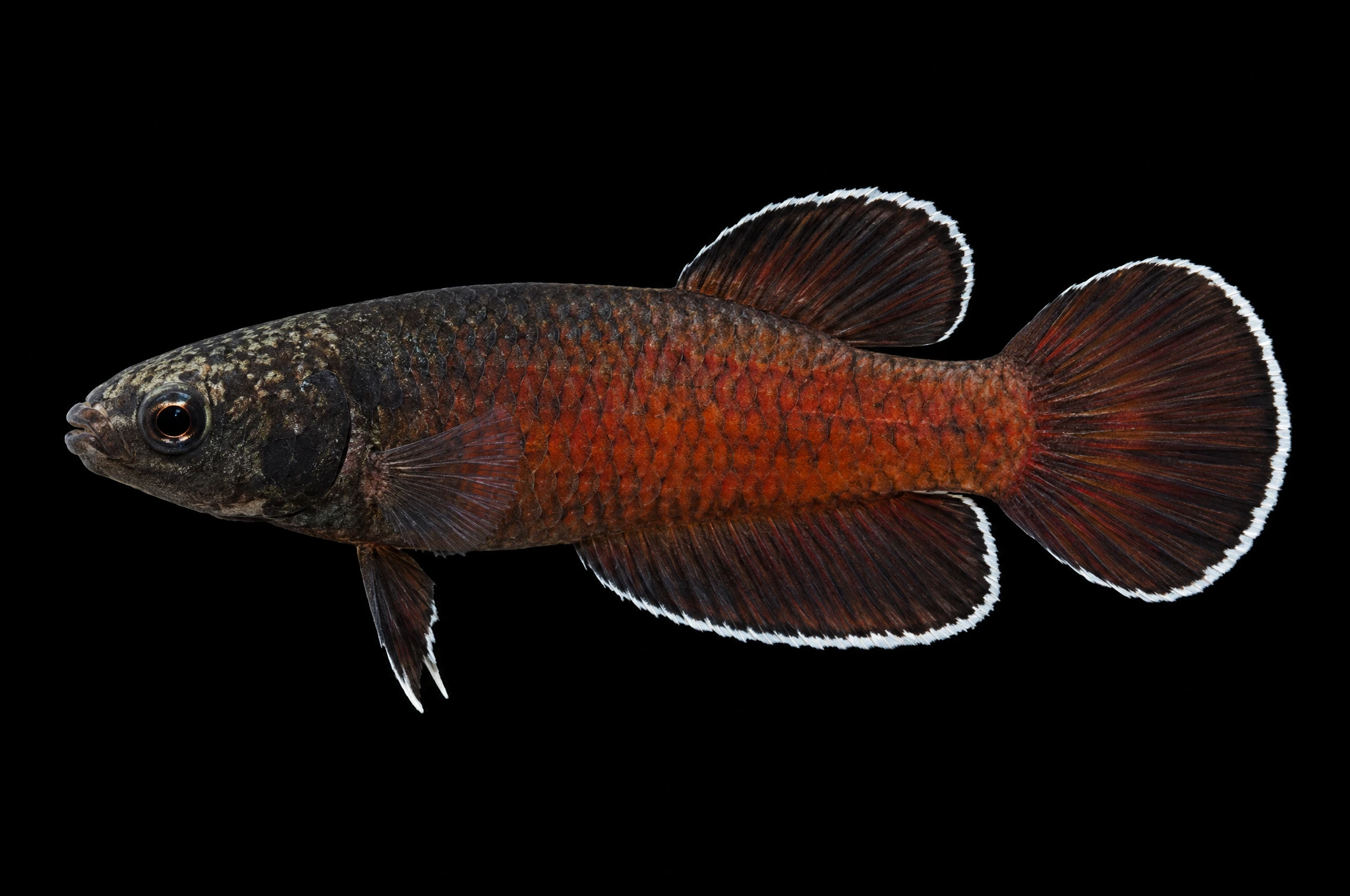
White fin margins and red flanks characterize mature males. Sebuku is the type-locality drainage; Malinau aquarium locality records should not be relabelled Kayan without supporting collection evidence.
Habitat and care
Shaded, often clear forest-stream margins with roots and leaf litter. Habitat and identity reference
Explore the habitat
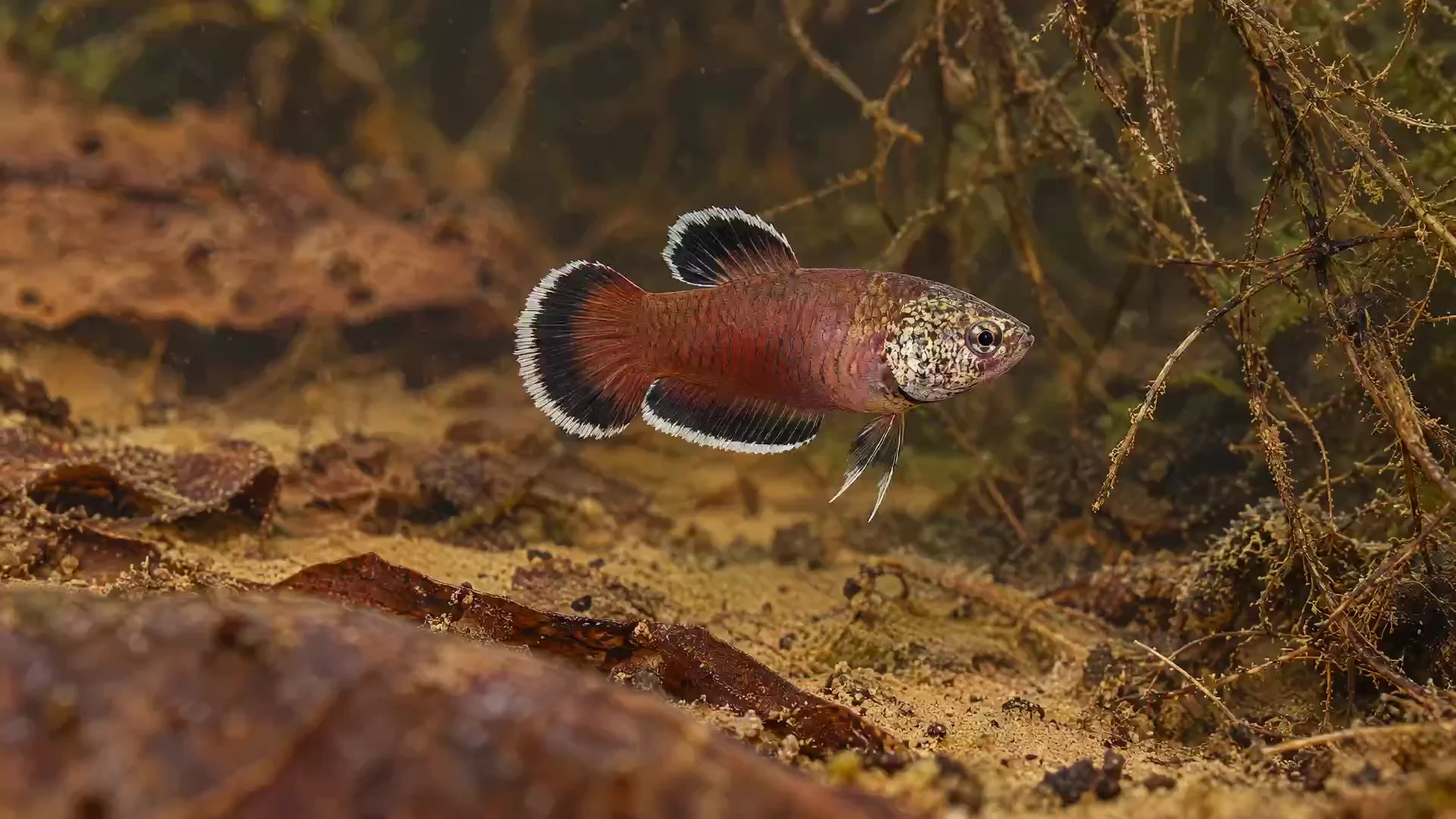
Shaded, often clear forest-stream margins with roots and leaf litter.
Illustrative habitat reconstructionFROM THE SIGNATURE COLLECTIONS
Look closely
The male’s white fin margins inspired the species name. Courtship can bring a much stronger orange, black and white display than its quieter everyday appearance.
A detail worth knowing
A paternal mouthbrooder: the male carries eggs and young until release. A published breeder account also describes recovery after brooding, a useful reminder to observe the male’s condition between spawning cycles.
Jesper Thorup / International Betta Congress
Source review: 22 September 2026. Educational notes, not a stock or breeding-success claim.
Plan before choosing
- Habitat
- Forest streams
- Size and measurement
- The IGL husbandry account reports that total length rarely exceeds 5 cm. Total length includes the caudal fin.
- Planning context
- A soft-water mouthbrooder from the Malinau–Sebuku area. The specialist account describes clear water and small live or frozen foods; do not automatically treat it as an extreme peat-blackwater species.
Michael Staab / IGL · specialist husbandry account
Source check: . Independent husbandry review pending.
Plan around the wild species
Care-planning notes. Confirm exact requirements for the species and source population.
- Wild Betta have different habitats and breeding strategies; ornamental Betta splendens advice cannot cover every species.
- Retain species and locality records, and verify whether the line is a bubble-nester or a mouthbrooder.
- Plan a secure cover, shelter and a species-specific social arrangement before acquiring a line.
Evidence record
Conservation record: Endangered (EN); assessment year 2018. Conservation source record. This retained reference is an index or secondary record; the direct assessment and date require verification. Check for a newer assessment before making conservation or sourcing decisions.
Identity and locality source check: . Editorial source check; independent taxonomic review pending. Research profile; availability is not open.
Catalogue inclusion confirms a research record, not current stock, legal export, or destination-country import permission.