Identity and origin
- Origin
- Brunei and northern Sarawak, Malaysian Borneo
- Identity
- Regional Southeast Asian species; not an Indonesian-native record
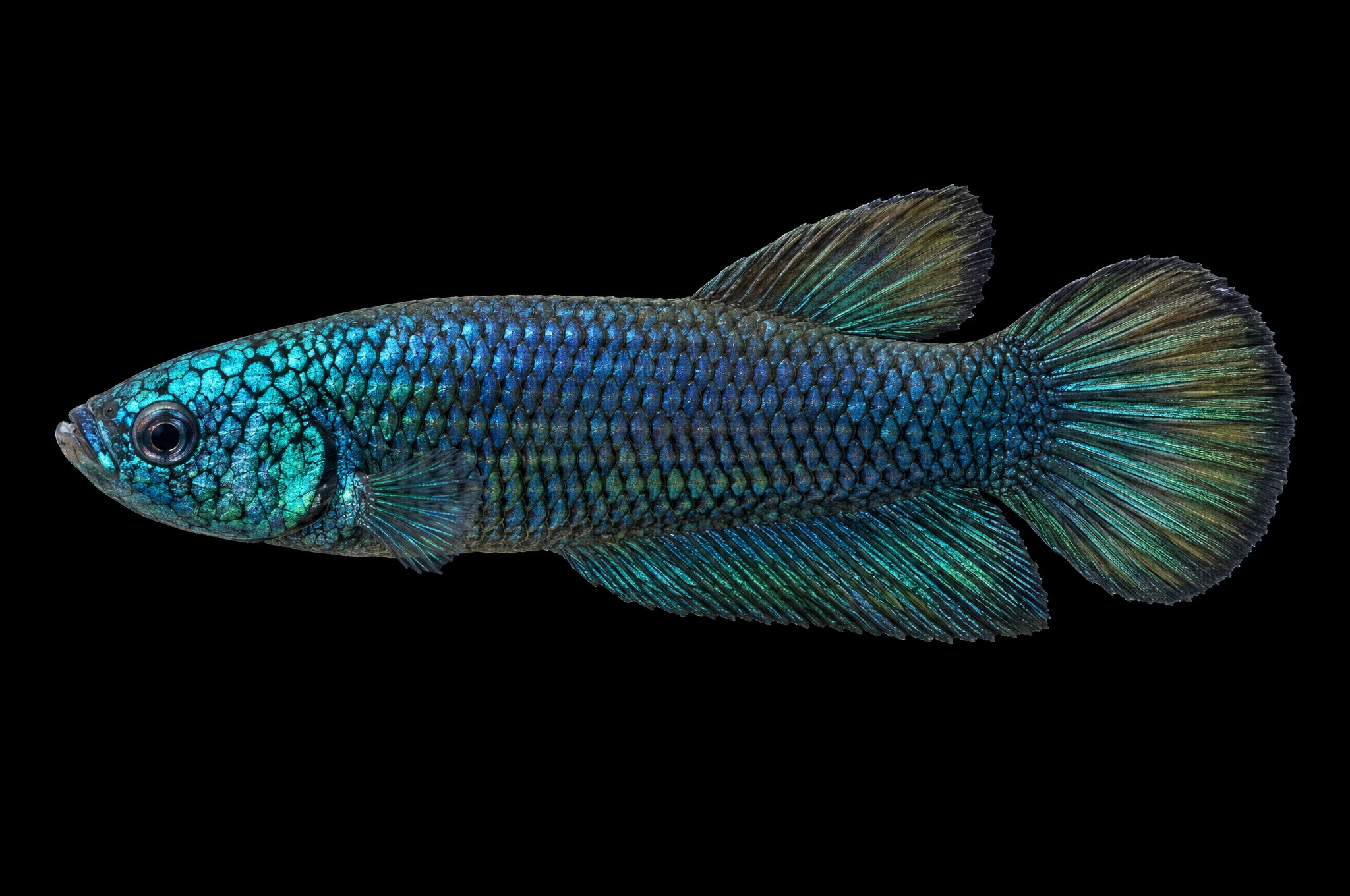
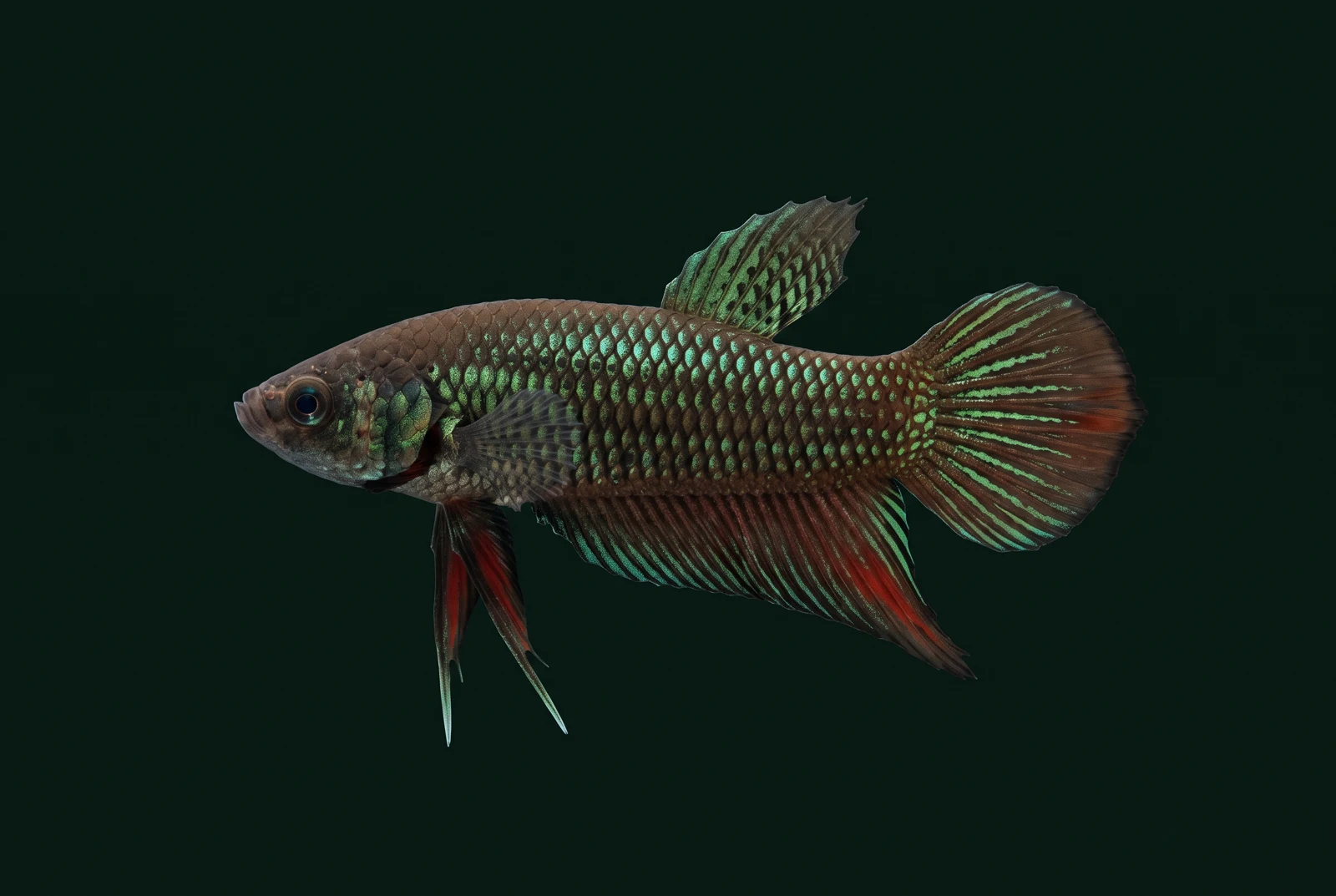
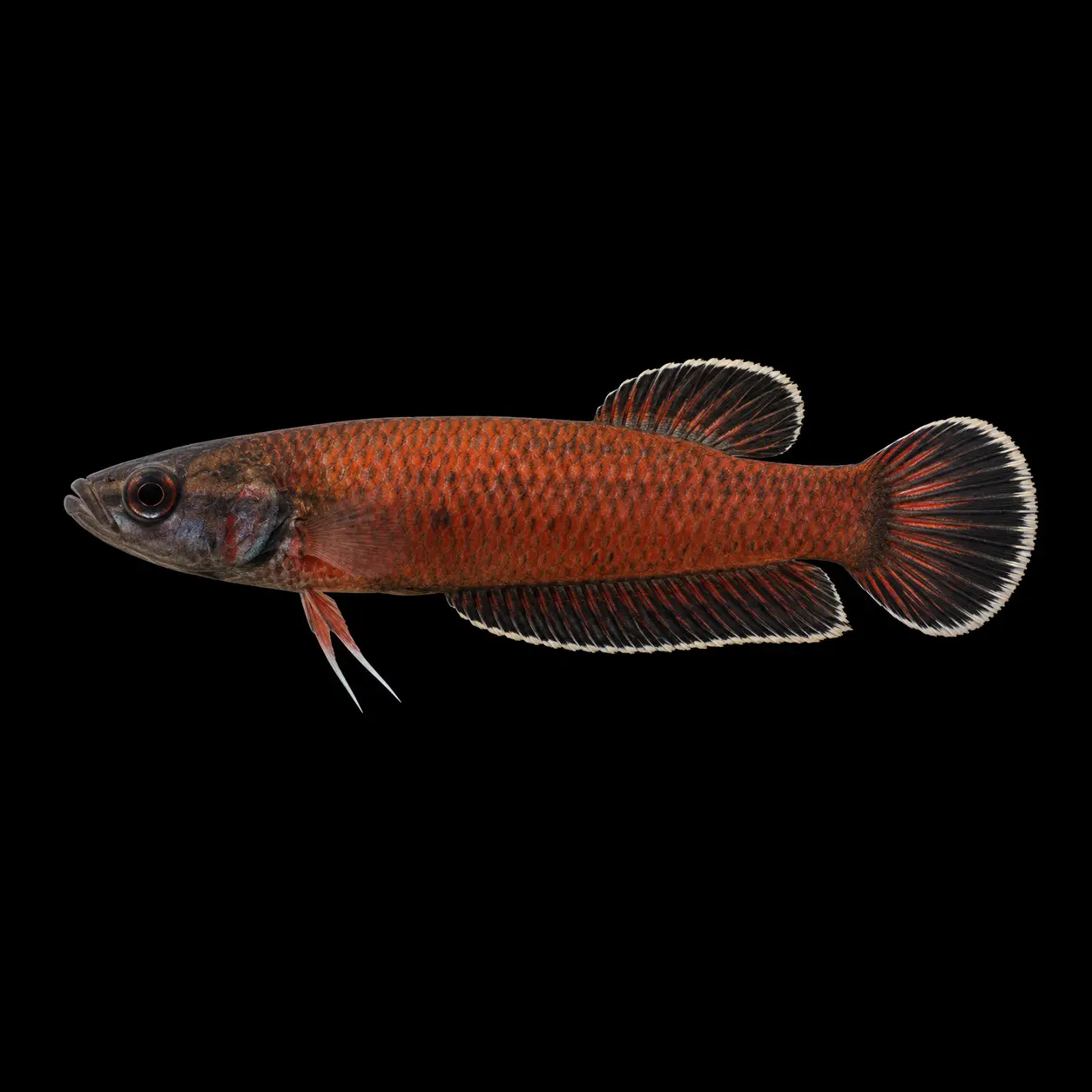
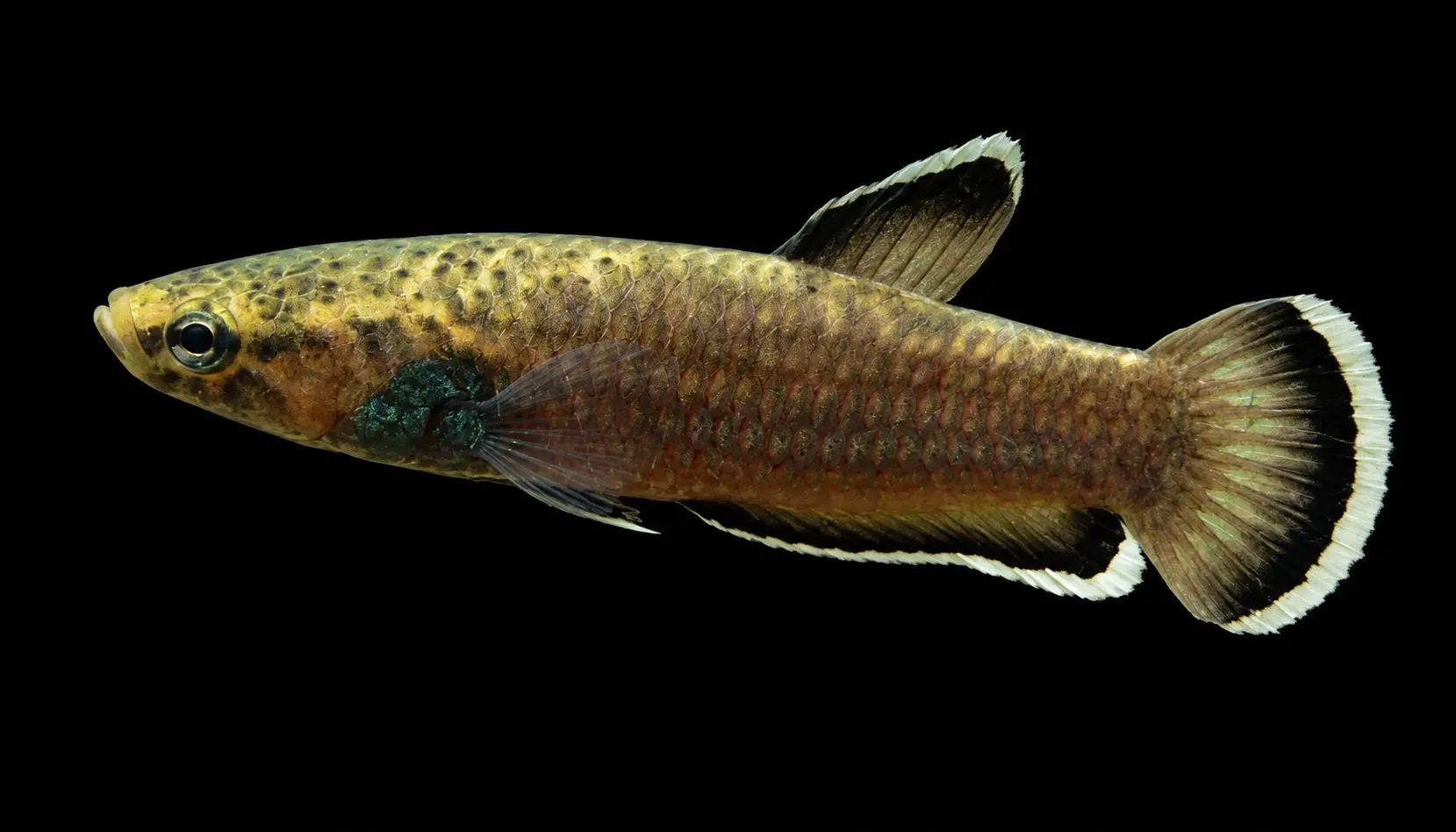
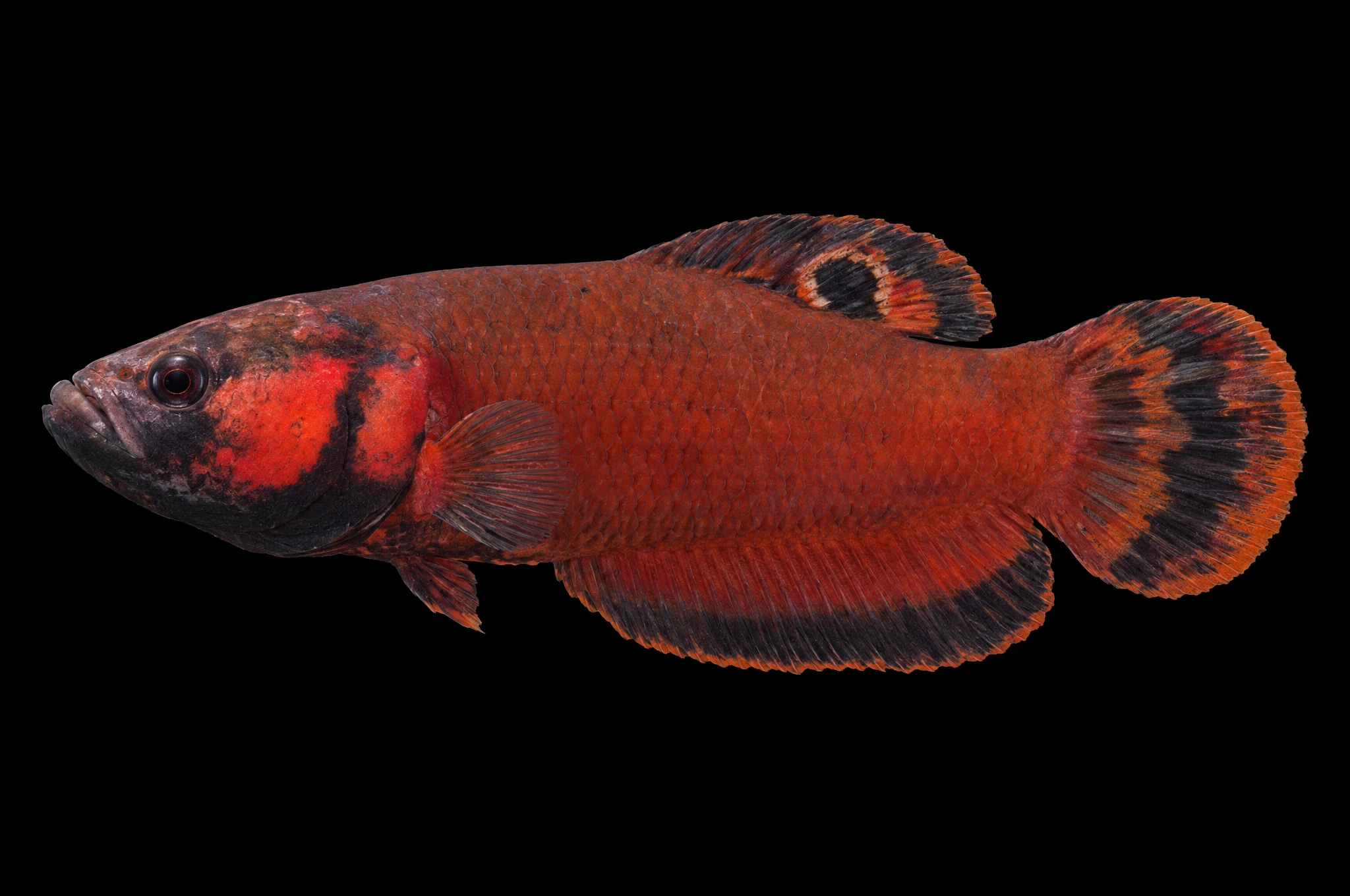
A large-headed mouthbrooder. Many adult males show red coloration, a dorsal ocellus and a patterned caudal fin; the dorsal marking varies among populations. These features aid recognition but do not replace locality records and taxonomic comparison.
Habitat and care
Clear-water forest pools and quiet stream microhabitats, as recorded in the 2005 Brunei field observations. Habitat and identity reference
Explore the habitat
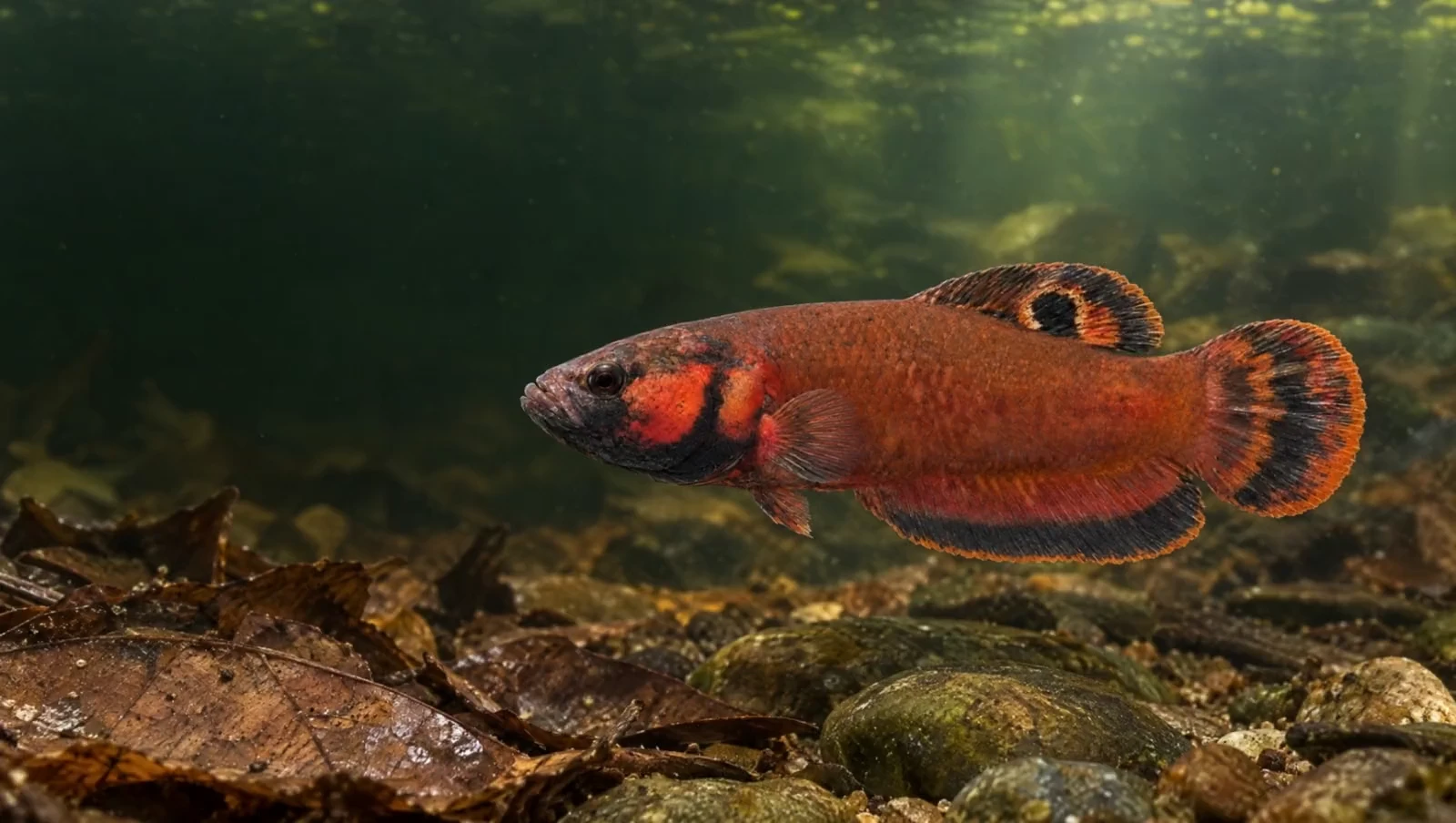
Clear-water forest pools and quiet stream microhabitats, as recorded in the 2005 Brunei field observations.
Illustrative habitat reconstructionDescription
6.98 cm SL · examined specimen; adult maximum unverifiedExamined specimens · not an adult maximum
Temperature 24–25 °C · pH 5.5–6.0 · GH <5 °dGHspecies guidance
Natural food: Appropriately sized live prey; frozen food less readily accepted.Prepared food: Prepared-food acceptance unverified.
Biology: mature biofilter; species-specific microbial counts are not established.
Sources & limits
Use a covered species aquarium with clean, soft acidic water, sheltered space and moderate surface movement. The IGL account recommends 24–25°C; offer suitable live foods.
Species husbandry guidance; population history still matters.
IGL estimates about 12–14 cm with the measurement convention unstated; it is not a validated maximum. FishBase’s 6.7 cm SL is lower than the 69.8 mm SL examined male.
Omitted parameters have no verified range in the sources checked. Habitat or experimental measurements are not safe keeping limits. GH, KH, TDS and conductivity are not interchangeable.
General system guidance: target free ammonia (NH₃) and nitrite (NO₂⁻) at 0 mg/L; account for test detection limits. These are chemical measurements, not microbial counts or each species’ tolerance limits. OATA · 2022. Assess biofilter function through waste processing and water tests, not clarity alone. Biofiltration reference.
Size checked: . Water/food checked: .
Plan before choosing
- Habitat
- Forest streams
- Planning context
- A mouthbrooding forest-stream species. Confirm the source population, feeding history and adult dimensions before choosing a system. Field measurements are observations, not a universal aquarium recipe.
Tan & Ng (2005) · taxonomic revision
Review date not recorded for this source. Independent husbandry review pending.
Plan around the wild species
Care-planning notes. Confirm exact requirements for the species and source population.
- Wild Betta have different habitats and breeding strategies; ornamental Betta splendens advice cannot cover every species.
- Retain species and locality records, and verify whether the line is a bubble-nester or a mouthbrooder.
- Plan a secure cover, shelter and a species-specific social arrangement before acquiring a line.
Evidence record
Conservation record: A current assessment has not been verified for this profile. This does not establish Not Evaluated status or imply low risk. Conservation status does not establish legal protection, availability or permission to trade.
Identity and locality source check: . Editorial source check; independent taxonomic review pending. Research profile; availability is not open.
Catalogue inclusion confirms a research record, not current stock, legal export, or destination-country import permission.