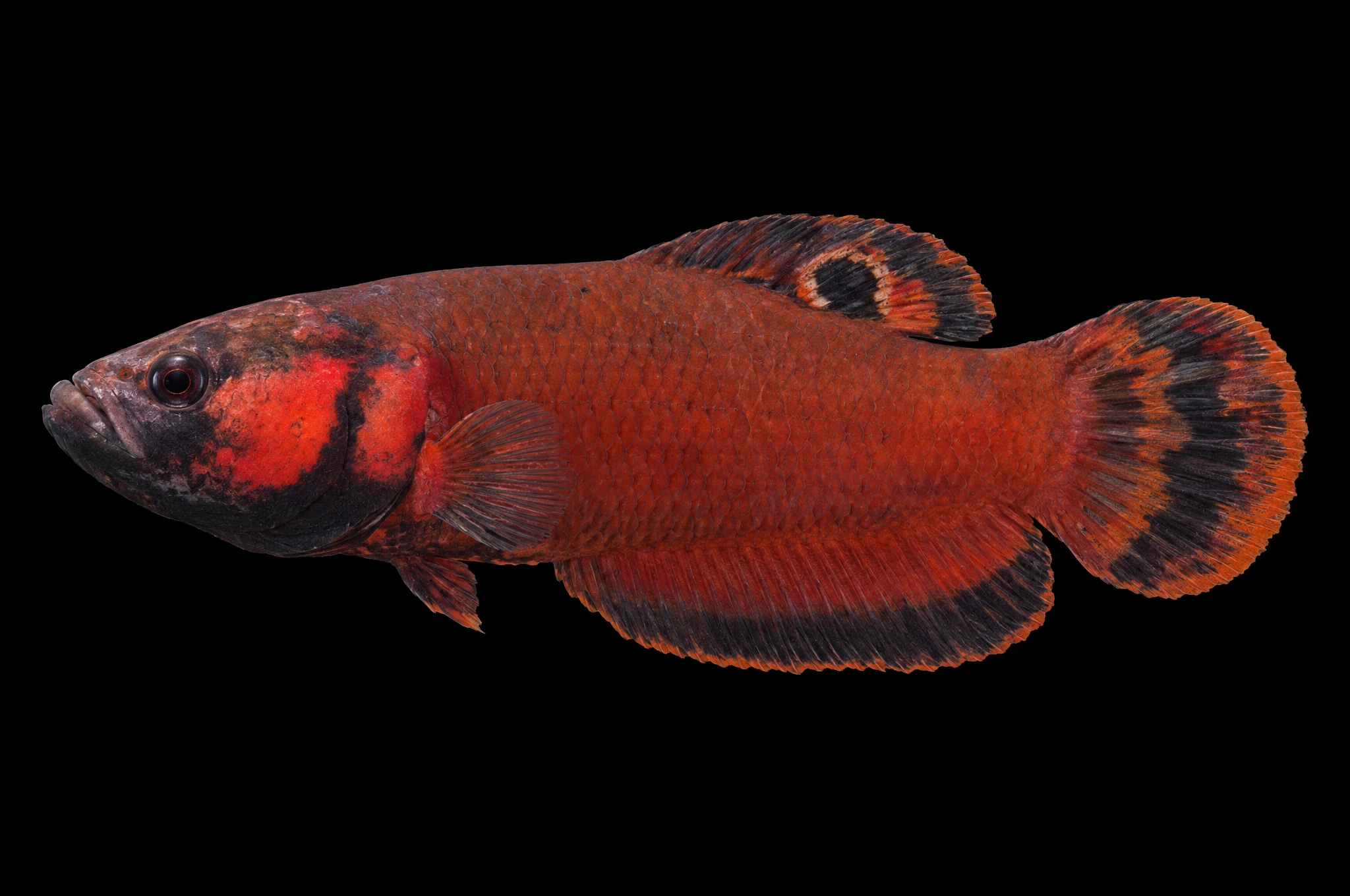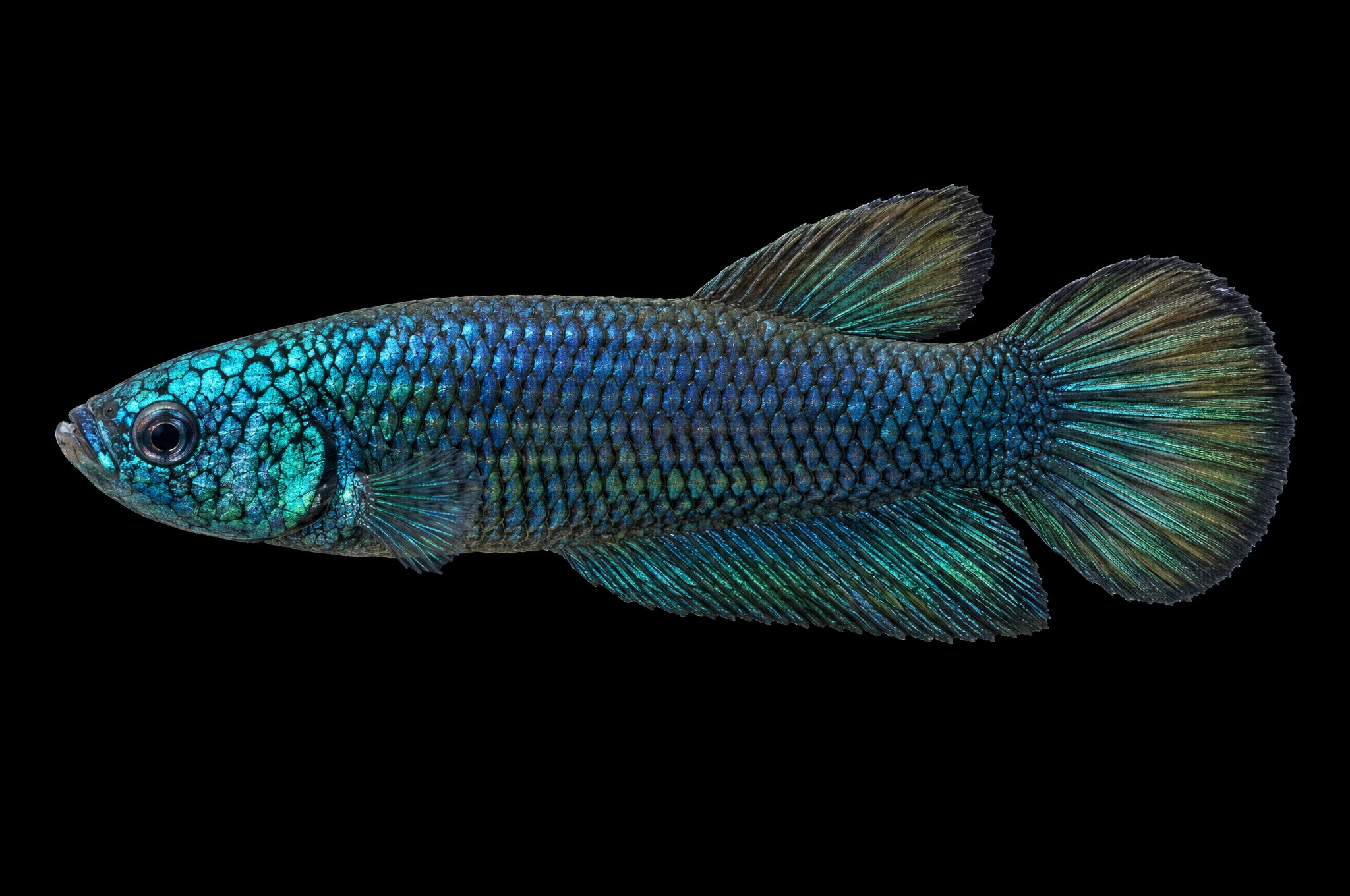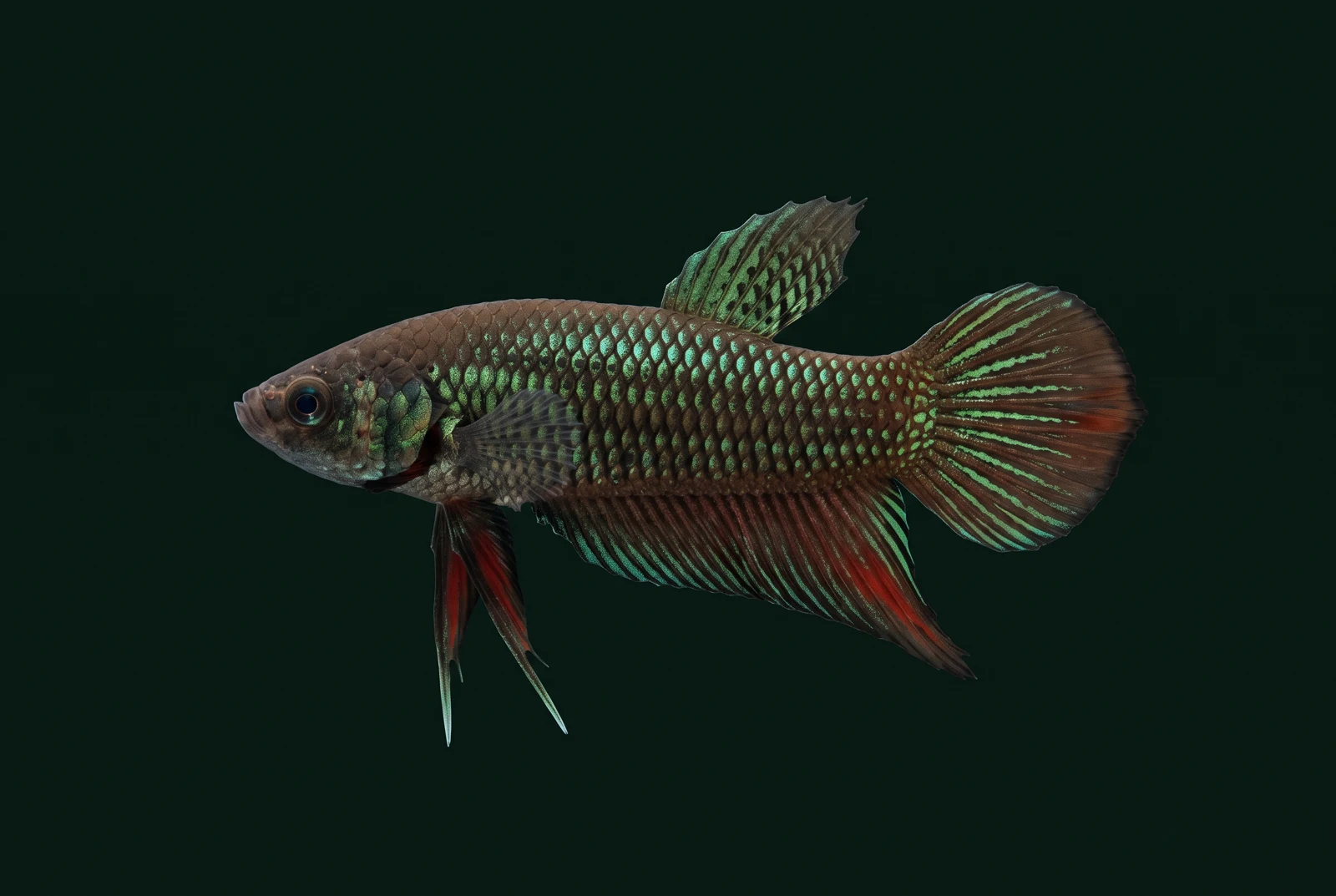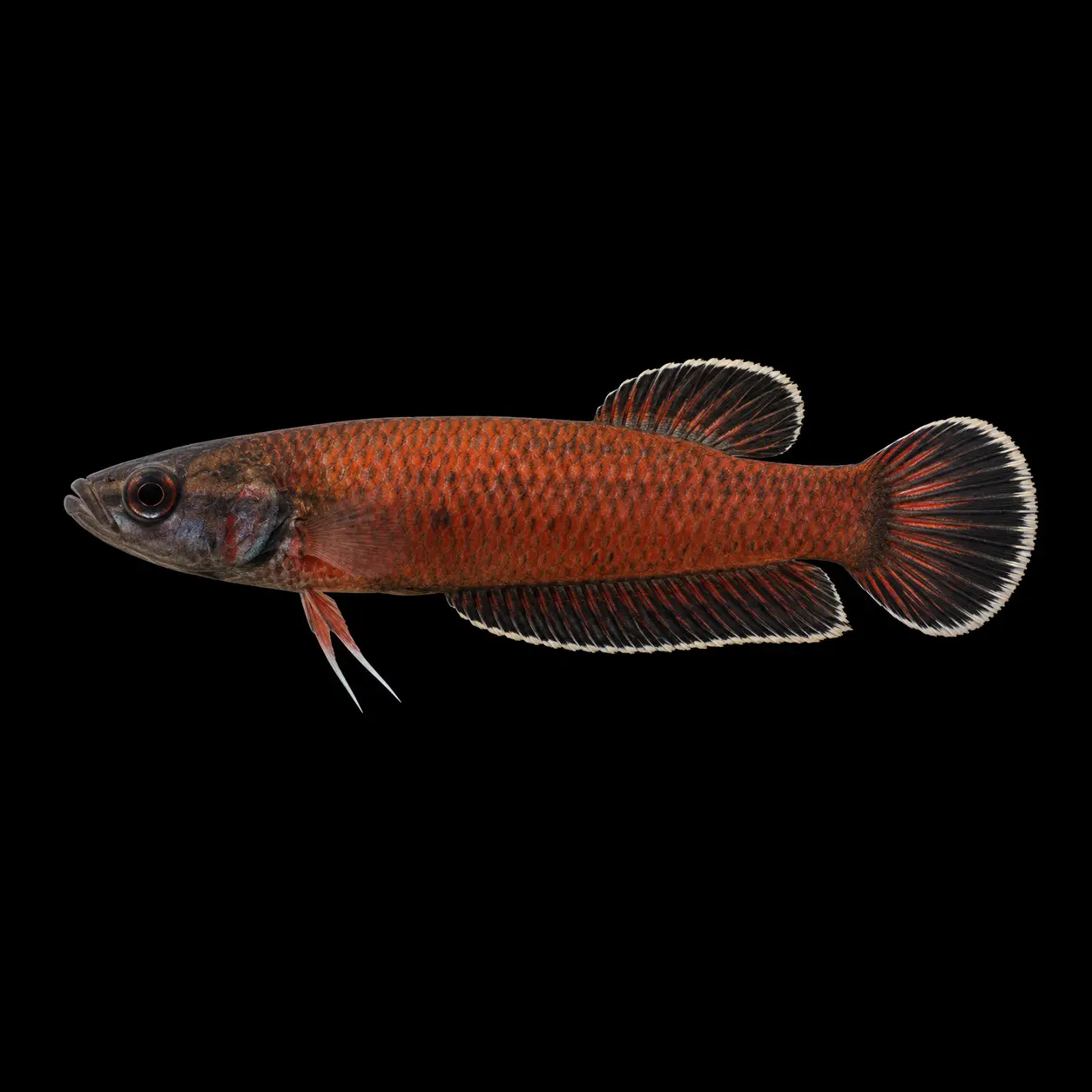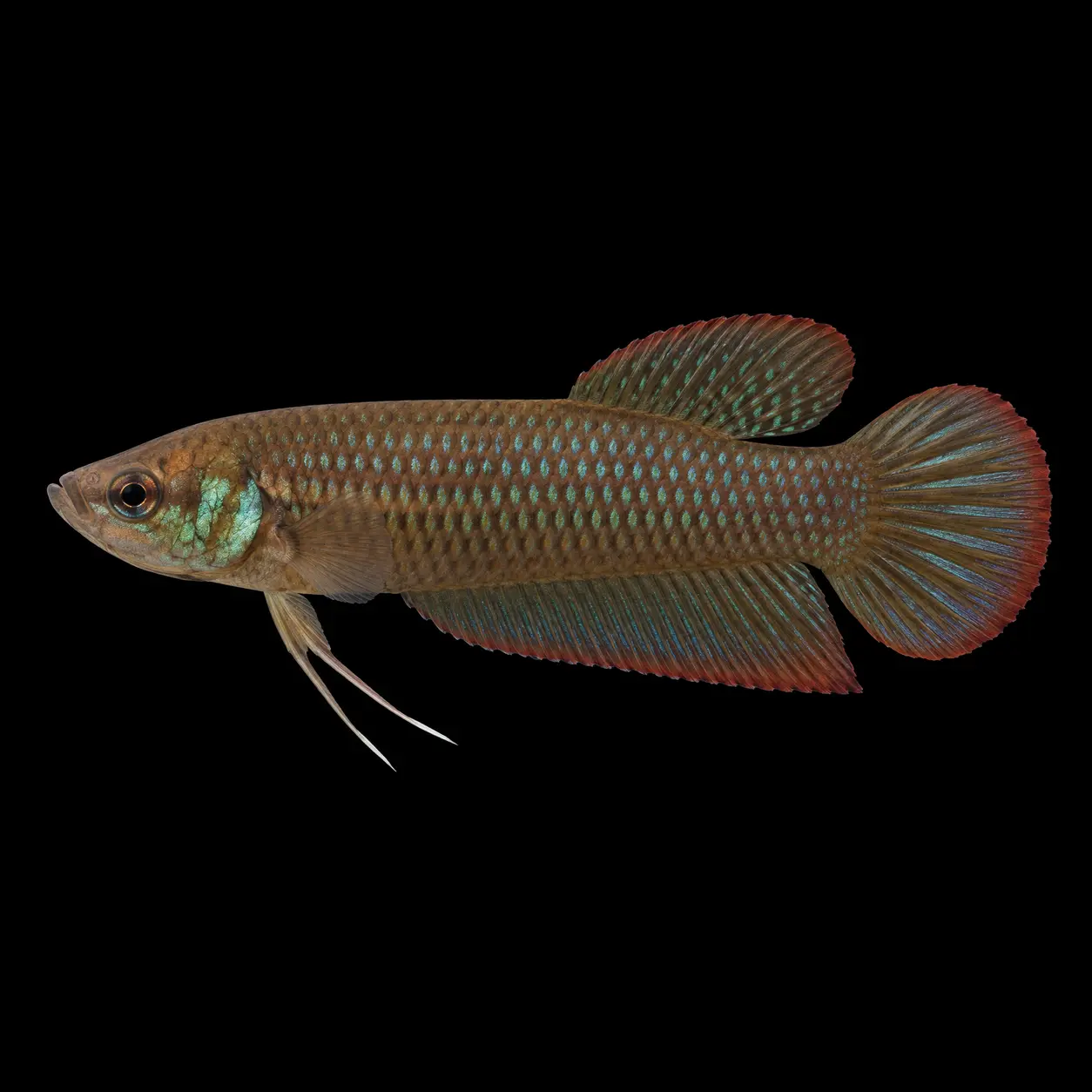
Identity and origin
- Origin
- Sumatra, Riau islands and Indonesian Kalimantan
- Identity
- Native Indonesian wild Betta species
A comparatively widespread mouthbrooder, while specimen-level locality remains valuable.
Description
8.2 cm TL · reported maximum
GH <5 °dGHspecies guidance
Natural food: Mosquito larvae, Tubifex, small/chopped earthworms; frozen Artemia.Prepared food: Dry food after habituation.
Biology: mature biofilter; species-specific microbial counts are not established.
Sources & limits
Maintain clean, filtered water with plants and shaded refuges. Check pair compatibility and give a brooding male quiet space; confirm the established conditions of the source population.
Source recommends approximately pH 6 and 25 °C, rather than bounded ranges. Habitat conductivity is not an aquarium prescription.
Omitted parameters have no verified range in the sources checked. Habitat or experimental measurements are not safe keeping limits. GH, KH, TDS and conductivity are not interchangeable.
General system guidance: target free ammonia (NH₃) and nitrite (NO₂⁻) at 0 mg/L; account for test detection limits. These are chemical measurements, not microbial counts or each species’ tolerance limits. OATA · 2022. Assess biofilter function through waste processing and water tests, not clarity alone. Biofiltration reference.
- International Betta Congress · Species Maintenance Program
- IGL, Jörg Vierke; revised Michael Staab (2024)
Size checked: . Water/food checked: .
Plan before choosing
- Habitat
- Variable freshwater habitats
- Scope of the habitat record
- The specialist account reports populations in both blackwater and clear water. Population-specific records are needed before choosing a care protocol.
- Planning context
- The cited source supports this broad habitat classification. A verified husbandry protocol is not yet available here; do not treat natural habitat observations as an aquarium recipe.
Specialist account · Jörg Vierke / IGL, revised Michael Staab (2024) · Vorkommen
Source check: . Independent husbandry review pending.
Plan around the wild species
Care-planning notes. Confirm exact requirements for the species and source population.
- Wild Betta have different habitats and breeding strategies; ornamental Betta splendens advice cannot cover every species.
- Retain species and locality records, and verify whether the line is a bubble-nester or a mouthbrooder.
- Plan a secure cover, shelter and a species-specific social arrangement before acquiring a line.
Evidence record
Conservation record: Reported LC — Least Concern. The category is retained from a cited record. Verification of the direct assessment and its dates is not yet documented here. Open the retained source. Conservation status does not establish legal protection, availability or permission to trade.
Catalogue inclusion confirms a research record, not current stock, legal export, or destination-country import permission.