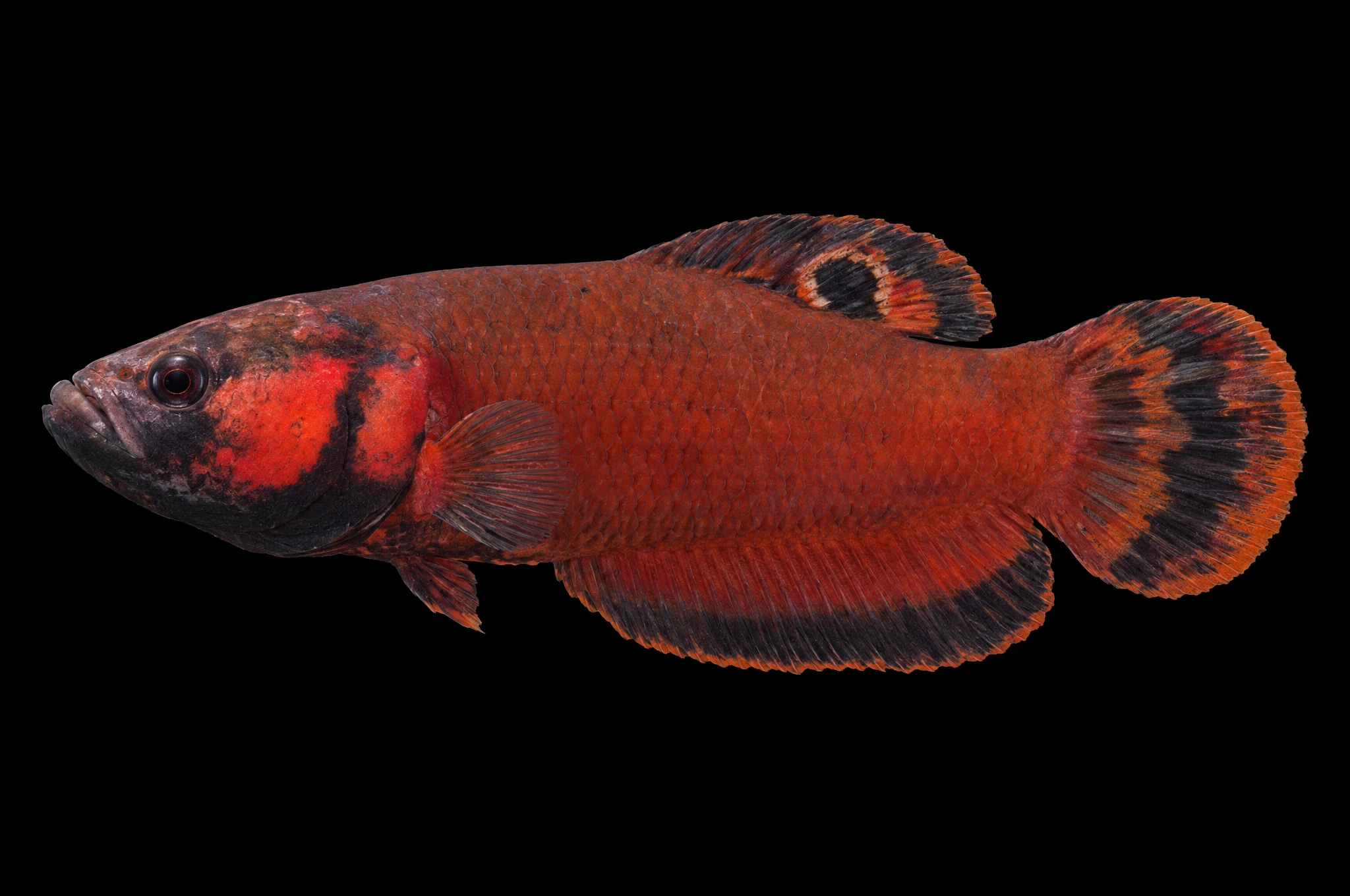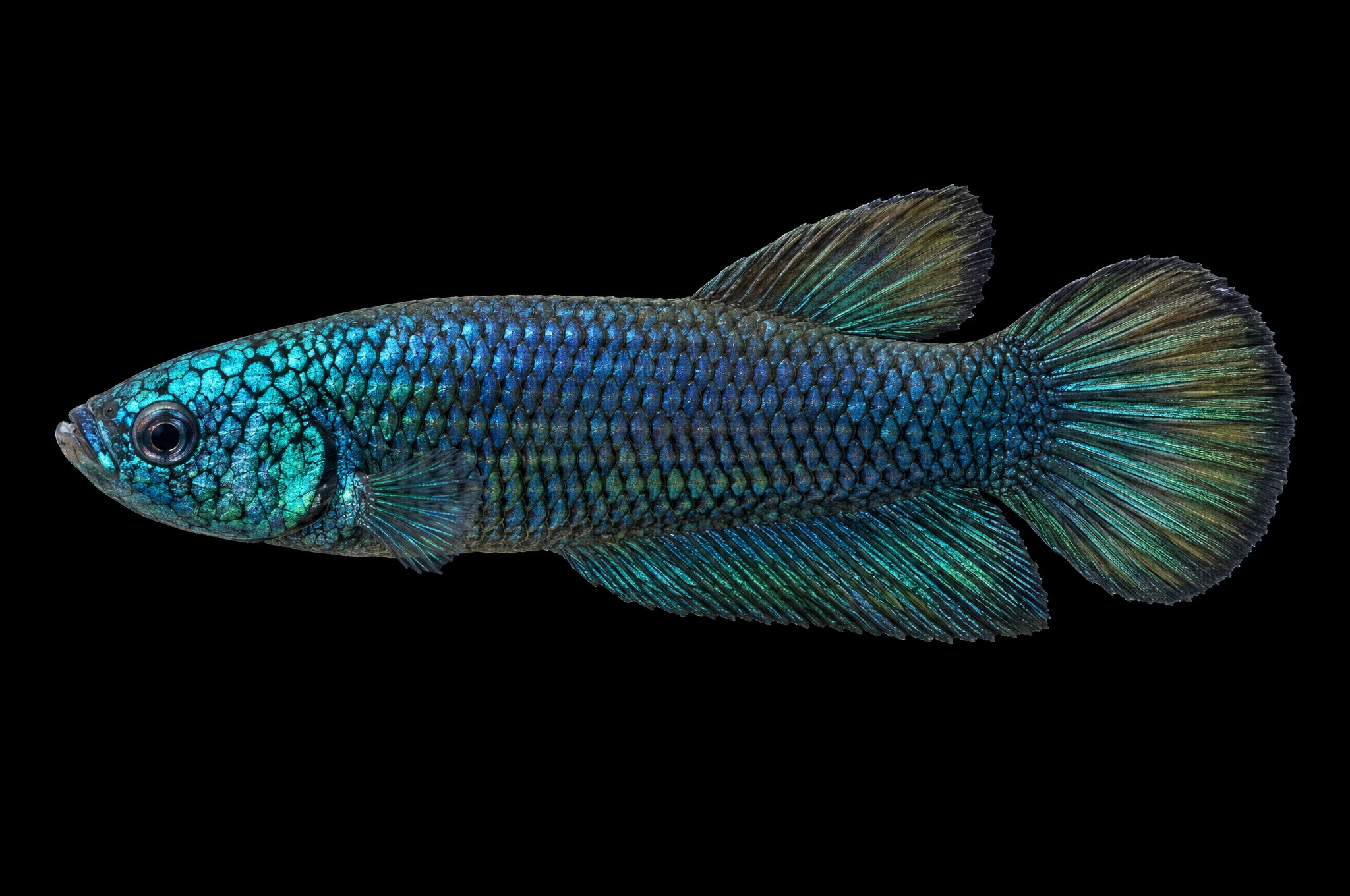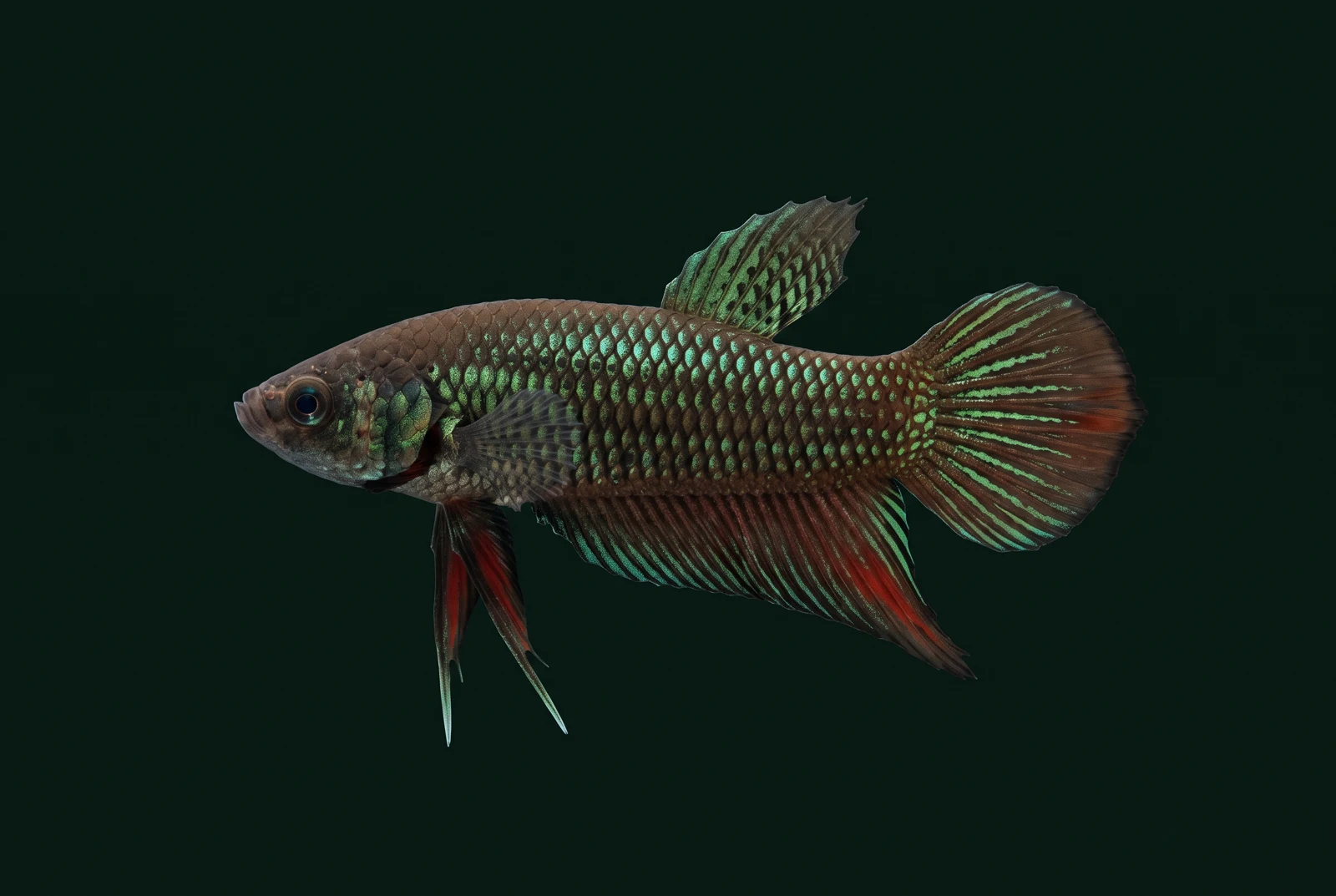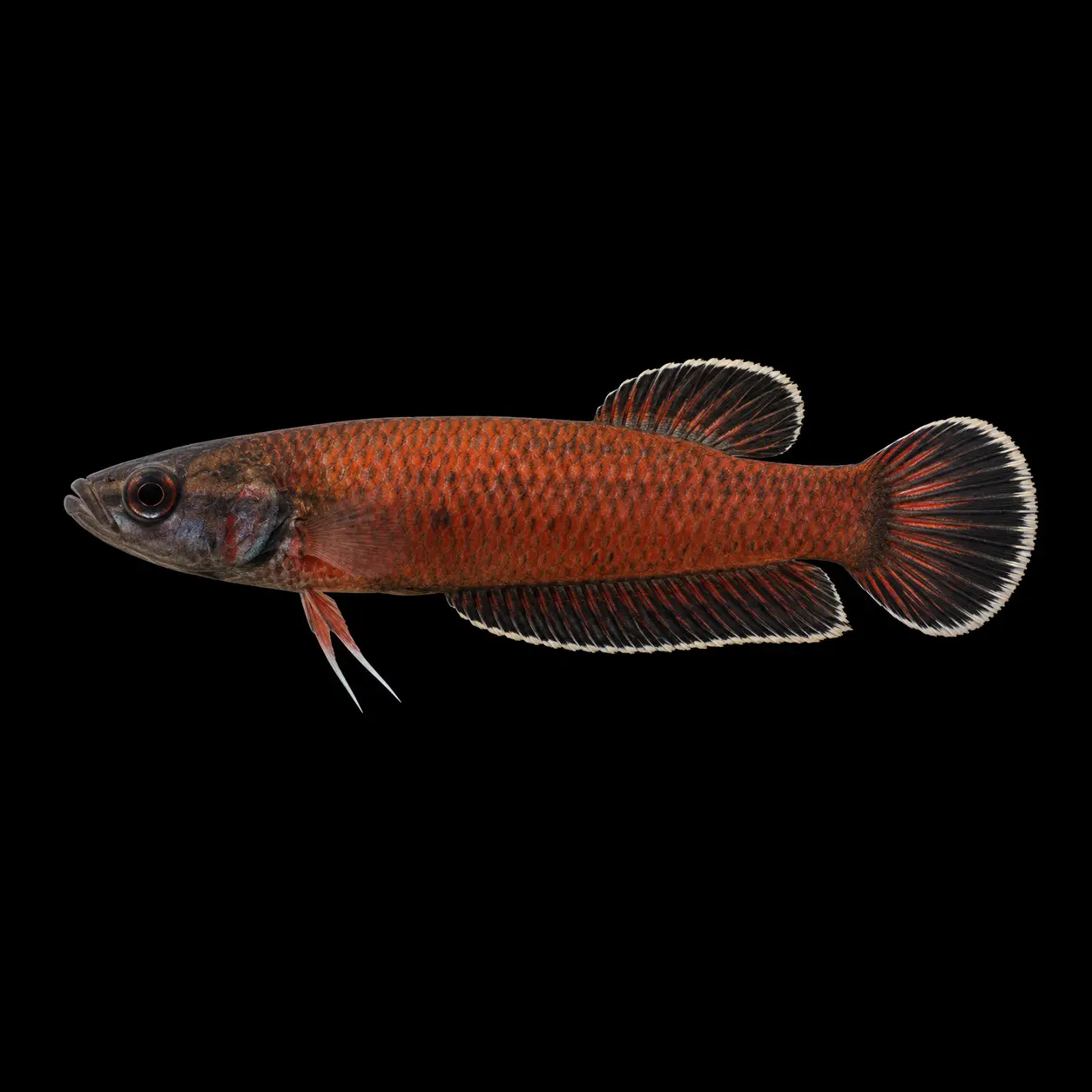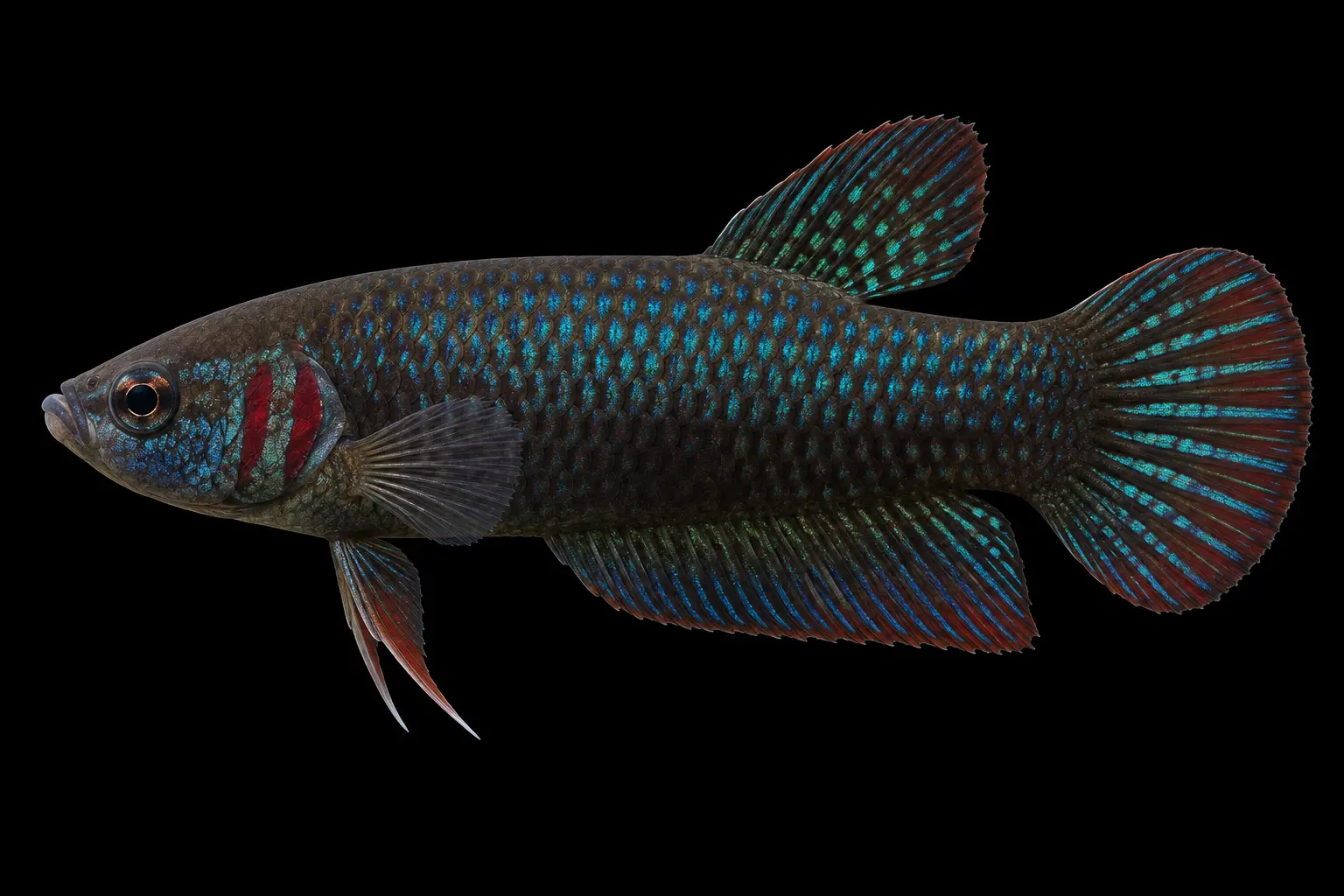
Identity and origin
- Origin
- Southern Kalimantan
- Identity
- Native Indonesian wild Betta species
An Endangered forest-creek mouthbrooder with specialist appeal and a strong need for locality-backed identity.
Description
7–8 cm TL · husbandry range; maximum unverifiedKeeping reference · not a measured maximum
Temperature 22–24 °C · pH 4.5–5.5 · KH 0–3 °dKHspecies guidance
Natural food: Live Artemia, mosquito larvae, Daphnia, small earthworms.Prepared food: Granules and frozen food possible; live food preferred.
Biology: mature biofilter; species-specific microbial counts are not established.
Sources & limits
Provide clean, soft acidic water, floating plants and ample refuges. IGL recommends relatively cool 22–24°C for maintenance; cover the tank securely and keep brooding males undisturbed.
Maintenance range; separate breeding settings are not merged into it.
Omitted parameters have no verified range in the sources checked. Habitat or experimental measurements are not safe keeping limits. GH, KH, TDS and conductivity are not interchangeable.
General system guidance: target free ammonia (NH₃) and nitrite (NO₂⁻) at 0 mg/L; account for test detection limits. These are chemical measurements, not microbial counts or each species’ tolerance limits. OATA · 2022. Assess biofilter function through waste processing and water tests, not clarity alone. Biofiltration reference.
Size checked: . Water/food checked: .
Plan before choosing
- Habitat
- Blackwater pools
- Scope of the habitat record
- The specialist account describes shaded blackwater pools in swamp forest of the Mentaya catchment.
- Planning context
- The cited source supports this broad habitat classification. A verified husbandry protocol is not yet available here; do not treat natural habitat observations as an aquarium recipe.
Specialist account · Carmen Scharschmidt / IGL (2010) · Vorkommen
Source check: . Independent husbandry review pending.
Plan around the wild species
Care-planning notes. Confirm exact requirements for the species and source population.
- Wild Betta have different habitats and breeding strategies; ornamental Betta splendens advice cannot cover every species.
- Retain species and locality records, and verify whether the line is a bubble-nester or a mouthbrooder.
- Plan a secure cover, shelter and a species-specific social arrangement before acquiring a line.
Evidence record
Conservation record: Reported EN — Endangered. The category is retained from a cited record. Verification of the direct assessment and its dates is not yet documented here. Open the retained source. Conservation status does not establish legal protection, availability or permission to trade.
Catalogue inclusion confirms a research record, not current stock, legal export, or destination-country import permission.