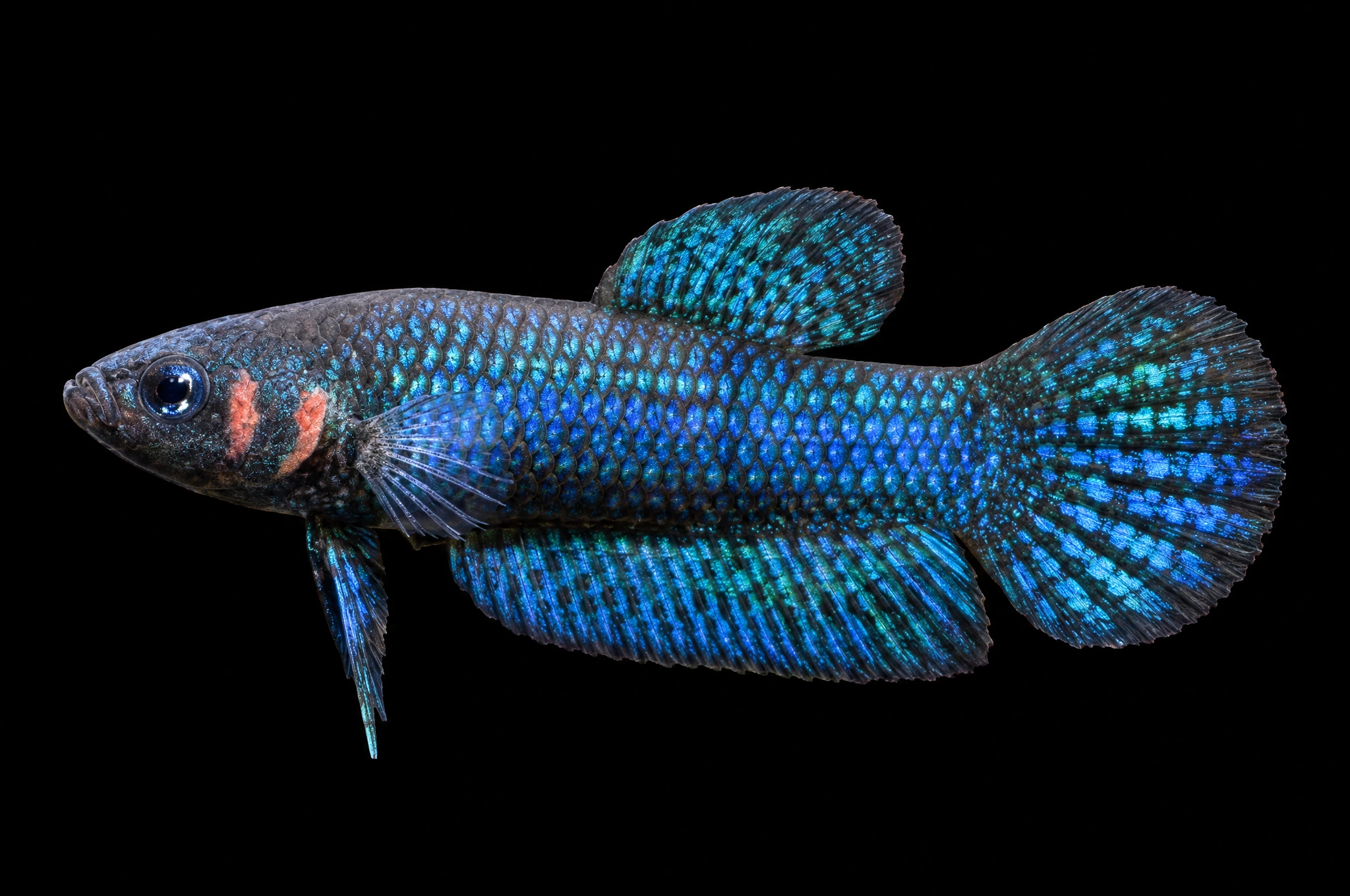
Identity and origin
- Origin
- Sebangau drainage, Central Kalimantan, Indonesia
- Identity
- Described Indonesian species in the Betta coccina group
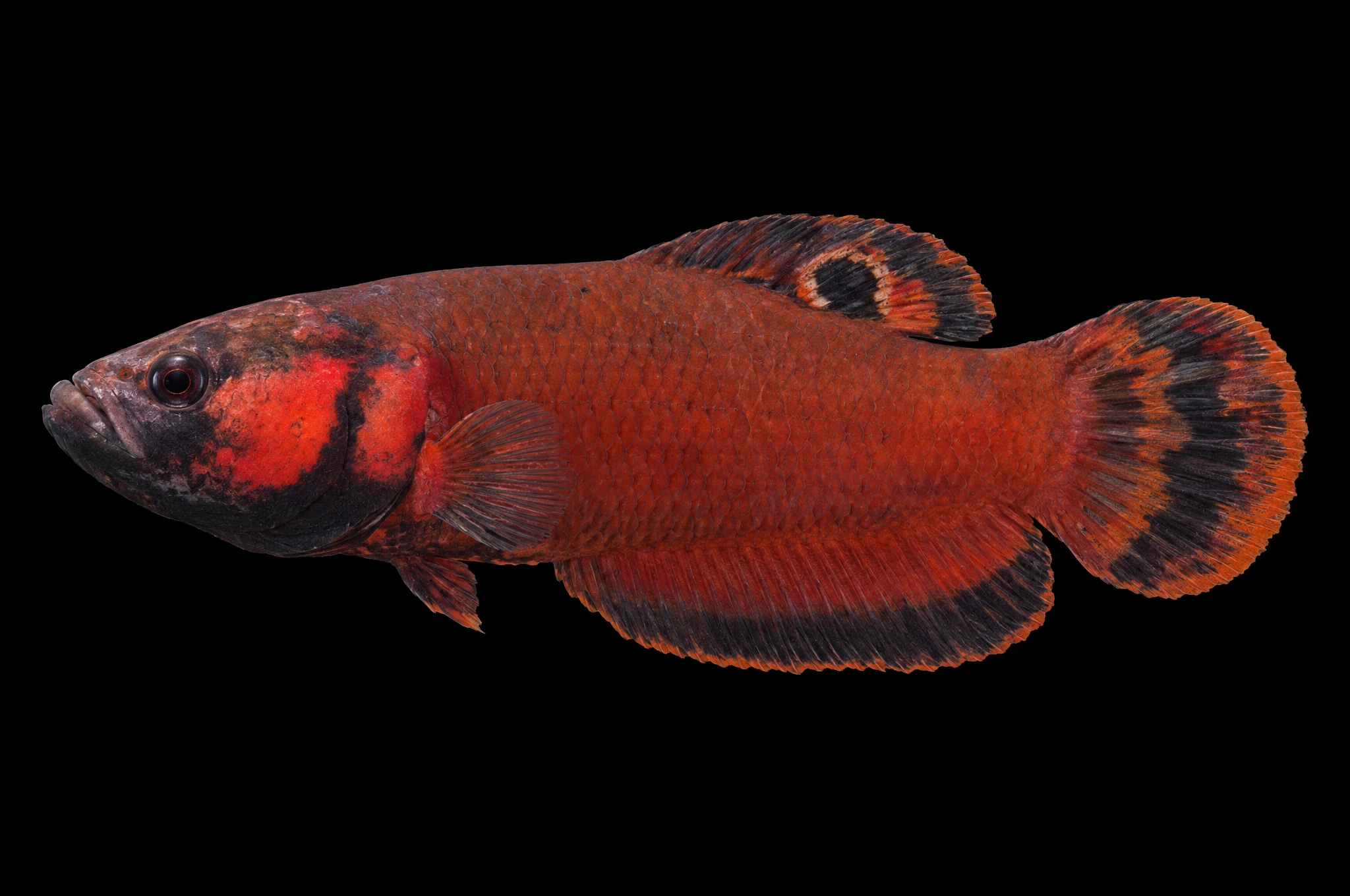
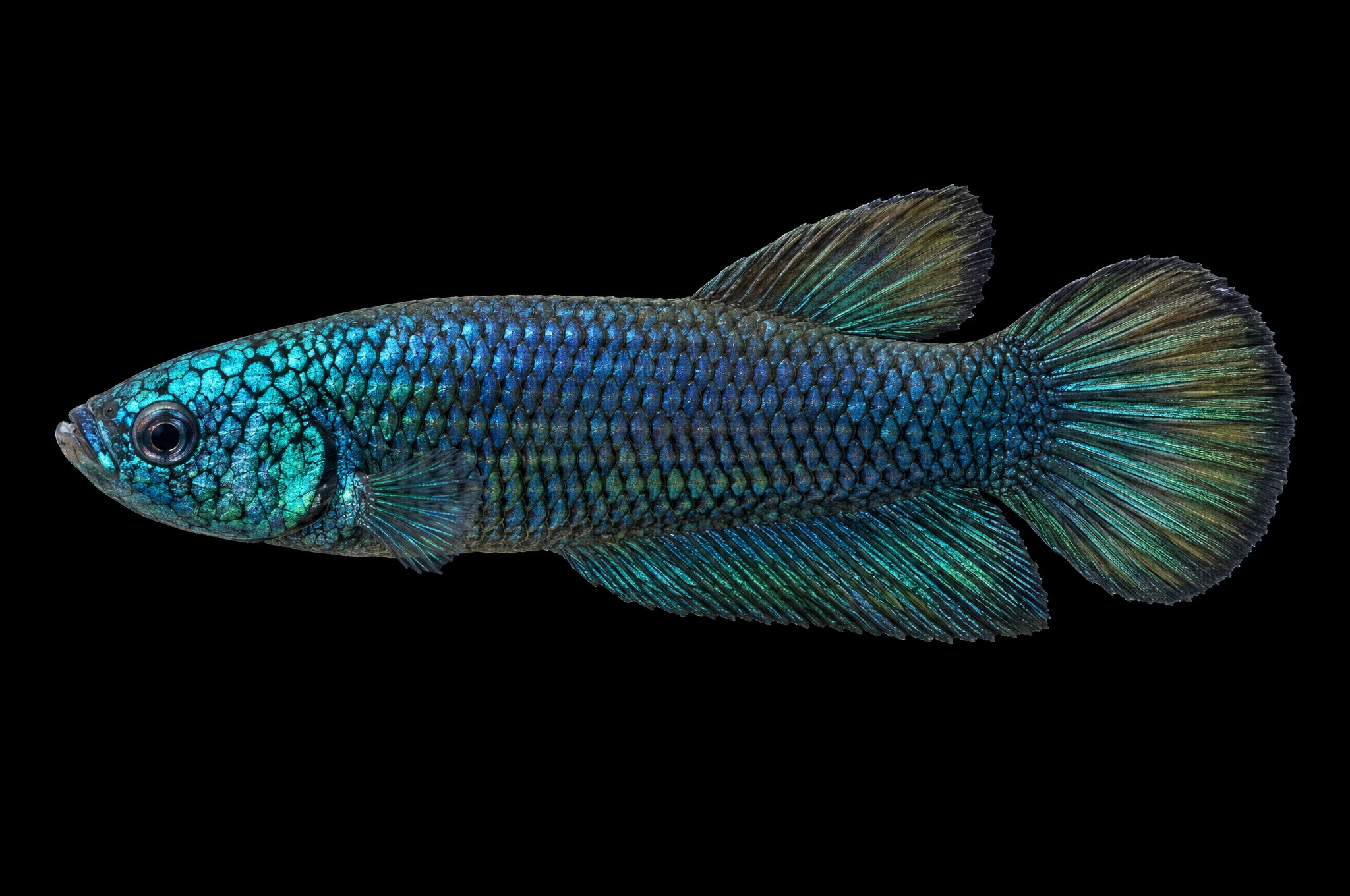
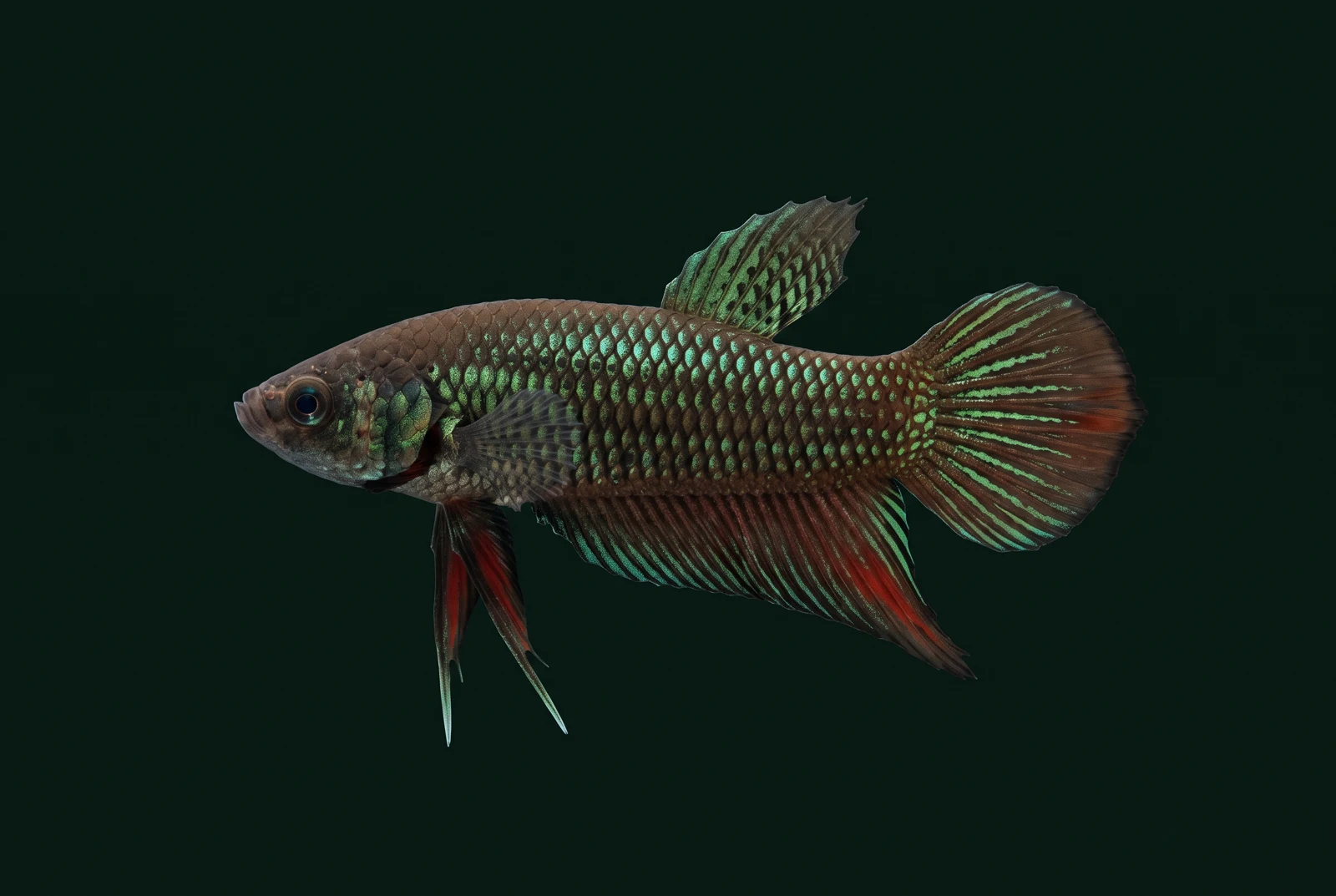
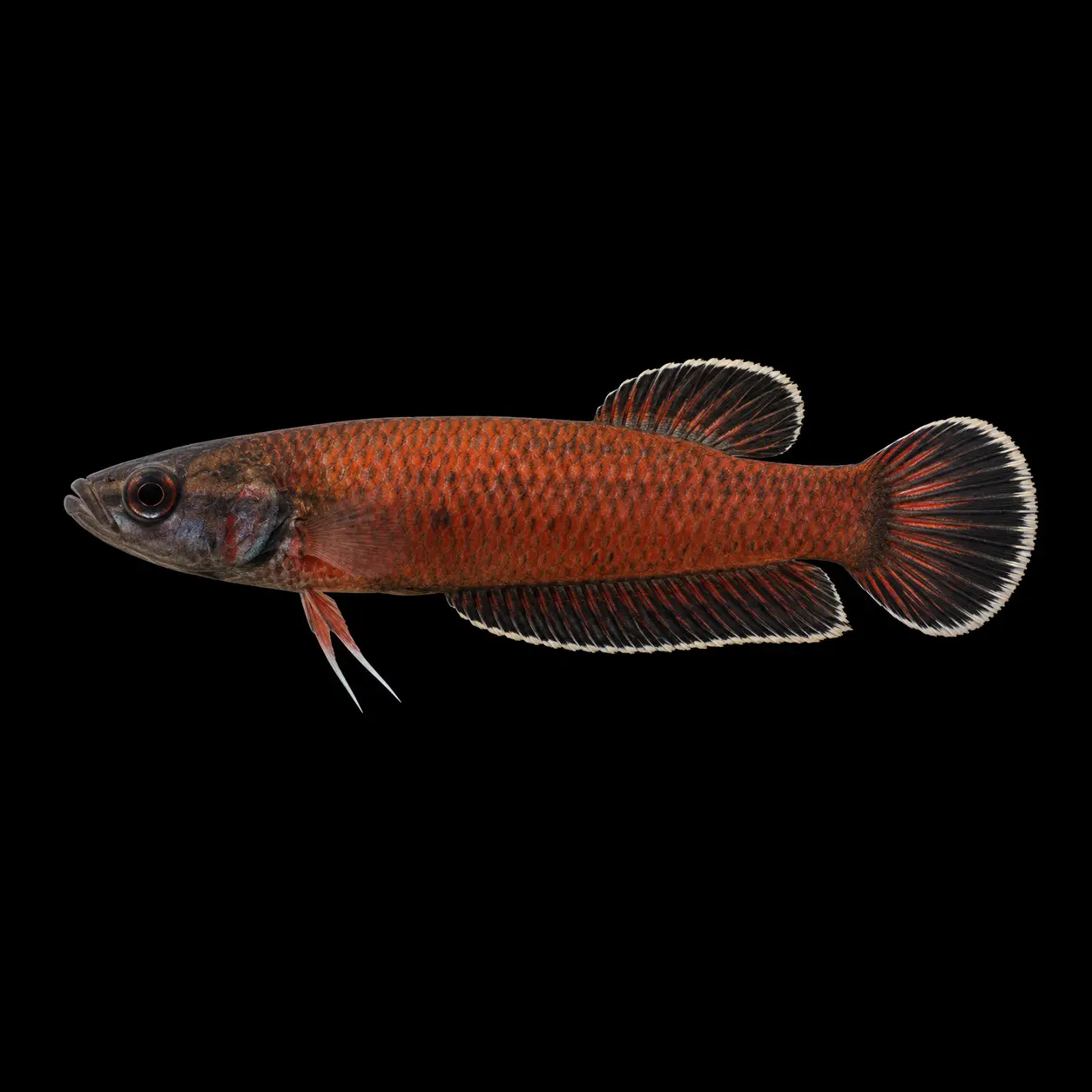
A bubble-nester with green-blue iridescent flanks. The original description distinguishes it from B. uberis using dorsal-fin ray counts; colour alone is insufficient for identification.
Habitat and care
Shaded, shallow blackwater peat swamps with submerged and marginal vegetation. Habitat and identity reference
Explore the habitat
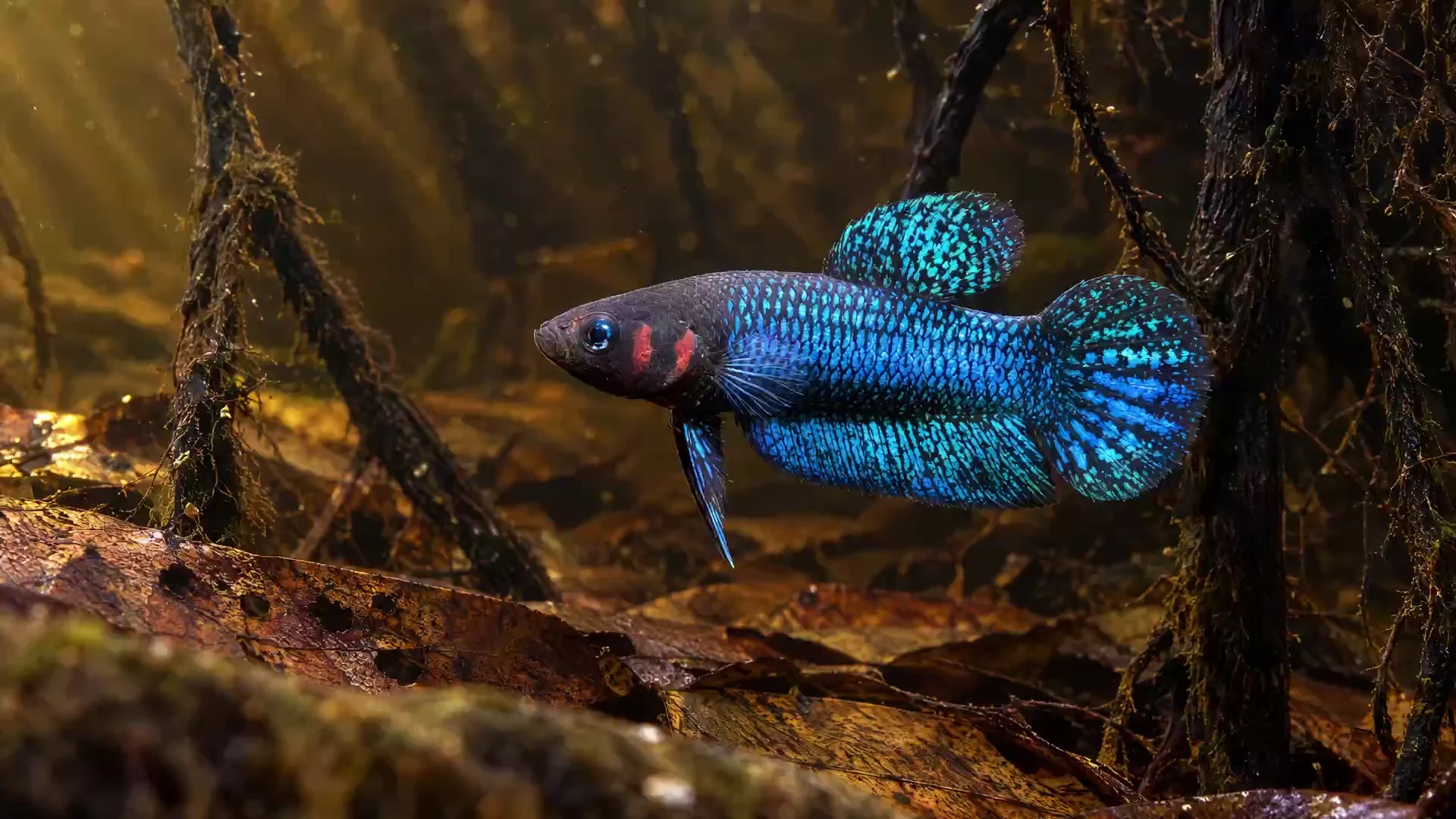
Shaded, shallow blackwater peat swamps with submerged and marginal vegetation.
Illustrative habitat reconstructionFROM THE SIGNATURE COLLECTIONS
Look closely
Iridescent greenish flanks and the absence of the dark side blotch seen in several related species are described in the original scientific account.
A detail worth knowing
Described in 2013 from Central Kalimantan, this member of the coccina group is associated with peat-swamp habitat. Read colour together with anatomy and origin when checking identity.
Schindler & Linke (2013) — original description
Source review: 22 September 2026. Educational notes, not a stock or breeding-success claim.
Description
4.5 cm SL in aquarium offspring · maximum unverifiedKeeping reference · not a measured maximum
Temperature 25–29 °C · pH 4.5–6.5 · GH 1–6 °dGHspecies guidance
Natural food: Artemia, mosquito larvae, grindal, springtails.Prepared food: Dry food after habituation.
Biology: mature biofilter; species-specific microbial counts are not established.
Sources & limits
A peat-swamp bubble-nester. Keep wild specimen measurements distinct from larger aquarium offspring, and verify food acceptance before relying on prepared feeds. Evidence limits checked: .
Use a sheltered setup with soft acidic water, leaf cover, floating plants and gentle flow. Offer small animal foods and monitor aggression during breeding.
Species husbandry guidance; population history still matters.
The wild type series reached 29.4 mm SL; measured aquarium paratypes reached 41.9 mm SL. The discussion separately reports captive offspring to 45 mm SL.
Omitted parameters have no verified range in the sources checked. Habitat or experimental measurements are not safe keeping limits. GH, KH, TDS and conductivity are not interchangeable.
General system guidance: target free ammonia (NH₃) and nitrite (NO₂⁻) at 0 mg/L; account for test detection limits. These are chemical measurements, not microbial counts or each species’ tolerance limits. OATA · 2022. Assess biofilter function through waste processing and water tests, not clarity alone. Biofiltration reference.
- Schindler & Linke (2013), Betta hendra, a new species of fighting fish
- IGL, species information sheet: Betta hendra
- Schindler & Linke (2013) · original description
Size checked: . Water/food checked: .
Plan before choosing
- Habitat
- Peat blackwater
- Planning context
- A peat-swamp bubble-nester. Preserve locality records and use a species-specific breeding plan; do not substitute mouthbrooder husbandry.
Schindler & Linke (2013) · original description
Review date not recorded for this source. Independent husbandry review pending.
Plan around the wild species
Care-planning notes. Confirm exact requirements for the species and source population.
- Wild Betta have different habitats and breeding strategies; ornamental Betta splendens advice cannot cover every species.
- Retain species and locality records, and verify whether the line is a bubble-nester or a mouthbrooder.
- Plan a secure cover, shelter and a species-specific social arrangement before acquiring a line.
Evidence record
Conservation record: Reported CR — Critically Endangered. The category is retained from a cited record. Verification of the direct assessment and its dates is not yet documented here. Open the retained source. Conservation status does not establish legal protection, availability or permission to trade.
Identity and locality source check: . Editorial source check; independent taxonomic review pending. Research profile; availability is not open.
Catalogue inclusion confirms a research record, not current stock, legal export, or destination-country import permission.