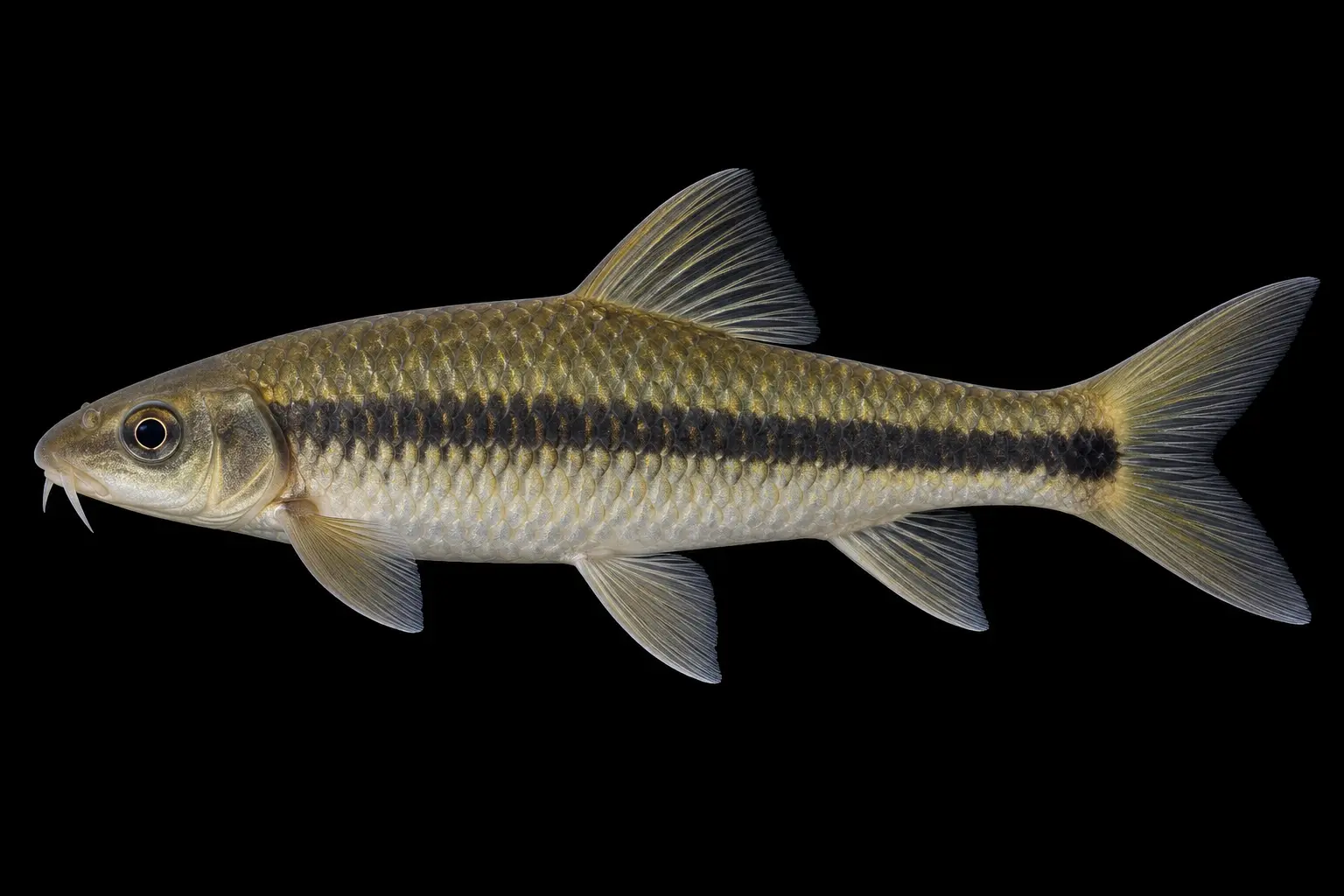
Identity and origin
- Origin
- Sumatra and Kalimantan; wider Southeast Asian range
- Identity
- Native stream cyprinid with trade-name confusion
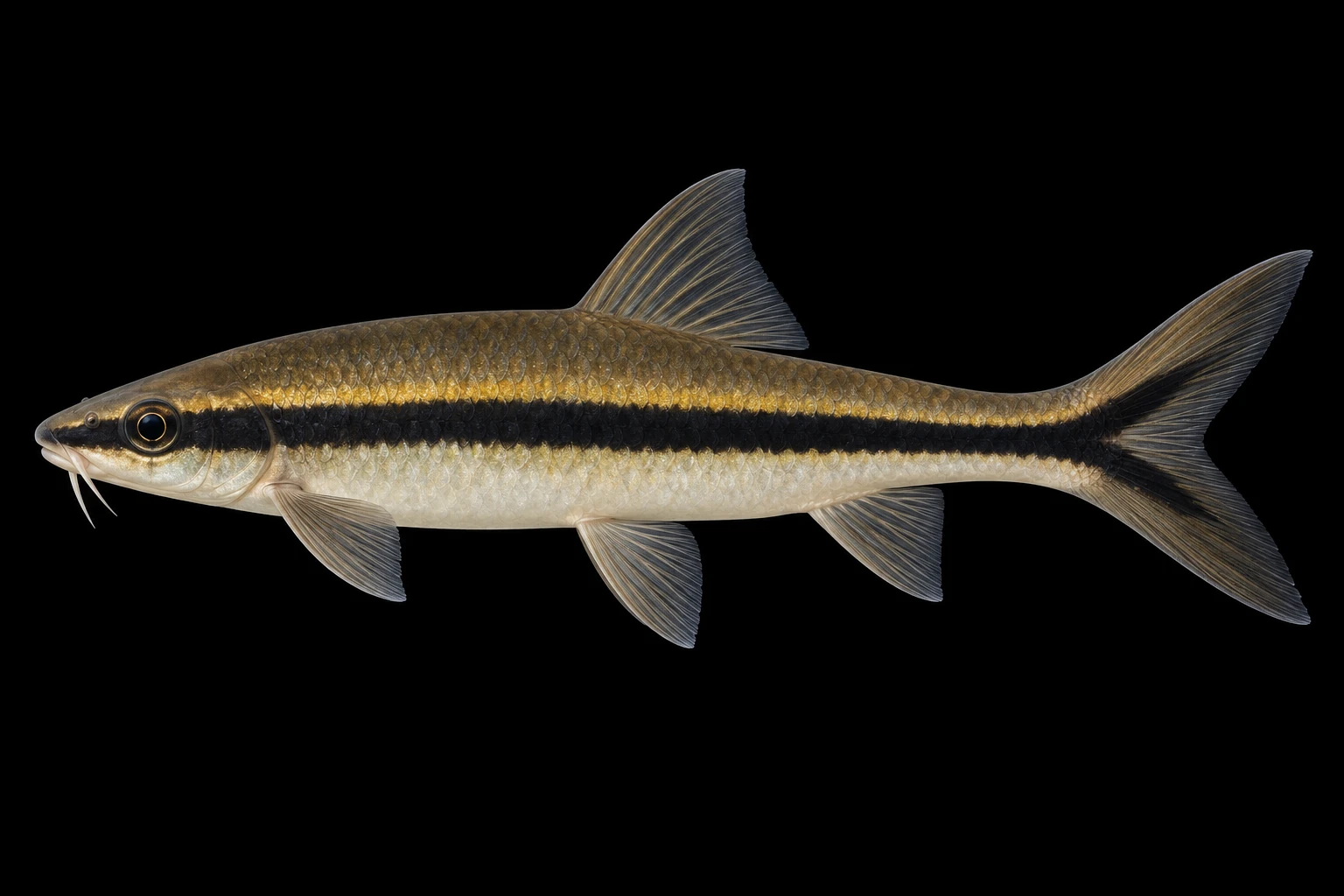
Despite the trade name, the species has Indonesian native records. Look-alike Crossocheilus and Epalzeorhynchos must be separated.
Description
Reported maximum: 16 cm SL
Specific water ranges are not yet verified.
Natural food: Species-specific natural-feed selection not verifiedPrepared food: Prepared-feed type and acceptance not verified
Biology: mature biofilter; species-specific microbial counts are not established.
Sources & limits
Provide spacious, well-oxygenated water with current, smooth stones, and sheltered resting areas. Offer algae-based and other suitable foods; confirm identification before relying on advertised algae-eating behaviour.
Group-level guidance
No defensible species-specific numerical care range was adopted from the sources accessible in this review. Keep the existing sourced ecological guidance; verify population and feeding before acquisition.
Aquarium fish sold as Siamese algae eaters may be other Crossocheilus species; this record concerns C. oblongus specifically.
Omitted parameters have no verified range in the sources checked. Habitat or experimental measurements are not safe keeping limits. GH, KH, TDS and conductivity are not interchangeable.
General system guidance: target free ammonia (NH₃) and nitrite (NO₂⁻) at 0 mg/L; account for test detection limits. These are chemical measurements, not microbial counts or each species’ tolerance limits. OATA · 2022. Assess biofilter function through waste processing and water tests, not clarity alone. Biofiltration reference.
Size checked: . Water/food checked: .
Before choosing this species
Care-planning notes. Confirm exact requirements for the species and source population.
- Confirm the adult size and social behaviour of the exact species before planning its aquarium.
- Establish biological filtration and stable water conditions before introducing animals.
- Ask for locality, captive history and the actual animal’s feeding record; a catalogue image cannot provide these.
Evidence record
Conservation record: A current assessment has not been verified for this profile. This does not establish Not Evaluated status or imply low risk. Conservation status does not establish legal protection, availability or permission to trade.
Catalogue inclusion confirms a research record, not current stock, legal export, or destination-country import permission.