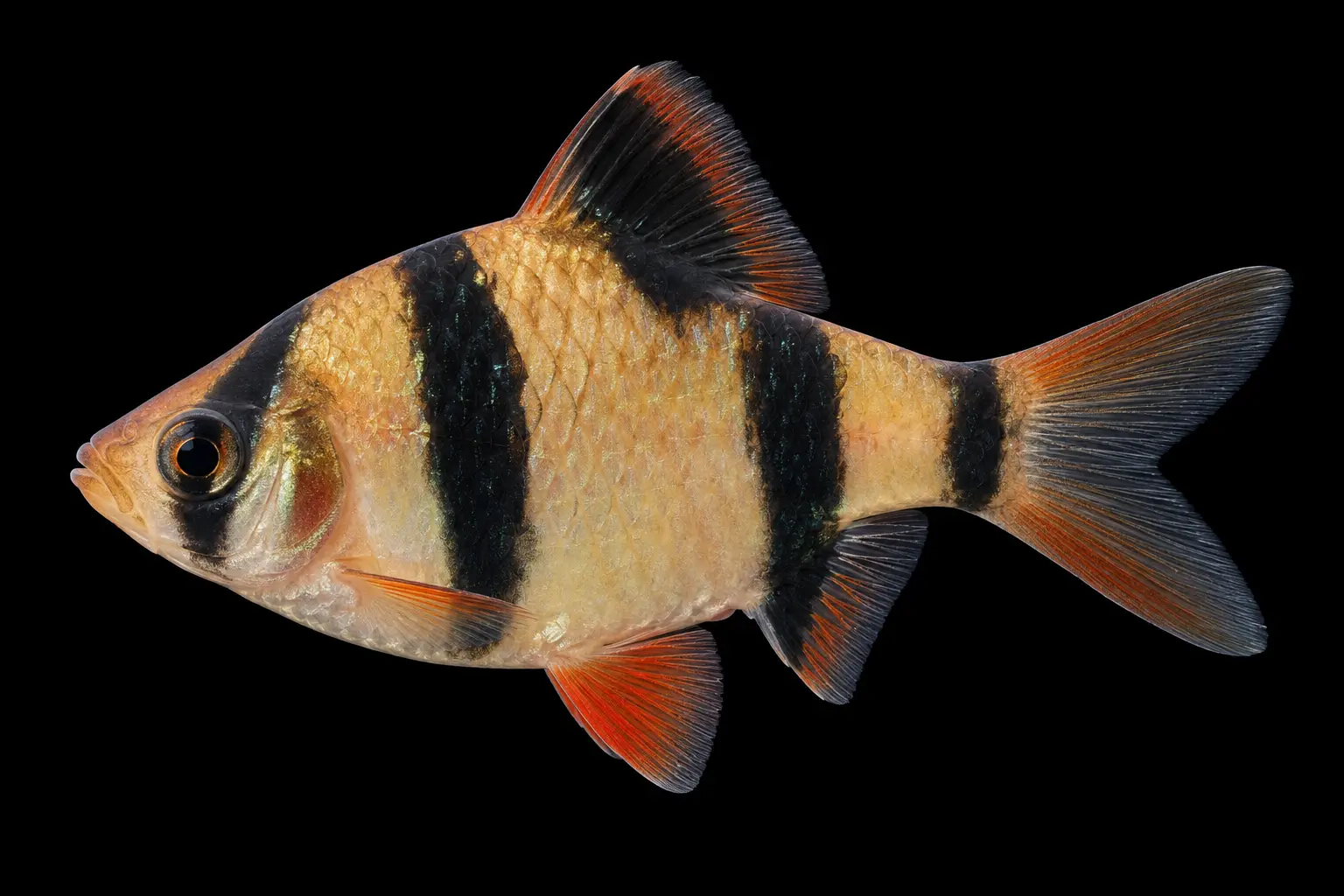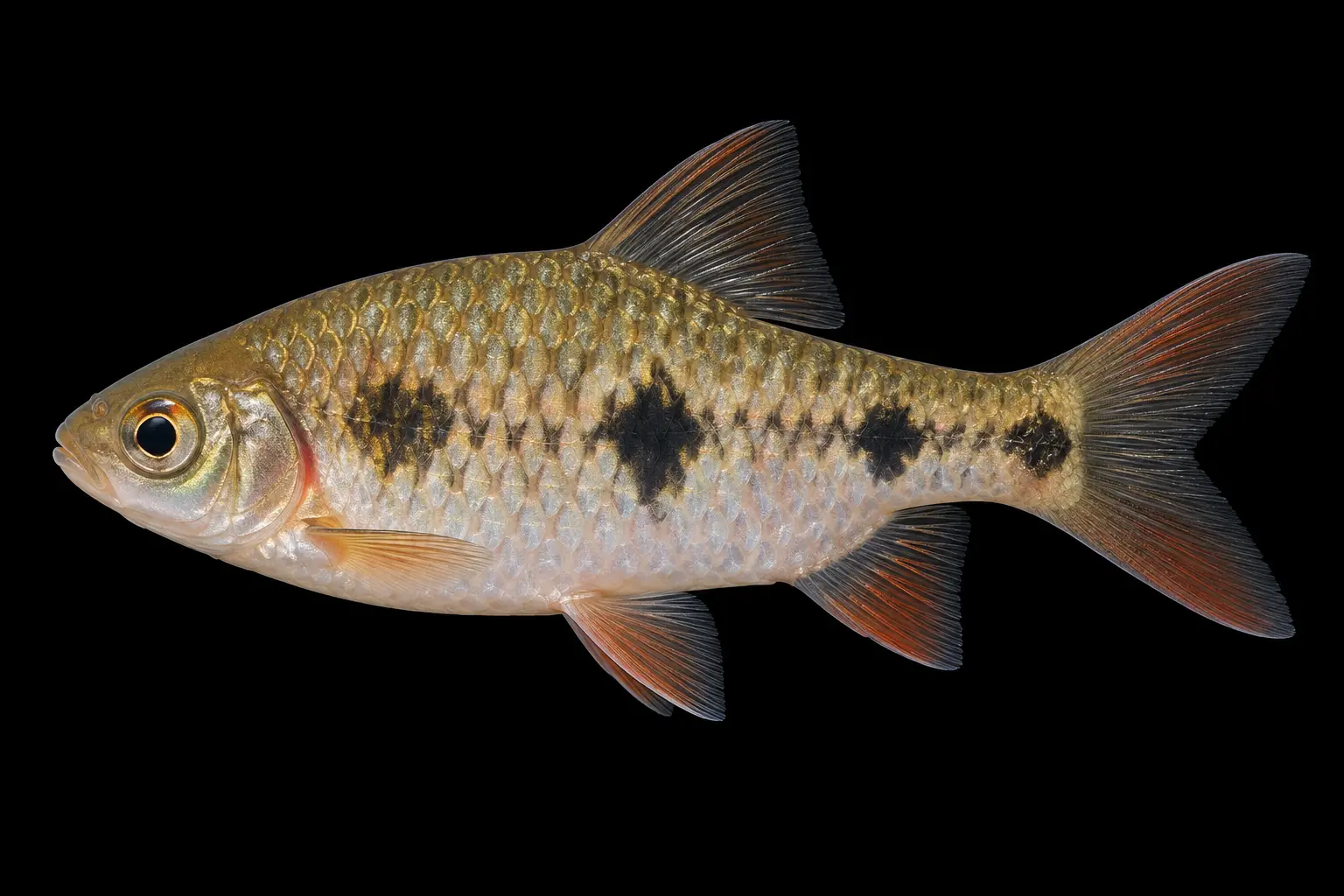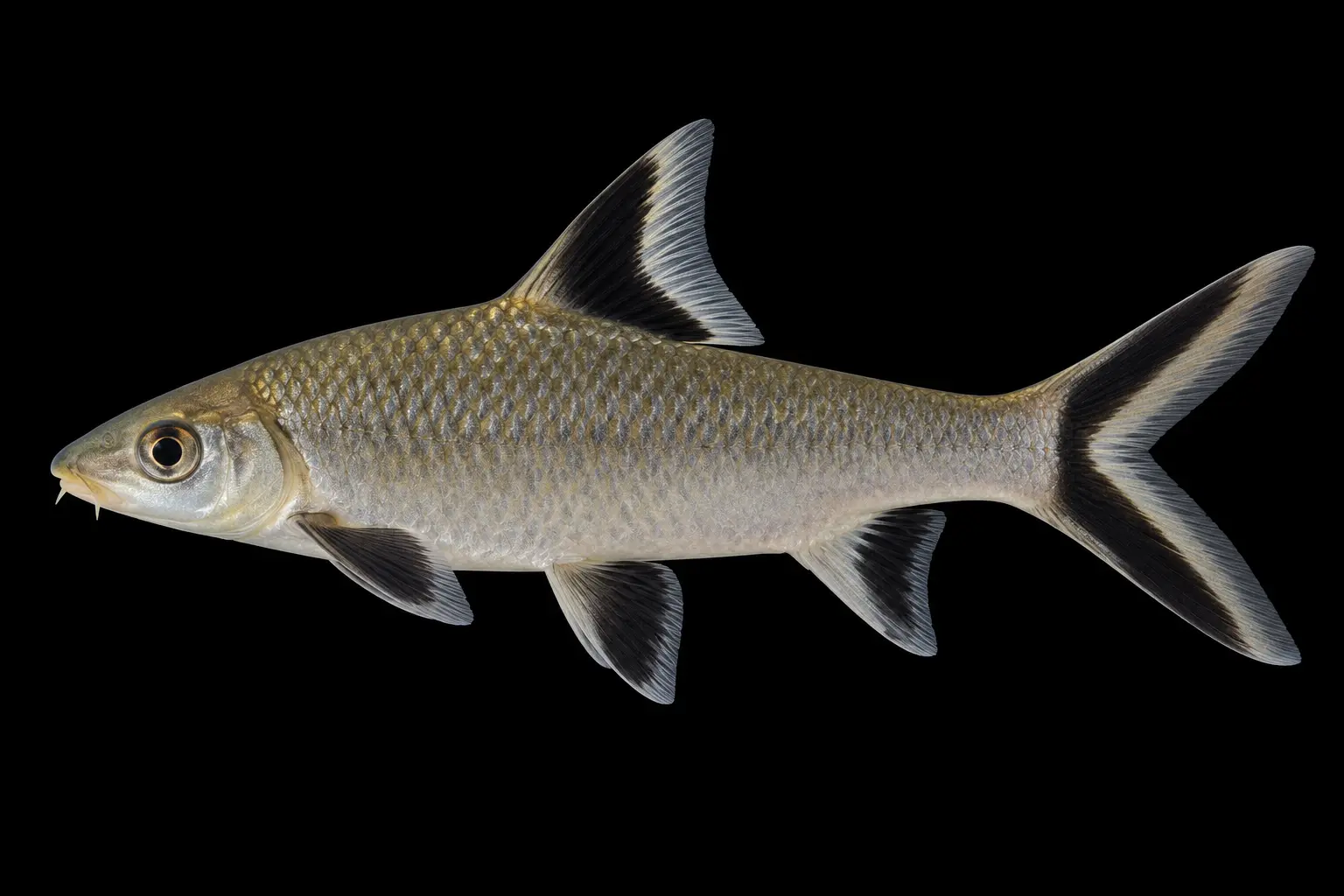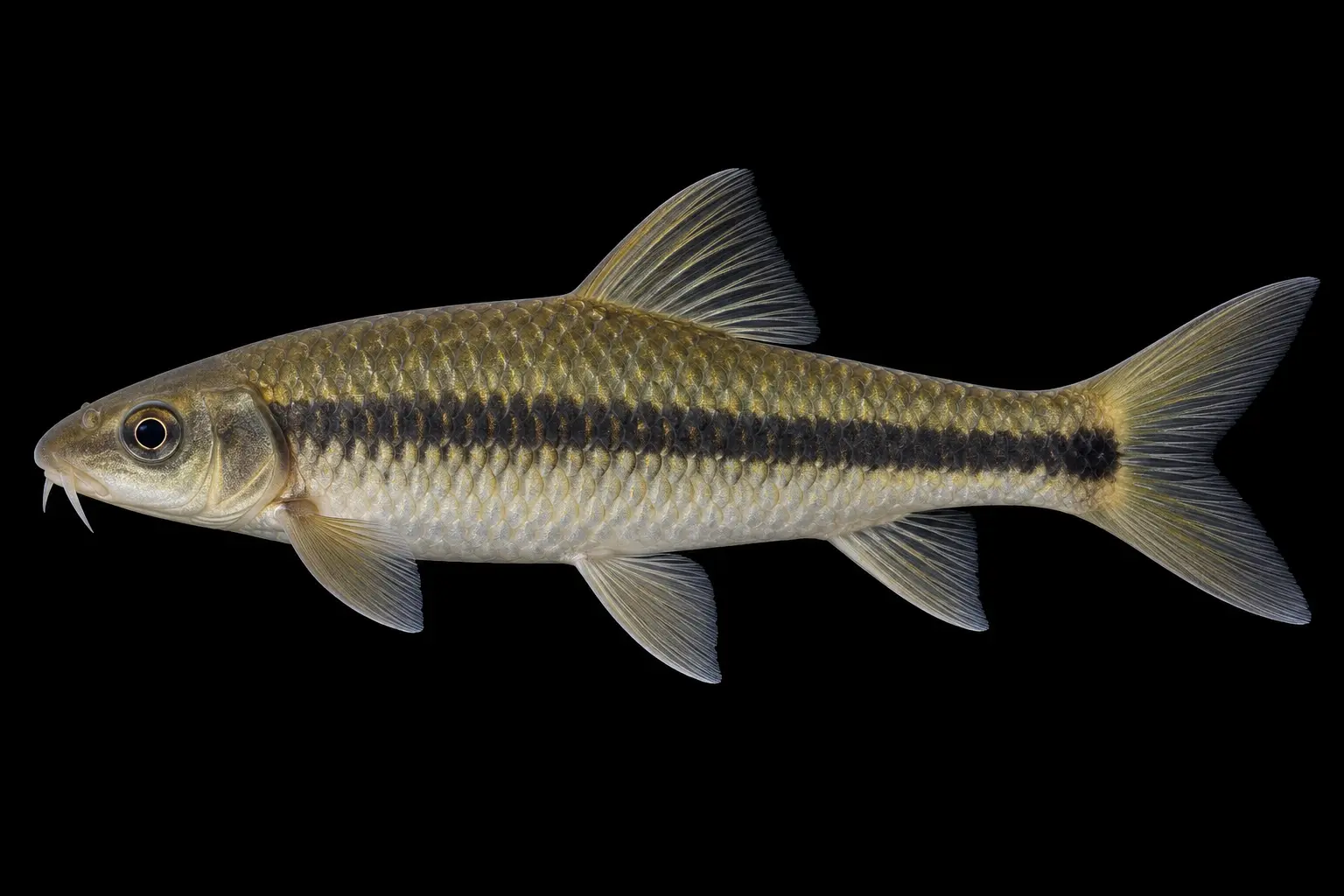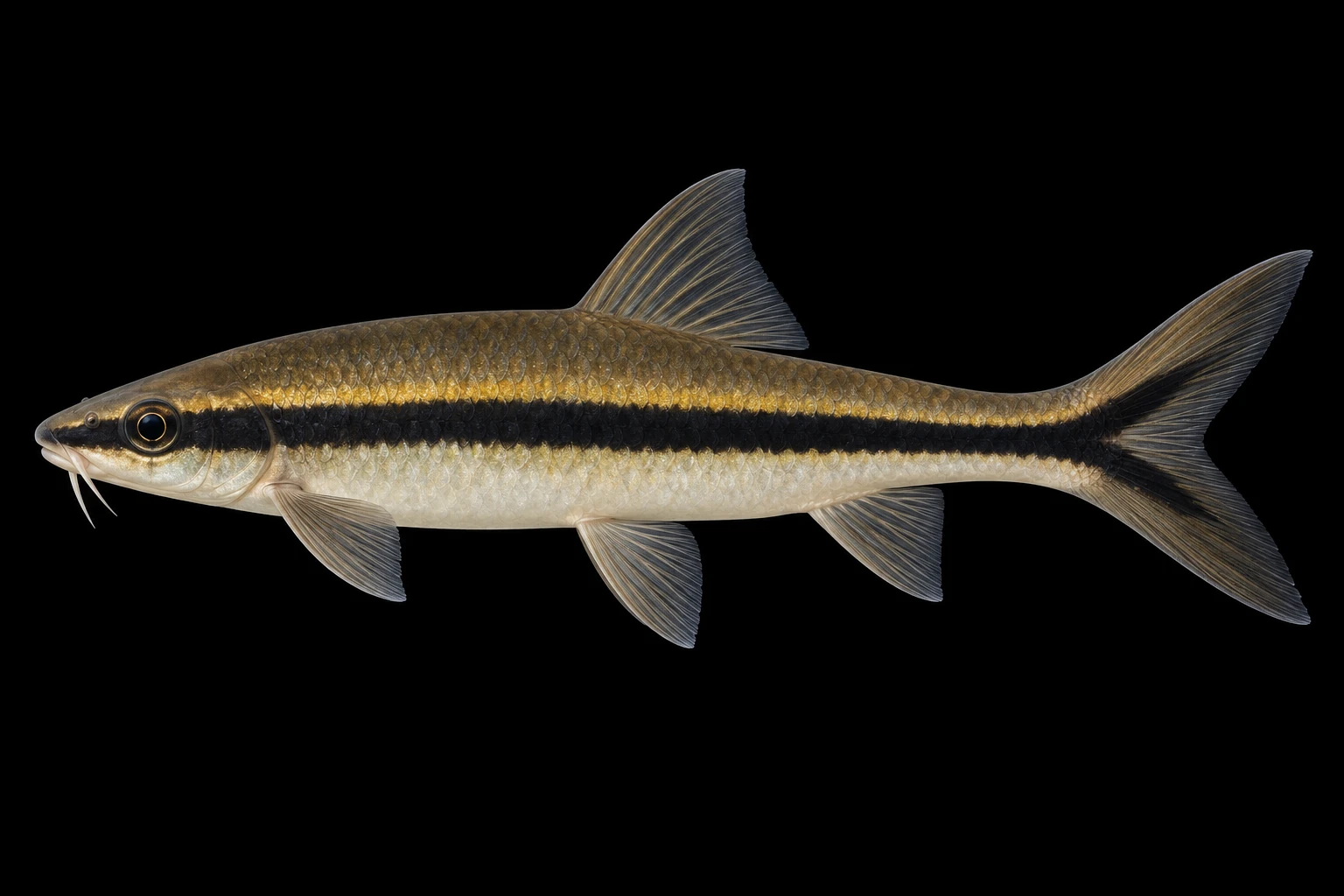
Identity and origin
- Origin
- Sumatra and Kalimantan; wider Sundaland range
- Identity
- Native algae-grazing cyprinid
Commonly confused with other elongate algae-eaters. Kottelat (2013) uses the corrected spelling Epalzeorhynchos kalopterum; this existing catalogue identifier and URL are retained pending review. Visual similarity and a corrected name do not establish specimen identity.
Description
Reported maximum: 16 cm TL
Temperature 20–26 °C · pH 6.0–7.5 · GH 2–12 °dGHspecies guidance
Natural food: Algae/biofilm; Daphnia, Artemia; vegetablesPrepared food: Vegetable-containing flakes/granules
Biology: mature biofilter; species-specific microbial counts are not established.
Sources & limits
Provide swimming room, planted or rocky retreats, and clean, oxygenated water. Adults can become territorial; monitor companions and offer mixed animal and plant foods rather than algae alone.
Group-level guidance
Specialist aquarium guidance; acclimation and provenance still matter. This is not a measured optimum or a breeding protocol.
Kottelat (2013, p. 101) uses Epalzeorhynchos kalopterum because the genus is neuter; kalopterus is a historical spelling. The catalogue identifier and URL remain unchanged pending nomenclature review. This name correction does not verify the pictured animal or a future batch.
Omitted parameters have no verified range in the sources checked. Habitat or experimental measurements are not safe keeping limits. GH, KH, TDS and conductivity are not interchangeable.
General system guidance: target free ammonia (NH₃) and nitrite (NO₂⁻) at 0 mg/L; account for test detection limits. These are chemical measurements, not microbial counts or each species’ tolerance limits. OATA · 2022. Assess biofilter function through waste processing and water tests, not clarity alone. Biofiltration reference.
- FishBase: maximum length
- FishBase species ecology; conservative aquarium guidance
- Seriously Fish — specialist aquarium guidance
- Kottelat (2013), nomenclatural note, printed p. 101
Size checked: . Water/food checked: .
Before choosing this species
Care-planning notes. Confirm exact requirements for the species and source population.
- Confirm the adult size and social behaviour of the exact species before planning its aquarium.
- Establish biological filtration and stable water conditions before introducing animals.
- Ask for locality, captive history and the actual animal’s feeding record; a catalogue image cannot provide these.
Evidence record
Conservation record: A current assessment has not been verified for this profile. This does not establish Not Evaluated status or imply low risk. Conservation status does not establish legal protection, availability or permission to trade.
Catalogue inclusion confirms a research record, not current stock, legal export, or destination-country import permission.