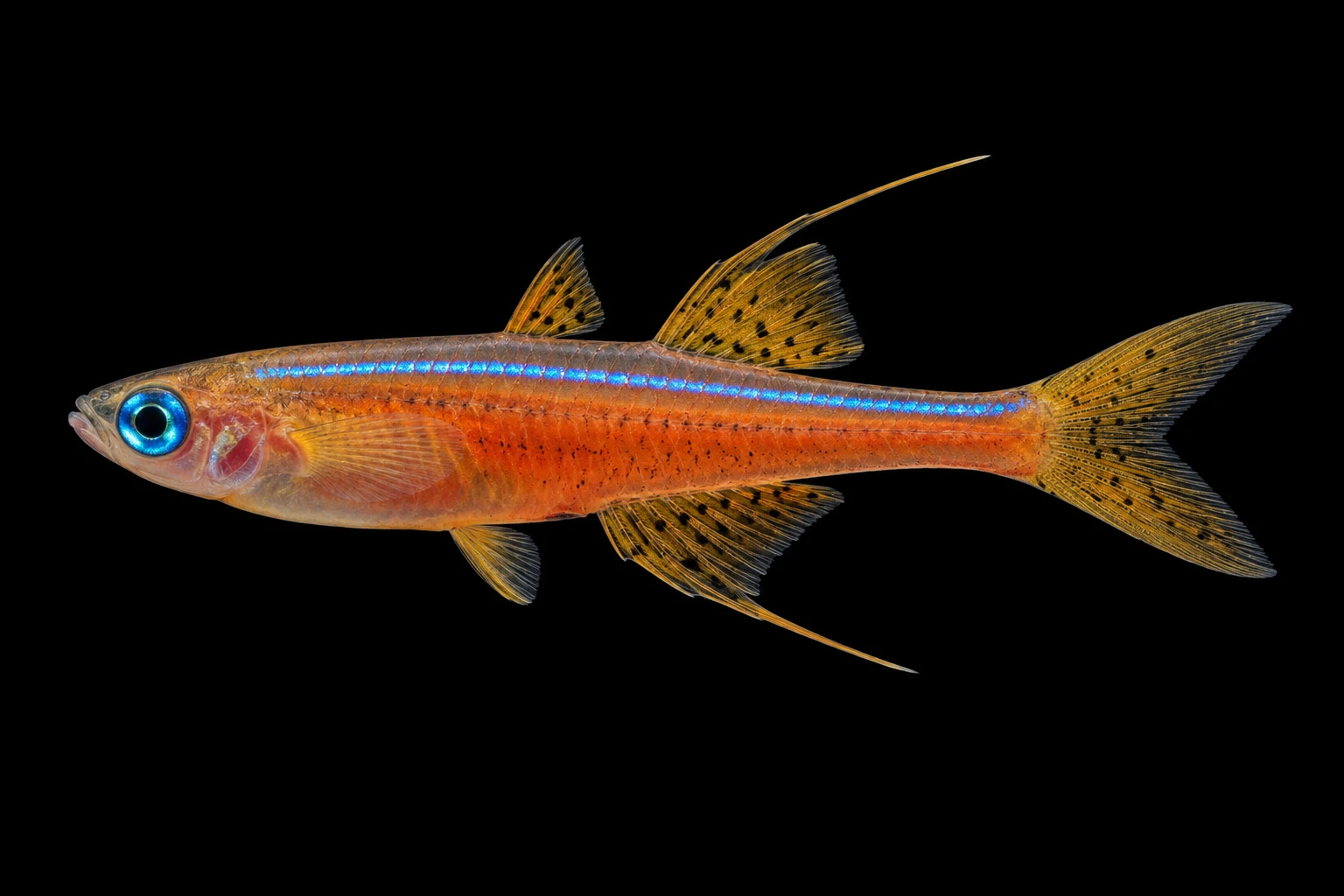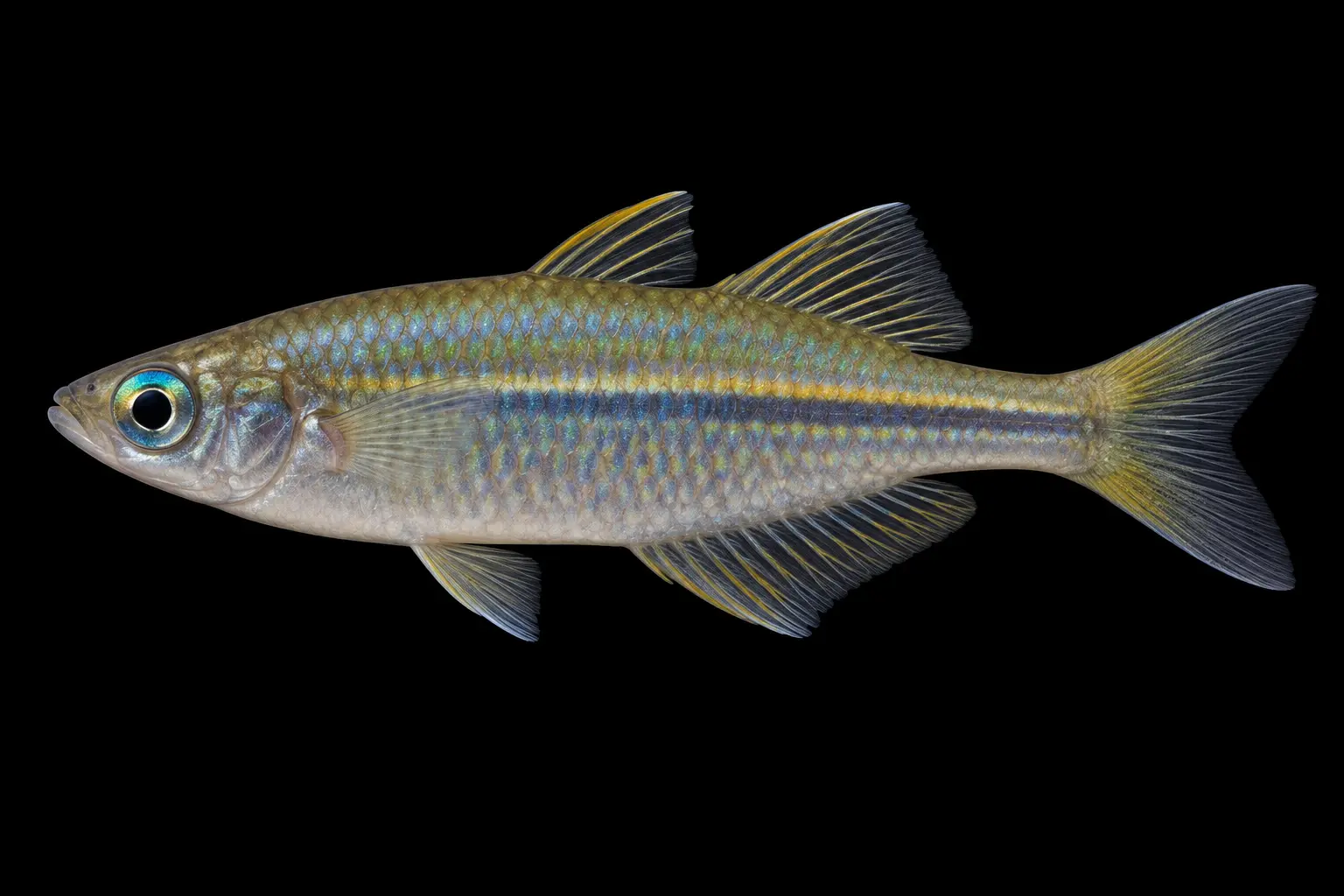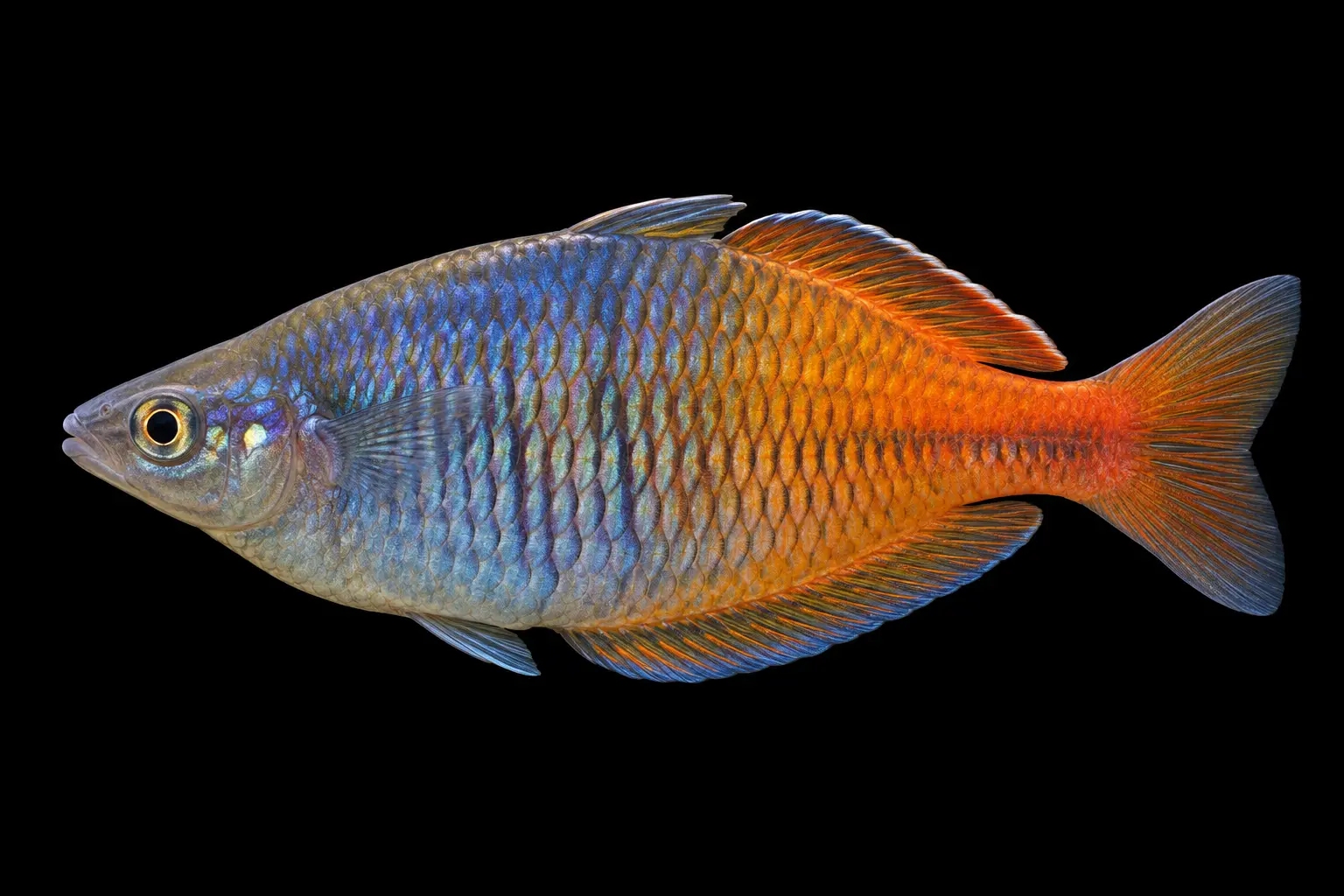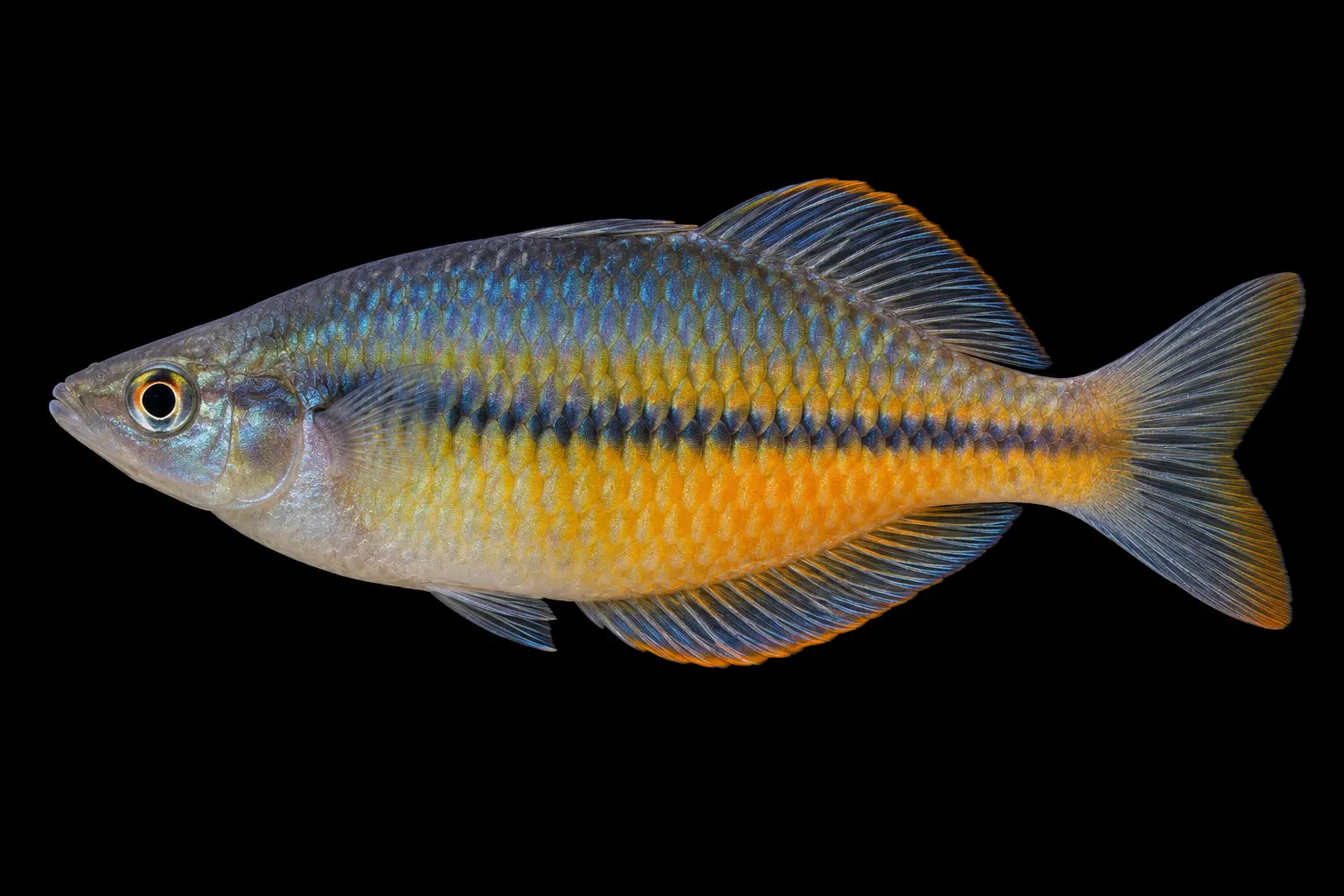
Identity and origin
- Origin
- Aru Islands and southern New Guinea; also northern Australia
- Identity
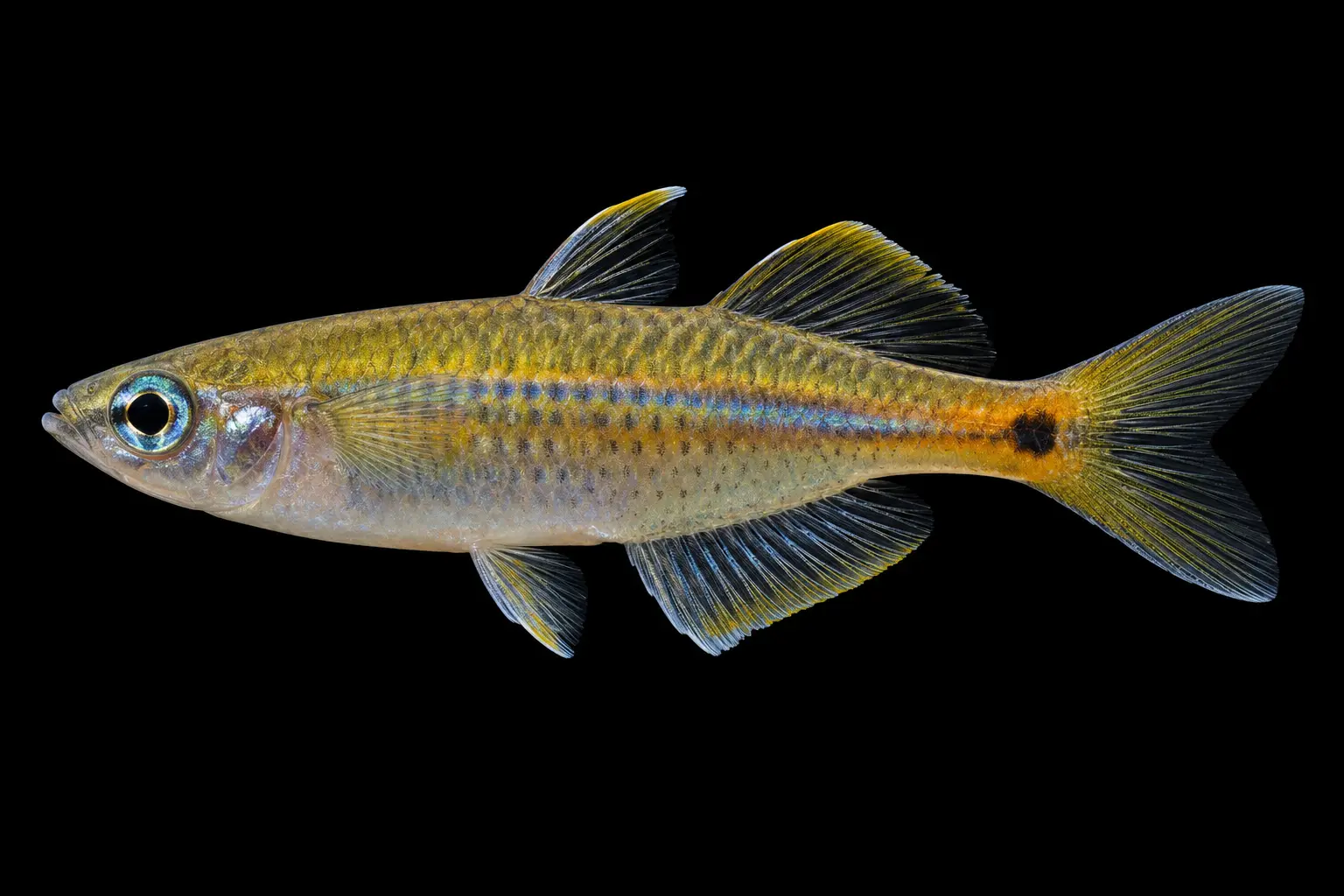
- Aru-locality blue-eye shown
This image is explicitly labelled from Aru, strengthening locality context. Broader species occurrence means Indonesian origin must never be assumed from the name alone.
Description
Reported maximum: 3.8 cm SL
Temperature 21–28 °C · pH 4.5–7.5 · GH 5–12 °dGHspecies guidance
Natural food: Small Daphnia/Moina, Artemia nauplii, microwormPrepared food: Finely crushed floating food
Biology: mature biofilter; species-specific microbial counts are not established.
Sources & limits
Keep a peaceful group in a mature aquarium with fine plants, sheltered margins, and gentle flow. Match chemistry to stock provenance; feed tiny foods and prevent feeding competition.
These broad aquarium ranges concern established ornamental stock; wild populations require locality-specific checks.
Wild populations occupy diverse water chemistries; a single extreme blackwater recipe is not appropriate for every locality.
Omitted parameters have no verified range in the sources checked. Habitat or experimental measurements are not safe keeping limits. GH, KH, TDS and conductivity are not interchangeable.
General system guidance: target free ammonia (NH₃) and nitrite (NO₂⁻) at 0 mg/L; account for test detection limits. These are chemical measurements, not microbial counts or each species’ tolerance limits. OATA · 2022. Assess biofilter function through waste processing and water tests, not clarity alone. Biofiltration reference.
- FishBase: maximum length
- ANGFA / Adrian R. Tappin, species account
- Seriously Fish — specialist aquarium guidance
Size checked: . Water/food checked: .
Design for feeding and movement
Care-planning notes. Confirm exact requirements for the species and source population.
- Check adult dimensions and social needs for this species; small body size alone does not establish aquarium suitability.
- Provide swimming space and refuge, and choose companions with compatible feeding behaviour.
- Match food size to the animal and observe feeding directly, especially when keeping small species with faster feeders.
Evidence record
Conservation record: Reported LC — Least Concern. The category is retained from a cited record. Verification of the direct assessment and its dates is not yet documented here. Open the retained source. Conservation status does not establish legal protection, availability or permission to trade.
Catalogue inclusion confirms a research record, not current stock, legal export, or destination-country import permission.