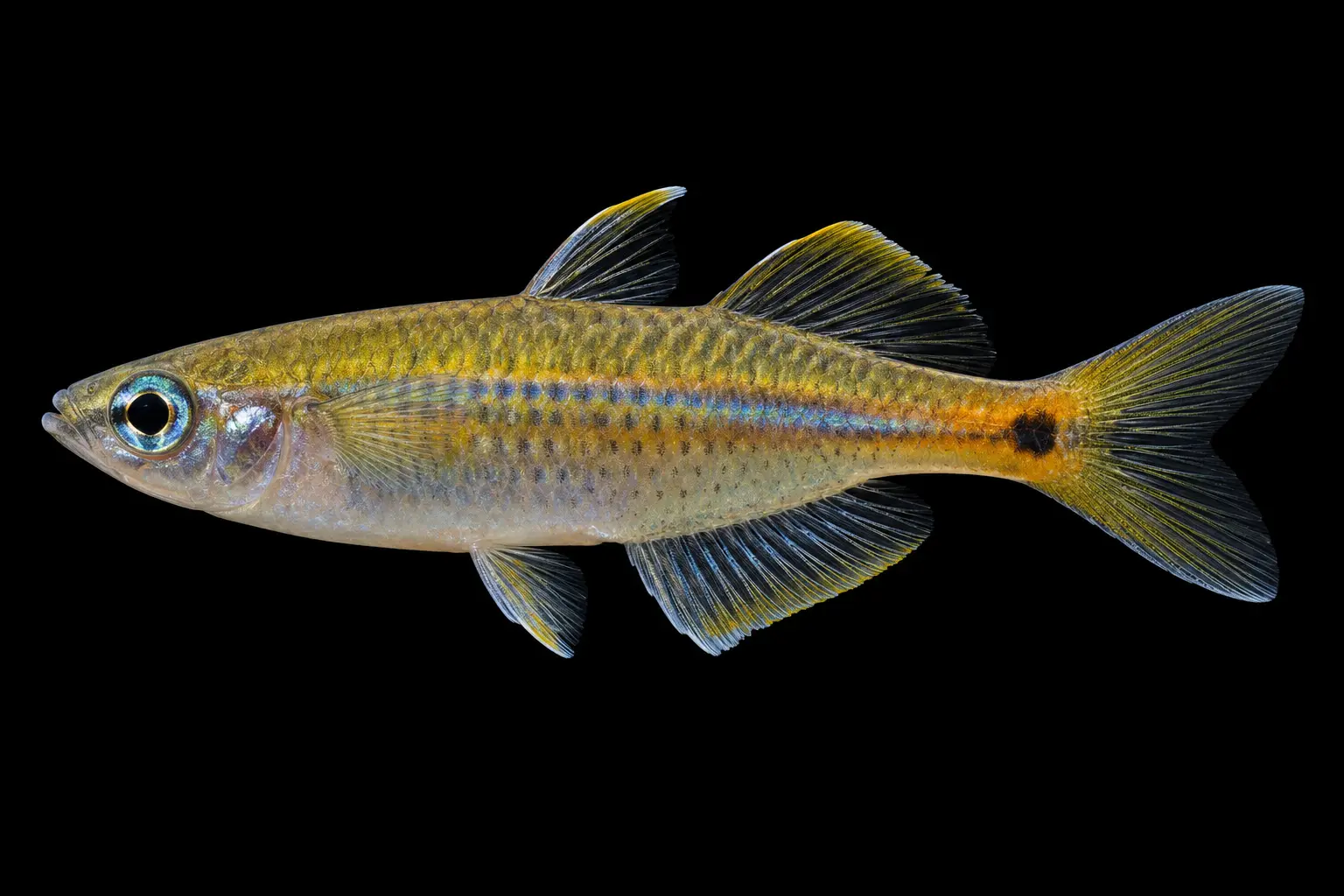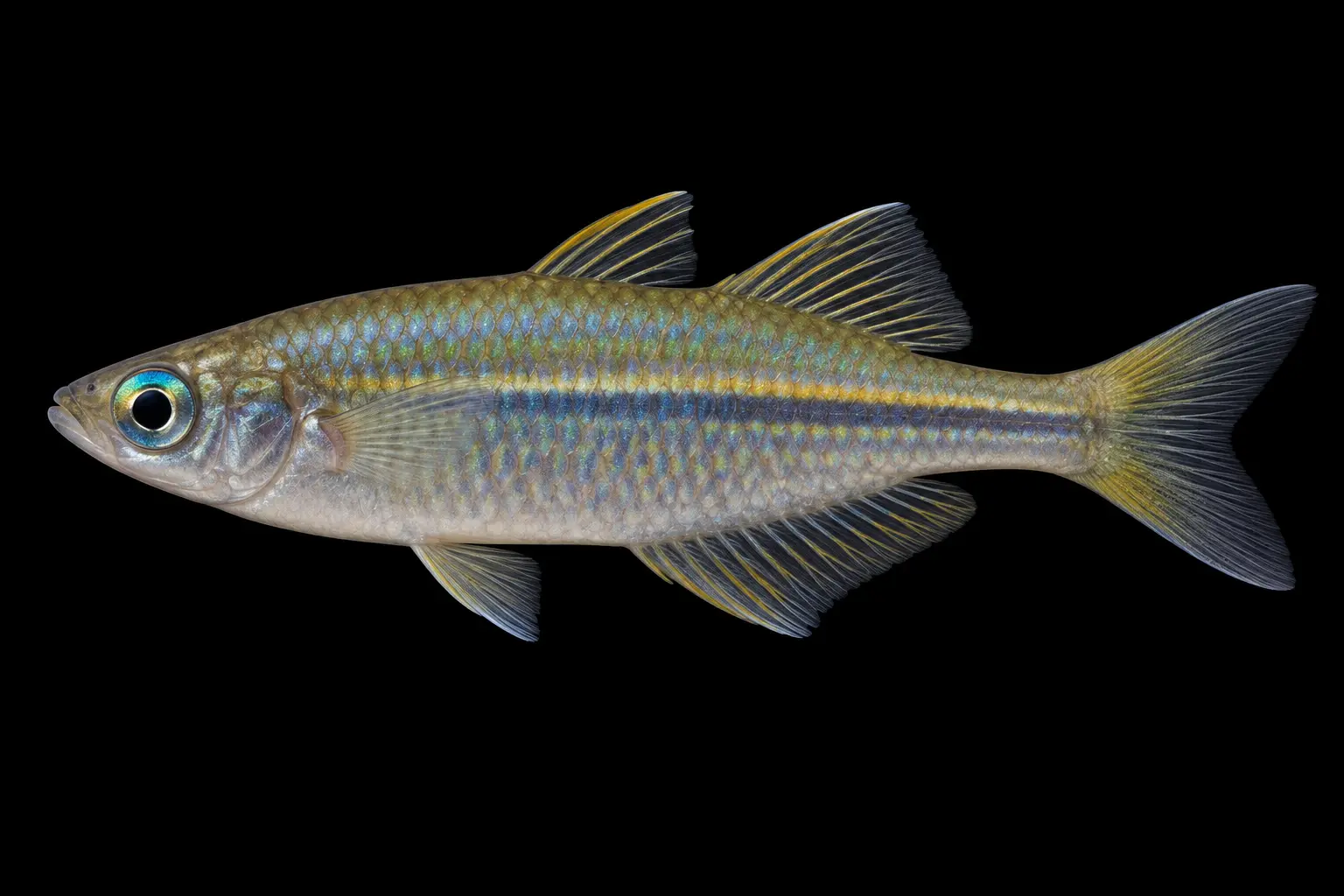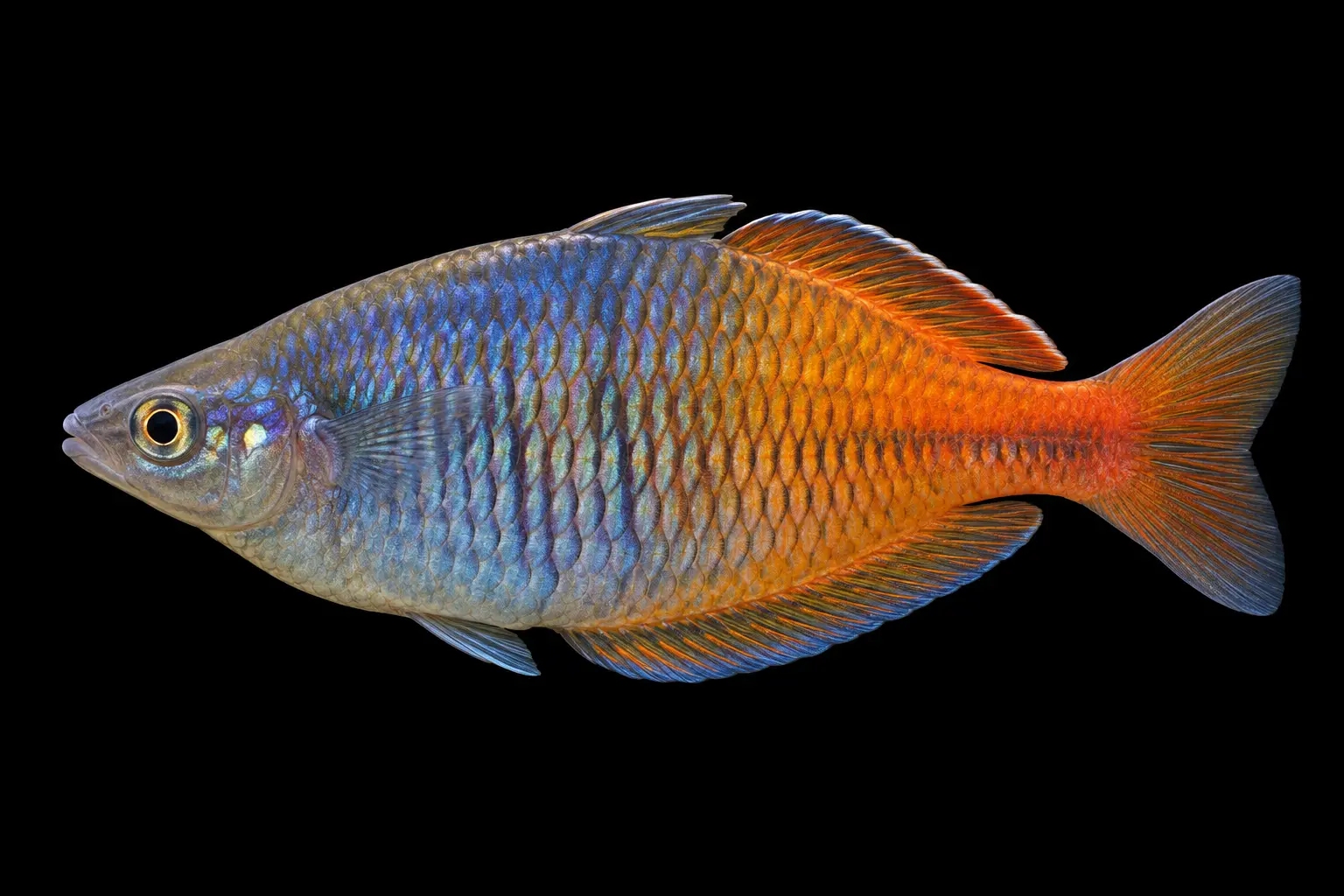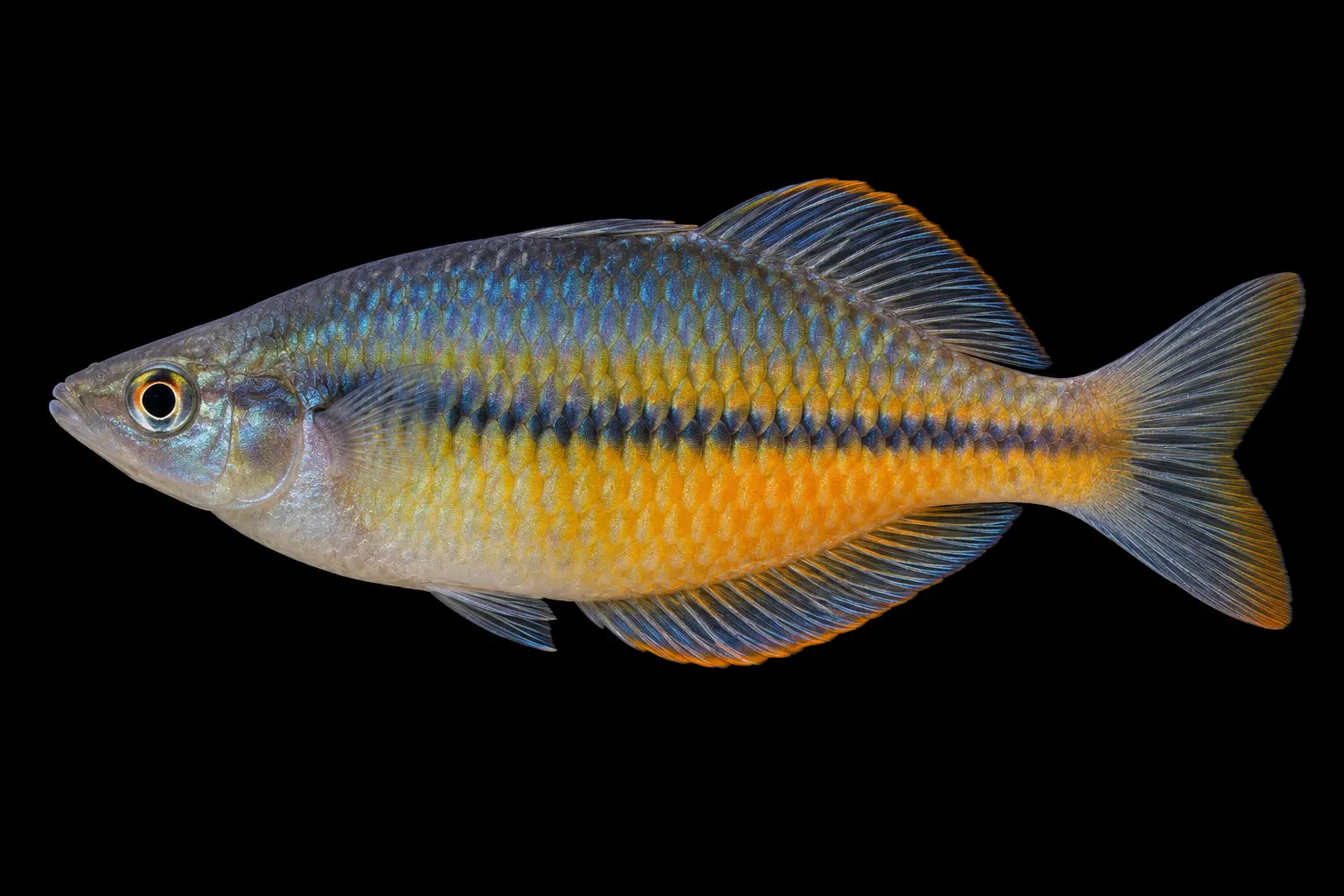
Identity and origin
- Origin
- Timika region, Indonesian Papua
- Identity
- Papuan blue-eye described in 2016
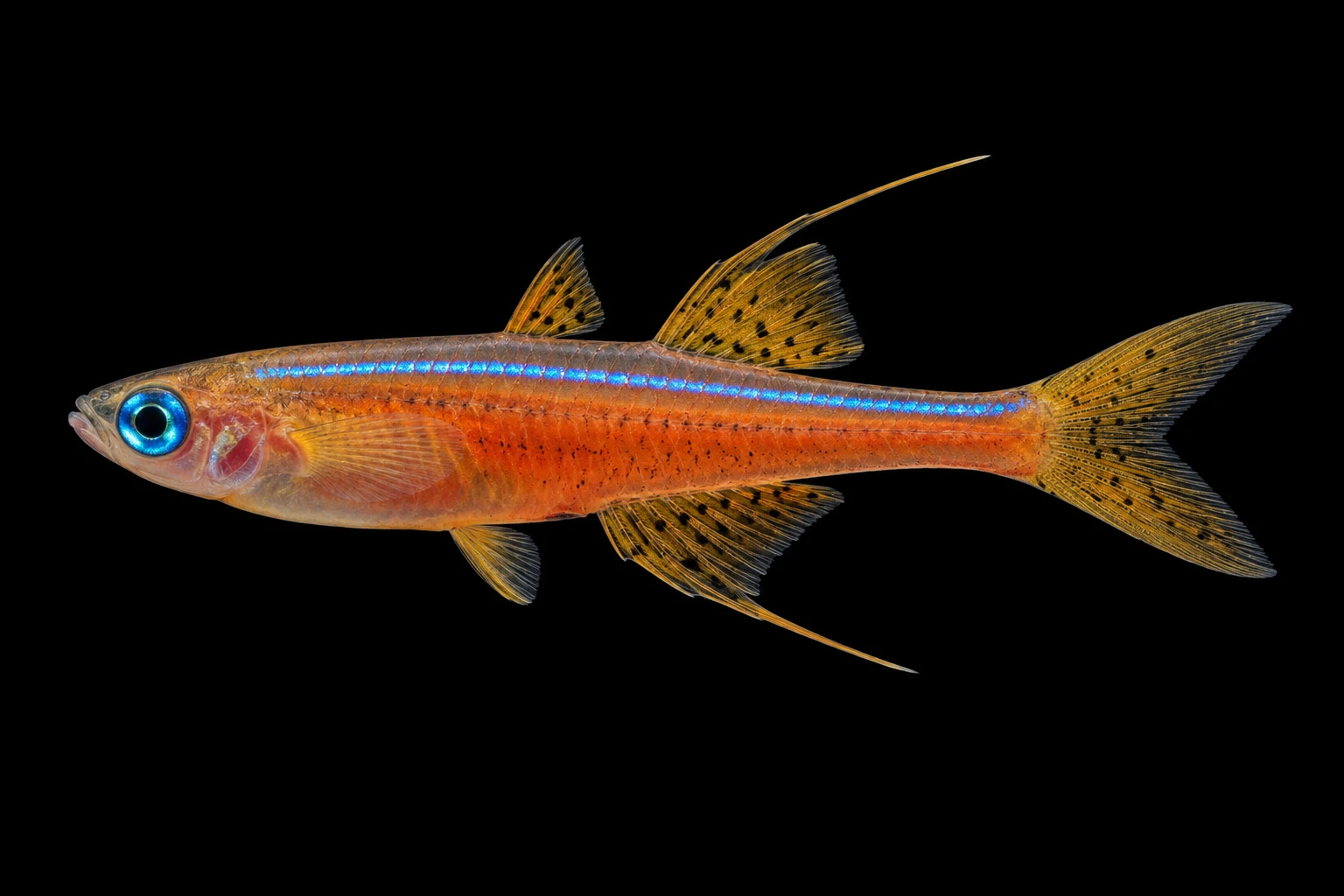
A tiny orange-red blue-eye with a luminous dorsal stripe. The original description distinguishes it from P. gertrudae and the trade name P. paskai. Published type-series size is not a guaranteed maximum aquarium size.
Habitat and care
Lowland swamp habitat in the Timika region. Habitat and identity reference
Provide mature planted cover, very small foods and gentle feeding competition. Keep locality and captive-line identity with breeding records.
Description
Reported maximum: 1.9 cm SL
Temperature 26–28 °C · pH 4.8–7.2habitat record — not an aquarium target
Natural food: Small Daphnia/Moina, Artemia naupliiPrepared food: Fine floating food; species acceptance not verifiedFood guidance at genus level
Biology: mature biofilter; species-specific microbial counts are not established.
Sources & limits
Keep a peaceful group in a mature aquarium with fine plants, shaded margins, and gentle flow. Maintain soft acidic to near-neutral freshwater, offer tiny foods, and avoid competitive companions.
Water values describe collection habitat, not a tested captive optimum. Food is inferred from a congener, not species-specific validation.
FishBase’s recorded maximum is 1.9 cm SL; ANGFA describes specimens about 2.2 cm SL. The original type-series measurement was not independently read, so the curated maximum is retained.
Omitted parameters have no verified range in the sources checked. Habitat or experimental measurements are not safe keeping limits. GH, KH, TDS and conductivity are not interchangeable.
General system guidance: target free ammonia (NH₃) and nitrite (NO₂⁻) at 0 mg/L; account for test detection limits. These are chemical measurements, not microbial counts or each species’ tolerance limits. OATA · 2022. Assess biofilter function through waste processing and water tests, not clarity alone. Biofiltration reference.
- FishBase: maximum length
- ANGFA / Adrian R. Tappin — collection habitat
- Seriously Fish — congeneric feeding reference
Size checked: . Water/food checked: .
Design for feeding and movement
Care-planning notes. Confirm exact requirements for the species and source population.
- Check adult dimensions and social needs for this species; small body size alone does not establish aquarium suitability.
- Provide swimming space and refuge, and choose companions with compatible feeding behaviour.
- Match food size to the animal and observe feeding directly, especially when keeping small species with faster feeders.
Evidence record
Conservation record: A current assessment has not been verified for this profile. This does not establish Not Evaluated status or imply low risk. Conservation status does not establish legal protection, availability or permission to trade.
Catalogue inclusion confirms a research record, not current stock, legal export, or destination-country import permission.