Identity and origin
- Origin
- Native Indonesian and wider Southeast Asian stream systems
- Identity
- Freshwater filter-feeding atyid; amphidromous reproduction
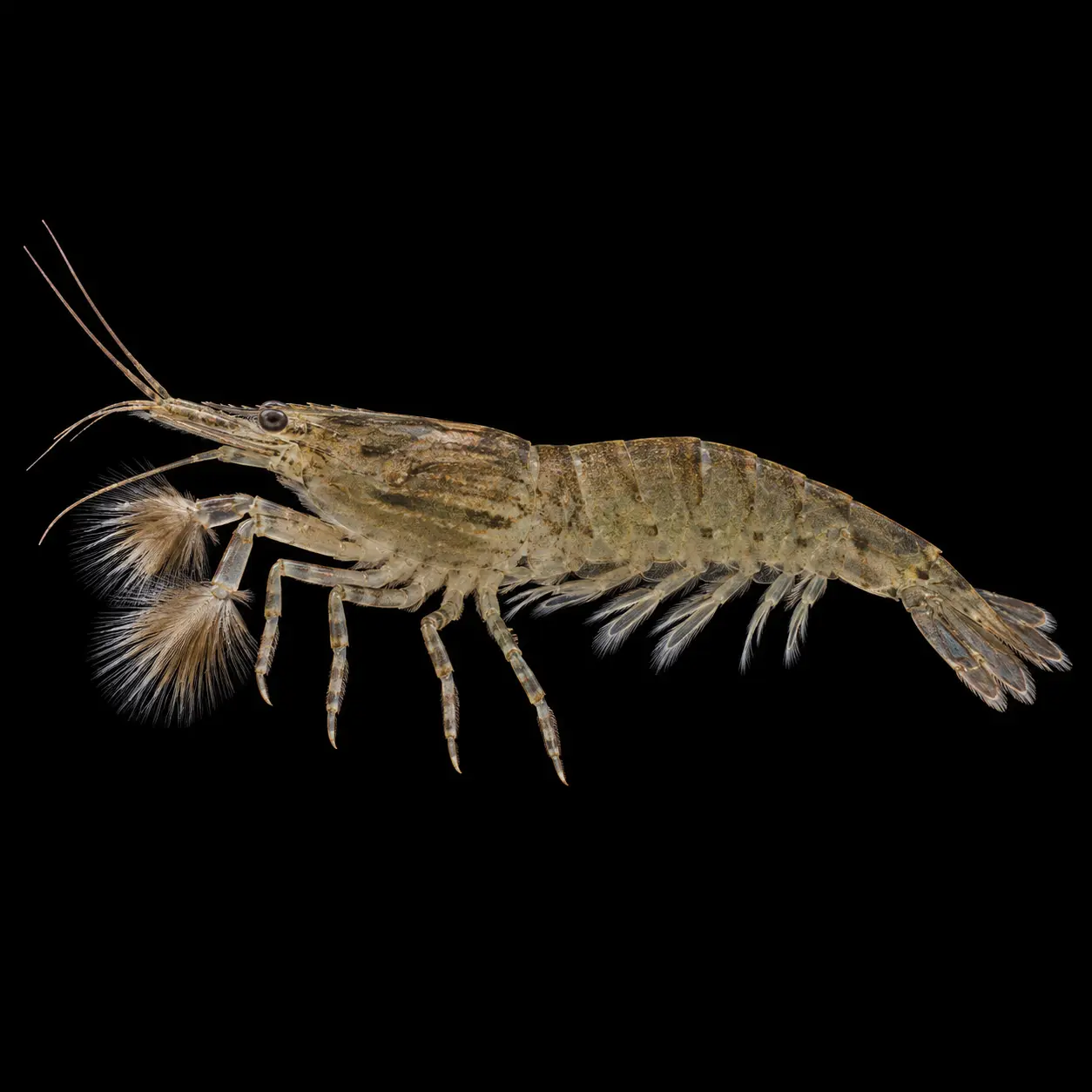
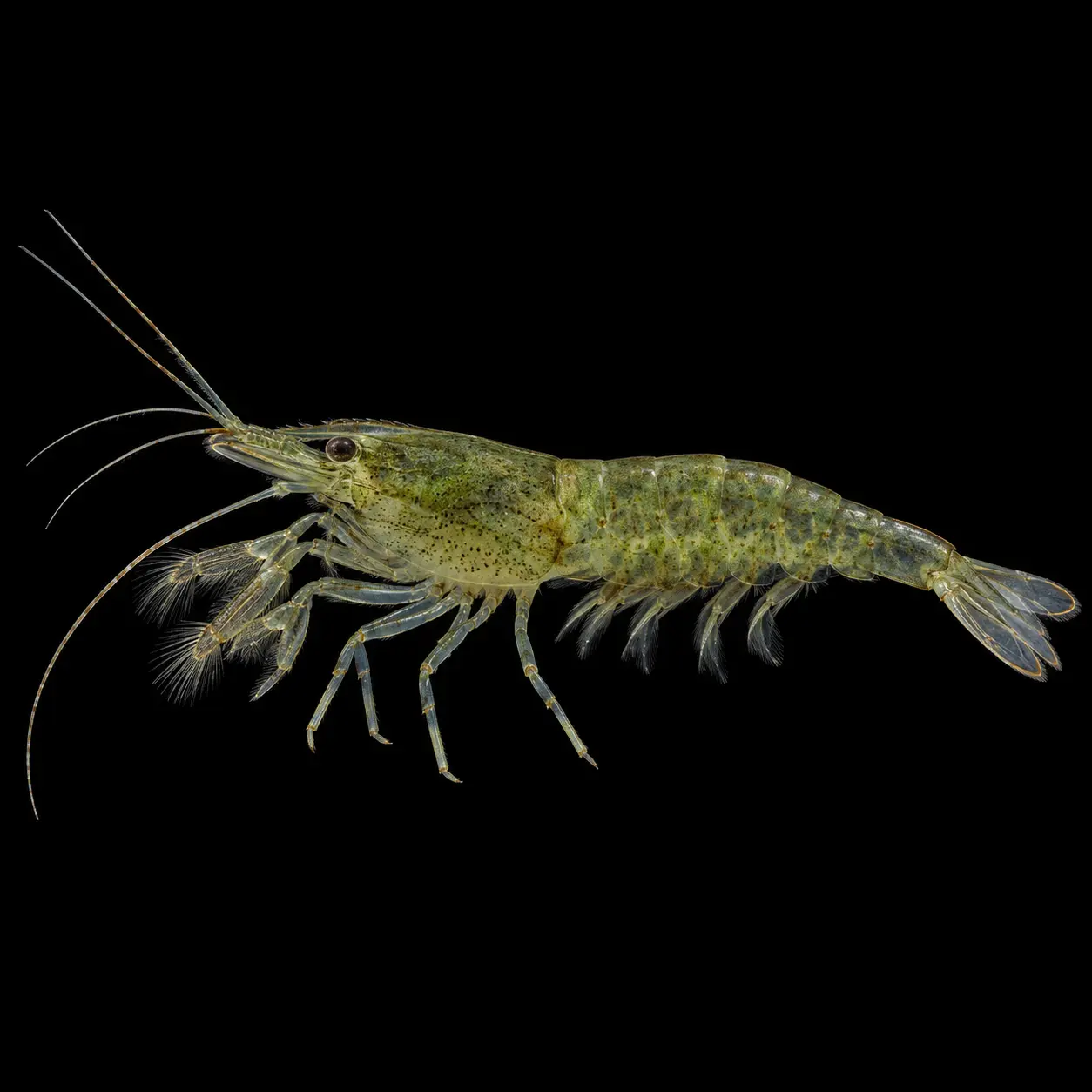
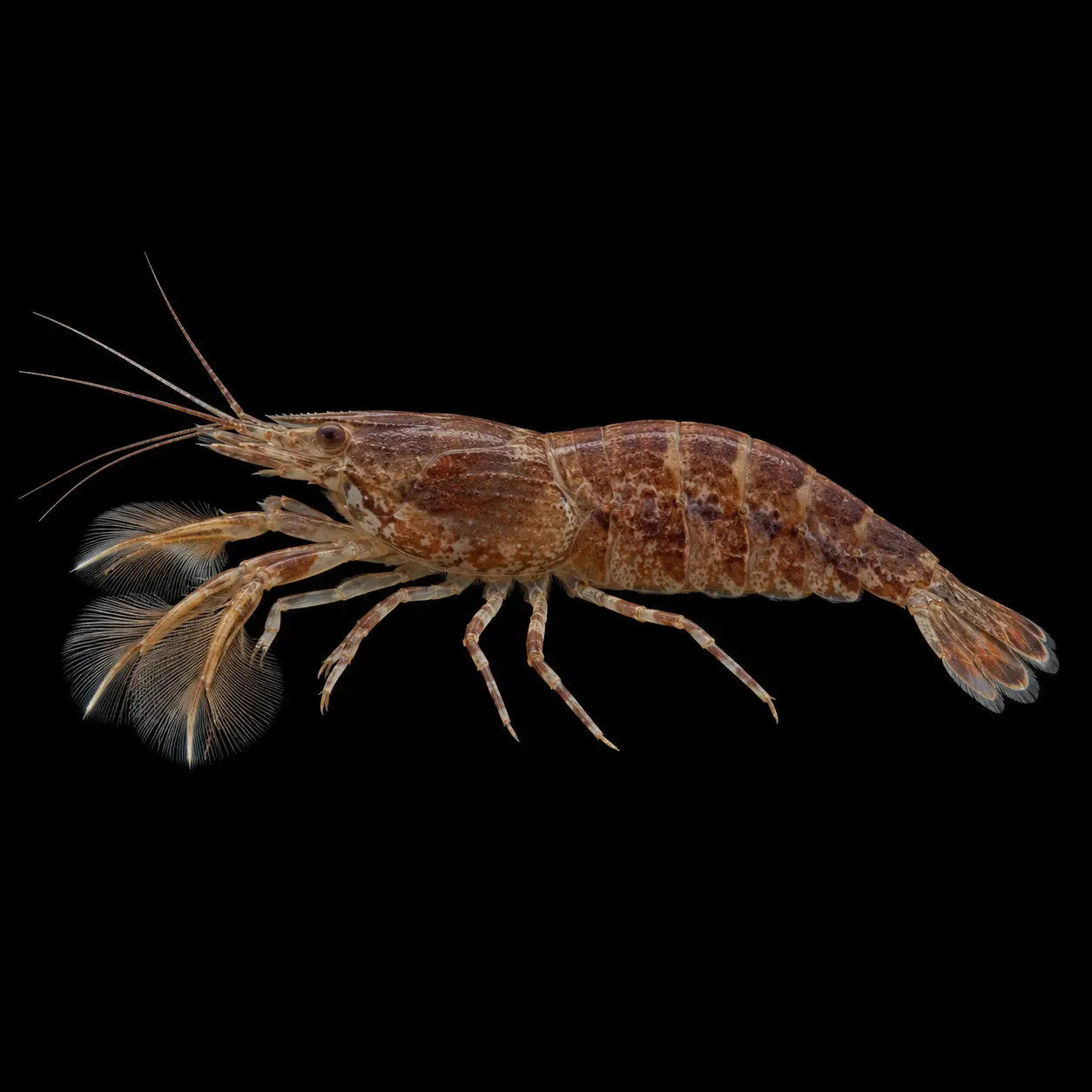
A large, peaceful fan shrimp that filters suspended food from strong current. Adults live in fresh water, but successful larval development normally requires a marine or brackish phase.
Description
Reported maximum: 8.6 cm total length; usually up to 7.7 cm.
Temperature 17–25 °Cspecies guidance
Natural food: Suspended microorganisms and fine particles.Prepared food: Finely ground flake or pellet feed in the current.
Biology: mature biofilter; species-specific microbial counts are not established.
Sources & limits
Provide a mature oxygenated aquarium with flowing-water perches and fine suspended food. Confirm active fan feeding; persistent substrate scraping can signal insufficient food. Protect from predators and avoid removing all suspended nutrition.
Genus-level guidance
Temperature is one published care guide, not a measured tolerance limit. Constant access to fine suspended food is distinct from occasional large sinking meals; other numerical water ranges remain unverified.
Care combines documented filter-feeding ecology with aquarium inference; a freshwater adult aquarium does not establish successful freshwater larval culture.
Omitted parameters have no verified range in the sources checked. Habitat or experimental measurements are not safe keeping limits. GH, KH, TDS and conductivity are not interchangeable.
General system guidance: target free ammonia (NH₃) and nitrite (NO₂⁻) at 0 mg/L; account for test detection limits. These are chemical measurements, not microbial counts or each species’ tolerance limits. OATA · 2022. Assess biofilter function through waste processing and water tests, not clarity alone. Biofiltration reference.
- FAO (2002), Western Central Pacific species guide
- Chace (1983), filter-feeding anatomy and stream ecology
- Flanders Animal Welfare, Huisdierwijzer zoetwatergarnalen (2021), species table
- Manufacturer freshwater-shrimp care guide
Size checked: . Water/food checked: .
A habitat for filter feeding
Care-planning notes. Confirm exact requirements for the species and source population.
- Provide water movement and stable perches where feeding fans can intercept suspended food.
- A visually clean aquarium can still be food-poor: observe feeding and body condition rather than relying on leftover food.
- Confirm larval-development requirements separately from adult care; freshwater adults do not imply simple freshwater breeding.
Evidence record
Conservation record: A current assessment has not been verified for this profile. This does not establish Not Evaluated status or imply low risk. Open the retained source. Conservation status does not establish legal protection, availability or permission to trade.
Catalogue inclusion confirms a research record, not current stock, legal export, or destination-country import permission.