Identity and origin
- Origin
- Indonesia and the wider Indo-West Pacific
- Identity
- Freshwater filter-feeding atyid
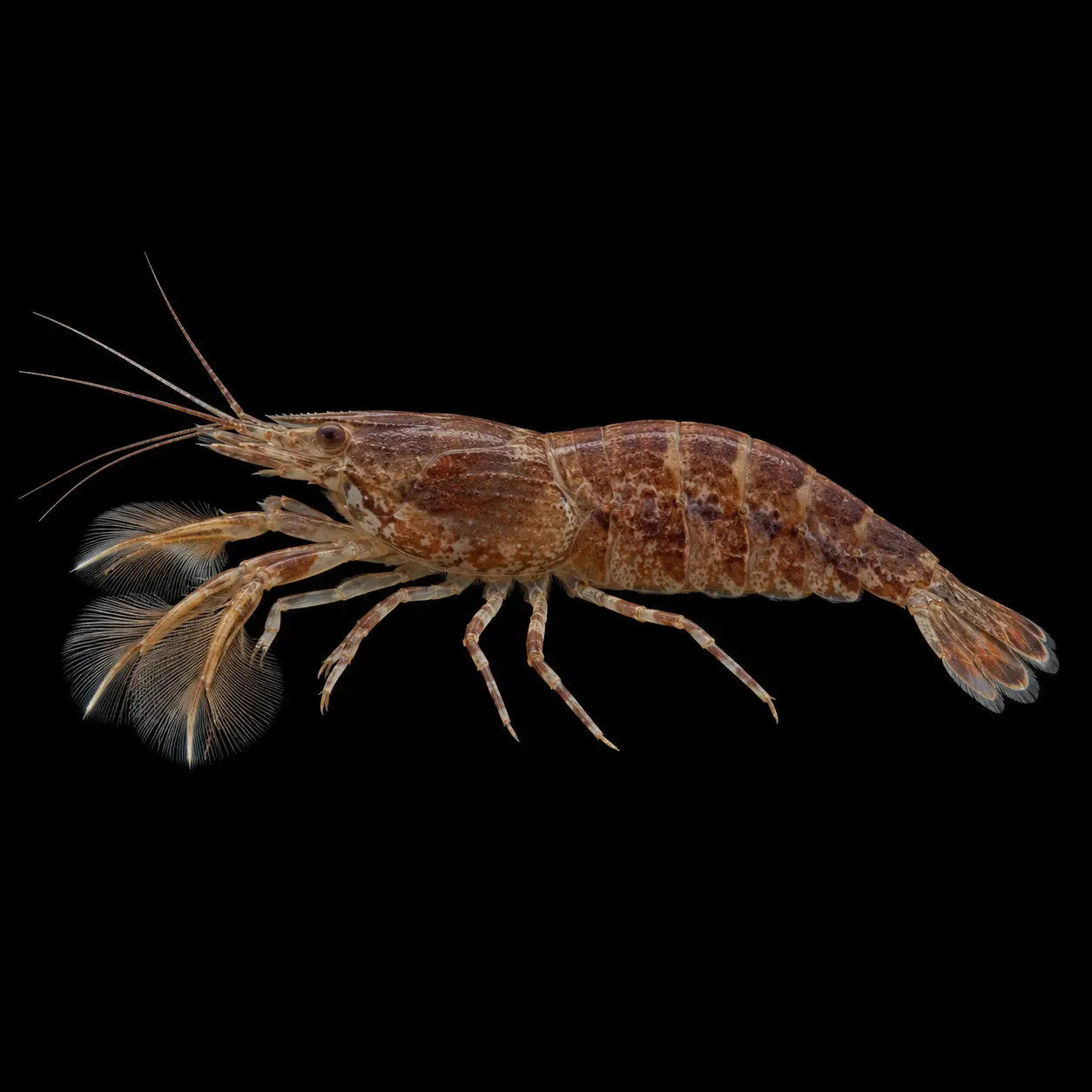
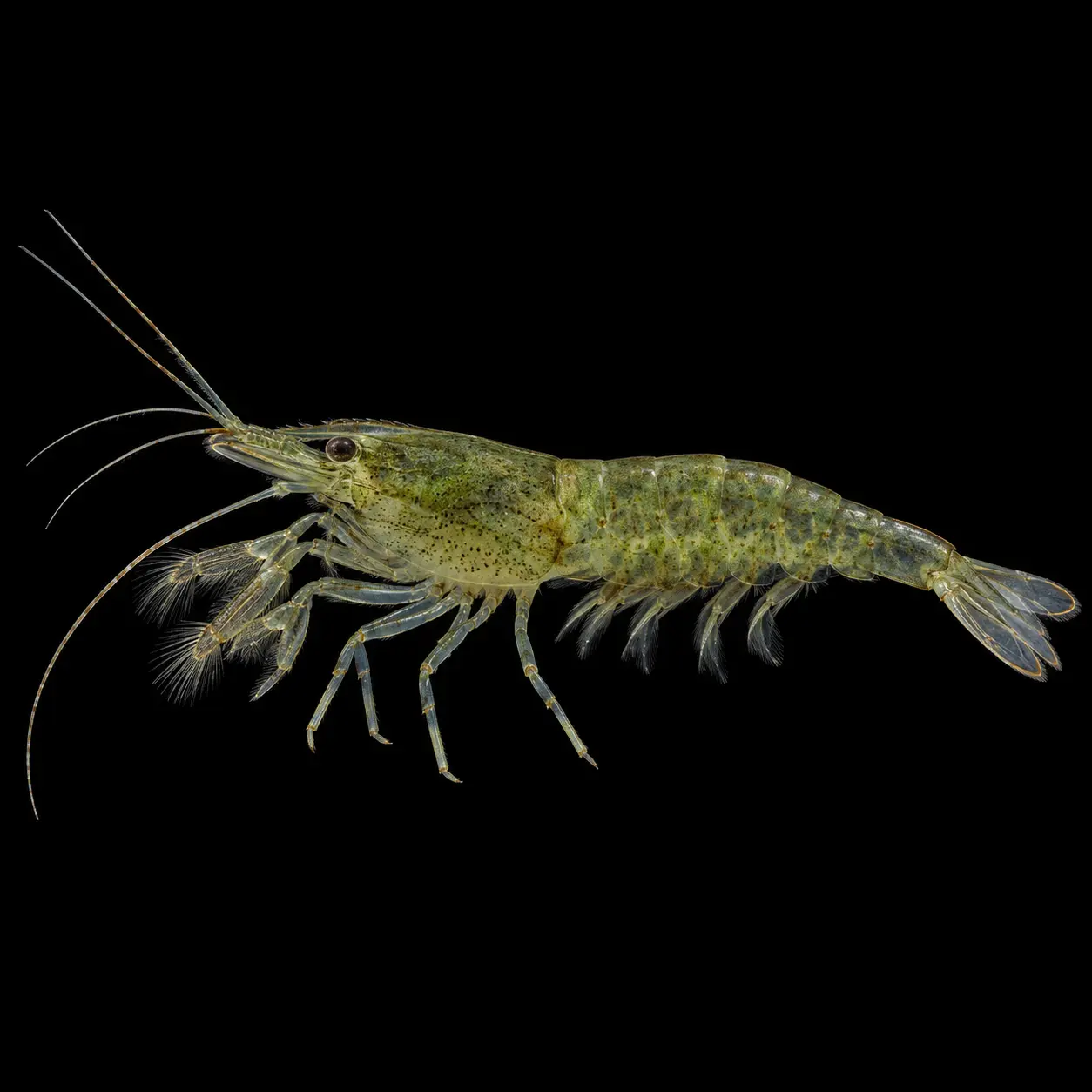
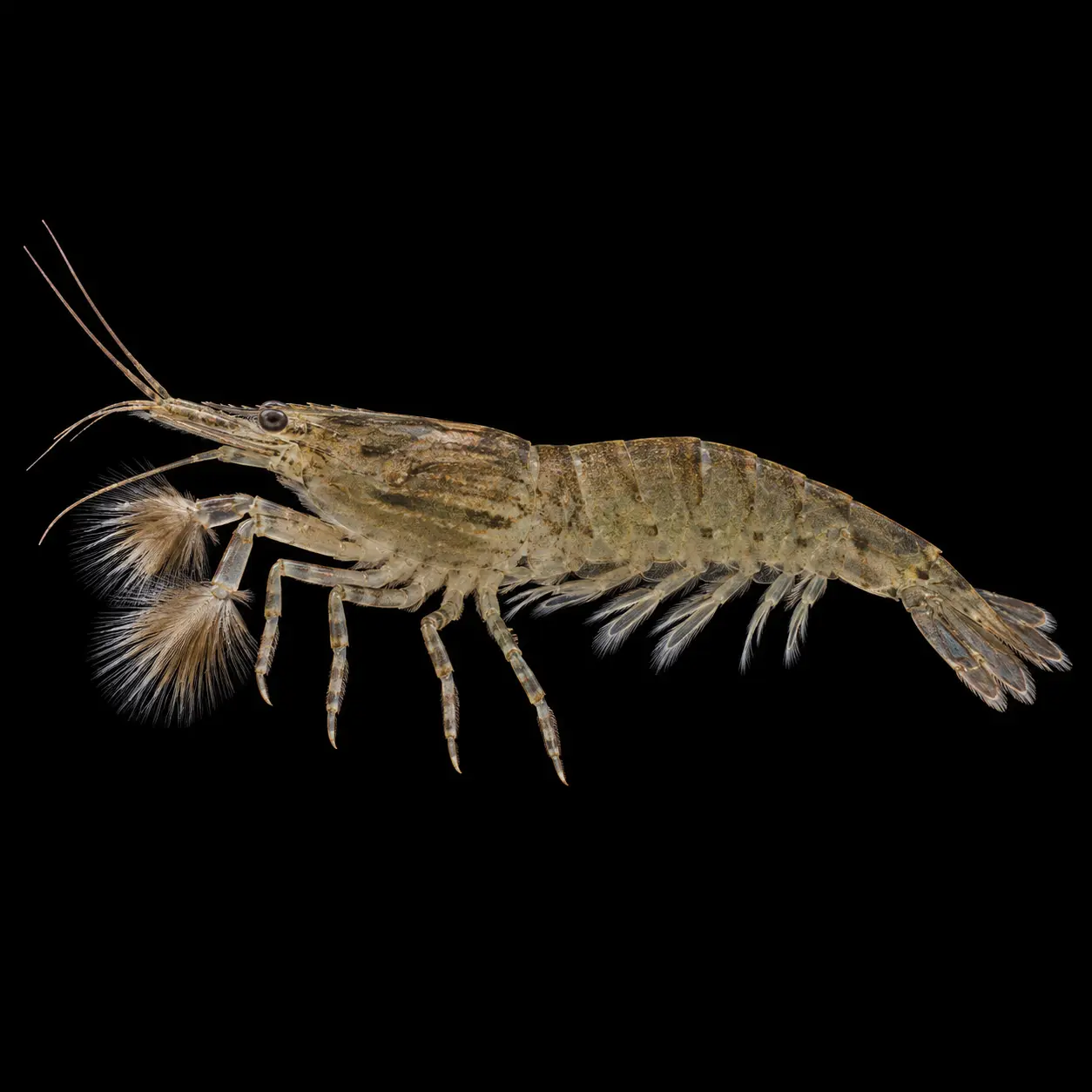
A robust brush-handed shrimp of flowing water. It is often merged with Bamboo Shrimp in commerce, so rostral characters, leg morphology and provenance must support identification.
Description
Largest studied specimen: about 7.1 cm overall length; species maximum unverified.Examined specimens · not an adult maximum
Specific water ranges are not yet verified.
Natural food: Fine suspended particles.Prepared food: Finely ground feed: genus-level inference; acceptance must be observed.Food guidance at genus level
Biology: mature biofilter; species-specific microbial counts are not established.
Sources & limits
Use a mature oxygenated aquarium with steady current, secure feeding perches and fine suspended food. Check that fans capture food consistently, protect from predators, and verify identification because this shrimp resembles A. moluccensis.
Genus-level guidance
Species-specific numerical water ranges and a formulated diet are unverified; aquarium food presentation is inferred from fan-feeding anatomy. Do not apply A. moluccensis temperatures automatically.
Overall length is the source’s approximate description. No CL-to-TL conversion is applied; species-specific aquarium protocols remain limited.
Omitted parameters have no verified range in the sources checked. Habitat or experimental measurements are not safe keeping limits. GH, KH, TDS and conductivity are not interchangeable.
General system guidance: target free ammonia (NH₃) and nitrite (NO₂⁻) at 0 mg/L; account for test detection limits. These are chemical measurements, not microbial counts or each species’ tolerance limits. OATA · 2022. Assess biofilter function through waste processing and water tests, not clarity alone. Biofiltration reference.
Size checked: . Water/food checked: .
A habitat for filter feeding
Care-planning notes. Confirm exact requirements for the species and source population.
- Provide water movement and stable perches where feeding fans can intercept suspended food.
- A visually clean aquarium can still be food-poor: observe feeding and body condition rather than relying on leftover food.
- Confirm larval-development requirements separately from adult care; freshwater adults do not imply simple freshwater breeding.
Evidence record
Conservation record: A current assessment has not been verified for this profile. This does not establish Not Evaluated status or imply low risk. Open the retained source. Conservation status does not establish legal protection, availability or permission to trade.
Catalogue inclusion confirms a research record, not current stock, legal export, or destination-country import permission.