Identity and native record
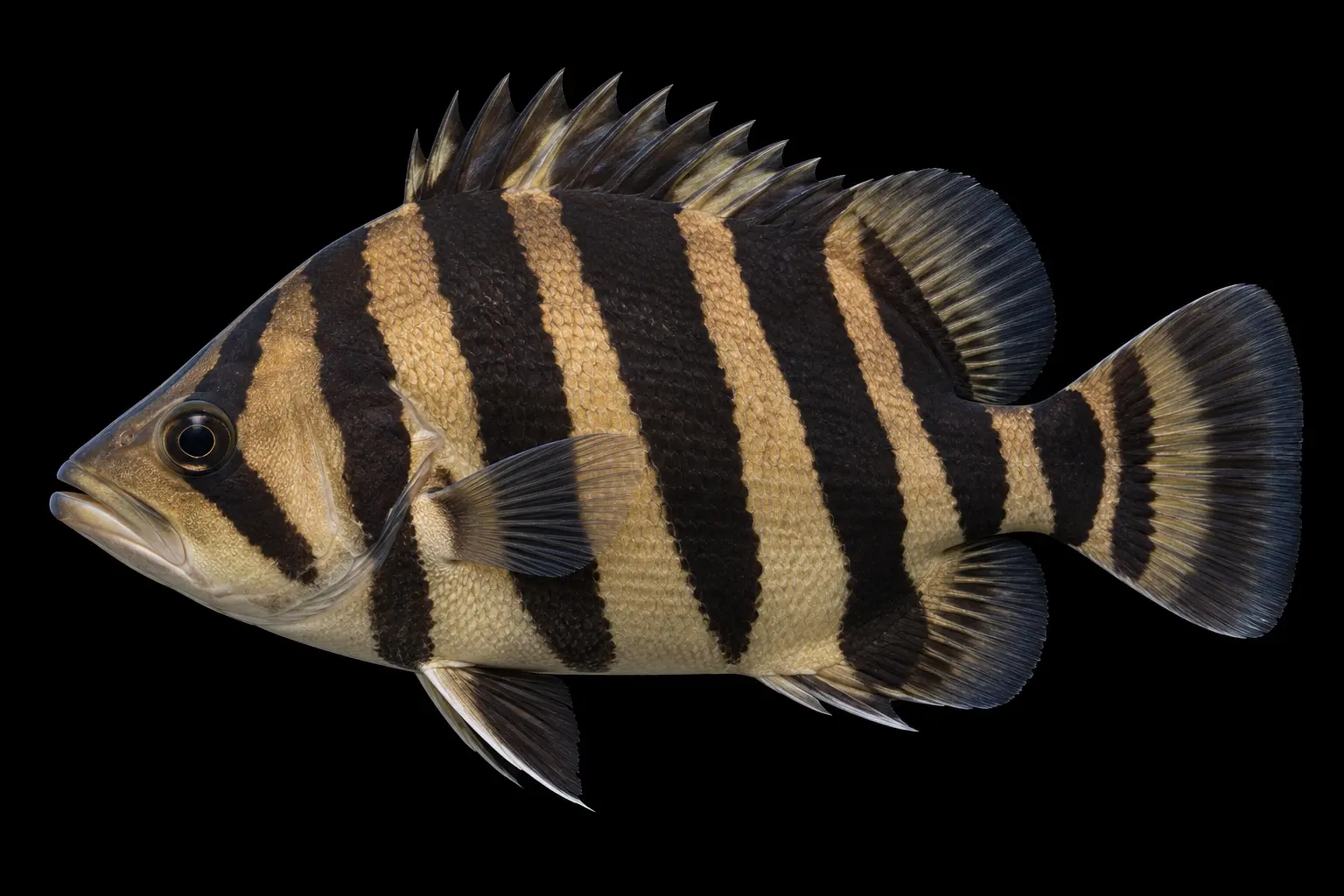
Datnioides campbelli (New Guinea Tigerfish) is included because authoritative species records document native occurrence in Fresh and brackish waters of southern New Guinea, including Indonesian Papua and Papua New Guinea. “Native to Indonesia” does not imply endemicity, captive availability, legal export, or permission to import.
Broad dark bars and the trade name “tigerfish” are not enough for identification; D. campbelli must be separated from the western Indonesian D. microlepis using morphology and provenance.
Ecology and adult scale
- Feeding guild
- Piscivore / aquatic carnivore
- Habitat
- Lower rivers, estuaries and connected floodplain waters
Feeding guild is an editorial husbandry aid, not a complete diet prescription. Juvenile and adult diets, seasonal ecology and individual behaviour can differ.
Description
Reported maximum: 32 cm SL
Temperature 20–28 °C · pH 7.5–9.0 · GH 15–30 °dGHspecies guidance
Natural food: Earthworms, shrimp, fish flesh, musselPrepared food: Pellet acceptance not established; confirm before relying on it
Biology: mature biofilter; species-specific microbial counts are not established.
Sources & limits
Provide a spacious stable system with shelters and good filtration. Verify the stock’s salinity history before setting water conditions; assess feeding transition and adult compatibility.
Group-level guidance
Euryhaline; verify provenance and acclimation history before selecting freshwater or brackish husbandry. No universal salt dose is established here.
Omitted parameters have no verified range in the sources checked. Habitat or experimental measurements are not safe keeping limits. GH, KH, TDS and conductivity are not interchangeable.
General system guidance: target free ammonia (NH₃) and nitrite (NO₂⁻) at 0 mg/L; account for test detection limits. These are chemical measurements, not microbial counts or each species’ tolerance limits. OATA · 2022. Assess biofilter function through waste processing and water tests, not clarity alone. Biofiltration reference.
- FishBase species ecology; conservative editorial keeping guidance
- Seriously Fish — specialist aquarium guidance
Size checked: . Water/food checked: .
Welfare and suitability screen
Large stable system with verified salinity history, careful feeding transition and conservative compatibility planning.
Before any future listing, LIMNIC would need to document the individual fish, expected adult dimensions, secure containment, water parameters, diet, compatibility, transport risk and the buyer’s capacity to provide lifetime care.