Species library · Explore freely. Orders are not open.

CARIDINA COLLECTION

Caridina Shrimp

Explore our planned Caridina collection, with clearly identified species and lines, considered selection, and care information for each future listing.

Enter the species journeyCollection in preparation

Details define the collection.

Each future profile will distinguish the shrimp’s identity and line rather than rely on a colour name alone. Water requirements and care guidance will be provided for the specific shrimp offered.

Species and captive lines, clearly separated.

Native Caridina species now sit beside documented bee, Taiwan Bee and tiger aquarium lines. Every profile separates scientific identity, trade terminology, ancestry and current availability.

10 records

Reading descriptions & sources

Fish SL excludes the tail fin; TL follows source endpoints, usually to the tail tip. CL measures the carapace only. Values are not converted between methods. Where a maximum is unverified, the largest examined specimen remains labelled as a specimen, not an adult maximum or a guaranteed final size.

Water ranges retain their source and scope: species, genus or group. Habitat measurements and experimental conditions are labelled separately from aquarium guidance. Missing numbers are not estimated. Prepared food is not always accepted; adapt food size to life stage and check feeding response. This summary does not replace system planning, quarantine, compatibility or adult space.

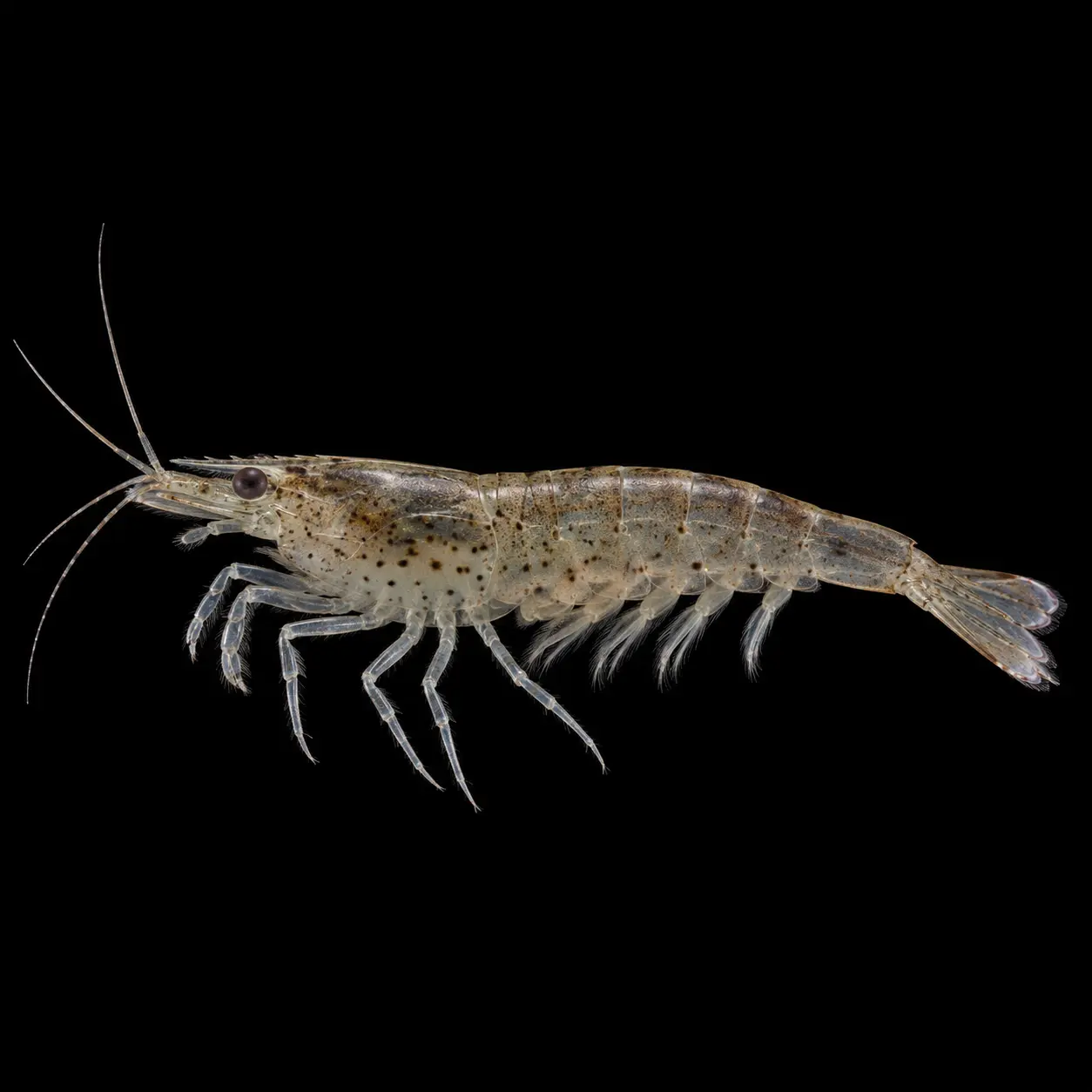
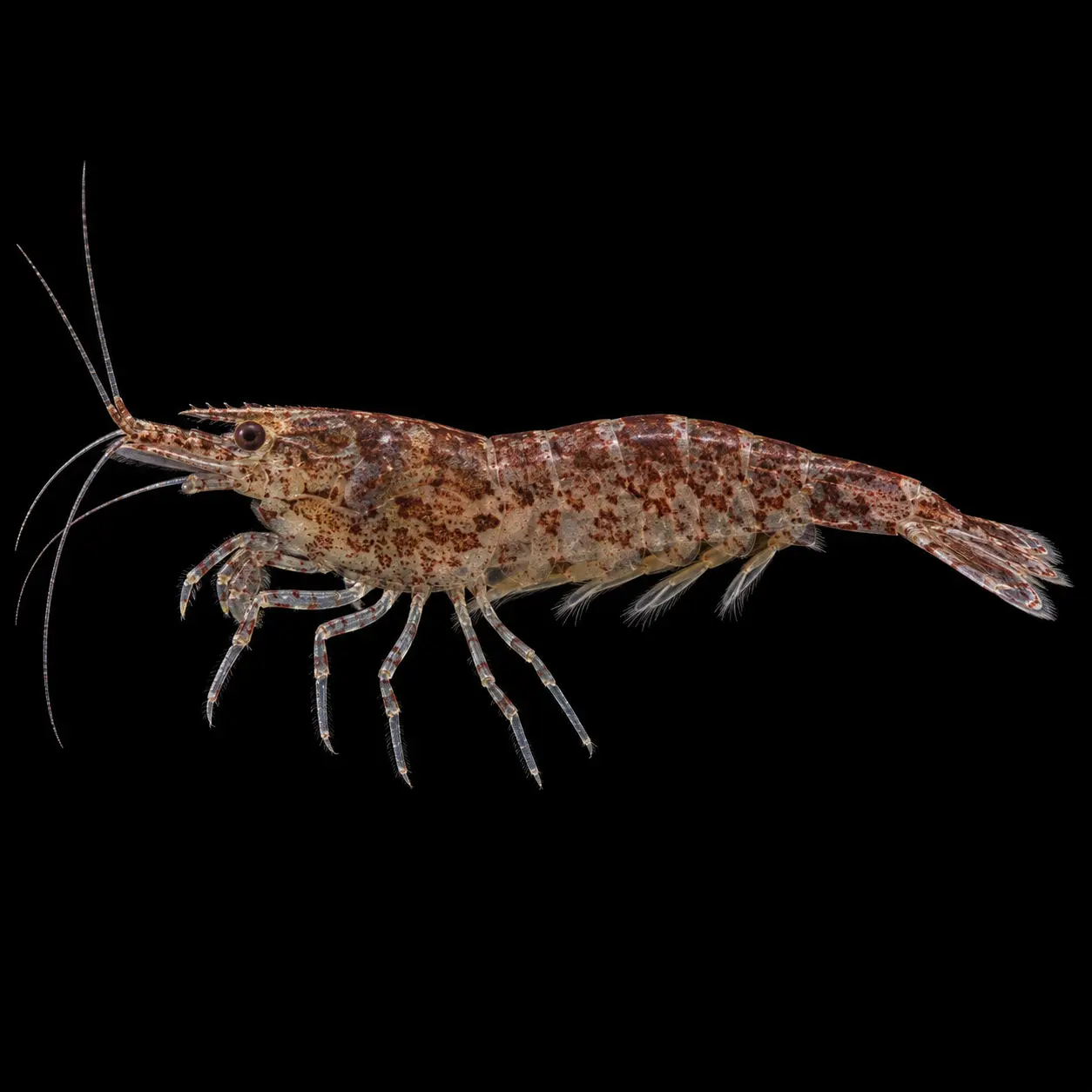
Caridina serratirostris

Caridina serratirostris

Ninja Shrimp

Origin
Native Indonesia within a broad Indo-West Pacific range
Habitat evidence
Habitat review pending

Description

Examined series: up to 5.1 mm carapace; maximum total length unverified.Examined specimens · not an adult maximum

Specific water ranges are not yet verified.

Natural food: Grazing biofilm (group guidance).Prepared food: Shrimp pellet acceptance unverified for this taxon.Food guidance at group level

Biology: mature biofilter; species-specific microbial counts are not established.

Sources & limits

Keep adults in a mature oxygenated aquarium with plant cover, grazing biofilm and shrimp-safe filtration. Match verified collection water and protect from predators. Larvae need a separate salinity-controlled culture with suitable plankton; ordinary freshwater breeding cannot be assumed.

Species-focused guidance · habitat inference, not a validated protocol

Species-specific adult-water ranges remain unverified. Larval salinity experiments must not be shown as adult aquarium targets; confirm taxonomic identity and provenance.

Cai (2026) proposes Marosina serratirostris. The catalogue identifier is retained pending nomenclature review. Lower-river adults and saline planktonic larvae need distinct planning; this habitat account is not a validated breeding protocol.

Omitted parameters have no verified range in the sources checked. Habitat or experimental measurements are not safe keeping limits. GH, KH, TDS and conductivity are not interchangeable.

General system guidance: target free ammonia (NH₃) and nitrite (NO₂⁻) at 0 mg/L; account for test detection limits. These are chemical measurements, not microbial counts or each species’ tolerance limits. OATA · 2022. Assess biofilter function through waste processing and water tests, not clarity alone. Biofiltration reference.

Size checked: . Water/food checked: .

Reported LCDirect assessment review pending

Library profile · not for sale
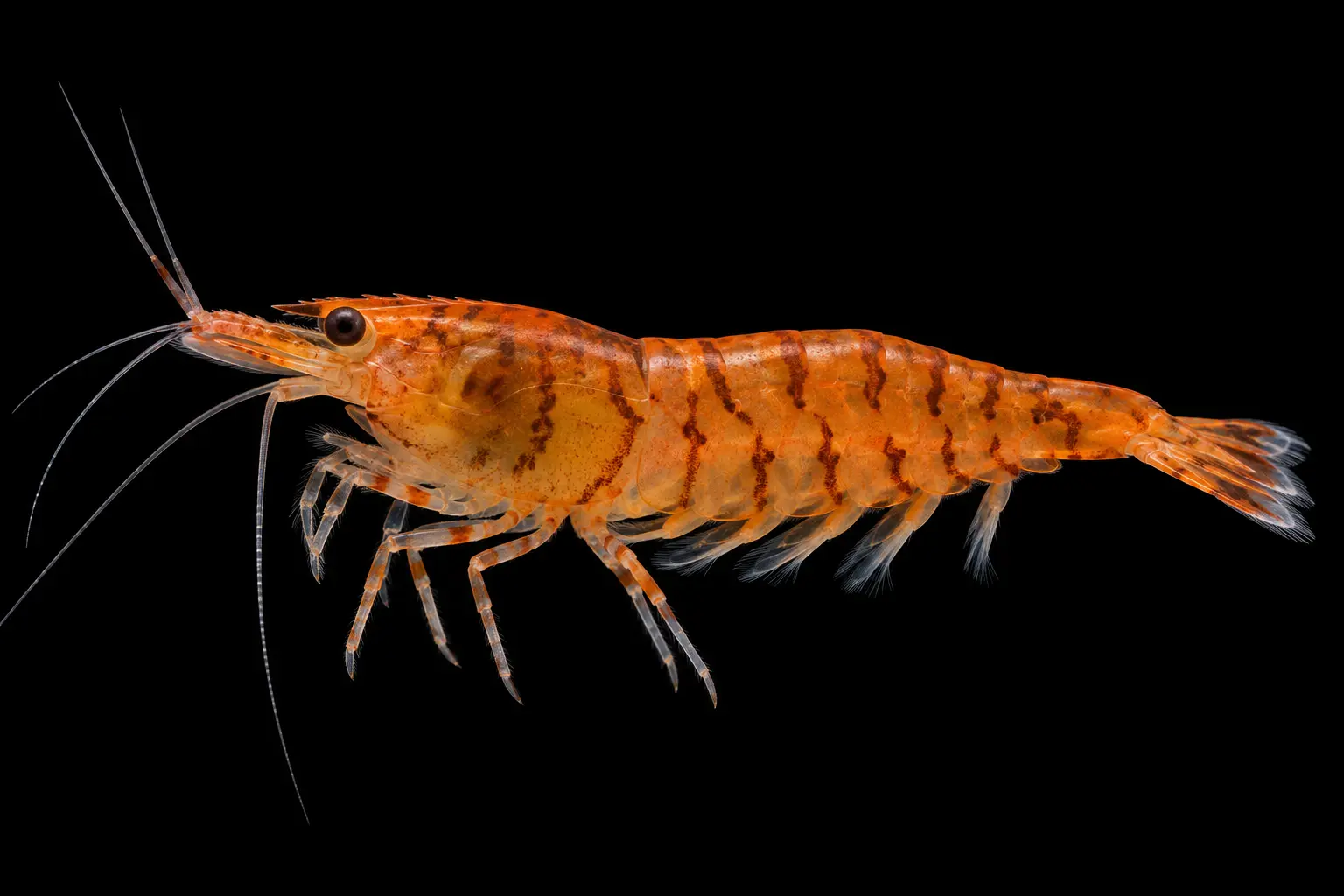
Caridina typus

Caridina typus

Typical Shrimp

Origin
Indonesian New Guinea records; wider Indo-West Pacific range; historical island records require taxonomic review
Habitat evidence
Habitat review pending

Description

Examined series: up to 8.8 mm carapace; maximum total length unverified.Examined specimens · not an adult maximum

Specific water ranges are not yet verified.

Natural food: Grazing biofilm (group guidance).Prepared food: Shrimp pellet acceptance unverified for this taxon.Food guidance at group level

Biology: mature biofilter; species-specific microbial counts are not established.

Sources & limits

Keep verified adults in a mature oxygenated freshwater aquarium with rocks, plants and grazing biofilm. Confirm lineage and provenance. Plan separate saline larval culture with suitable plankton; laboratory larval results are not a universal adult-water recipe.

Species-focused guidance · habitat inference, not a validated protocol

Species-specific adult-water ranges remain unverified. Larval salinity experiments must not be shown as adult aquarium targets; confirm taxonomic identity and provenance.

Cai (2025) restricts true typus to the ARC lineage and discusses TAL/SUL reassignment, while requiring further morphological checks. The 8.8 mm CL specimen is not an adult maximum. Aquarium guidance is inferred; provenance and larval requirements need verification.

Omitted parameters have no verified range in the sources checked. Habitat or experimental measurements are not safe keeping limits. GH, KH, TDS and conductivity are not interchangeable.

General system guidance: target free ammonia (NH₃) and nitrite (NO₂⁻) at 0 mg/L; account for test detection limits. These are chemical measurements, not microbial counts or each species’ tolerance limits. OATA · 2022. Assess biofilter function through waste processing and water tests, not clarity alone. Biofiltration reference.

Size checked: . Water/food checked: .

Reported LCDirect assessment review pending

Library profile · not for sale

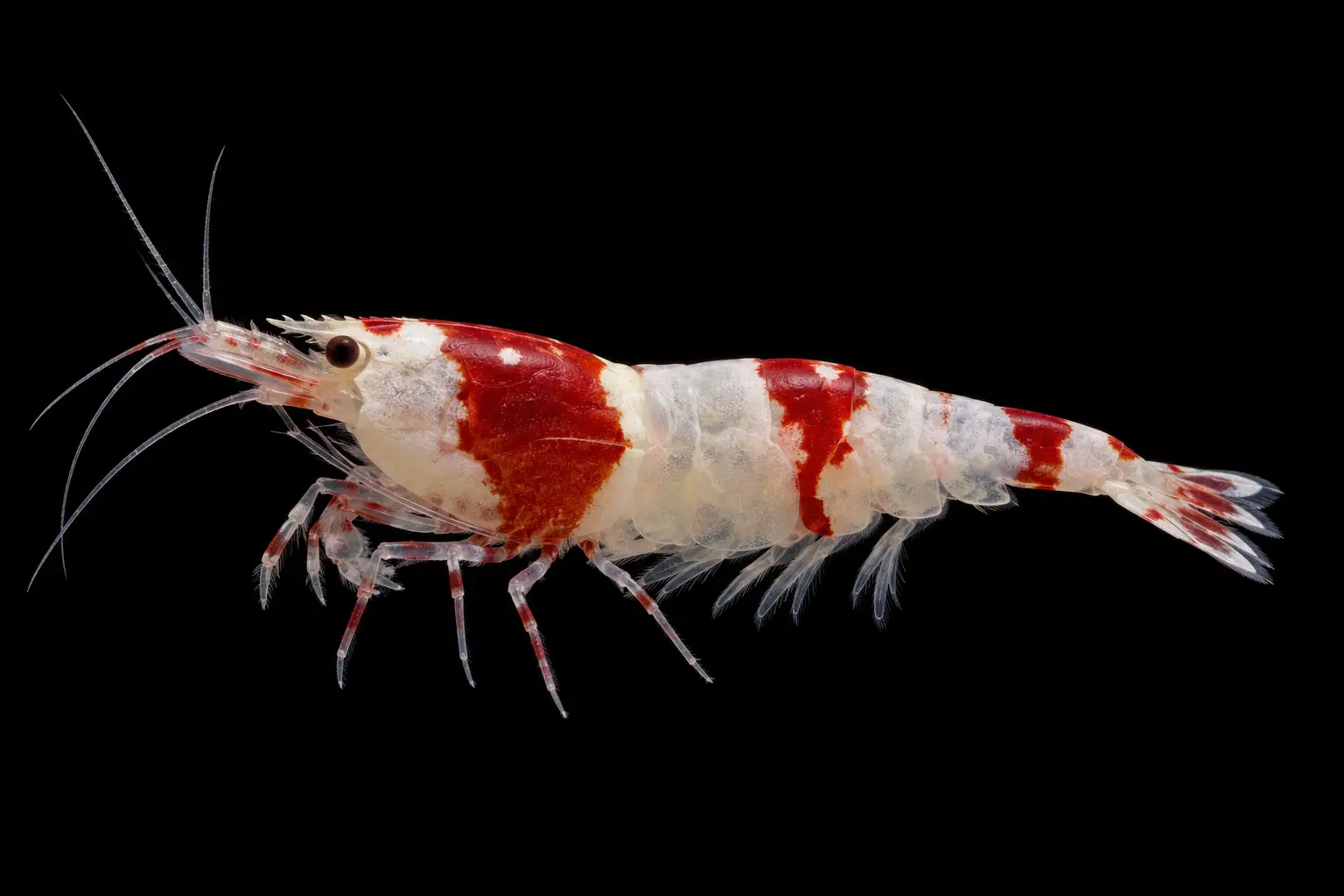
Caridina logemanni complex

Caridina logemanni complex

Crystal Red Bee

Origin
Captive-bred ornamental line; East Asian bee or tiger shrimp ancestry
Habitat evidence
Habitat review pending

Description

Maximum total length unverified for these ornamental lines.Maximum not verified

Temperature 20–24 °Cgroup guidance

pH 6.0–6.5 · GH 5.5–6.5 °dGH · Conductivity 250–290 µS/cmmineral-product guidance · group

Natural food: Biofilm; clean dried leaves.Prepared food: Complete shrimp feed.Food guidance at group level

Biology: mature biofilter; species-specific microbial counts are not established.

Sources & limits

Use mature soft, acidic freshwater with stable remineralisation, biofilm and gentle shrimp-safe filtration. Feed sparingly, acclimate slowly, and confirm the breeder’s water conditions before changing substrate or transferring sensitive ornamental lines.

Group-level guidance

Bee-shrimp group guidance and manufacturer water preparation; not a strain-specific optimum or proof of ancestry. Confirm the breeder’s substrate and water before transfer.

Complex is a catalog label for ornamental lines. Wild C. logemanni specimen measurements cannot establish a strain-specific total-length maximum.

Omitted parameters have no verified range in the sources checked. Habitat or experimental measurements are not safe keeping limits. GH, KH, TDS and conductivity are not interchangeable.

General system guidance: target free ammonia (NH₃) and nitrite (NO₂⁻) at 0 mg/L; account for test detection limits. These are chemical measurements, not microbial counts or each species’ tolerance limits. OATA · 2022. Assess biofilter function through waste processing and water tests, not clarity alone. Biofiltration reference.

Size checked: . Water/food checked: .

Status reviewAssessment not verified

Library profile · not for sale

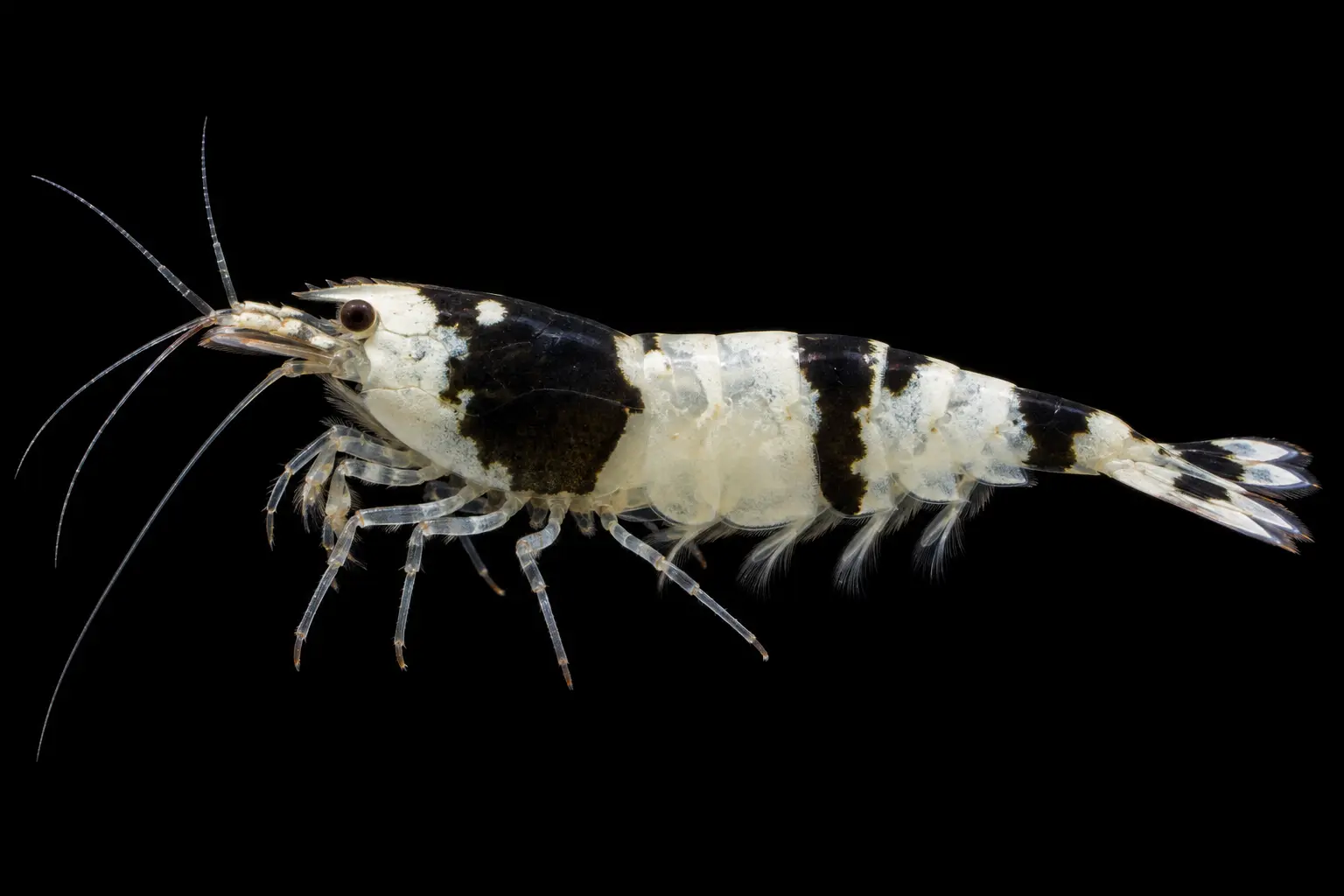
Caridina logemanni complex

Caridina logemanni complex

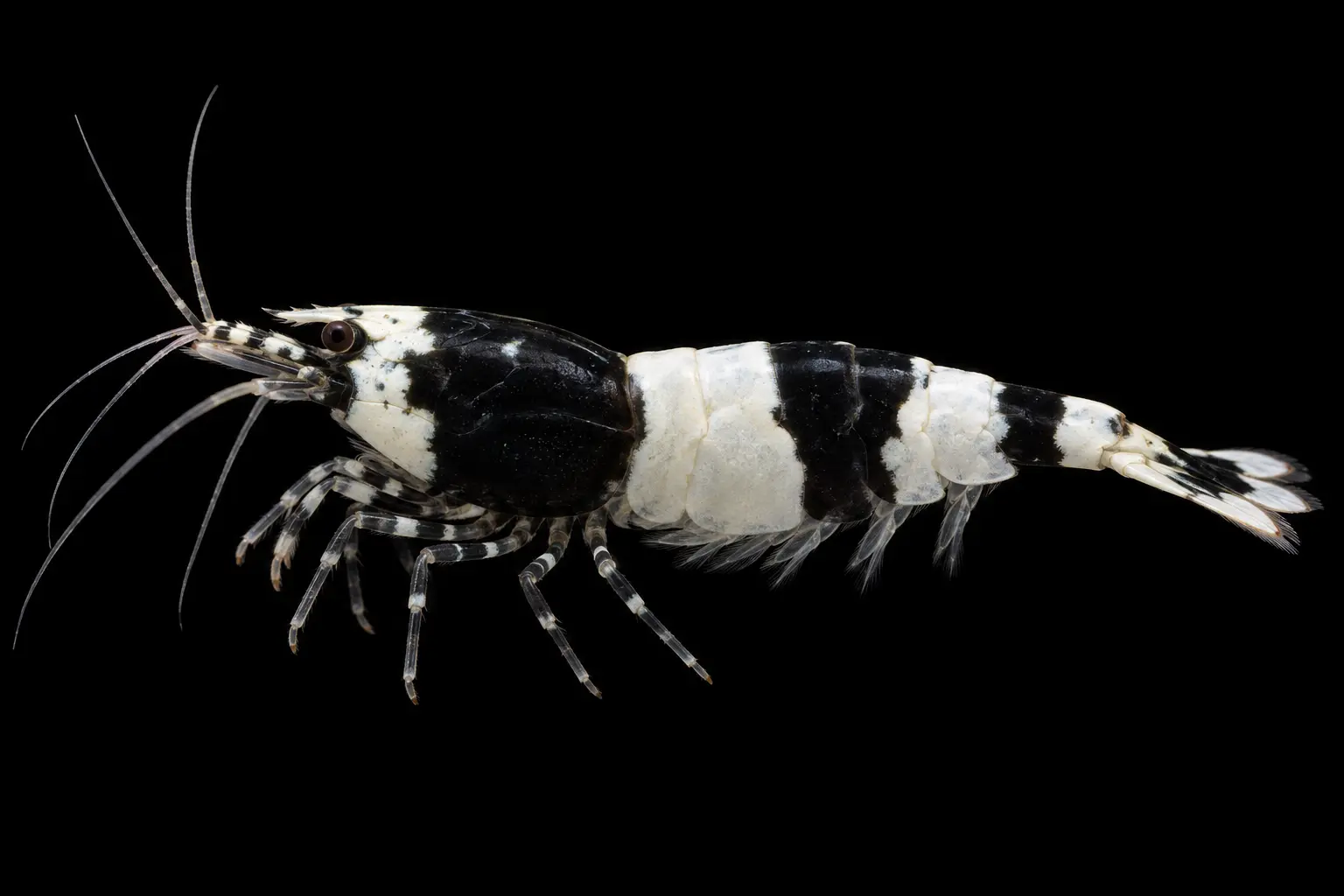
Crystal Black Bee

Origin
Captive-bred ornamental line; East Asian bee or tiger shrimp ancestry
Habitat evidence
Habitat review pending

Description

Maximum total length unverified for these ornamental lines.Maximum not verified

Temperature 20–24 °Cgroup guidance

pH 6.0–6.5 · GH 5.5–6.5 °dGH · Conductivity 250–290 µS/cmmineral-product guidance · group

Natural food: Biofilm; clean dried leaves.Prepared food: Complete shrimp feed.Food guidance at group level

Biology: mature biofilter; species-specific microbial counts are not established.

Sources & limits

Use mature soft, acidic freshwater with stable remineralisation, biofilm and gentle shrimp-safe filtration. Feed sparingly, acclimate slowly, and confirm the breeder’s water conditions before changing substrate or transferring sensitive ornamental lines.

Group-level guidance

Bee-shrimp group guidance and manufacturer water preparation; not a strain-specific optimum or proof of ancestry. Confirm the breeder’s substrate and water before transfer.

Complex is a catalog label for ornamental lines. Wild C. logemanni specimen measurements cannot establish a strain-specific total-length maximum.

Omitted parameters have no verified range in the sources checked. Habitat or experimental measurements are not safe keeping limits. GH, KH, TDS and conductivity are not interchangeable.

General system guidance: target free ammonia (NH₃) and nitrite (NO₂⁻) at 0 mg/L; account for test detection limits. These are chemical measurements, not microbial counts or each species’ tolerance limits. OATA · 2022. Assess biofilter function through waste processing and water tests, not clarity alone. Biofiltration reference.

Size checked: . Water/food checked: .

Status reviewAssessment not verified

Library profile · not for sale

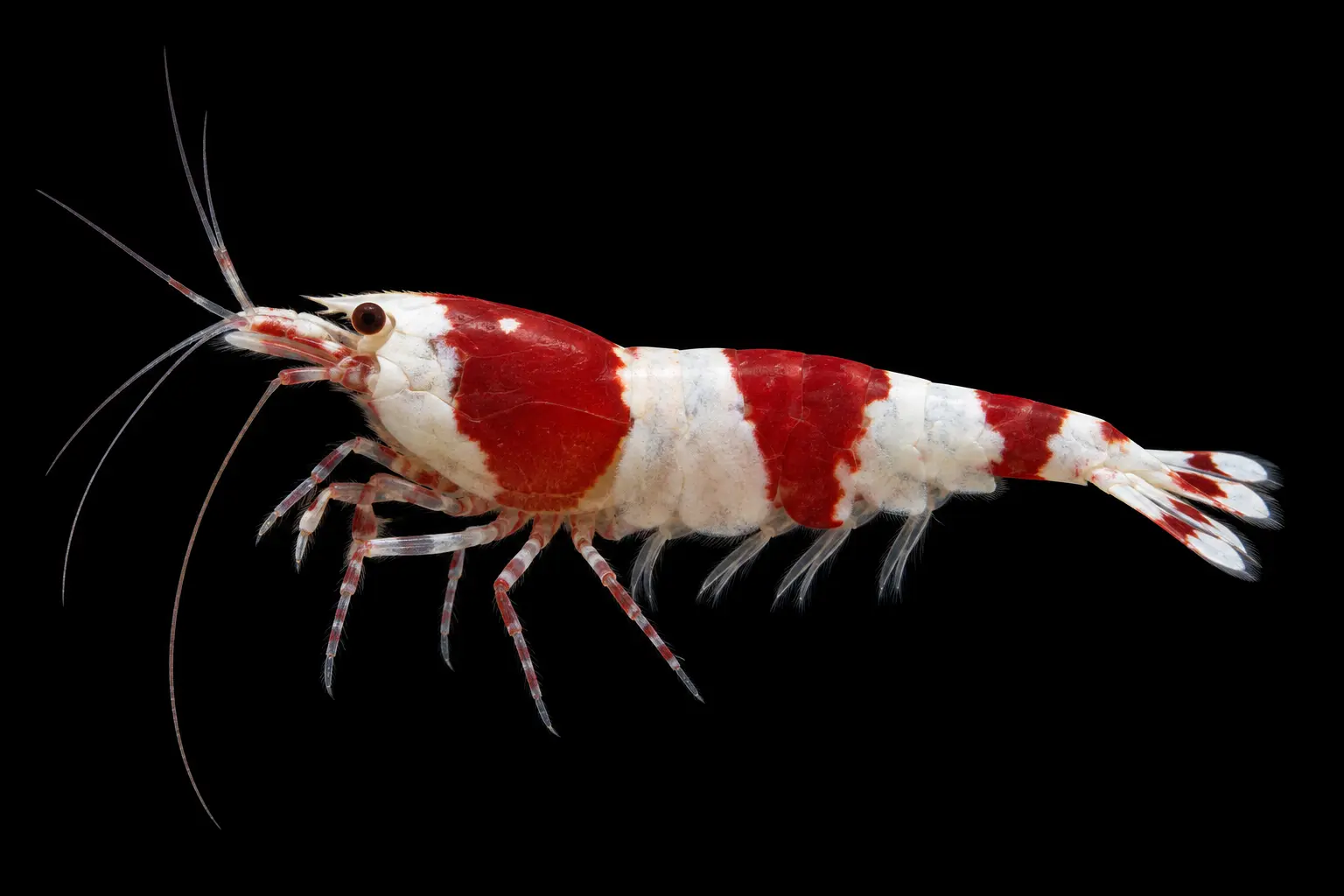
Caridina logemanni complex

Caridina logemanni complex

Pure Red Line

Origin
Captive-bred ornamental line; East Asian bee or tiger shrimp ancestry
Habitat evidence
Habitat review pending

Description

Maximum total length unverified for these ornamental lines.Maximum not verified

Temperature 20–24 °Cgroup guidance

pH 6.0–6.5 · GH 5.5–6.5 °dGH · Conductivity 250–290 µS/cmmineral-product guidance · group

Natural food: Biofilm; clean dried leaves.Prepared food: Complete shrimp feed.Food guidance at group level

Biology: mature biofilter; species-specific microbial counts are not established.

Sources & limits

Use mature soft, acidic freshwater with stable remineralisation, biofilm and gentle shrimp-safe filtration. Feed sparingly, acclimate slowly, and confirm the breeder’s water conditions before changing substrate or transferring sensitive ornamental lines.

Group-level guidance

Bee-shrimp group guidance and manufacturer water preparation; not a strain-specific optimum or proof of ancestry. Confirm the breeder’s substrate and water before transfer.

Complex is a catalog label for ornamental lines. Wild C. logemanni specimen measurements cannot establish a strain-specific total-length maximum.

Omitted parameters have no verified range in the sources checked. Habitat or experimental measurements are not safe keeping limits. GH, KH, TDS and conductivity are not interchangeable.

General system guidance: target free ammonia (NH₃) and nitrite (NO₂⁻) at 0 mg/L; account for test detection limits. These are chemical measurements, not microbial counts or each species’ tolerance limits. OATA · 2022. Assess biofilter function through waste processing and water tests, not clarity alone. Biofiltration reference.

Size checked: . Water/food checked: .

Status reviewAssessment not verified

Library profile · not for sale

Caridina logemanni complex

Caridina logemanni complex

Pure Black Line

Origin
Captive-bred ornamental line; East Asian bee or tiger shrimp ancestry
Habitat evidence
Habitat review pending

Description

Maximum total length unverified for these ornamental lines.Maximum not verified

Temperature 20–24 °Cgroup guidance

pH 6.0–6.5 · GH 5.5–6.5 °dGH · Conductivity 250–290 µS/cmmineral-product guidance · group

Natural food: Biofilm; clean dried leaves.Prepared food: Complete shrimp feed.Food guidance at group level

Biology: mature biofilter; species-specific microbial counts are not established.

Sources & limits

Use mature soft, acidic freshwater with stable remineralisation, biofilm and gentle shrimp-safe filtration. Feed sparingly, acclimate slowly, and confirm the breeder’s water conditions before changing substrate or transferring sensitive ornamental lines.

Group-level guidance

Bee-shrimp group guidance and manufacturer water preparation; not a strain-specific optimum or proof of ancestry. Confirm the breeder’s substrate and water before transfer.

Complex is a catalog label for ornamental lines. Wild C. logemanni specimen measurements cannot establish a strain-specific total-length maximum.

Omitted parameters have no verified range in the sources checked. Habitat or experimental measurements are not safe keeping limits. GH, KH, TDS and conductivity are not interchangeable.

General system guidance: target free ammonia (NH₃) and nitrite (NO₂⁻) at 0 mg/L; account for test detection limits. These are chemical measurements, not microbial counts or each species’ tolerance limits. OATA · 2022. Assess biofilter function through waste processing and water tests, not clarity alone. Biofiltration reference.

Size checked: . Water/food checked: .

Status reviewAssessment not verified

Library profile · not for sale

Caridina cantonensis complex

Caridina cantonensis complex

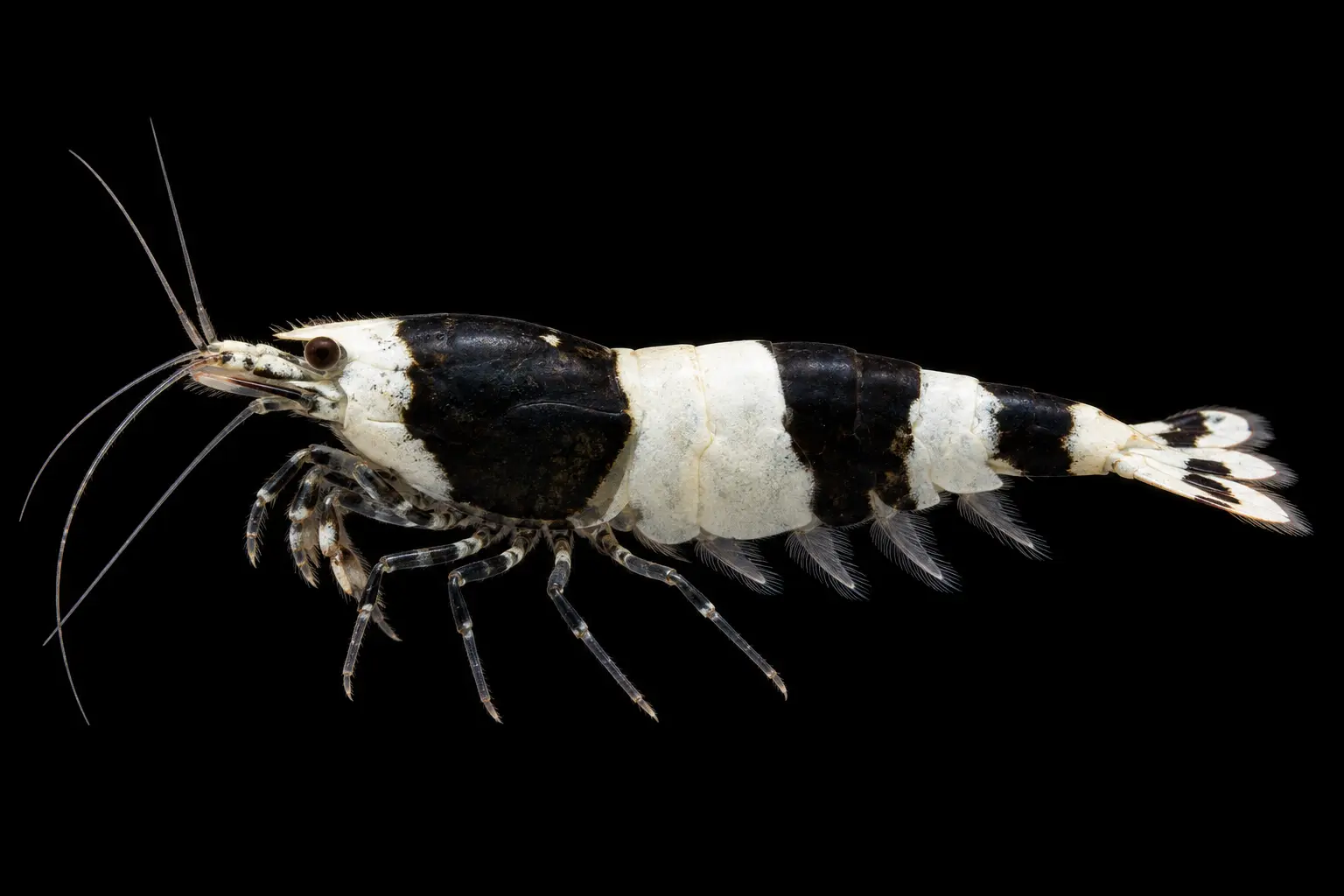
Panda Taiwan Bee

Origin
Captive-bred ornamental line; East Asian bee or tiger shrimp ancestry
Habitat evidence
Habitat review pending

Description

Maximum total length unverified for these Taiwan Bee lines.Maximum not verified

Temperature 20–24 °Cgroup guidance

pH 6.0–6.5 · GH 5.5–6.5 °dGH · Conductivity 250–290 µS/cmmineral-product guidance · group

Natural food: Biofilm; clean dried leaves.Prepared food: Complete shrimp feed.Food guidance at group level

Biology: mature biofilter; species-specific microbial counts are not established.

Sources & limits

Maintain a mature bee-shrimp aquarium with stable soft acidic water, controlled remineralisation and plentiful biofilm. Match the breeder’s established conditions, feed conservatively, and avoid abrupt changes during acclimation or substrate replacement.

Group-level guidance

Bee-shrimp group guidance and manufacturer water preparation; not a strain-specific optimum or proof of ancestry. Confirm the breeder’s substrate and water before transfer.

Taiwan Bee trade lines are not verified here as pure wild C. cantonensis; ancestry and water needs should be confirmed with the breeder.

Omitted parameters have no verified range in the sources checked. Habitat or experimental measurements are not safe keeping limits. GH, KH, TDS and conductivity are not interchangeable.

General system guidance: target free ammonia (NH₃) and nitrite (NO₂⁻) at 0 mg/L; account for test detection limits. These are chemical measurements, not microbial counts or each species’ tolerance limits. OATA · 2022. Assess biofilter function through waste processing and water tests, not clarity alone. Biofiltration reference.

Size checked: . Water/food checked: .

Status reviewAssessment not verified

Library profile · not for sale

Caridina cantonensis complex

Caridina cantonensis complex

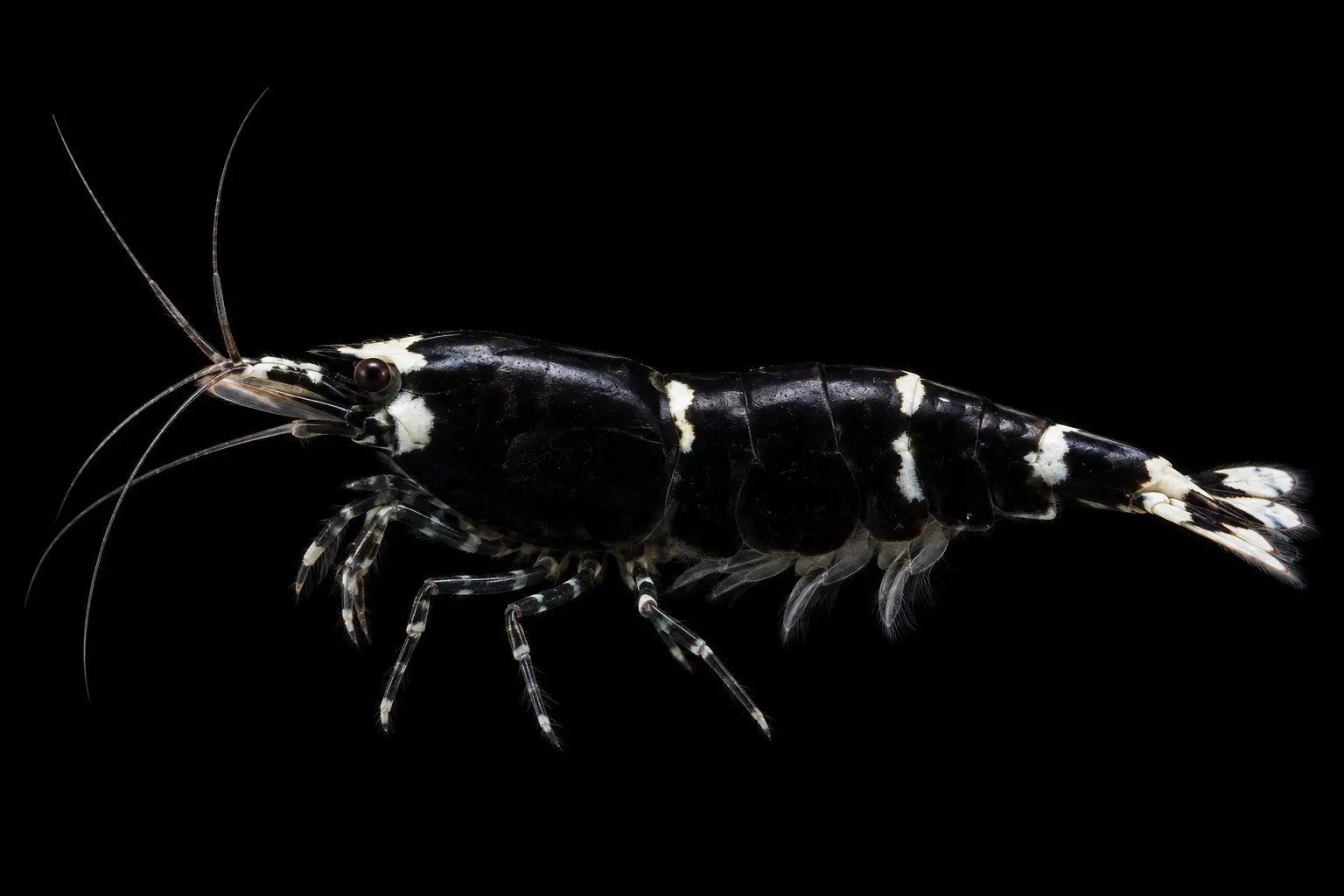
King Kong Taiwan Bee

Origin
Captive-bred ornamental line; East Asian bee or tiger shrimp ancestry
Habitat evidence
Habitat review pending

Description

Maximum total length unverified for these Taiwan Bee lines.Maximum not verified

Temperature 20–24 °Cgroup guidance

pH 6.0–6.5 · GH 5.5–6.5 °dGH · Conductivity 250–290 µS/cmmineral-product guidance · group

Natural food: Biofilm; clean dried leaves.Prepared food: Complete shrimp feed.Food guidance at group level

Biology: mature biofilter; species-specific microbial counts are not established.

Sources & limits

Maintain a mature bee-shrimp aquarium with stable soft acidic water, controlled remineralisation and plentiful biofilm. Match the breeder’s established conditions, feed conservatively, and avoid abrupt changes during acclimation or substrate replacement.

Group-level guidance

Bee-shrimp group guidance and manufacturer water preparation; not a strain-specific optimum or proof of ancestry. Confirm the breeder’s substrate and water before transfer.

Taiwan Bee trade lines are not verified here as pure wild C. cantonensis; ancestry and water needs should be confirmed with the breeder.

Omitted parameters have no verified range in the sources checked. Habitat or experimental measurements are not safe keeping limits. GH, KH, TDS and conductivity are not interchangeable.

General system guidance: target free ammonia (NH₃) and nitrite (NO₂⁻) at 0 mg/L; account for test detection limits. These are chemical measurements, not microbial counts or each species’ tolerance limits. OATA · 2022. Assess biofilter function through waste processing and water tests, not clarity alone. Biofiltration reference.

Size checked: . Water/food checked: .

Status reviewAssessment not verified

Library profile · not for sale

Caridina cantonensis complex

Caridina cantonensis complex

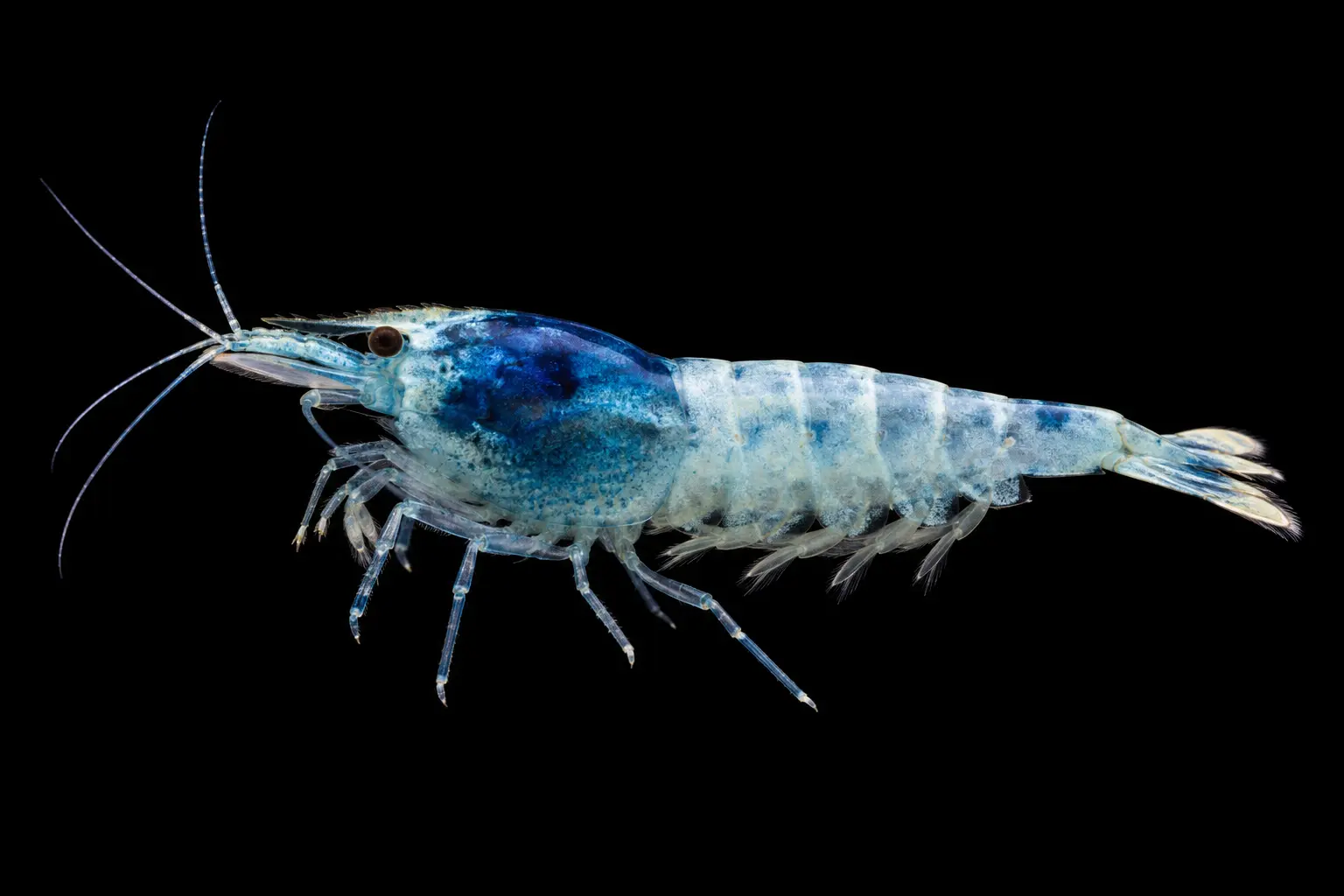
Blue Bolt Taiwan Bee

Origin
Captive-bred ornamental line; East Asian bee or tiger shrimp ancestry
Habitat evidence
Habitat review pending

Description

Maximum total length unverified for these Taiwan Bee lines.Maximum not verified

Temperature 20–24 °Cgroup guidance

pH 6.0–6.5 · GH 5.5–6.5 °dGH · Conductivity 250–290 µS/cmmineral-product guidance · group

Natural food: Biofilm; clean dried leaves.Prepared food: Complete shrimp feed.Food guidance at group level

Biology: mature biofilter; species-specific microbial counts are not established.

Sources & limits

Maintain a mature bee-shrimp aquarium with stable soft acidic water, controlled remineralisation and plentiful biofilm. Match the breeder’s established conditions, feed conservatively, and avoid abrupt changes during acclimation or substrate replacement.

Group-level guidance

Bee-shrimp group guidance and manufacturer water preparation; not a strain-specific optimum or proof of ancestry. Confirm the breeder’s substrate and water before transfer.

Taiwan Bee trade lines are not verified here as pure wild C. cantonensis; ancestry and water needs should be confirmed with the breeder.

Omitted parameters have no verified range in the sources checked. Habitat or experimental measurements are not safe keeping limits. GH, KH, TDS and conductivity are not interchangeable.

General system guidance: target free ammonia (NH₃) and nitrite (NO₂⁻) at 0 mg/L; account for test detection limits. These are chemical measurements, not microbial counts or each species’ tolerance limits. OATA · 2022. Assess biofilter function through waste processing and water tests, not clarity alone. Biofiltration reference.

Size checked: . Water/food checked: .

Status reviewAssessment not verified

Library profile · not for sale

Caridina mariae lineage

Caridina mariae lineage

Tangerine Tiger

Origin
Captive-bred ornamental line; East Asian bee or tiger shrimp ancestry
Habitat evidence
Habitat review pending

Description

Maximum total length unverified for this Tangerine Tiger lineage.Maximum not verified

Specific water ranges are not yet verified.

Natural food: Biofilm; clean dried leaves.Prepared food: Complete shrimp feed.Food guidance at group level

Biology: mature biofilter; species-specific microbial counts are not established.

Sources & limits

Provide a mature tiger-shrimp aquarium with stable soft to moderately mineralised water, plants and biofilm. Match the breeder’s actual conditions, acclimate gradually, use shrimp-safe filtration, and supplement grazing without allowing waste to accumulate.

Group-level guidance

Tiger-shrimp group guidance only. Numerical ranges and ancestry of the catalogue’s Tangerine Tiger lineage remain unverified; do not copy bee-shrimp values.

The catalog’s lineage label is retained; the stock is not assumed to be taxonomically verified pure C. mariae.

Omitted parameters have no verified range in the sources checked. Habitat or experimental measurements are not safe keeping limits. GH, KH, TDS and conductivity are not interchangeable.

General system guidance: target free ammonia (NH₃) and nitrite (NO₂⁻) at 0 mg/L; account for test detection limits. These are chemical measurements, not microbial counts or each species’ tolerance limits. OATA · 2022. Assess biofilter function through waste processing and water tests, not clarity alone. Biofiltration reference.

Size checked: . Water/food checked: .

Status reviewAssessment not verified

Library profile · not for sale

Explore freely. Orders, prices and availability have not opened yet.

Page 1 of 1 · 10 matching catalogue records

Caridina identity and line register.

Caridina identity and line register.

This directory groups established aquarium terms without pretending that every trade name is a taxon. Parentage and accepted scientific names will be checked line by line before listing.

Caridina logemanni and closely related bee-shrimp lineages

4 documented names
  • Crystal Red
  • Crystal Black
  • Pure Red Line
  • Pure Black Line

Taiwan Bee trade family — verify parentage for each line

6 documented names
  • Panda
  • King Kong
  • Red Wine
  • Blue Bolt
  • Red Bolt
  • Shadow Panda

Caridina mariae and tiger-line derivatives

4 documented names
  • Tiger
  • Super Tiger
  • Orange Eye Blue Tiger
  • Tangerine Tiger

Recognised species profiles

2 documented names
  • Caridina multidentata — True Amano / Yamato Shrimp
  • Gracidina gracilirostris — Pinocchio / Red Nose Shrimp

Taxonomy is checked against WoRMS. Note that Caridina gracilirostris is currently treated there as Gracidina gracilirostris.

All shrimp collectionsFish & Shrimp Foods