Species library · Explore freely. Orders are not open.

NATIVE INDONESIA / SPECIALIST SHRIMP

Other Shrimp

Native Indonesian fan shrimp, Macrobrachium prawns and Papuan Cherax crayfish, with taxonomy, behaviour and life cycles explained clearly.

Enter the species journeyCollection in preparation

Beyond dwarf shrimp.

This research collection focuses on distinctive native Indonesian crustaceans outside the Caridina, Sulawesi and Neocaridina catalogues. Locality, adult size, larval ecology, conservation status and lawful sourcing remain separate evidence fields.

Native Indonesian shrimp with specialist appeal.

Twenty-one research-led visual profiles cover fan shrimp, long-arm prawns and Papuan crayfish. Adult size, predatory behaviour, amphidromous larval ecology and narrow-range provenance are stated explicitly rather than treating every crustacean as a dwarf community shrimp.

21 records

Reading descriptions & sources

Fish SL excludes the tail fin; TL follows source endpoints, usually to the tail tip. CL measures the carapace only. Values are not converted between methods. Where a maximum is unverified, the largest examined specimen remains labelled as a specimen, not an adult maximum or a guaranteed final size.

Water ranges retain their source and scope: species, genus or group. Habitat measurements and experimental conditions are labelled separately from aquarium guidance. Missing numbers are not estimated. Prepared food is not always accepted; adapt food size to life stage and check feeding response. This summary does not replace system planning, quarantine, compatibility or adult space.

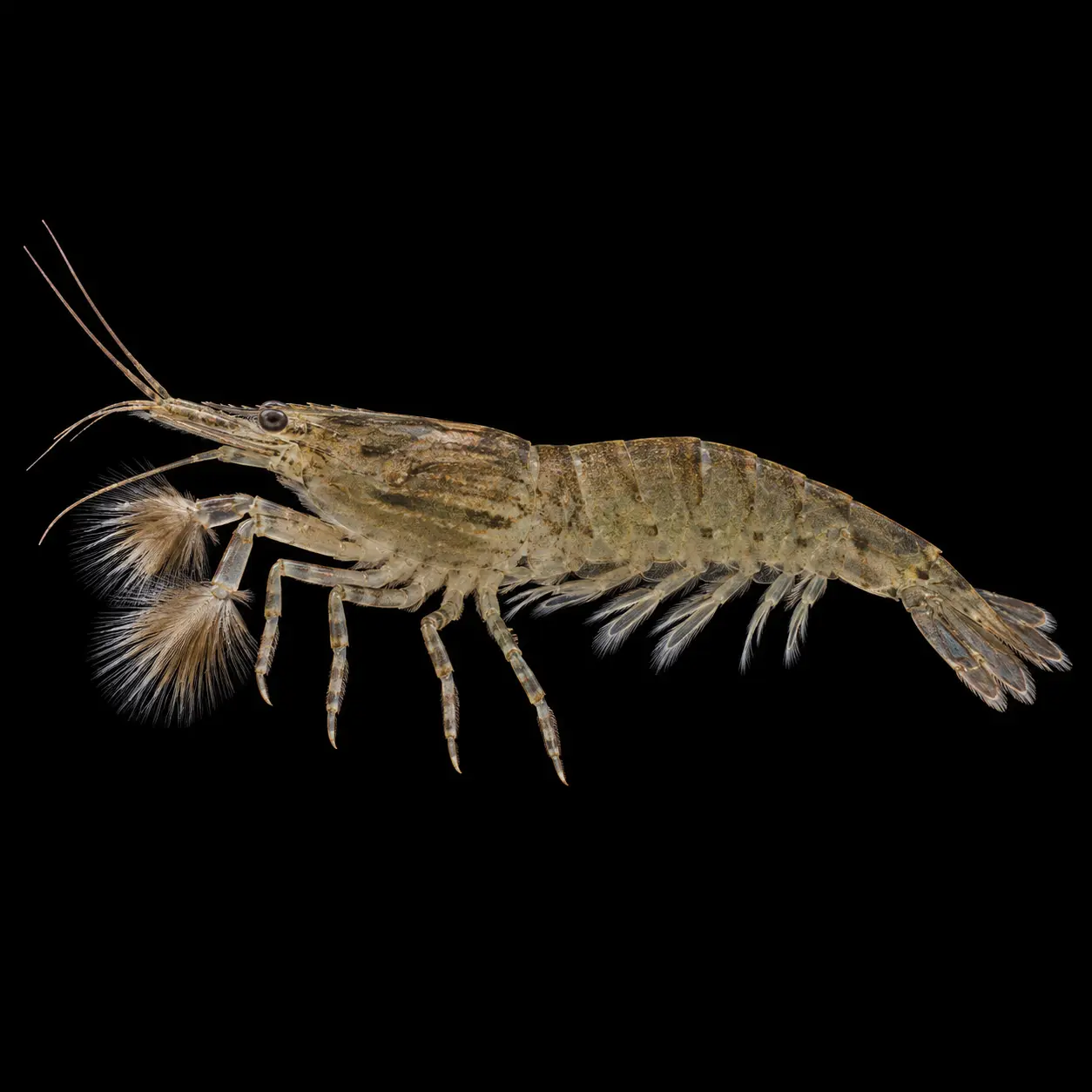
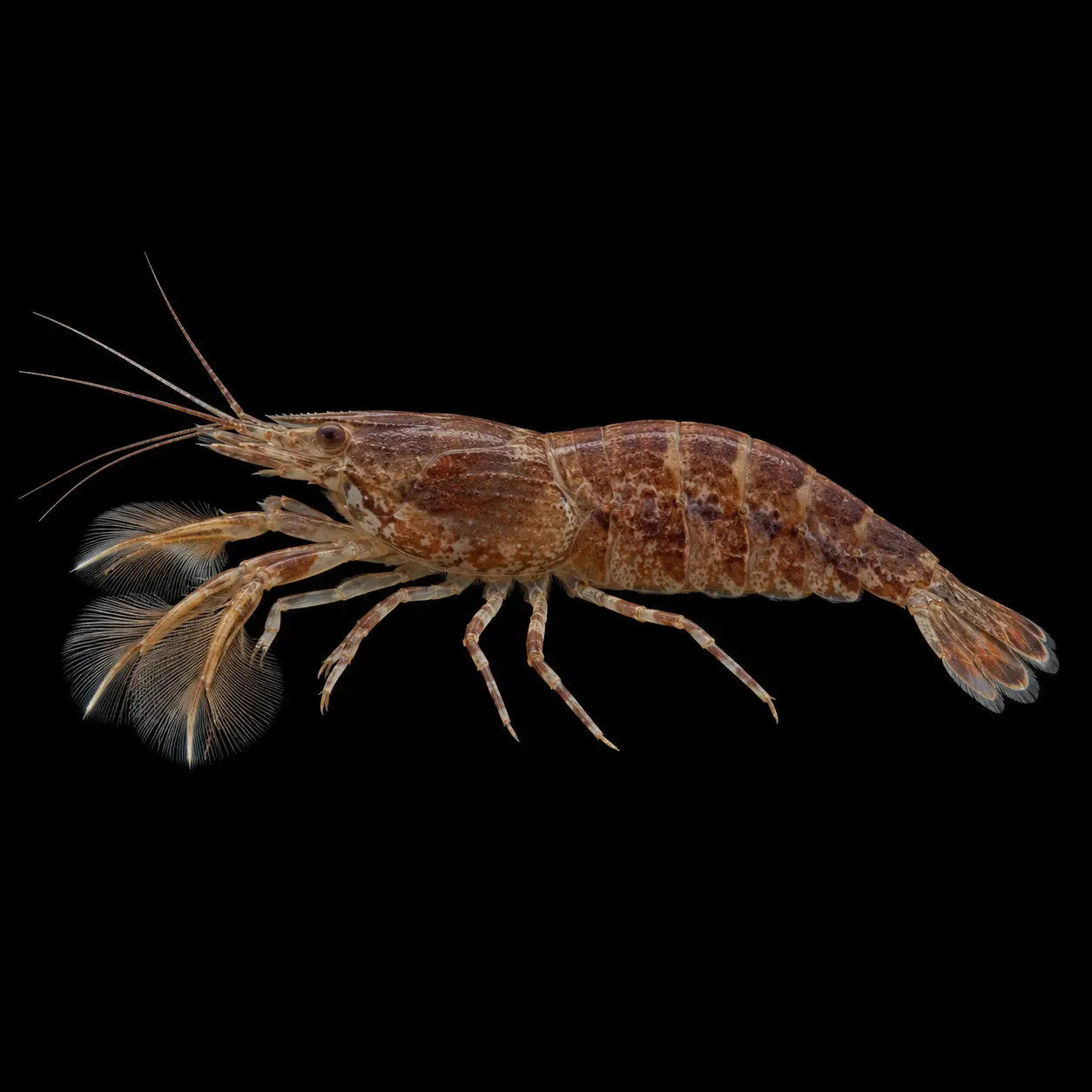
Atyopsis moluccensis

Atyopsis moluccensis

Bamboo Shrimp

Origin
Native Indonesian and wider Southeast Asian stream systems
Habitat evidence
Habitat review pending

Description

Reported maximum: 8.6 cm total length; usually up to 7.7 cm.

Temperature 17–25 °Cspecies guidance

Natural food: Suspended microorganisms and fine particles.Prepared food: Finely ground flake or pellet feed in the current.

Biology: mature biofilter; species-specific microbial counts are not established.

Sources & limits

Provide a mature oxygenated aquarium with flowing-water perches and fine suspended food. Confirm active fan feeding; persistent substrate scraping can signal insufficient food. Protect from predators and avoid removing all suspended nutrition.

Genus-level guidance

Temperature is one published care guide, not a measured tolerance limit. Constant access to fine suspended food is distinct from occasional large sinking meals; other numerical water ranges remain unverified.

Care combines documented filter-feeding ecology with aquarium inference; a freshwater adult aquarium does not establish successful freshwater larval culture.

Omitted parameters have no verified range in the sources checked. Habitat or experimental measurements are not safe keeping limits. GH, KH, TDS and conductivity are not interchangeable.

General system guidance: target free ammonia (NH₃) and nitrite (NO₂⁻) at 0 mg/L; account for test detection limits. These are chemical measurements, not microbial counts or each species’ tolerance limits. OATA · 2022. Assess biofilter function through waste processing and water tests, not clarity alone. Biofiltration reference.

Size checked: . Water/food checked: .

Status reviewAssessment not verified

Library profile · not for sale
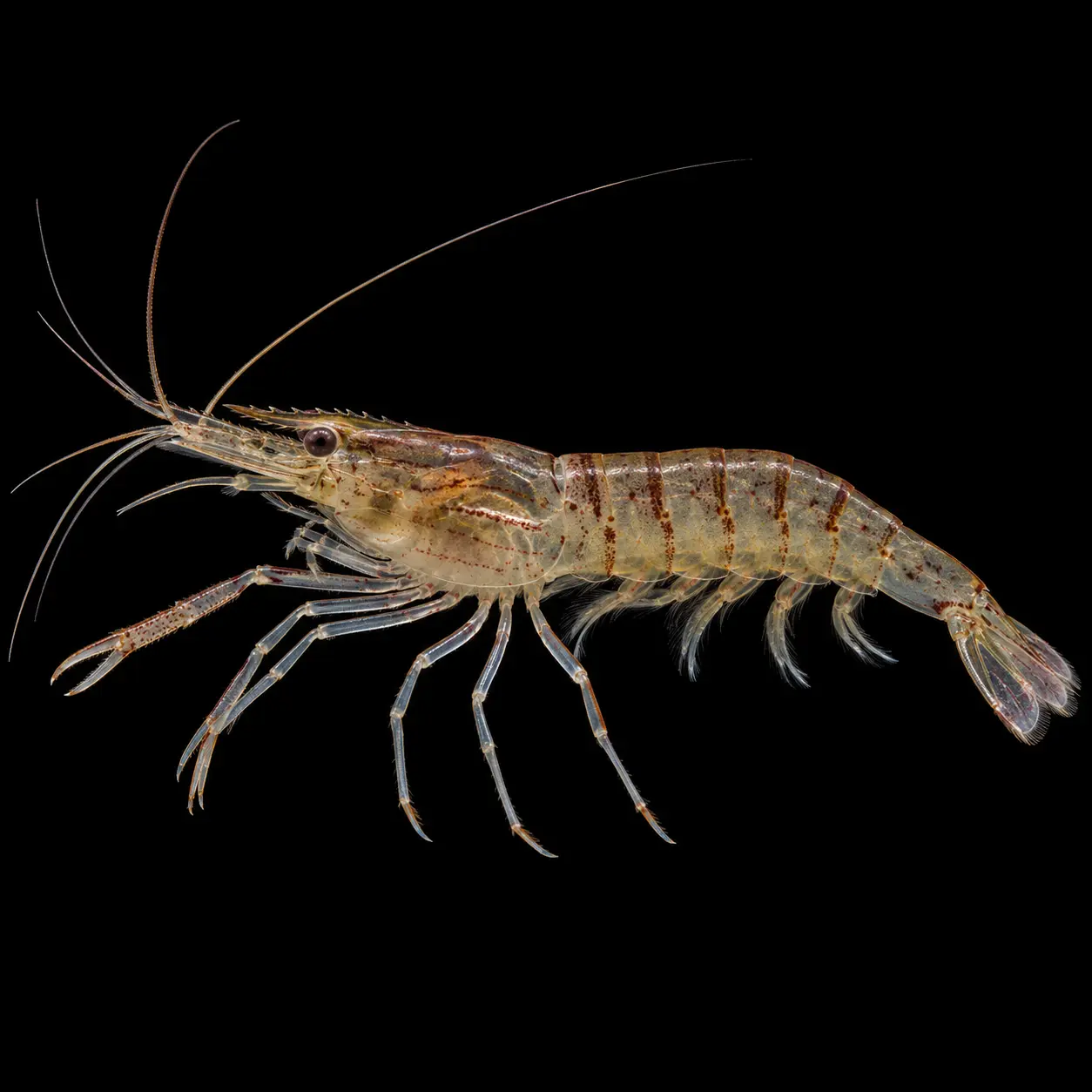
Atyopsis spinipes

Atyopsis spinipes

Soldier Brush Shrimp

Origin
Indonesia and the wider Indo-West Pacific
Habitat evidence
Habitat review pending

Description

Largest studied specimen: about 7.1 cm overall length; species maximum unverified.Examined specimens · not an adult maximum

Specific water ranges are not yet verified.

Natural food: Fine suspended particles.Prepared food: Finely ground feed: genus-level inference; acceptance must be observed.Food guidance at genus level

Biology: mature biofilter; species-specific microbial counts are not established.

Sources & limits

Use a mature oxygenated aquarium with steady current, secure feeding perches and fine suspended food. Check that fans capture food consistently, protect from predators, and verify identification because this shrimp resembles A. moluccensis.

Genus-level guidance

Species-specific numerical water ranges and a formulated diet are unverified; aquarium food presentation is inferred from fan-feeding anatomy. Do not apply A. moluccensis temperatures automatically.

Overall length is the source’s approximate description. No CL-to-TL conversion is applied; species-specific aquarium protocols remain limited.

Omitted parameters have no verified range in the sources checked. Habitat or experimental measurements are not safe keeping limits. GH, KH, TDS and conductivity are not interchangeable.

General system guidance: target free ammonia (NH₃) and nitrite (NO₂⁻) at 0 mg/L; account for test detection limits. These are chemical measurements, not microbial counts or each species’ tolerance limits. OATA · 2022. Assess biofilter function through waste processing and water tests, not clarity alone. Biofiltration reference.

Size checked: . Water/food checked: .

Status reviewAssessment not verified

Library profile · not for sale
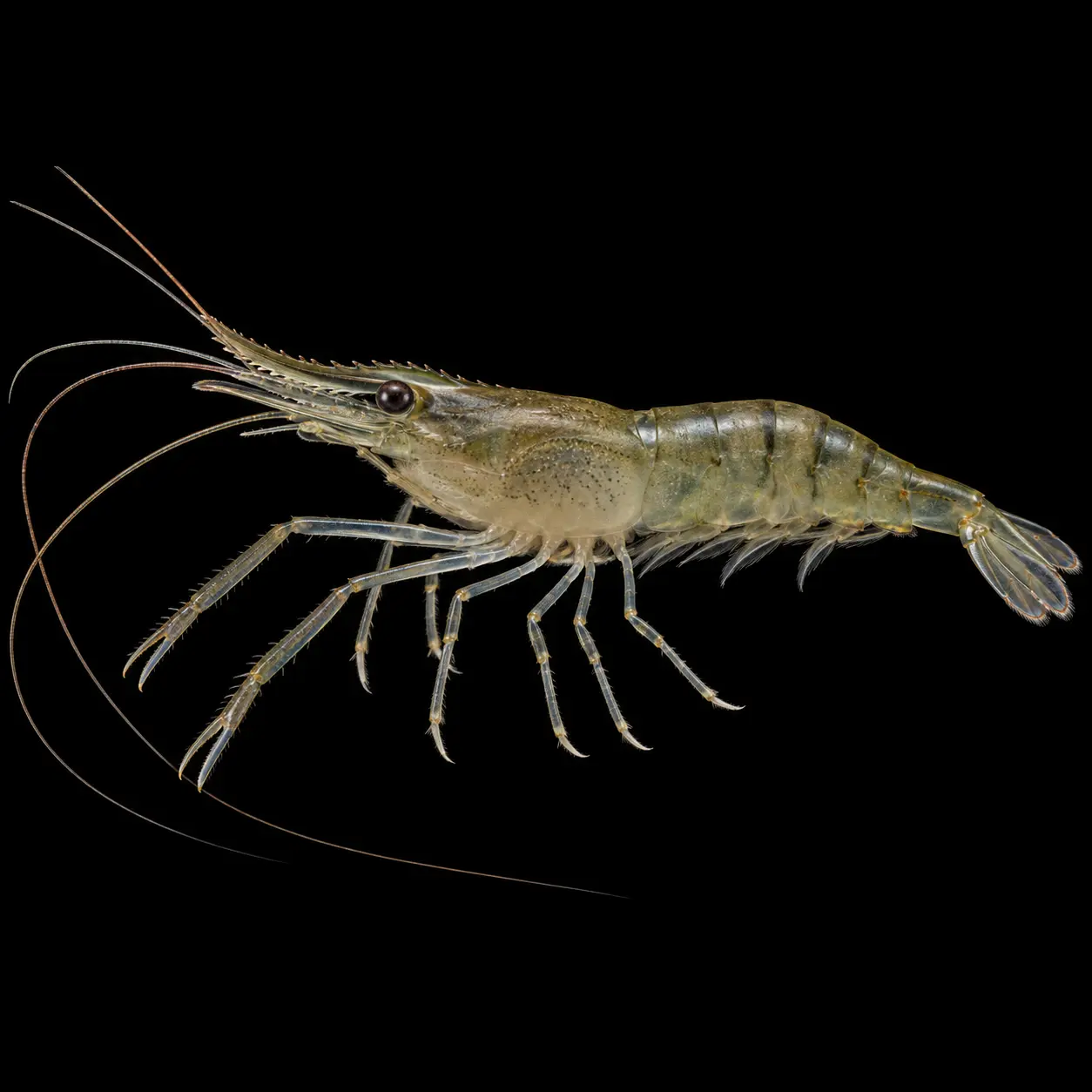
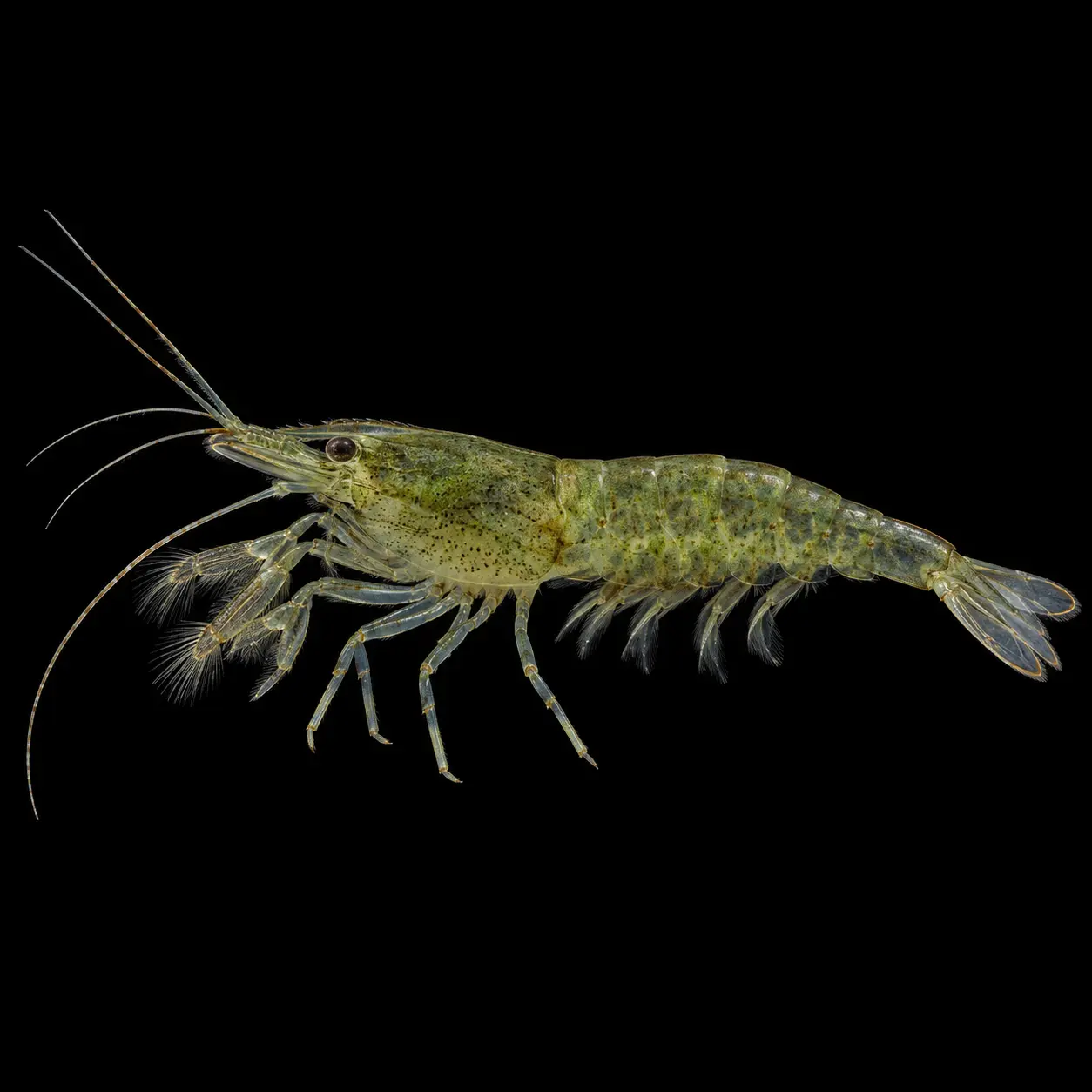
Atyoida pilipes

Atyoida pilipes

Green Lace Shrimp

Origin
Indonesian islands within a broad Indo-Pacific range
Habitat evidence
Habitat review pending

Description

Examined series: up to 8.8 mm carapace; maximum total length unverified.Examined specimens · not an adult maximum

Specific water ranges are not yet verified.

Natural food: Fine suspended particles.Prepared food: Dry fish food; slowly disintegrating tablets.

Biology: mature biofilter; species-specific microbial counts are not established.

Sources & limits

Provide oxygenated current, sheltered feeding perches and fine suspended particles in a mature aquarium. Observe actual feeding and supplement carefully; adults may live in freshwater, while larvae require a separate marine-development plan.

Food acceptance is a first-hand importer observation, not a complete nutrition trial. Numerical adult-water ranges remain unverified; larval marine culture is a separate requirement.

Omitted parameters have no verified range in the sources checked. Habitat or experimental measurements are not safe keeping limits. GH, KH, TDS and conductivity are not interchangeable.

General system guidance: target free ammonia (NH₃) and nitrite (NO₂⁻) at 0 mg/L; account for test detection limits. These are chemical measurements, not microbial counts or each species’ tolerance limits. OATA · 2022. Assess biofilter function through waste processing and water tests, not clarity alone. Biofiltration reference.

Size checked: . Water/food checked: .

Status reviewAssessment not verified

Library profile · not for sale
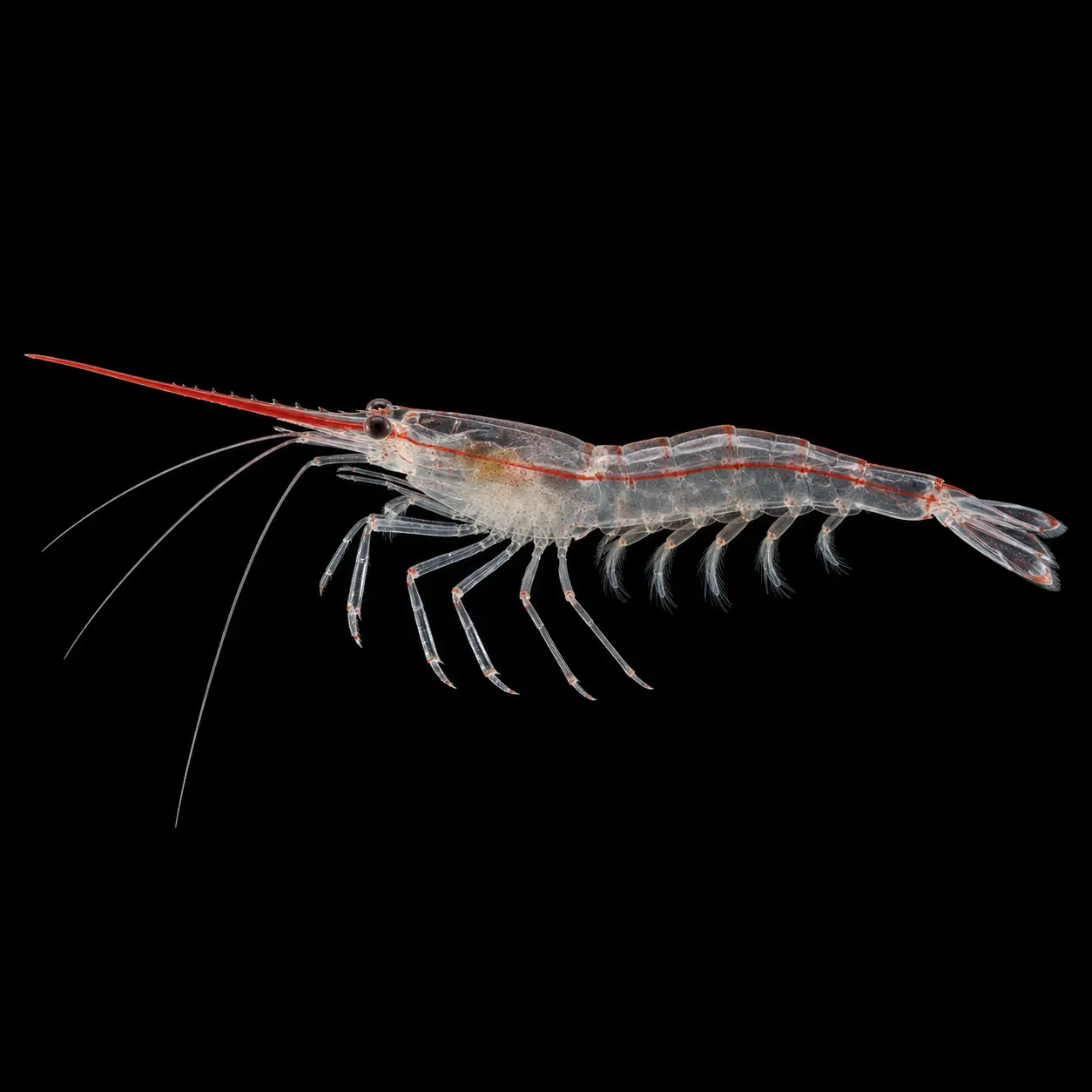
Gracidina gracilirostris

Gracidina gracilirostris

Pinocchio / Red Nose Shrimp

Origin
Indonesia within a broad Indo-Pacific coastal range
Habitat evidence
Habitat review pending

Description

Examined paralectotypes: up to 5.7 mm carapace; maximum total length unverified.Examined specimens · not an adult maximum

Specific water ranges are not yet verified.

Natural food: Grazing biofilm (group guidance).Prepared food: Shrimp pellet acceptance unverified for this taxon.Food guidance at group level

Biology: mature biofilter; species-specific microbial counts are not established.

Sources & limits

Provide mature plants and grazing biofilm with oxygenated water and shrimp-safe filtration. Match verified collection salinity, protect the delicate long rostrum during handling, and confirm larval requirements before planning aquarium breeding.

Species-specific adult-water ranges remain unverified. Larval salinity experiments must not be shown as adult aquarium targets; confirm taxonomic identity and provenance.

The 2026 genus update is retained. Specimen CL excludes the very long rostrum and is not whole-shrimp length; larval husbandry is not established by this habitat account.

Omitted parameters have no verified range in the sources checked. Habitat or experimental measurements are not safe keeping limits. GH, KH, TDS and conductivity are not interchangeable.

General system guidance: target free ammonia (NH₃) and nitrite (NO₂⁻) at 0 mg/L; account for test detection limits. These are chemical measurements, not microbial counts or each species’ tolerance limits. OATA · 2022. Assess biofilter function through waste processing and water tests, not clarity alone. Biofiltration reference.

Size checked: . Water/food checked: .

Reported LCDirect assessment review pending

Library profile · not for sale

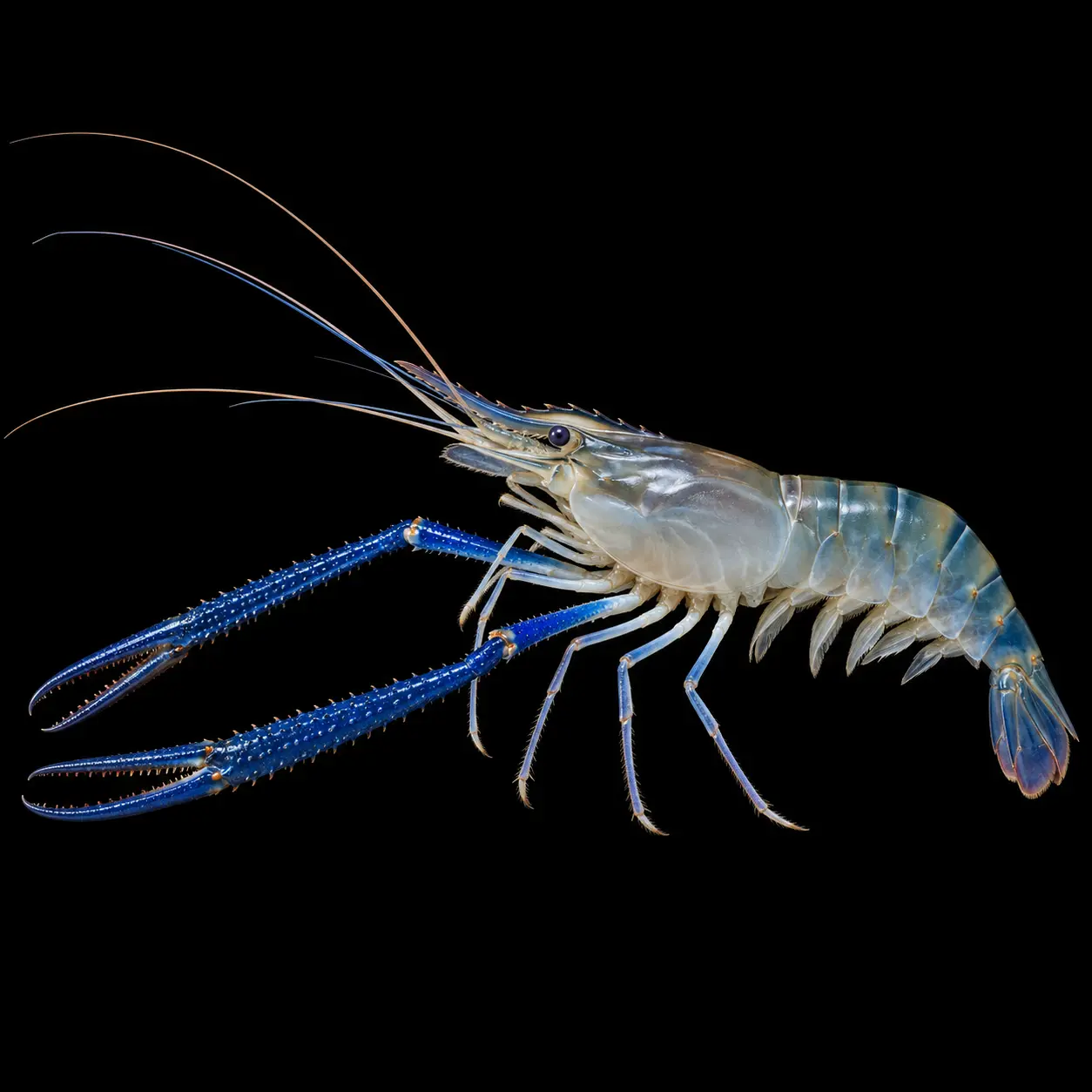
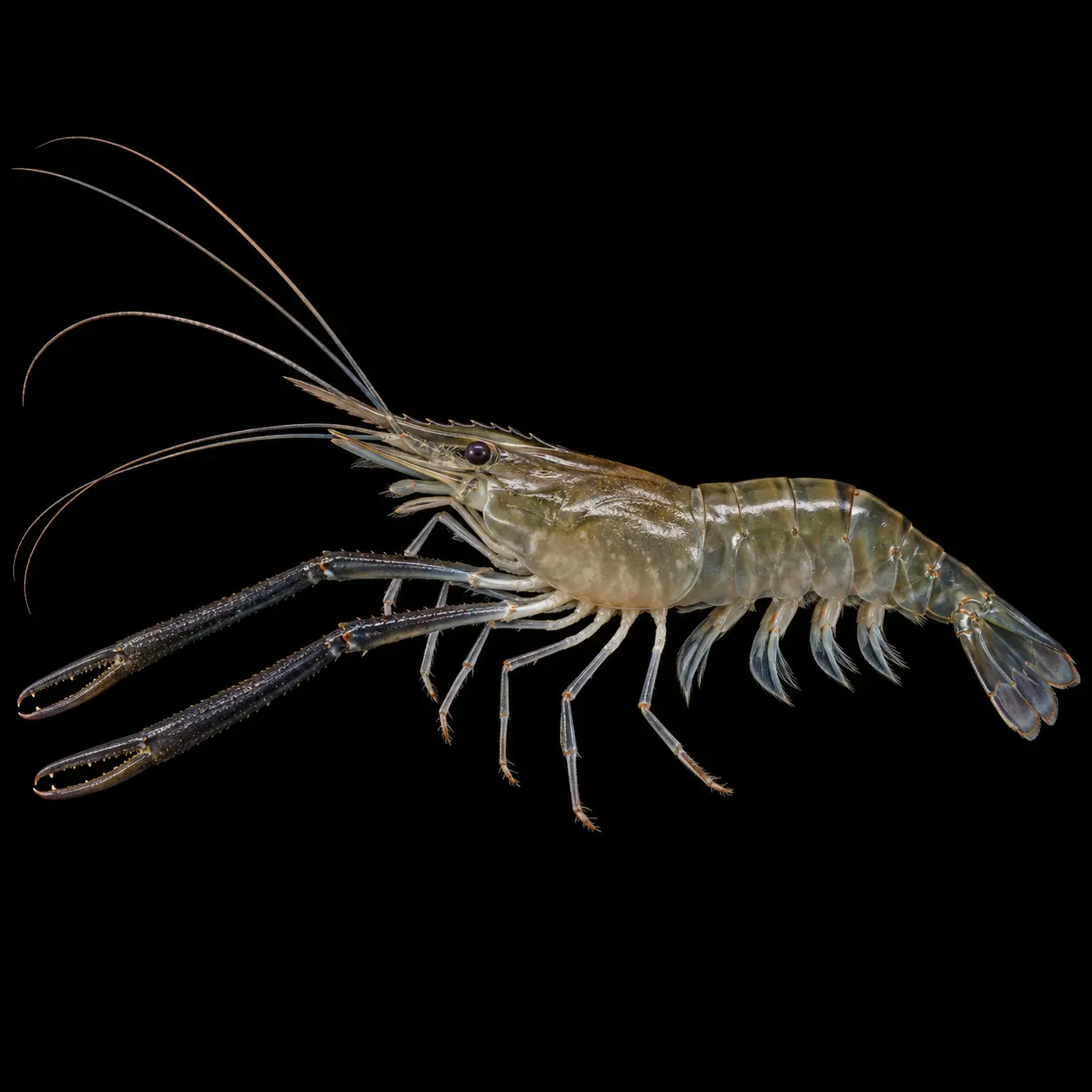
Macrobrachium rosenbergii

Macrobrachium rosenbergii

Giant River Prawn

Origin
Indonesia and the wider Indo-West Pacific
Habitat evidence
Habitat review pending

Description

Reported maximum: 32 cm total length.

Temperature 28–31 °C · pH 7.0–8.5 · Dissolved O₂ 3–7 mg/L · GH 30–150 mg/L as CaCO₃grow-out guidance · not larvae

Natural food: Earthworms; mollusc flesh.Prepared food: Water-stable prawn pellets.

Biology: mature biofilter; species-specific microbial counts are not established.

Sources & limits

Provide substantial floor space, strong oxygenation and filtration, individual shelters and a varied sinking diet. Separate vulnerable smaller animals; males compete and cannibalism occurs. Freshwater adults and brackish-water larvae require different systems.

FAO nursery/grow-out guidance only, not larval hatchery water. Hardness is reported as mg/L CaCO₃, not degrees. The oxygen range is the cited production guidance, not an instruction to reduce aeration.

Omitted parameters have no verified range in the sources checked. Habitat or experimental measurements are not safe keeping limits. GH, KH, TDS and conductivity are not interchangeable.

General system guidance: target free ammonia (NH₃) and nitrite (NO₂⁻) at 0 mg/L; account for test detection limits. These are chemical measurements, not microbial counts or each species’ tolerance limits. OATA · 2022. Assess biofilter function through waste processing and water tests, not clarity alone. Biofiltration reference.

Size checked: . Water/food checked: .

Status reviewAssessment not verified

Library profile · not for sale

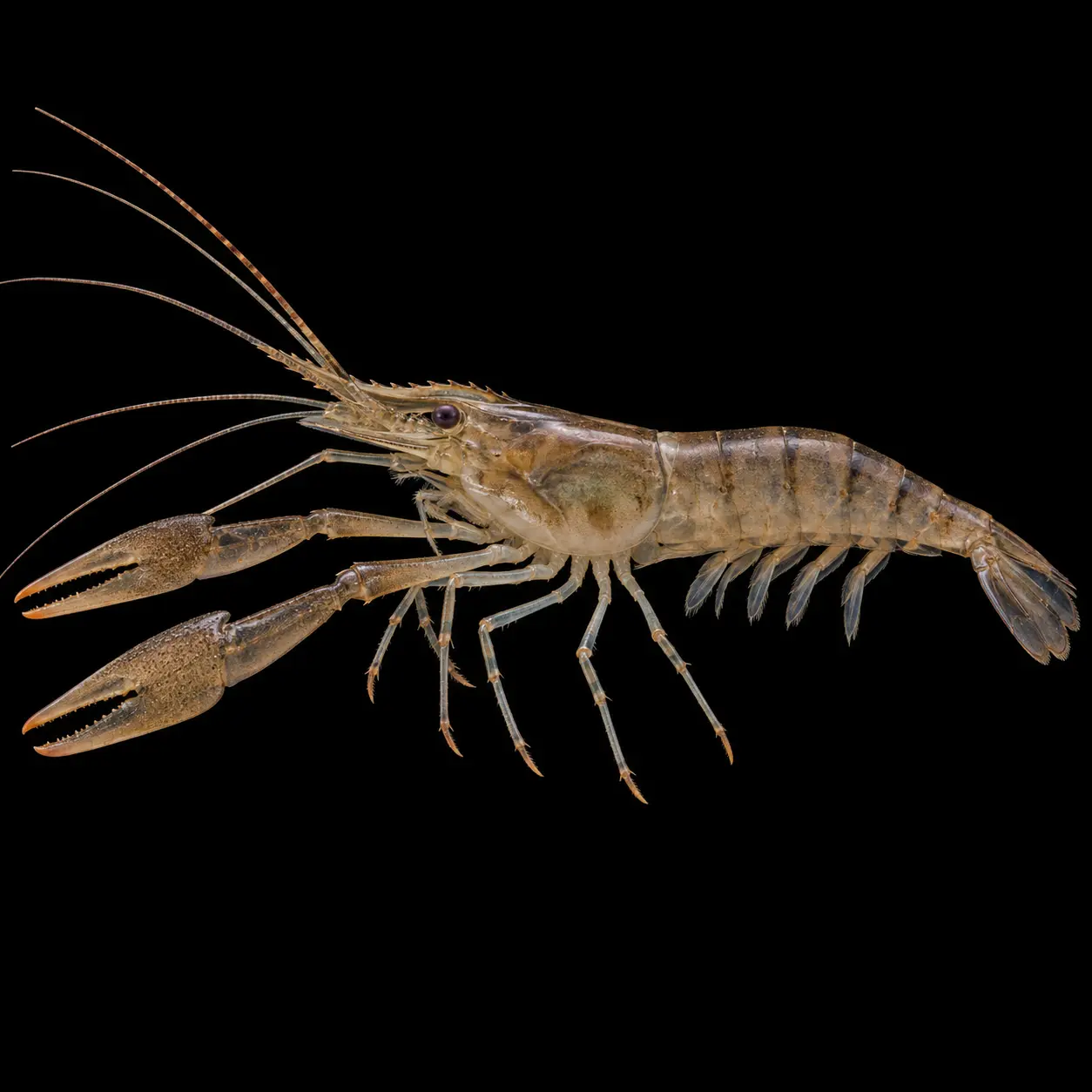
Macrobrachium lar

Macrobrachium lar

Monkey River Prawn

Origin
Indonesia within a broad Indo-Pacific range
Habitat evidence
Habitat review pending

Description

Reported maximum: 18.1 cm total length.

Specific water ranges are not yet verified.

Natural food: Earthworms; mollusc flesh.Prepared food: Water-stable prawn pellets.Food guidance at genus level

Biology: mature biofilter; species-specific microbial counts are not established.

Sources & limits

Give adults a spacious oxygenated freshwater aquarium with separate shelters, robust filtration and varied sinking food. Avoid small fish or shrimp companions; marine or brackish larval development needs a dedicated breeding system.

Genus-level guidance

Food choices are adapted from freshwater-prawn grow-out guidance; species-specific acceptance and adult-water ranges remain unverified. Larval culture requires separate evidence.

Aquarium management is adapted from FAO prawn husbandry; species-specific captive protocols are limited.

Omitted parameters have no verified range in the sources checked. Habitat or experimental measurements are not safe keeping limits. GH, KH, TDS and conductivity are not interchangeable.

General system guidance: target free ammonia (NH₃) and nitrite (NO₂⁻) at 0 mg/L; account for test detection limits. These are chemical measurements, not microbial counts or each species’ tolerance limits. OATA · 2022. Assess biofilter function through waste processing and water tests, not clarity alone. Biofiltration reference.

Size checked: . Water/food checked: .

Status reviewAssessment not verified

Library profile · not for sale

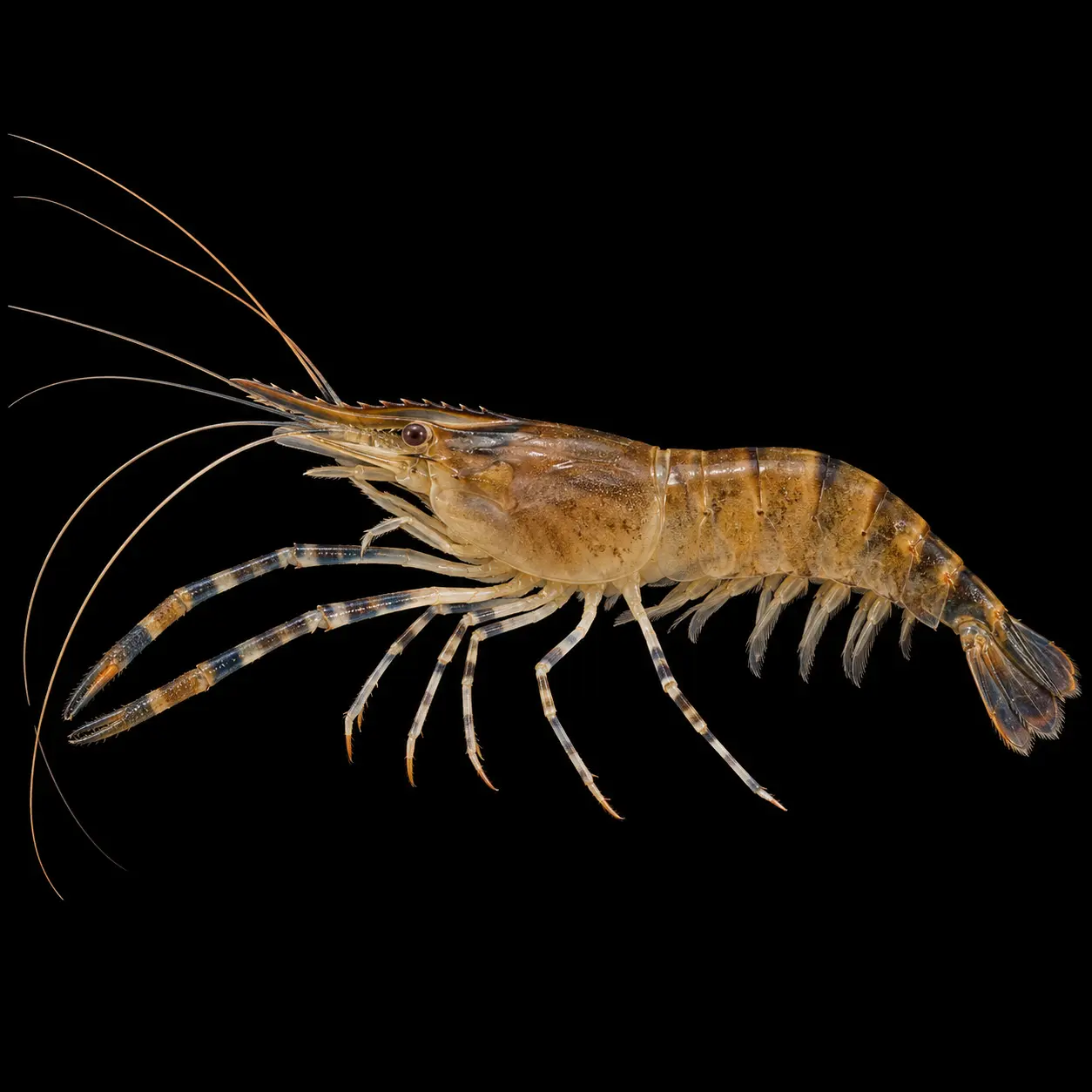
Macrobrachium latidactylus

Macrobrachium latidactylus

Broad-fingered River Prawn

Origin
Java, Sumatra, Kalimantan, Sulawesi and other Indo-West Pacific localities
Habitat evidence
Habitat review pending

Description

Reported maximum: 8 cm total length.

Specific water ranges are not yet verified.

Natural food: Earthworms; mollusc flesh.Prepared food: Water-stable prawn pellets.Food guidance at genus level

Biology: mature biofilter; species-specific microbial counts are not established.

Sources & limits

Provide oxygenated freshwater, separate rock or wood shelters and varied sinking food. Manage clawed-prawn aggression and protect moulting animals; verify collection conditions and larval salinity needs before attempting reproduction in the aquarium.

Genus-level guidance

Food choices are adapted from freshwater-prawn grow-out guidance; species-specific acceptance and adult-water ranges remain unverified. Larval culture requires separate evidence.

Aquarium management is adapted from FAO prawn husbandry; species-specific captive protocols are limited.

Omitted parameters have no verified range in the sources checked. Habitat or experimental measurements are not safe keeping limits. GH, KH, TDS and conductivity are not interchangeable.

General system guidance: target free ammonia (NH₃) and nitrite (NO₂⁻) at 0 mg/L; account for test detection limits. These are chemical measurements, not microbial counts or each species’ tolerance limits. OATA · 2022. Assess biofilter function through waste processing and water tests, not clarity alone. Biofiltration reference.

Size checked: . Water/food checked: .

Status reviewAssessment not verified

Library profile · not for sale

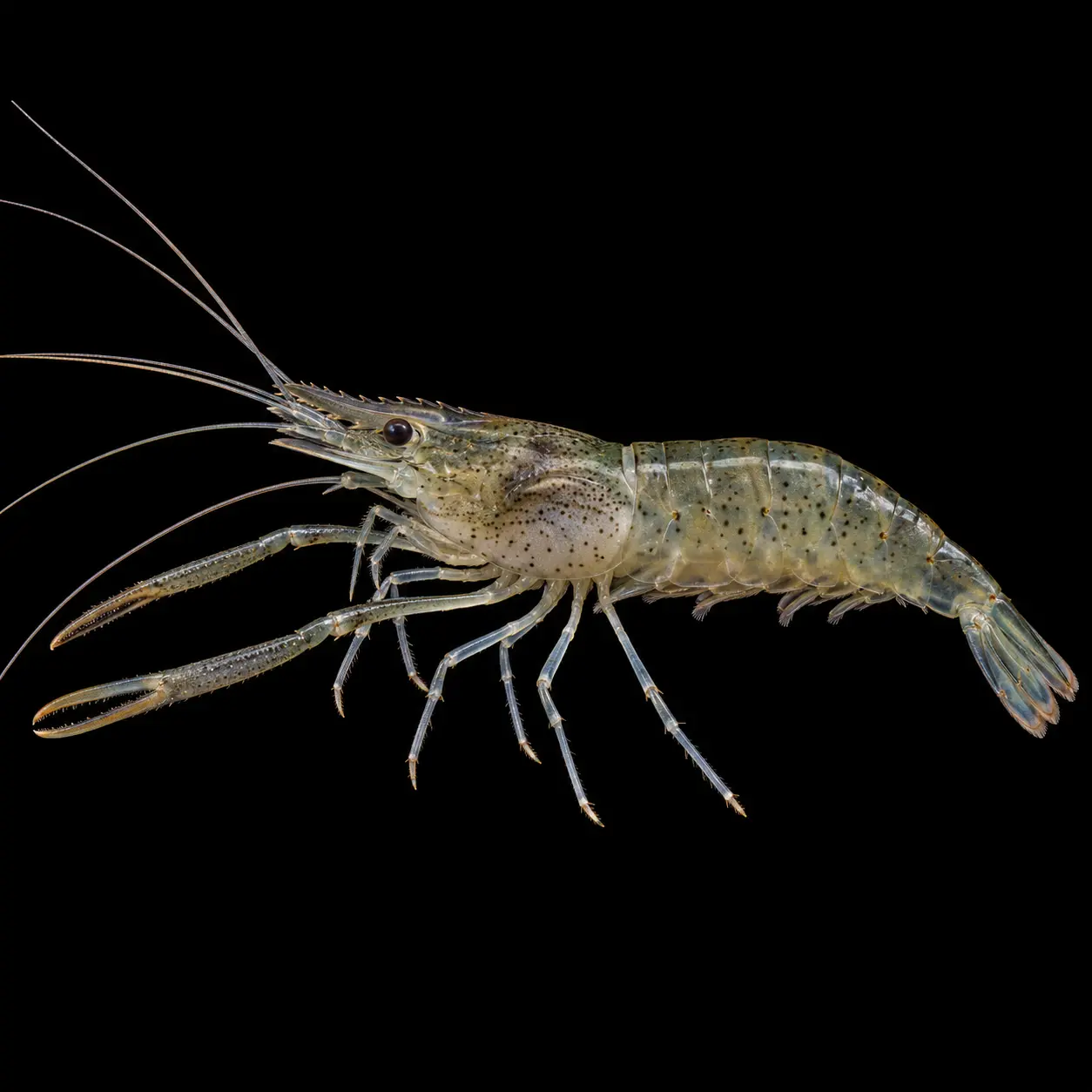
Macrobrachium equidens

Macrobrachium equidens

Rough River Prawn

Origin
Indonesian fresh and brackish waters within a wider Indo-Pacific range
Habitat evidence
Habitat review pending

Description

Reported maximum: 9.8 cm total length.

Specific water ranges are not yet verified.

Natural food: Earthworms; mollusc flesh.Prepared food: Water-stable prawn pellets.Food guidance at genus level

Biology: mature biofilter; species-specific microbial counts are not established.

Sources & limits

Match verified estuarine or brackish-water provenance rather than assuming permanent freshwater care. Provide oxygenation, separate shelters and varied sinking food; avoid vulnerable tankmates and develop a separate salinity-controlled plan for larvae.

Food choices are adapted from freshwater-prawn grow-out guidance; species-specific acceptance and adult-water ranges remain unverified. Larval culture requires separate evidence. Estuarine provenance matters; permanent freshwater suitability must not be assumed.

FAO describes high-salinity brackish and marine occurrence, with pure freshwater uncommon. Adult care must follow verified provenance and acclimation history.

Omitted parameters have no verified range in the sources checked. Habitat or experimental measurements are not safe keeping limits. GH, KH, TDS and conductivity are not interchangeable.

General system guidance: target free ammonia (NH₃) and nitrite (NO₂⁻) at 0 mg/L; account for test detection limits. These are chemical measurements, not microbial counts or each species’ tolerance limits. OATA · 2022. Assess biofilter function through waste processing and water tests, not clarity alone. Biofiltration reference.

Size checked: . Water/food checked: .

Status reviewAssessment not verified

Library profile · not for sale

Macrobrachium esculentum

Macrobrachium esculentum

Wallacea River Prawn

Origin
Sulawesi and the Wallacea region of Indonesia
Habitat evidence
Habitat review pending

Description

Reported maximum: 7.9 cm total length.

Specific water ranges are not yet verified.

Natural food: Earthworms; mollusc flesh.Prepared food: Water-stable prawn pellets.Food guidance at genus level

Biology: mature biofilter; species-specific microbial counts are not established.

Sources & limits

Use a mature oxygenated freshwater aquarium with separate shelters and varied sinking food. Treat as a clawed prawn when assessing tankmates, protect moulting individuals, and confirm breeding requirements instead of assuming a simple freshwater cycle.

Genus-level guidance

Food choices are adapted from freshwater-prawn grow-out guidance; species-specific acceptance and adult-water ranges remain unverified. Larval culture requires separate evidence.

Aquarium management is adapted from FAO prawn husbandry; species-specific captive protocols are limited.

Omitted parameters have no verified range in the sources checked. Habitat or experimental measurements are not safe keeping limits. GH, KH, TDS and conductivity are not interchangeable.

General system guidance: target free ammonia (NH₃) and nitrite (NO₂⁻) at 0 mg/L; account for test detection limits. These are chemical measurements, not microbial counts or each species’ tolerance limits. OATA · 2022. Assess biofilter function through waste processing and water tests, not clarity alone. Biofiltration reference.

Size checked: . Water/food checked: .

Status reviewAssessment not verified

Library profile · not for sale

Macrobrachium sintangense

Macrobrachium sintangense

Sintang River Shrimp

Origin
Sumatra, Java and Indonesian Borneo
Habitat evidence
Habitat review pending

Description

Historical reported maximum: 6.6 cm total length; taxonomic scope later revised.

Specific water ranges are not yet verified.

Natural food: Earthworms; mollusc flesh.Prepared food: Water-stable prawn pellets.Food guidance at genus level

Biology: mature biofilter; species-specific microbial counts are not established.

Sources & limits

Provide oxygenated moderately mineralised freshwater, separate shelters and varied sinking food. Avoid very soft stagnant conditions, manage territorial encounters, and check identification and collection locality because historical records included the now-distinct M. elegans.

Food choices are adapted from freshwater-prawn grow-out guidance; species-specific acceptance and adult-water ranges remain unverified. Larval culture requires separate evidence.

The 1980 maximum included M. elegans in synonymy. The later revision separates that species, so 6.6 cm is a historical report, not a newly verified modern-species limit.

Omitted parameters have no verified range in the sources checked. Habitat or experimental measurements are not safe keeping limits. GH, KH, TDS and conductivity are not interchangeable.

General system guidance: target free ammonia (NH₃) and nitrite (NO₂⁻) at 0 mg/L; account for test detection limits. These are chemical measurements, not microbial counts or each species’ tolerance limits. OATA · 2022. Assess biofilter function through waste processing and water tests, not clarity alone. Biofiltration reference.

Size checked: . Water/food checked: .

Status reviewAssessment not verified

Library profile · not for sale

Macrobrachium ngankeeae

Macrobrachium ngankeeae

Nang Kè River Prawn

Origin
Kaimana region, West Papua, Indonesia
Habitat evidence
Habitat review pending

Description

Maximum total length unverified in accessible primary evidence.Maximum not verified

Specific water ranges are not yet verified.

Natural food: Earthworms; mollusc flesh.Prepared food: Water-stable prawn pellets.Food guidance at genus level

Biology: mature biofilter; species-specific microbial counts are not established.

Sources & limits

Start with verified Kaimana freshwater provenance, oxygenation, separate shelters and varied sinking food. Apply conservative clawed-prawn stocking, protect moulting individuals, and verify larval requirements because a species-specific aquarium protocol is not established.

Genus-level guidance

Food choices are adapted from freshwater-prawn grow-out guidance; species-specific acceptance and adult-water ranges remain unverified. Larval culture requires separate evidence.

The accessible 2024 original-description abstract establishes identity and locality but supplies no maximum size or validated aquarium protocol.

Omitted parameters have no verified range in the sources checked. Habitat or experimental measurements are not safe keeping limits. GH, KH, TDS and conductivity are not interchangeable.

General system guidance: target free ammonia (NH₃) and nitrite (NO₂⁻) at 0 mg/L; account for test detection limits. These are chemical measurements, not microbial counts or each species’ tolerance limits. OATA · 2022. Assess biofilter function through waste processing and water tests, not clarity alone. Biofiltration reference.

Size checked: . Water/food checked: .

Status reviewAssessment not verified

Library profile · not for sale

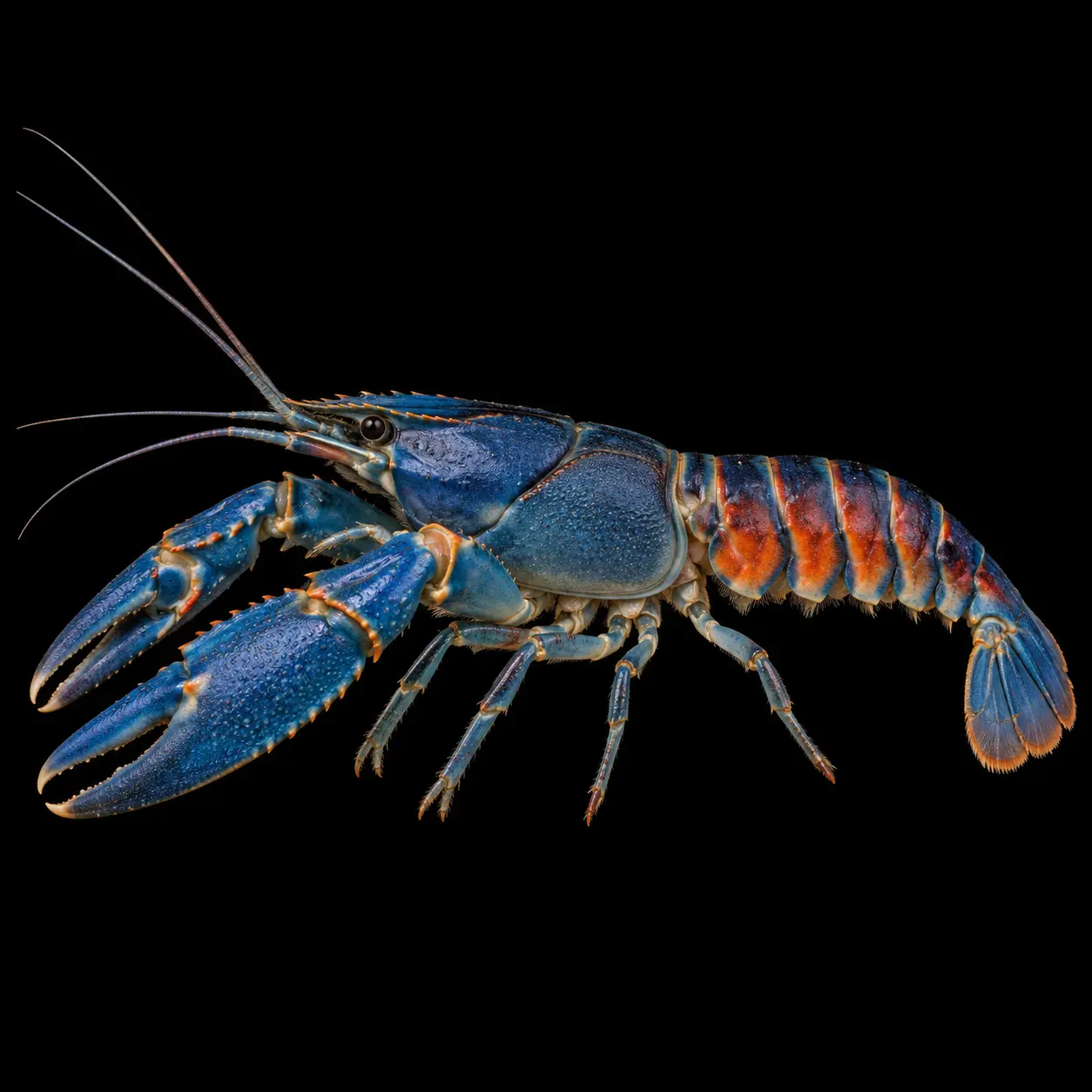
Cherax boesemani

Cherax boesemani

Supernova Crayfish

Origin
Ayamaru lakes and river system, Southwest Papua, Indonesia
Habitat evidence
Habitat review pending

Description

Reported maximum: 25 cm total length in a later taxonomic comparison.

Specific water ranges are not yet verified.

Natural food: Courgette; cucumber.Prepared food: Sinking crustacean pellets; algae wafers.Food guidance at group level

Biology: mature biofilter; species-specific microbial counts are not established.

Sources & limits

Allow generous floor space for a large lake crayfish, individual shelters and strong oxygenation. Use locality-matched stable water, a secure lid and varied sinking food; protect moulting animals and avoid vulnerable fish or shrimp.

Group-level guidance

General crayfish food guidance, not a species-specific feeding trial. Numerical husbandry ranges remain unverified; match documented locality and breeder history.

The 2008 original description examined males up to 12.3 cm TL. The larger 25 cm report is cited in the 2015 paper from a specialist book; it is not that type-series measurement.

Omitted parameters have no verified range in the sources checked. Habitat or experimental measurements are not safe keeping limits. GH, KH, TDS and conductivity are not interchangeable.

General system guidance: target free ammonia (NH₃) and nitrite (NO₂⁻) at 0 mg/L; account for test detection limits. These are chemical measurements, not microbial counts or each species’ tolerance limits. OATA · 2022. Assess biofilter function through waste processing and water tests, not clarity alone. Biofiltration reference.

Size checked: . Water/food checked: .

Reported DDDirect assessment review pending

Library profile · not for sale

Explore freely. Orders, prices and availability have not opened yet.

Page 1 of 2 · 21 matching catalogue records

Evidence-bounded specialist register.

Evidence-bounded specialist register.

Only species with documented native Indonesian occurrence and credible aquarium relevance are included. A broad Indo-Pacific range does not make an animal Indonesian stock; every future batch still needs locality and legal provenance.

Other native atyids

1 taxa
Research sources.

Research sources.

Accepted names, Indonesian occurrence, life-cycle biology and conservation assessment are checked independently.

  1. Chace (1983), Atya-like shrimps of the Indo-Pacific.
  2. Cai et al. (2026), Gracidina genus revision.
  3. de Mazancourt et al. (2024), Macrobrachium ngankeeae from West Papua.
  4. Lukhaup et al. (2018), two Cherax from Indonesian New Guinea.
  5. Patoka et al. (2023), Cherax woworae.
  6. Lukhaup et al. (2024), Cherax rayko and C. peknyi.
  7. WoRMS — accepted names and distribution records.
  8. IUCN Red List — NE and DD are not low-risk findings.
All shrimp collectionsFish & Shrimp Foods